Artwork
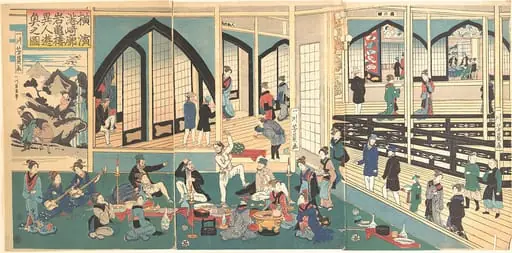
横浜 岩亀見込の図|The Interior of the Gankiro Tea House in Yokohama
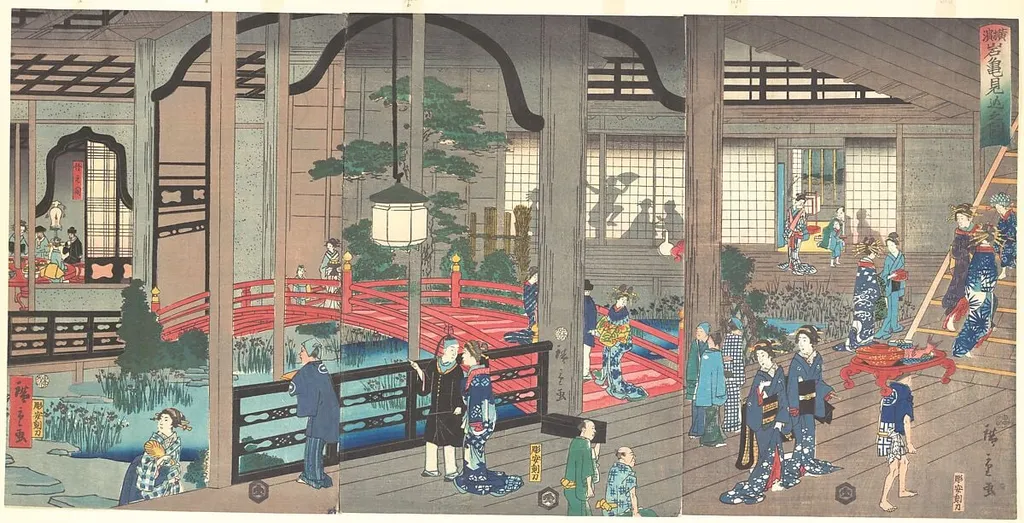
横浜 岩亀見込の図|The Interior of the Gankiro Tea House in Yokohama is an ink print by the Impressionist artist Suzuki Hiroshige II. It dates from 1861 and is held in the collection of the Metropolitan Museum of Art.
About this work
Overview
This triptych woodblock print, created in 1861 by Suzuki Hiroshige II, depicts the interior of the Gankiro tea house in Yokohama.
This triptych woodblock print, created in 1861 by Suzuki Hiroshige II, depicts the interior of the Gankiro tea house in Yokohama. Composed of three connected panels, it captures a moment of quiet activity within a refined social space. Ink and color on paper convey a sense of everyday life, blending interior architecture with glimpses of an external garden. The composition is balanced across the panels, guiding the viewer’s eye through a sequence of figures and spatial transitions.
Subject & Meaning
The scene portrays patrons and staff moving through the tea house’s interior, some crossing a red-rail bridge over a small pond. The setting reflects Yokohama’s emerging cosmopolitan culture in the late Edo period, where traditional Japanese tea culture intersected with foreign influences. Figures in varied attire suggest a mix of local and international visitors, hinting at the city’s role as a gateway for cultural exchange during Japan’s opening to the world.
Technique & Style
Hiroshige II employs fine linear details and subtle cross-hatching to model forms and suggest depth, particularly in the figures and the bridge’s structure. Colors are restrained—soft blues, muted greens, and pale reds—creating harmony without visual overload. The use of sliding doors as framing devices connects interior and exterior spaces, while the flat planes of the architecture contrast with the delicate rendering of natural elements like trees and water.
History & Provenance
Produced in 1861, the print emerged during a period of rapid change in Japan, as Yokohama became a hub for foreign trade. It was likely distributed as part of a series documenting the city’s new urban scenes. The work entered the collection of The Metropolitan Museum of Art in the 20th century, where it remains as part of its holdings of Japanese prints from the late Edo era.
Context
Yokohama’s transformation after 1859, following the opening of Japanese ports to foreign commerce, inspired artists to document its evolving landscape. The Gankiro tea house, a known gathering place, symbolized the blending of tradition and modernity. Hiroshige II’s depiction aligns with a broader trend in ukiyo-e that shifted from idealized landscapes to contemporary urban life, capturing the pulse of a society in transition.
Legacy
This print contributes to the record of how Japanese artists responded to Western influence without abandoning traditional aesthetics. Its quiet observation of daily life influenced later generations of printmakers and Western artists interested in Japanese composition. Though not widely celebrated in its time, it endures as a nuanced document of Yokohama’s cultural hybridity during a pivotal historical moment.
Artist & collection

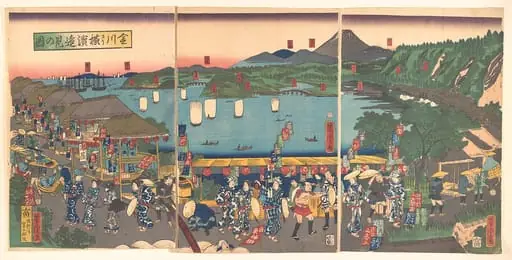 Kanagawa yōri Yokohama...ken no zu|A Distant View of Yokohama from Kanagawa
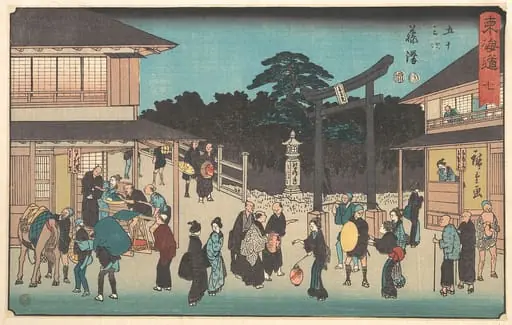 東海道五十三次 藤澤|Fujisawa
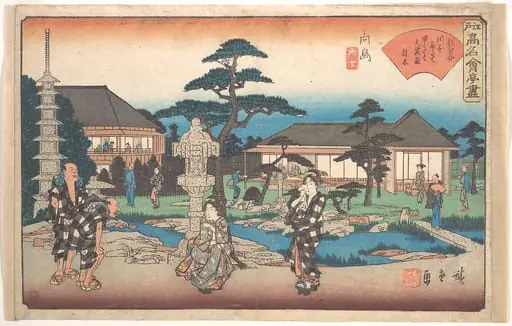 Mukōjima (Daikokuya)|江戸高名会亭尽 向島 大七|The Daikokuya at Mukojima
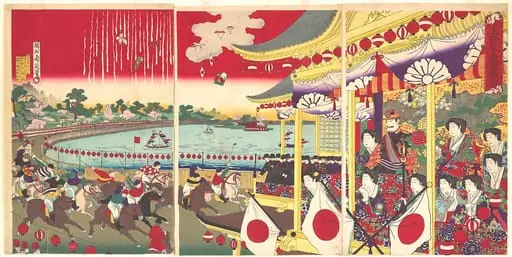 『上野不忍競馬図』|View of the Horse Track at Shinobazu in Ueno Park (Ueno shinobazu keiba zu)
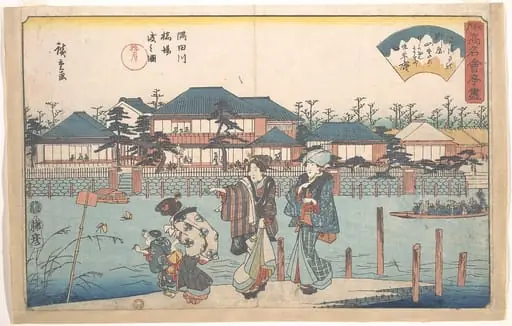 江戸高名会亭尽 隅田川橋場渡之図 柳屋|Sumidagawa Hashiba Watashi Zu (Yanagiya)
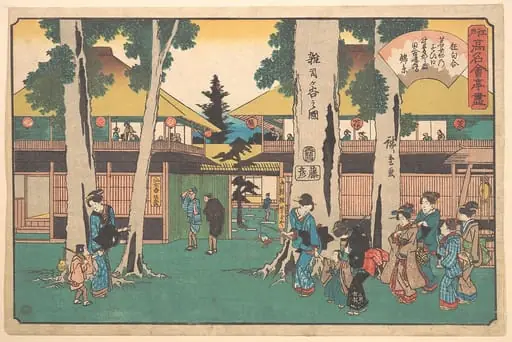 江戸高名会亭尽 雑司ヶ谷の図 茗荷屋|Zoshigaya no Zu (Myoga-ya)
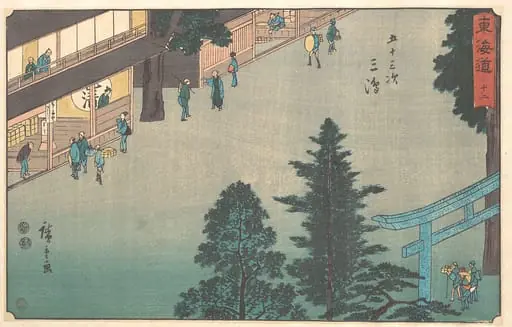 東海道五十三次 三島|Mishima
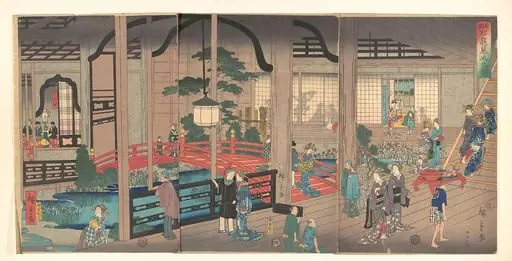 Yokohama Gankirō no zu|View of the Interior of the Gankirō Tea House in Yokohama
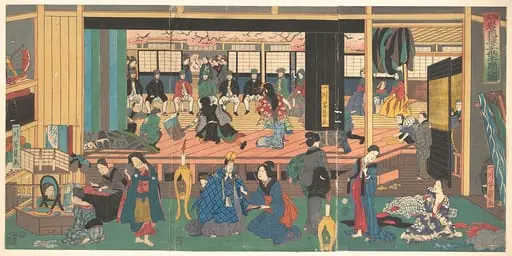 Yokohama Gankirō kodomo te odori no zu|Foreigners Enjoying Children's Kabuki at the Gankirō Tea House
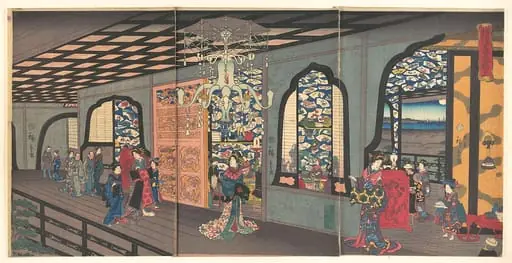 Yokohama Gankirō age|横浜岩亀楼上|Upper Floor of the Gankirō Tea House in Yokohama
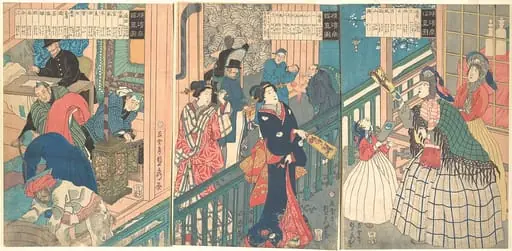 歌川(五雲亭)貞秀画 「横濱商館真圖」|A True View of a Trading House of a Yokohama Merchant
 Yokohama Miyozaki-kaku Gankirō ijin yūkyō no zu|Foreigners Enjoying a Party at the Gankirō Tea House