Artwork
Yokohama Gankirō no zu|View of the Interior of the Gankirō Tea House in Yokohama
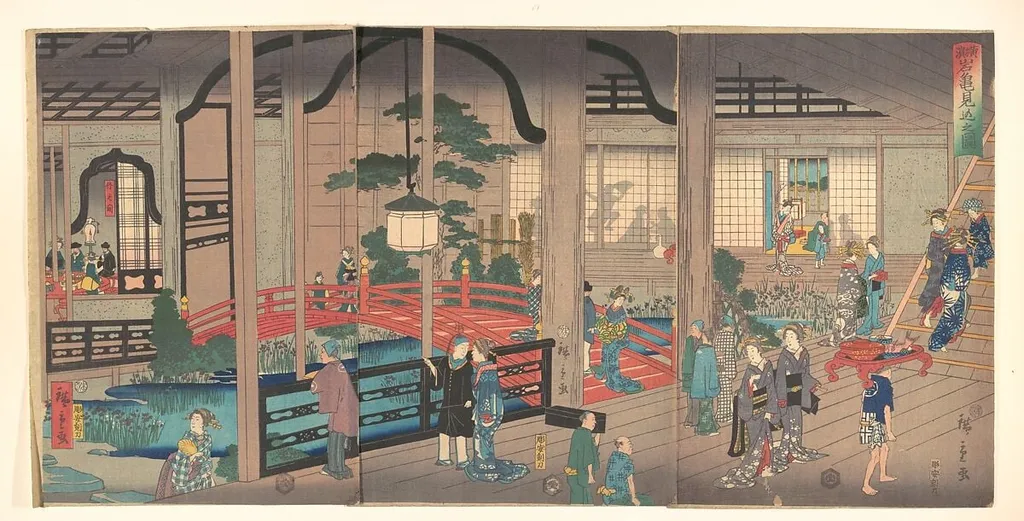
Yokohama Gankirō no zu|View of the Interior of the Gankirō Tea House in Yokohama is an ink print by the Impressionist artist Utagawa Hiroshige II. It dates from 4 and is held in the collection of the Metropolitan Museum of Art.
About this work
Overview
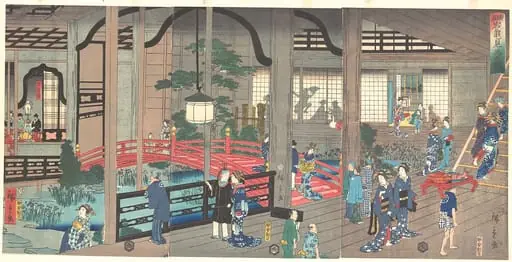
Utagawa Hiroshige II's 'View of the Interior of the Gankirō Tea House in Yokohama' is a triptych woodblock print capturing a vibrant scene within a Yokohama tea house courtyard. The work, executed in ink and color on paper, is part of The Metropolitan Museum of Art's collection.
Subject & Meaning
The print depicts a bustling courtyard where people engage in various activities amidst traditional wooden architecture, a red bridge, and a pond. The coexistence of traditional and Western attire among the figures subtly alludes to the cultural intersection of the time.
Technique & Style
Hiroshige II's composition skillfully balances dynamism with openness, packing numerous activities into the scene without cluttering the space. The use of a lantern and a sign with Japanese characters adds depth and authenticity to the setting.
History & Provenance
Created in the late 19th century, the exact date is not specified in the provided information. The work is currently held in the collection of The Metropolitan Museum of Art.
Context
This piece reflects the transformative period in Yokohama, where Eastern and Western influences converged, particularly in areas like the Gankirō Tea House, which would have been a hub for both locals and foreigners.
Legacy
While specific legacy details of this work are not provided, as a piece by Utagawa Hiroshige II, it contributes to the broader legacy of the Utagawa school in ukiyo-e woodblock printing, documenting the evolving urban landscape of late 19th-century Japan.
Artist & collection

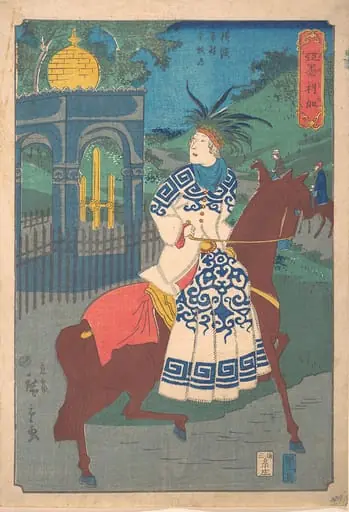 二代歌川広重画 『亜墨利加 横浜本村本牧道』|American Woman Riding Side-Saddle on the Road at Honmoku, Motomura, Yokohama (America Yokohama Motomura Honmoku michi)
 Untitled
 Untitled
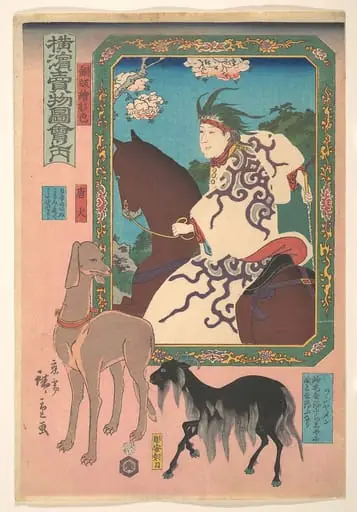 横浜賣物図会の内 唐犬|Copper Plate Engraving of a Woman Riding a Horse, a Goat and a Dog
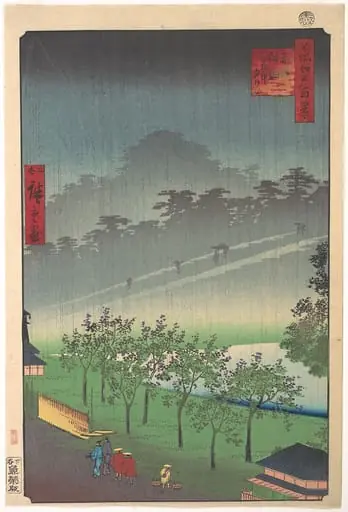 Untitled
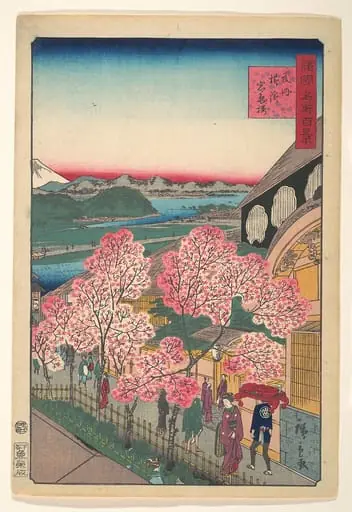 Bushu Yokohama Gankirō|諸国名所百景 武州横浜岩亀楼|Entrance to the Gankirō Tea House in the Miyozaki District, Yokohama, Bushu
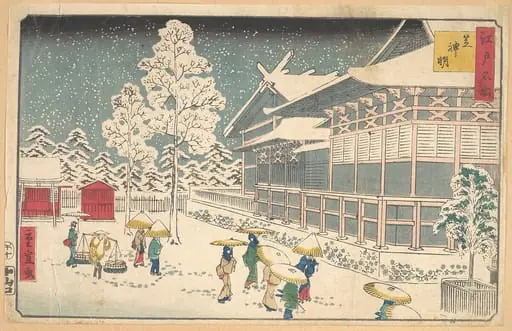 江戸名所 芝神明|Famous Places of Edo: Shiba Shinmei
 Untitled
 横浜 岩亀見込の図|The Interior of the Gankiro Tea House in Yokohama
 Yokohama Gankirō kodomo te odori no zu|Foreigners Enjoying Children's Kabuki at the Gankirō Tea House
 Yokohama Gankirō age|横浜岩亀楼上|Upper Floor of the Gankirō Tea House in Yokohama
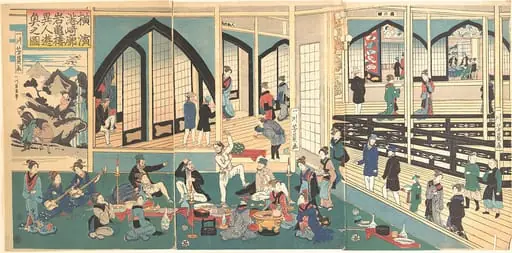 Yokohama Miyozaki-kaku Gankirō ijin yūkyō no zu|Foreigners Enjoying a Party at the Gankirō Tea House
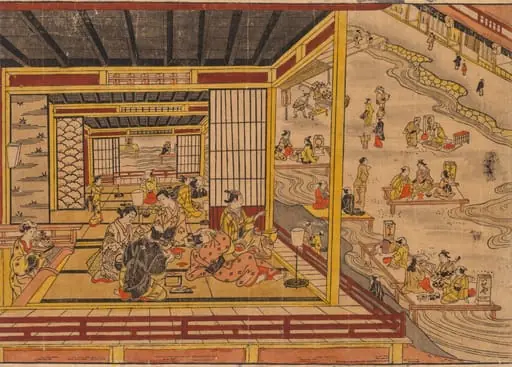 Tea House Beside the Kamo River in Kyoto
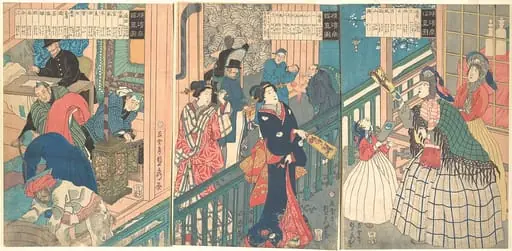 歌川(五雲亭)貞秀画 「横濱商館真圖」|A True View of a Trading House of a Yokohama Merchant
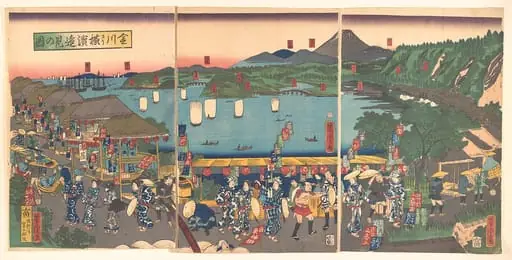 Kanagawa yōri Yokohama...ken no zu|A Distant View of Yokohama from Kanagawa
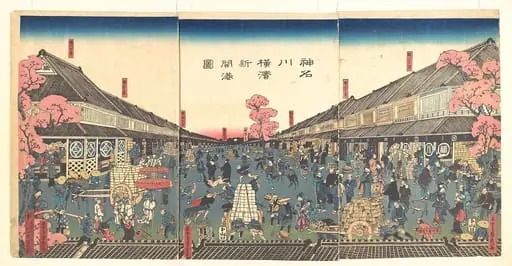 歌川五雲亭貞秀画 『神名川横浜新開港圖』|The Newly Opened Port of Yokohama in Kanagawa Prefecture (Kanagawa Yokohama shinkaikōzu)