Artwork
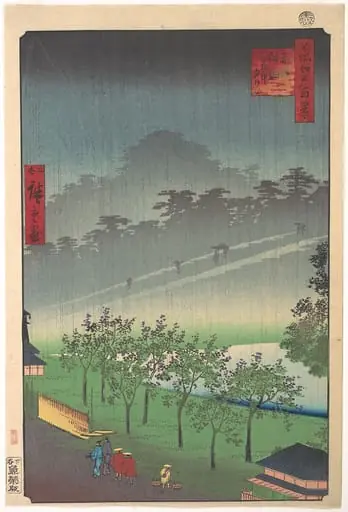
Picture of Light Rain on the Embankment of the Sumida River, from the series A New Selection of Famous Places in Edo
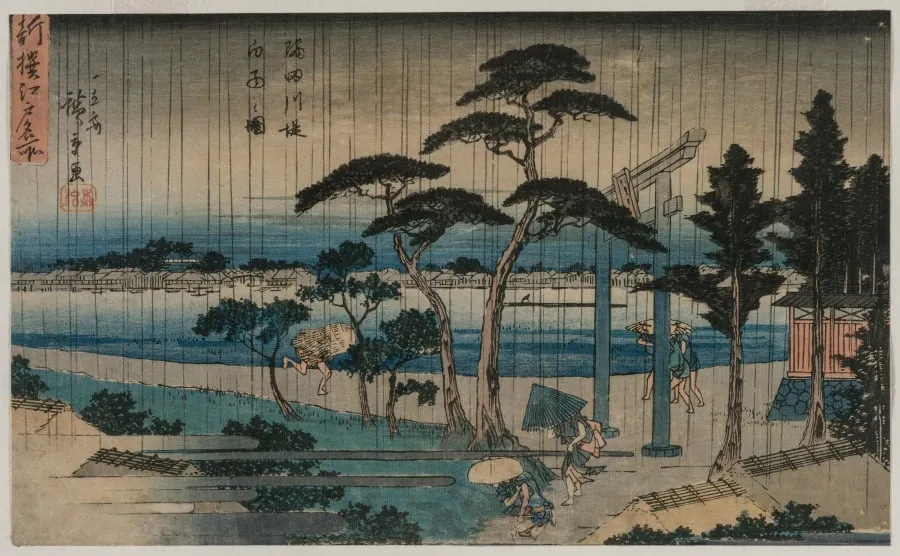
Picture of Light Rain on the Embankment of the Sumida River, from the series A New Selection of Famous Places in Edo is a print by the Romanticist artist Utagawa Hiroshige. It dates from 1840 and is held in the collection of the Cleveland Museum of Art.
About this work
Overview
It captures a quiet moment along the Sumida River during a light rain, diverging from the typical ukiyo-e focus on theater and pleasure quarters.
Created around 1840 by Utagawa Hiroshige, this woodblock print is part of the series A New Selection of Famous Places in Edo. It captures a quiet moment along the Sumida River during a light rain, diverging from the typical ukiyo-e focus on theater and pleasure quarters. Hiroshige’s attention to weather and atmosphere marks a shift in landscape representation, emphasizing mood over narrative. The print exemplifies his mature style, blending natural observation with compositional restraint.
Subject & Meaning
The scene depicts pedestrians navigating a rainy riverside path beneath pine trees and a wooden bridge, some sheltered by umbrellas or cloaks. A torii gate near the center suggests a nearby shrine, subtly anchoring the landscape in spiritual space. The calm river and distant buildings evoke daily life in Edo, not as spectacle but as quiet routine. The red lantern offers a muted contrast, drawing the eye without disrupting the scene’s stillness.
Technique & Style
Hiroshige employed fine, controlled lines and layered washes to suggest the softness of rain and the dampness of air. Colors are restrained—blues, grays, and greens dominate—with minimal use of warm tones for emphasis. The print’s delicate gradations and sparse detail create a sense of depth without heavy modeling. The technique mimics ink sketching, enhancing the impression of immediacy and transient weather.
History & Provenance
Produced during Hiroshige’s early period of landscape-focused work, this print predates his more famous One Hundred Famous Views of Edo. It was part of a series commissioned to document Edo’s lesser-known vistas, reflecting growing public interest in local scenery. The print circulated widely as a commercial ukiyo-e, likely sold in shops or as souvenirs, contributing to Hiroshige’s reputation as a top landscape artist of his time.
Context
In 1840s Edo, urban expansion and improved travel encouraged citizens to explore the city’s outskirts. This print responds to that cultural shift, portraying nature and weather not as backdrop but as central experience. Unlike earlier ukiyo-e, which emphasized human drama, Hiroshige’s work invites contemplation of environment, aligning with broader aesthetic values of quietude and seasonal awareness in Edo-period culture.
Legacy
This print helped establish Hiroshige as a pioneer in atmospheric landscape printing, influencing later Japanese artists and, eventually, Western impressionists. Its emphasis on transient light and weather became a defining trait of his later series. The quiet, observational approach shifted ukiyo-e’s trajectory, expanding its scope beyond entertainment to include meditative depictions of everyday nature.
Artist & collection
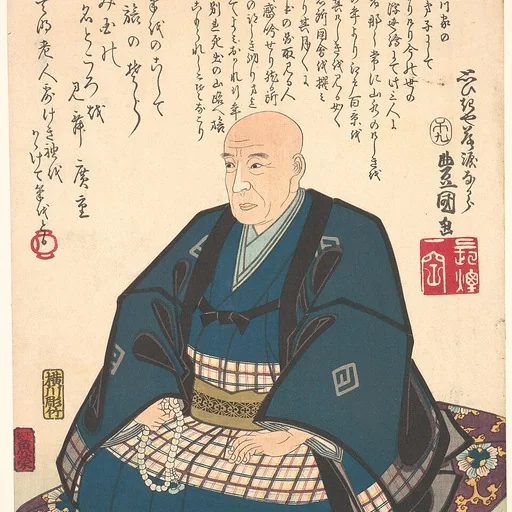
Artist
Utagawa Hiroshige (歌川 広重) or Andō Hiroshige (安藤 広重), born Andō Tokutarō (安藤 徳太郎; 1797 – 12 October 1858), was a Japanese ukiyo-e artist, considered the last great master of that tradition.

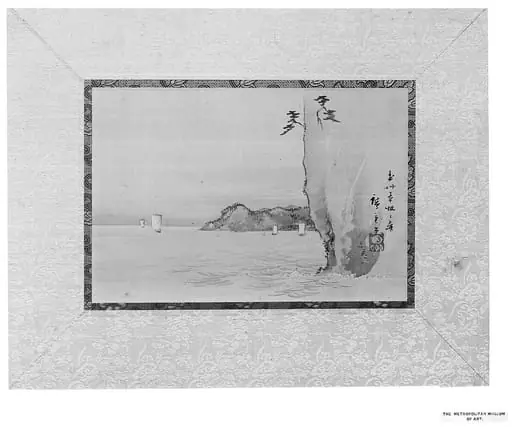
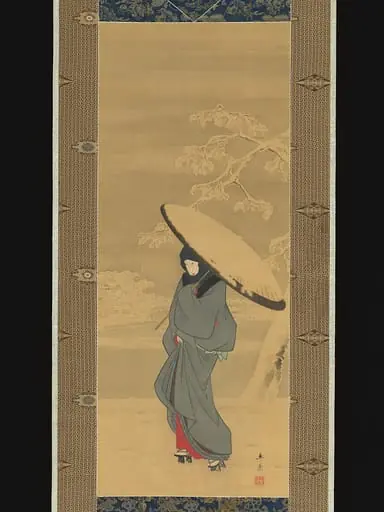
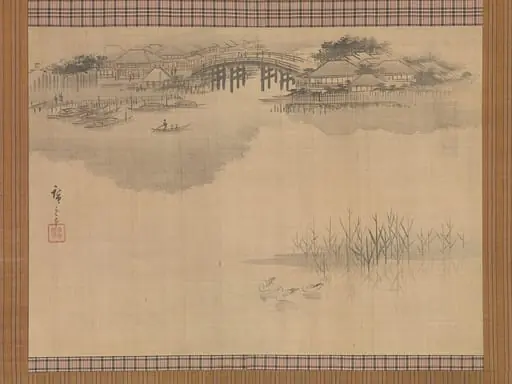
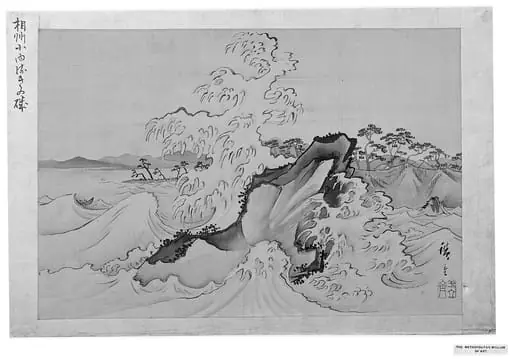
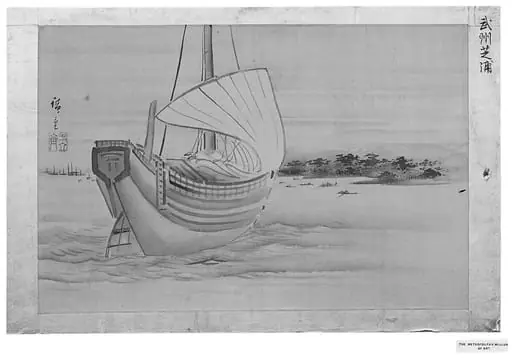
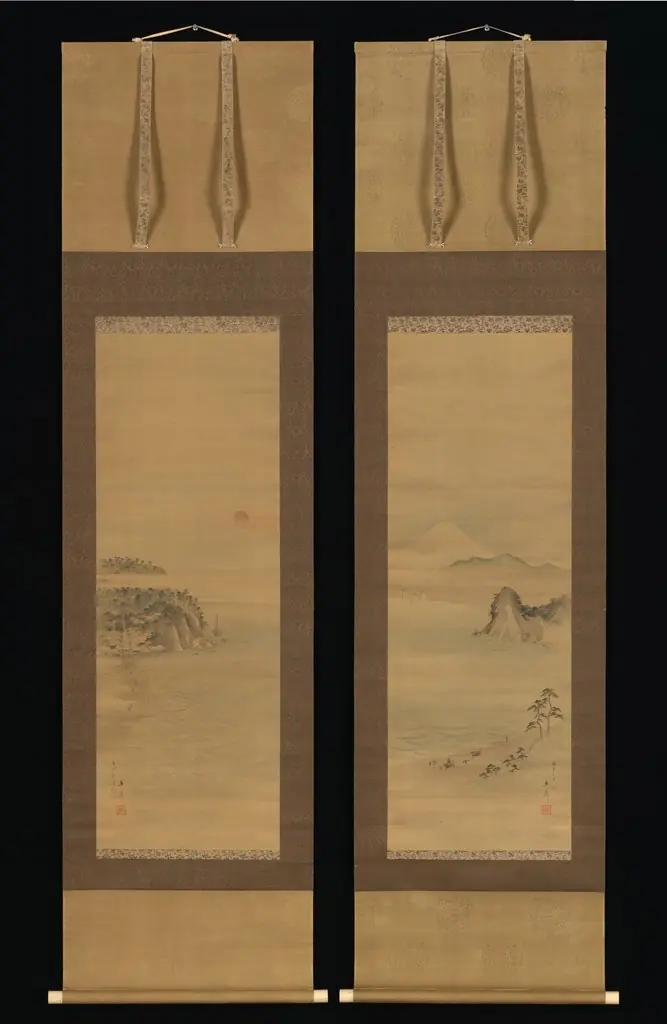
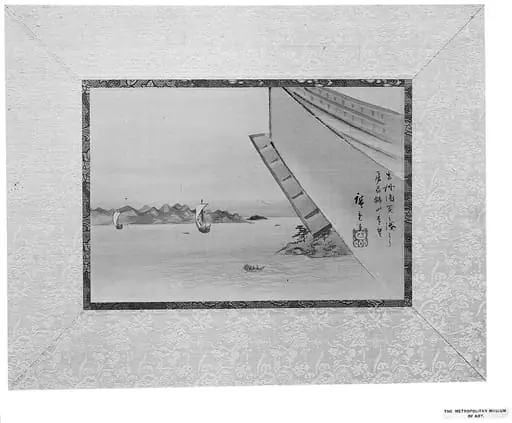
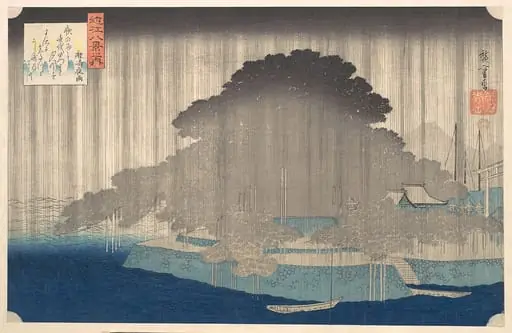 歌川広重画 「近江八景之内 唐崎夜雨」|Night Rain at Karasaki, from the series Eight Views of Ōmi (Ōmi hakkei no uchi)
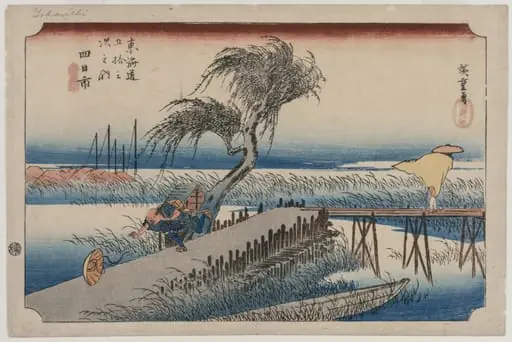 Yokkaichi: View of the Mie River, from the series The Fifty-Three Stations of the Tōkaidō
 Untitled
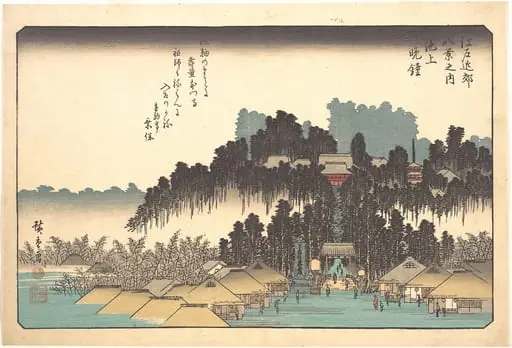 Ikegami Bansho|江戸近郊八景之内 池上晩鐘|Vesper Bells at Ikegami
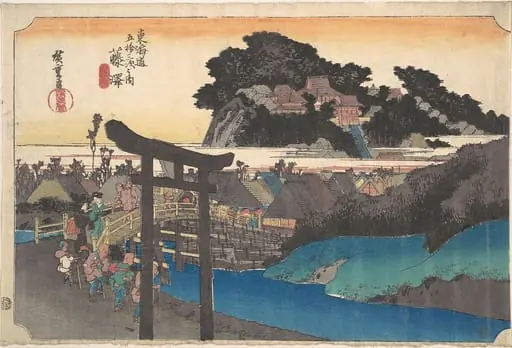 東海道五十三次之内 藤澤 遊行寺|Fujiwara; Yugyoji
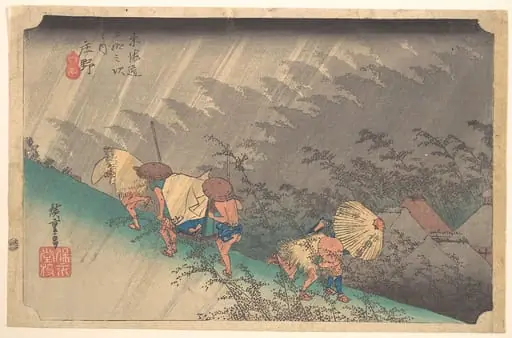 Shōno Hakuu|東海道五十三次之内 庄野 白雨|White Rain at Shōno
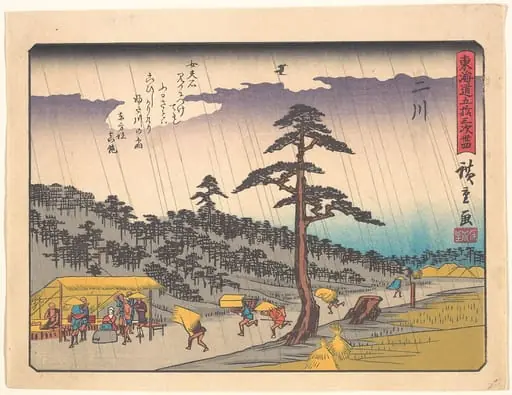 東海道五十三次 二川|Futakawa, from the series The Fifty-three Stations of the Tōkaidō Road
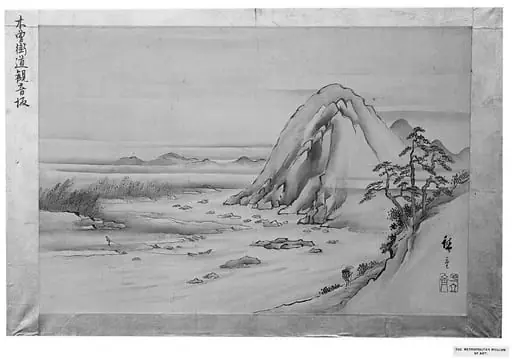
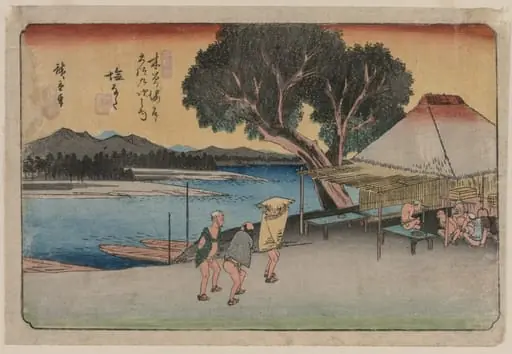 The Sixty-Nine Stations of the Kiso Highway: Shionata
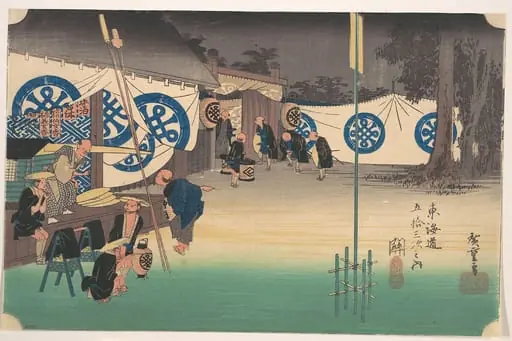 東海道五十三次 関 本陣早立|Seki, Stations No. 48