Artwork
The Sixty-Nine Stations of the Kiso Highway: Shionata
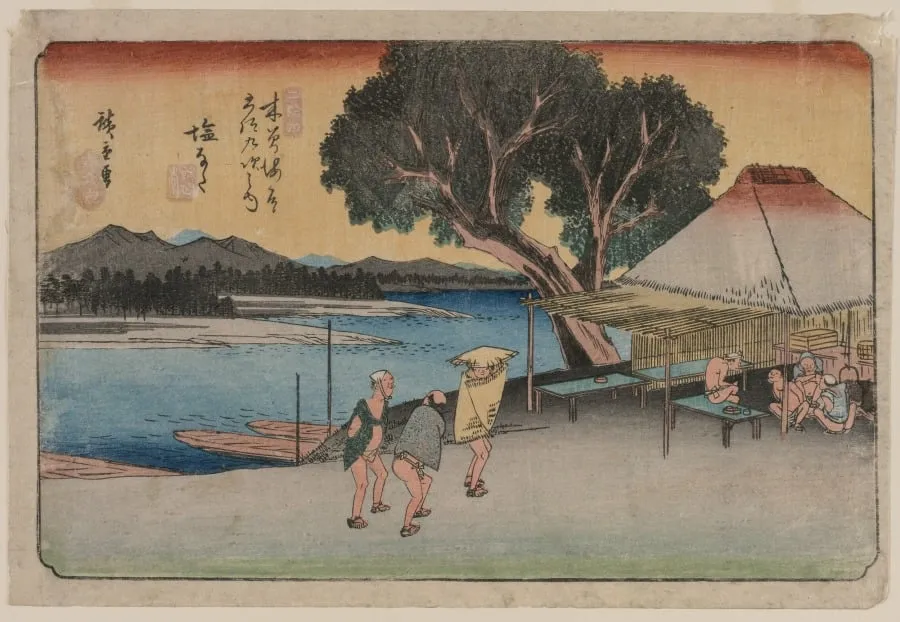
The Sixty-Nine Stations of the Kiso Highway: Shionata is a print by the Romanticist artist Utagawa Hiroshige. It dates from 1828 and is held in the collection of the Cleveland Museum of Art.
About this work
Overview
Part of a broader movement in ukiyo-e toward landscape depiction, the print captures a resting point along a major Edo-period travel route.
Utagawa Hiroshige produced *Shionata* in 1828 as the forty-third print in his series *The Sixty-Nine Stations of the Kiso Highway*. Part of a broader movement in ukiyo-e toward landscape depiction, the print captures a resting point along a major Edo-period travel route. Unlike earlier ukiyo-e focused on actors and courtesans, this work emphasizes quiet natural settings and the rhythms of everyday travel.
Subject & Meaning
The scene portrays travelers pausing near a riverbank, where a large tree anchors the composition. Figures include two men on foot—one bearing a load—and others resting beneath a shelter, likely a teahouse. The imagery reflects the practical and contemplative nature of journeying along the Kiso Highway, highlighting moments of respite amid long-distance travel. The absence of dramatic action underscores the dignity of ordinary movement through the landscape.
Technique & Style
Hiroshige employed woodblock printing with subtle gradations of color to evoke atmospheric depth. The warm yellow sky contrasts with the dark, receding mountains, creating a sense of spatial recession. The tree’s branching form divides the composition, guiding the eye toward the distant horizon. Fine linework defines figures and architecture, while muted tones reinforce the calm, early evening mood characteristic of his mature style.
History & Provenance
The print was issued by the publisher Hoeido as part of a commercially successful series commissioned to document the Kiso Highway’s stations. It circulated widely among Edo’s urban middle class, who collected such prints as souvenirs or decorative objects. Original impressions are now held in major museum collections, including the Museum of Fine Arts, Boston, and the British Museum, attesting to its enduring archival presence.
Context
During the early 19th century, domestic travel in Japan increased due to improved infrastructure and the sankin-kōtai system, which required regional lords to journey periodically to Edo. Landscape prints like this one catered to public interest in distant places and pilgrimage routes. The Kiso Highway, part of the Nakasendō, was one of five official roads, and its depiction in art reflected both practical navigation and cultural fascination with travel.
Legacy
Hiroshige’s series helped redefine ukiyo-e by centering nature and transient moments over human spectacle. His atmospheric compositions influenced later Western artists, including the Impressionists, who admired his use of perspective and seasonal mood. Though produced for mass consumption, these prints now serve as key documents of Edo-period geography, social practice, and aesthetic sensibility.
Artist & collection
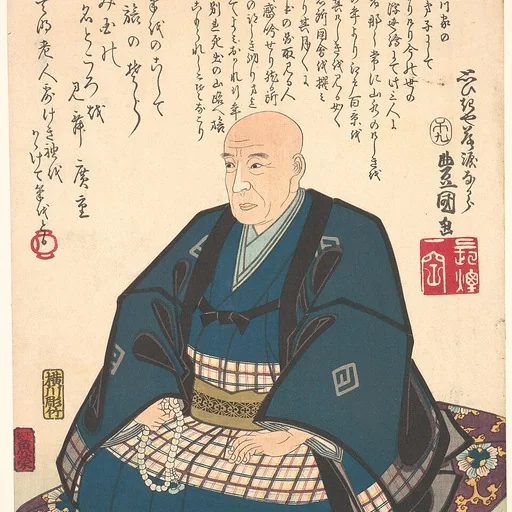
Artist
Utagawa Hiroshige (歌川 広重) or Andō Hiroshige (安藤 広重), born Andō Tokutarō (安藤 徳太郎; 1797 – 12 October 1858), was a Japanese ukiyo-e artist, considered the last great master of that tradition.

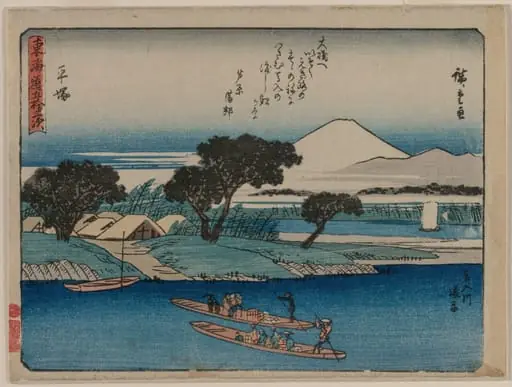 The Fifty-Three Stations of the Tokaido: Hiratsuka
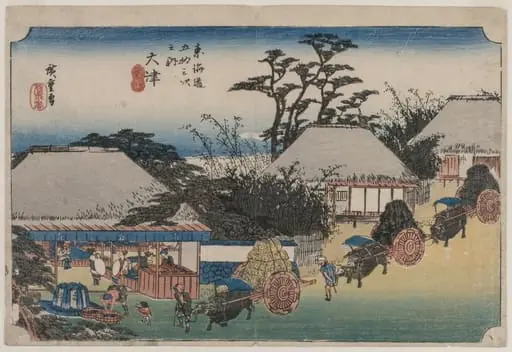 The Fifty-Three Stations of the Tokaido: Otsu
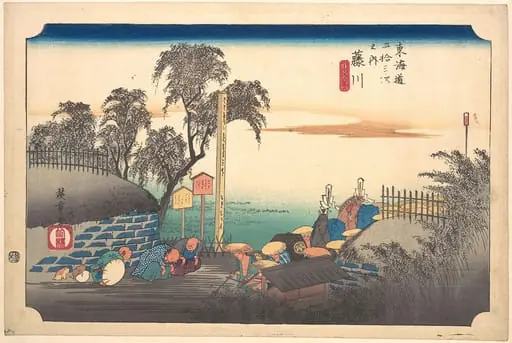 東海道五十三次之内 藤川 棒鼻の図|Station Thirty-Eight: Fujikawa, Scene at the Border, from the Fifty-Three Stations of the Tokaido
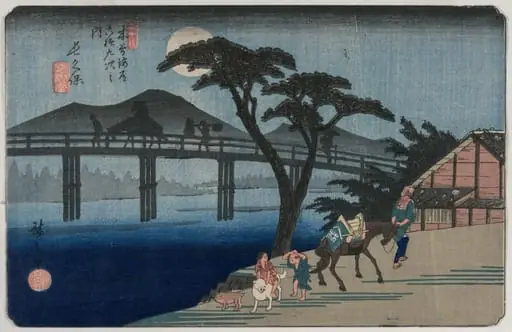 Nagakubo (Station 28) from the series Sixty-Nine Stations of the Kisokaido
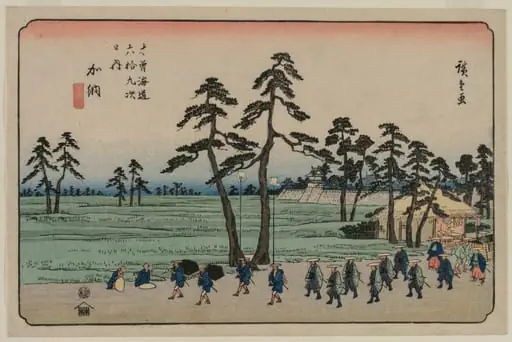 Kanō, from the series Sixty-nine Stations of the Kisokaidō
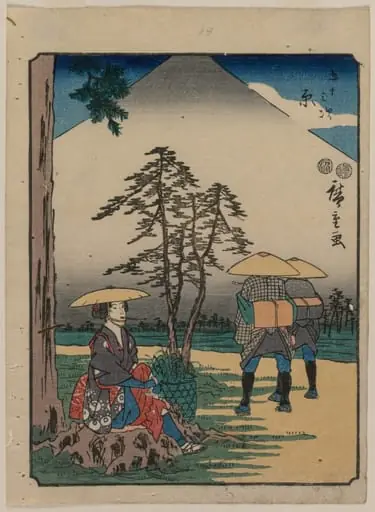 The Fifty-Three Stations of the Tokaido: Hara
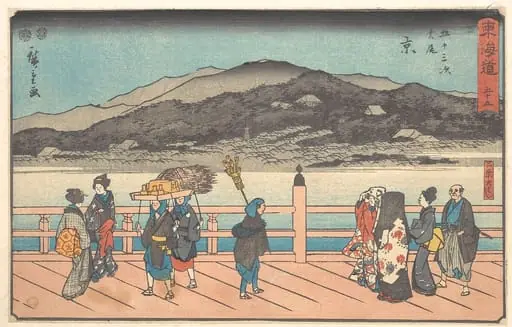 歌川広重画 「東海道 五十三次 大尾 京 三条大はし」|The Great Bridge at Sanjō (Taibi, Kyō, Sanjō Ōhashi), from the series The Tōkaidō Road: The Fifty-Three Stations (Tōkaidō: Gojūsan tsugi)