Artwork
歌川広重画 「東海道 五十三次 大尾 京 三条大はし」|The Great Bridge at Sanjō (Taibi, Kyō, Sanjō Ōhashi), from the series The Tōkaidō Road: The Fifty-Three Stations (Tōkaidō: Gojūsan tsugi)
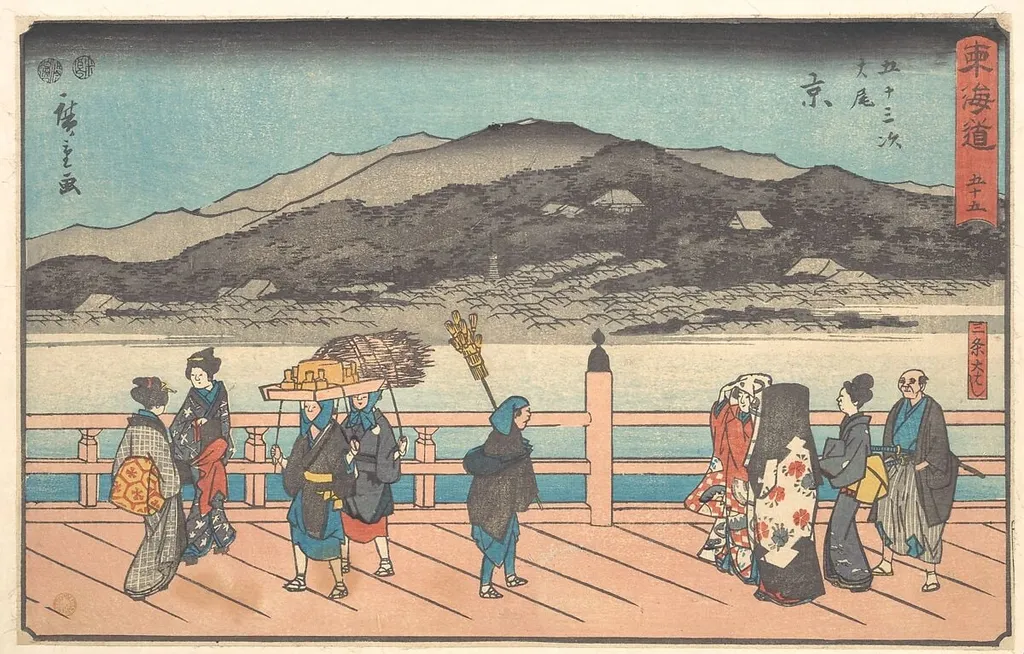
歌川広重画 「東海道 五十三次 大尾 京 三条大はし」|The Great Bridge at Sanjō (Taibi, Kyō, Sanjō Ōhashi), from the series The Tōkaidō Road: The Fifty-Three Stations (Tōkaidō: Gojūsan tsugi) is an ink print by the Romanticist artist Utagawa Hiroshige. It dates from 1850 and is held in the collection of the Metropolitan Museum of Art.
About this work
Overview
This woodblock print, created by Utagawa Hiroshige around 1850, is part of his series 'The Tōkaidō Road: The Fifty-Three Stations'. It depicts a serene scene of people crossing a bridge over a river, showcasing Hiroshige's focus on landscapes.
Subject & Meaning
The print captures a tranquil moment on the Sanjō Ōhashi bridge, with people in traditional clothing going about their daily activities. The scene conveys a sense of peacefulness, inviting the viewer to step into the depicted world.
Technique & Style
Executed in ink and color on paper, the print exemplifies Hiroshige's skill in ukiyo-e, a genre he adapted to focus on landscapes rather than the typical urban entertainment scenes.
Context
The work is one of 55 prints documenting key stops along the historic Tōkaidō road, a major route between Edo and Kyoto during Japan's Edo period, highlighting the significance of this journey in the cultural landscape.
Artist & collection
Artist
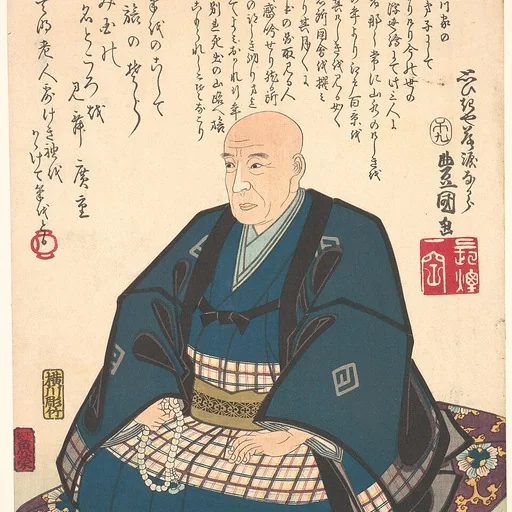
Utagawa Hiroshige (歌川 広重) or Andō Hiroshige (安藤 広重), born Andō Tokutarō (安藤 徳太郎; 1797 – 12 October 1858), was a Japanese ukiyo-e artist, considered the last great master of that tradition.

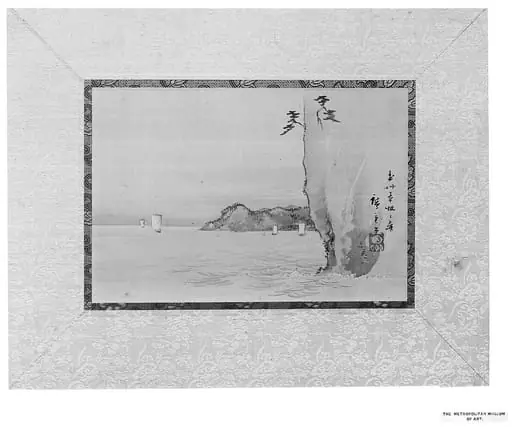
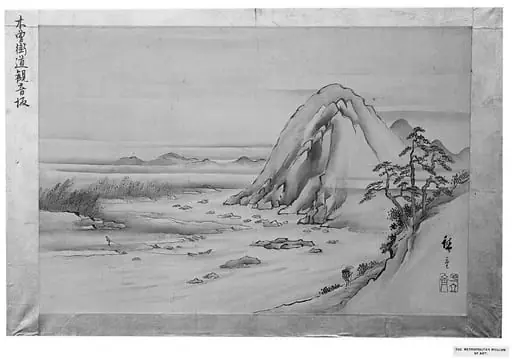
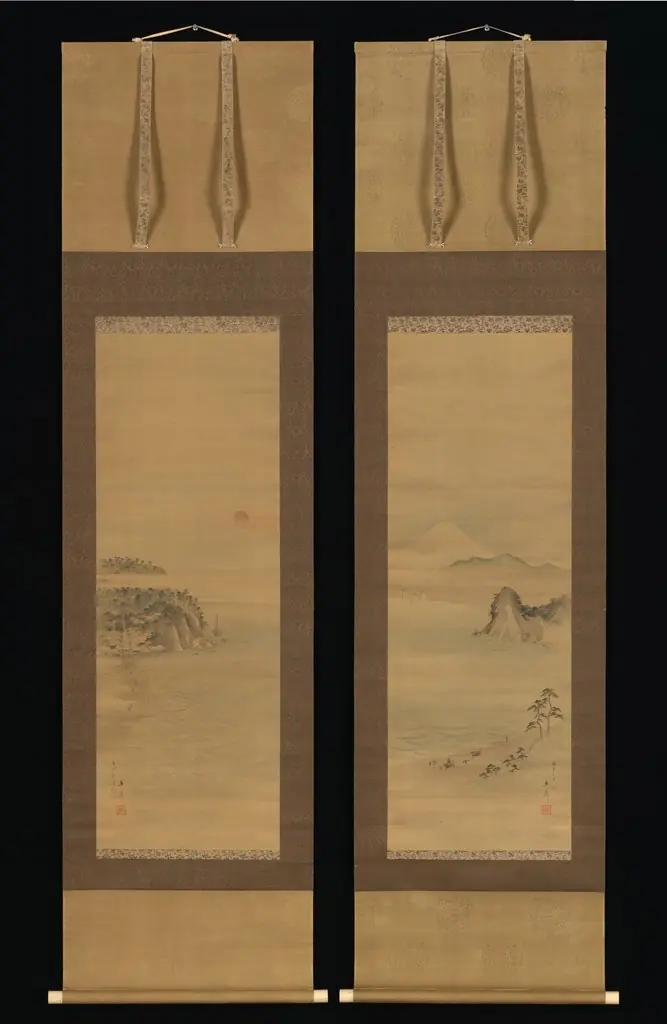
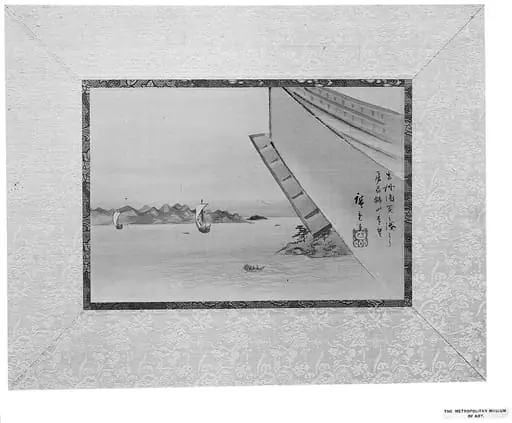
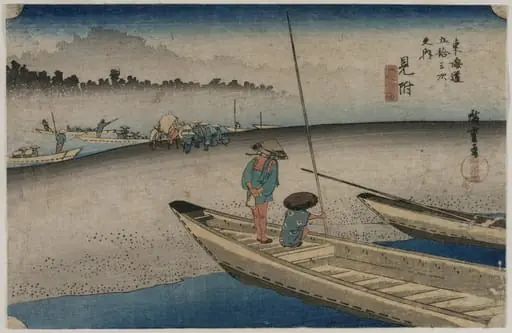 Picture of the Tenryu River near Mitsuke (Station 29), from the series Fifty-Three Stations of the Tokaido
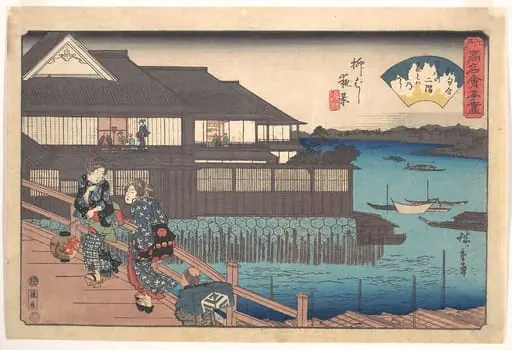 江戸高名会亭尽 柳ばし夜景 万八|The Manpachi at Evening in Yanagibashi
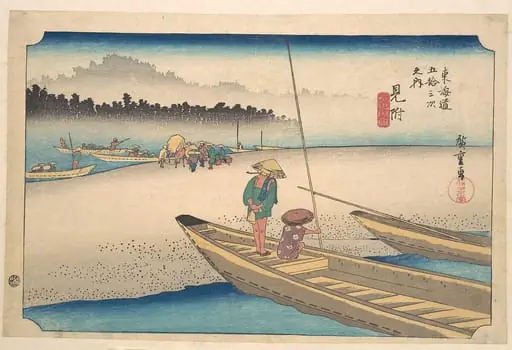 東海道五十三次 見附 天竜川|Mitsukei Tenryugawa
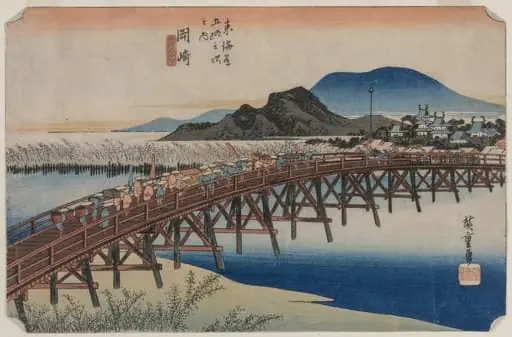 Yahagi Bridge at Okazaki (Station 39), From the series Fifty-Three Stations of the Tokaido
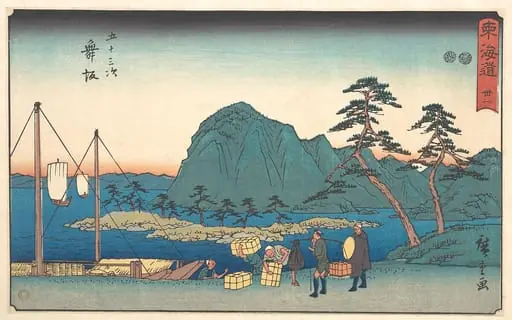 東海道五十三次 舞坂|Maizaka
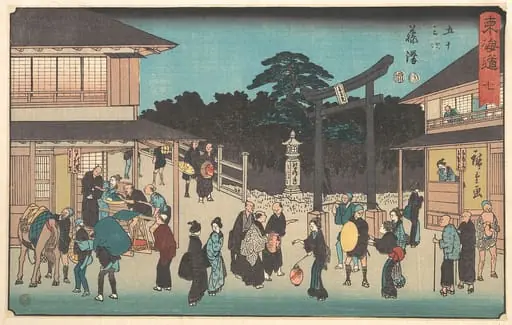 東海道五十三次 藤澤|Fujisawa
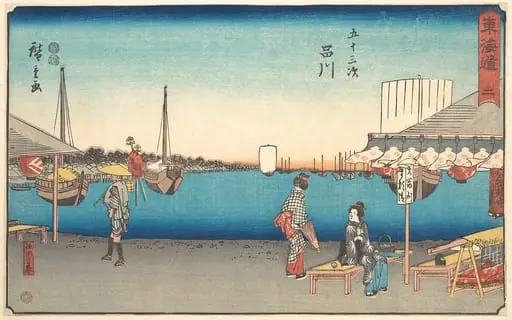 東海道五十三次 品川 鮫州の茶や|Shinagawa
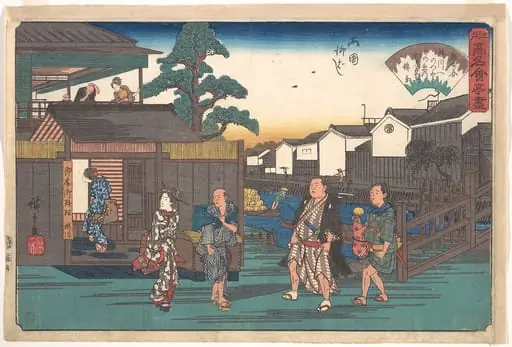 Ryogoku Yanagibashi (Umegawa)|江戸高名会亭尽 柳ばし|The Umegawa at Ryogoku Yanagibashi