Artwork
Katada no Rakugan|近江八景之内 堅田落雁|Returning Geese at Katada
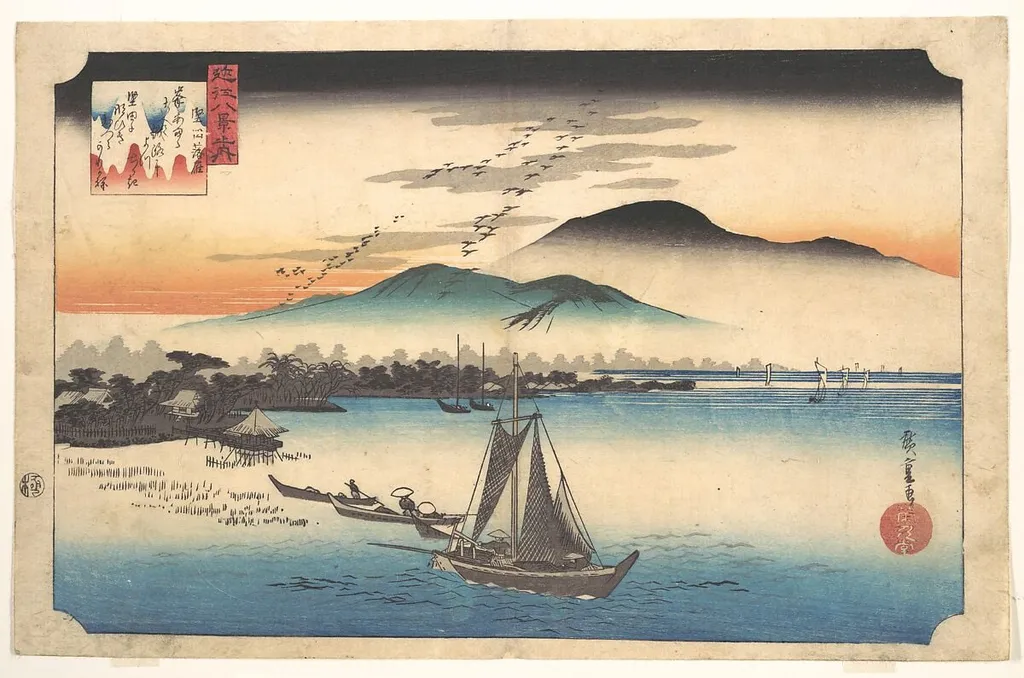
Katada no Rakugan|近江八景之内 堅田落雁|Returning Geese at Katada is an ink print by the Romanticist artist Utagawa Hiroshige. It dates from 1828 and is held in the collection of the Metropolitan Museum of Art.
About this work
Overview
Created in 1828 by Utagawa Hiroshige, *Katada no Rakugan* is one of eight prints in the *Ōmi Hakkei* series, depicting scenic views around Lake Biwa in Ōmi Province. Executed in woodblock print technique with ink and color on paper, it exemplifies Hiroshige’s shift toward contemplative landscapes, moving beyond the popular urban themes of his contemporaries.
Subject & Meaning
The scene captures geese in flight over a quiet river at dusk, their V-shaped formation contrasting with the stillness of the water and shore.
The scene captures geese in flight over a quiet river at dusk, their V-shaped formation contrasting with the stillness of the water and shore. A small boat with two figures approaches the bank, suggesting quiet human presence amid nature’s rhythm. The title, meaning 'Returning Geese at Katada,' evokes seasonal change and the cyclical return of migratory birds, a motif tied to classical Japanese poetic traditions.
Technique & Style
Hiroshige employed subtle gradations of color—soft pinks and blues—to suggest the fading light of evening. Bold, simplified forms define the mountains, trees, and buildings, while minimal linework conveys texture without detail. The use of negative space and muted tones enhances the atmosphere, emphasizing tranquility over narrative drama, a signature of his mature style.
History & Provenance
Part of the *Ōmi Hakkei* series, commissioned during Hiroshige’s early rise as a landscape printmaker, the work was produced by a collaborative studio system common in Edo-period publishing. Original impressions were distributed widely, though few survive in pristine condition. The print’s popularity helped establish Hiroshige as a key figure in the evolution of ukiyo-e beyond courtesans and actors.
Context
The *Ōmi Hakkei* series responded to a growing cultural interest in pilgrimage routes and regional scenery during the Edo period. Inspired by Chinese poetic traditions and Japanese travel literature, Hiroshige’s landscapes invited viewers to imagine serene journeys. Unlike earlier ukiyo-e focused on entertainment districts, these works reflected a broader appreciation for nature and quiet contemplation.
Legacy
Hiroshige’s *Katada no Rakugan* influenced later generations of artists, both in Japan and abroad, particularly through its atmospheric composition and emotional restraint. Its emphasis on seasonal change and natural harmony became a touchstone for Western impressionists and modern printmakers, cementing its role in the global appreciation of Japanese woodblock printing.
Artist & collection
Artist
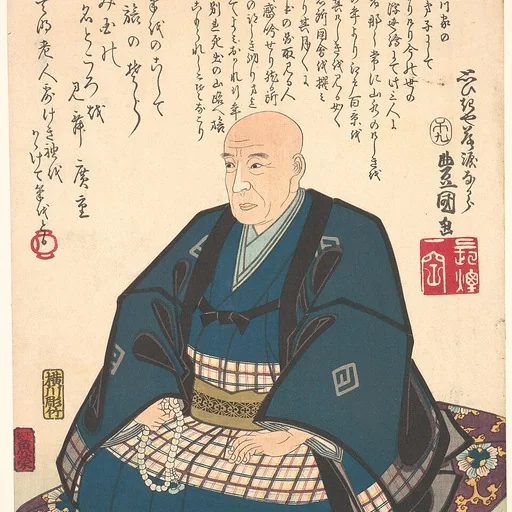
Utagawa Hiroshige (歌川 広重) or Andō Hiroshige (安藤 広重), born Andō Tokutarō (安藤 徳太郎; 1797 – 12 October 1858), was a Japanese ukiyo-e artist, considered the last great master of that tradition.

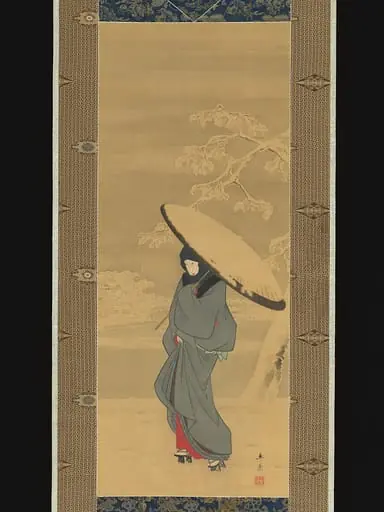
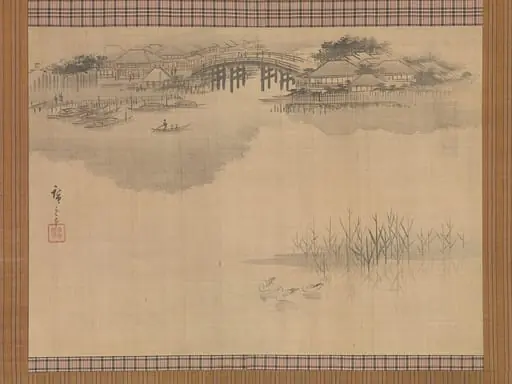
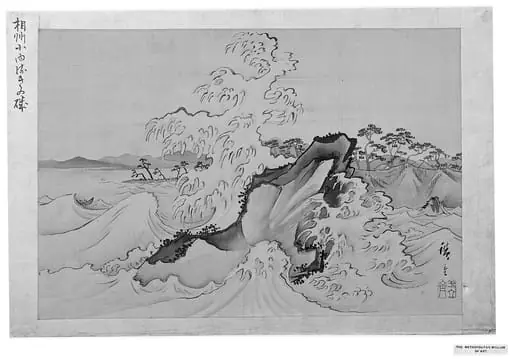
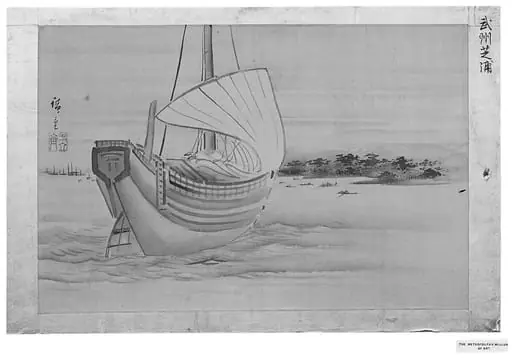

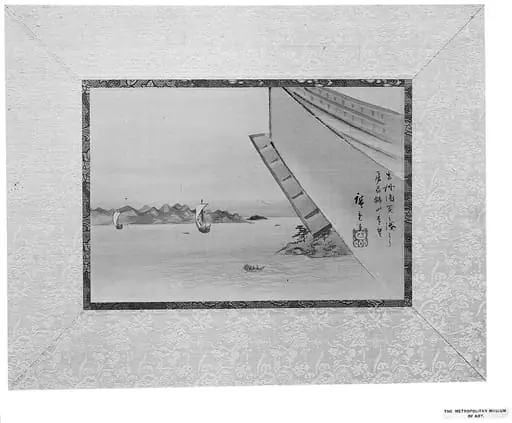
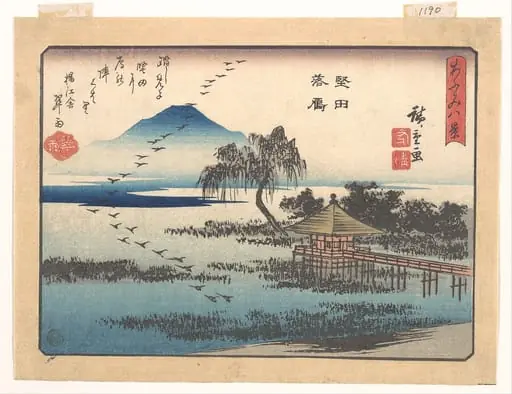 歌川広重画 「あふみ八景 堅田落雁」|Descending Geese at Katada, from the series Eight Views of Ōmi (Ōmi hakkei)
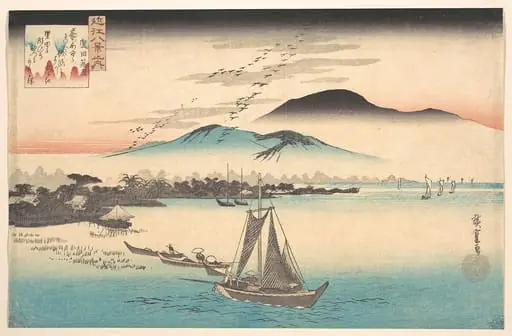 近江八景之内 堅田落雁|Geese Flying Down to Katada
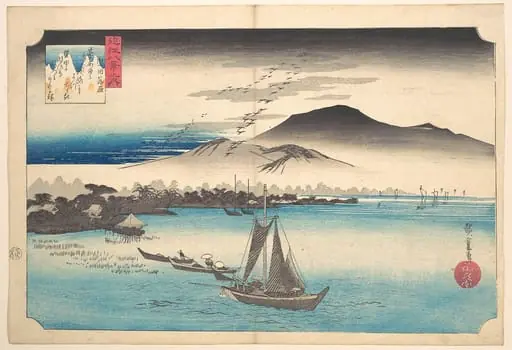 近江八景之内 堅田落雁|Returning Geese at Katada
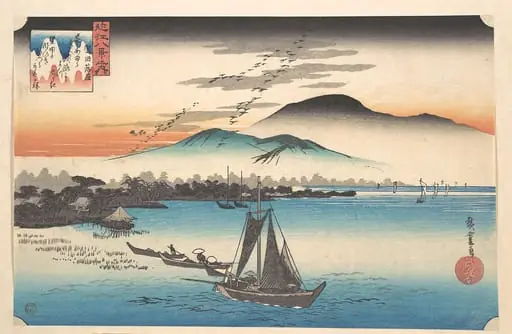 近江八景之内 堅田落雁|Geese Alighting at Katada, Lake Biwa
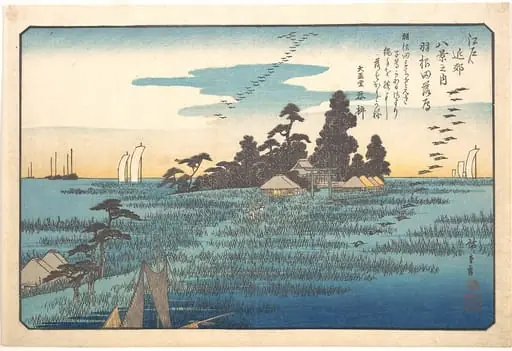 Haneda Rakugan|江戸近郊八景之内 羽根田落雁|Wild Geese at Haneda
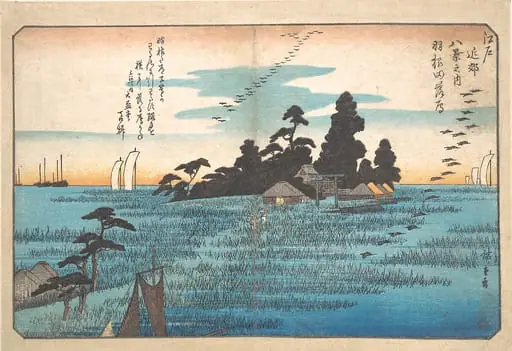 江戸近郊八景之内 羽根田落雁|Haneda Rakugan
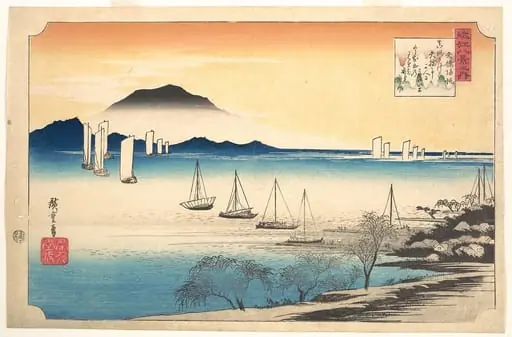 Yabase no Kihan|近江八景之内 矢橋帰帆|Fishing Boats Returning to Yabase
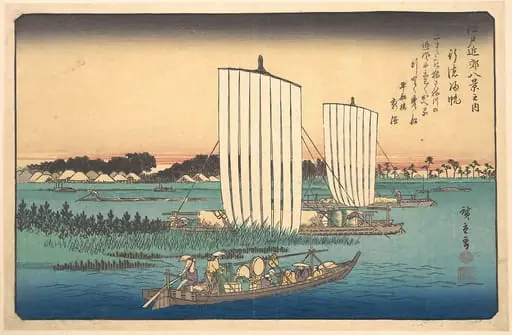 江戸近郊八景之内 行徳帰帆|Boats Returning to Gyotoku
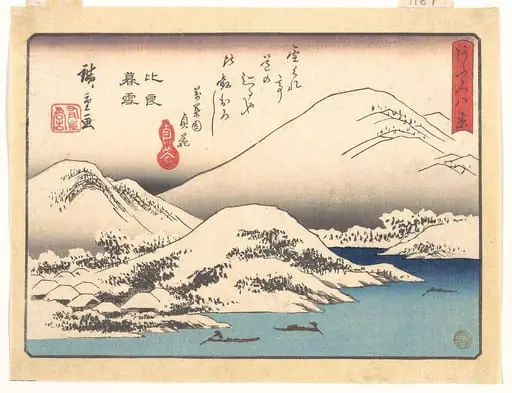 歌川広重画 「あふみ八景 比良暮雪」|Evening Snow at Mount Hira, from the series Eight Views of Ōmi (Ōmi hakkei)