Artwork
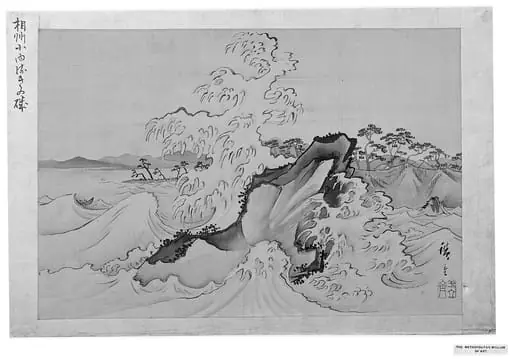
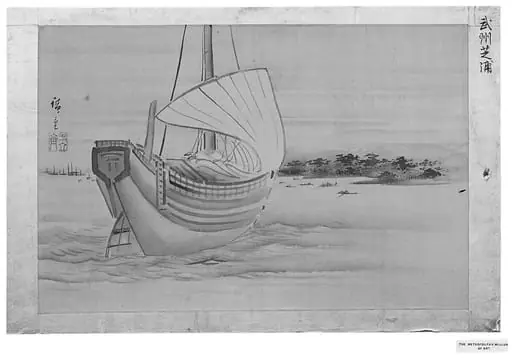
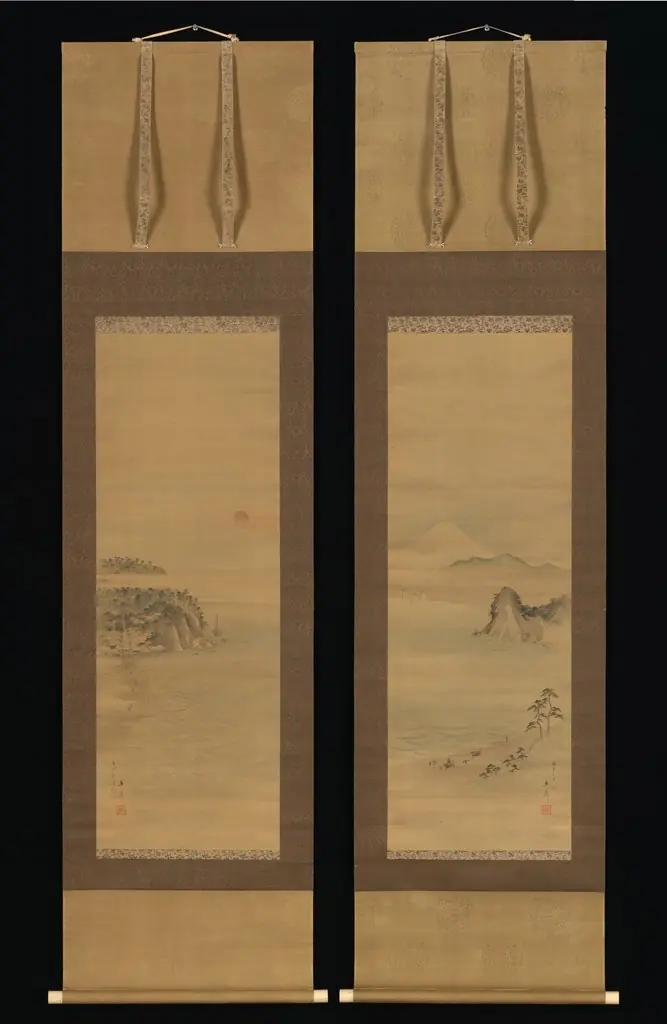
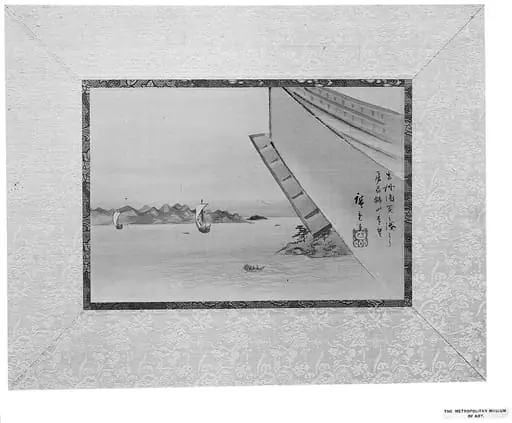
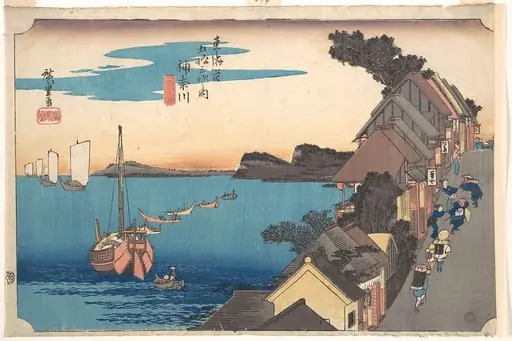
東海道五十三次之内 神奈川 台之景|View of Kangawa at Sunset
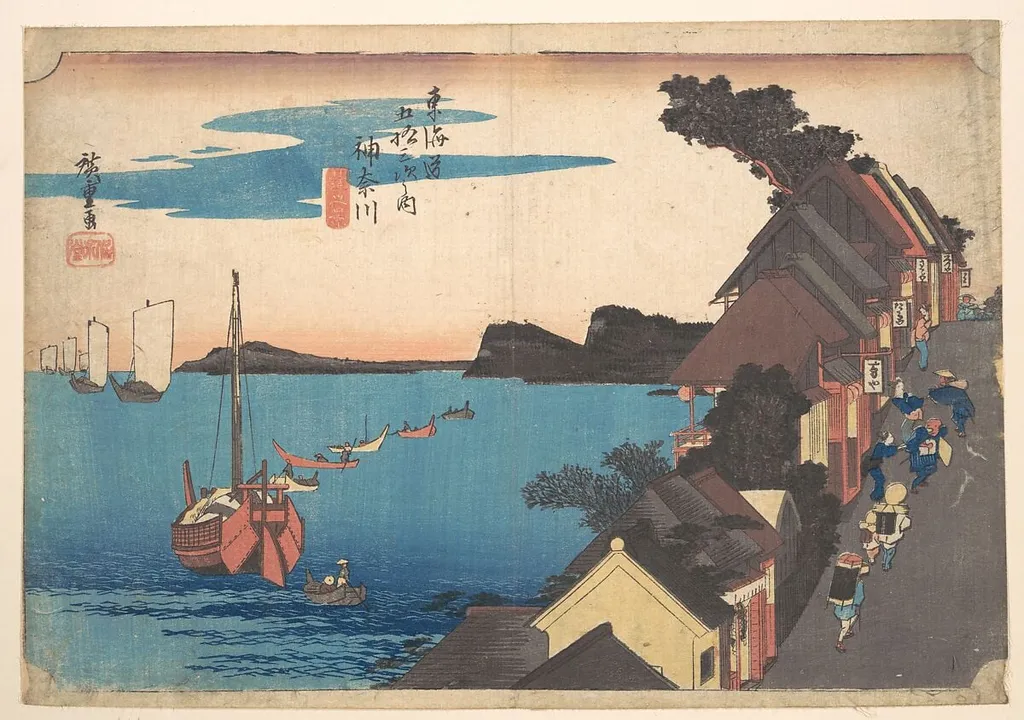
東海道五十三次之内 神奈川 台之景|View of Kangawa at Sunset is an ink print by the Romanticist artist Utagawa Hiroshige. It dates from 1834 and is held in the collection of the Metropolitan Museum of Art.
About this work
Overview
Created around 1834 by Utagawa Hiroshige, this woodblock print is one of fifty-three scenes in the series *The Fifty-three Stations of the Tōkaidō*.
Created around 1834 by Utagawa Hiroshige, this woodblock print is one of fifty-three scenes in the series *The Fifty-three Stations of the Tōkaidō*. It portrays the coastal station of Kanagawa at twilight, shifting focus from urban entertainment to the quiet rhythms of travel and nature along Japan’s main highway. The composition blends human activity with the landscape, reflecting the series’ broader aim to document the journey between Edo and Kyoto.
Subject & Meaning
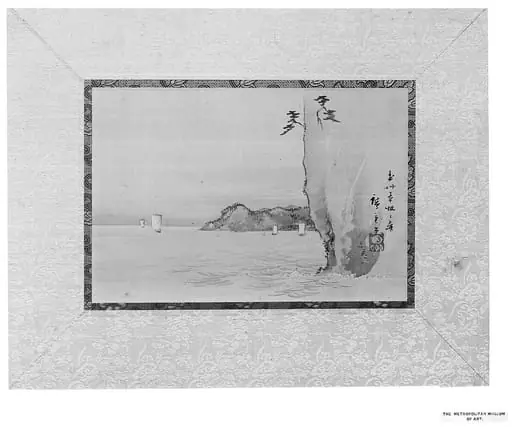
The scene captures the harbor at dusk, where a large red sailing vessel anchors among smaller fishing boats. Along the shore, travelers and locals move beneath sloped-roof buildings and hanging lanterns, suggesting the end of a day’s journey. The quiet bustle implies the Tōkaidō’s role as a vital artery of commerce and pilgrimage, while the fading light evokes transience—a recurring theme in Edo-period aesthetics.
Technique & Style
Hiroshige employed flat areas of color and crisp outlines typical of ukiyo-e, enhancing clarity and decorative rhythm. The sky is rendered in soft gradients of blue, with minimal cloud detail to suggest twilight’s hush. Figures and boats, though small, are carefully articulated, conveying motion and variety without clutter. The use of perspective is subtle, favoring pattern and balance over realistic depth.
History & Provenance
Produced during the peak of Hiroshige’s career, this print was part of a commercially successful series commissioned by the publisher Hoeidō. It was widely distributed as a travel souvenir, circulating among merchants and townspeople. Surviving impressions from the original woodblocks remain in major collections, testifying to the print’s enduring popularity and the technical precision of Edo-period block printing.
Context
The Tōkaidō road connected Edo with Kyoto, serving as both a political route and a cultural corridor. Hiroshige’s series responded to growing public interest in travel and regional identity. Unlike earlier ukiyo-e focused on courtesans or actors, this work elevated everyday landscapes, aligning with a broader shift toward nature-centered themes in early 19th-century Japanese art.
Legacy
Hiroshige’s *Tōkaidō* series influenced later Western artists, including Impressionists and Post-Impressionists, who admired its compositional clarity and atmospheric effects. In Japan, it helped redefine printmaking as a medium for poetic observation of place. The series remains a touchstone for understanding how ordinary journeys were imbued with cultural and emotional resonance during the Edo period.
Artist & collection
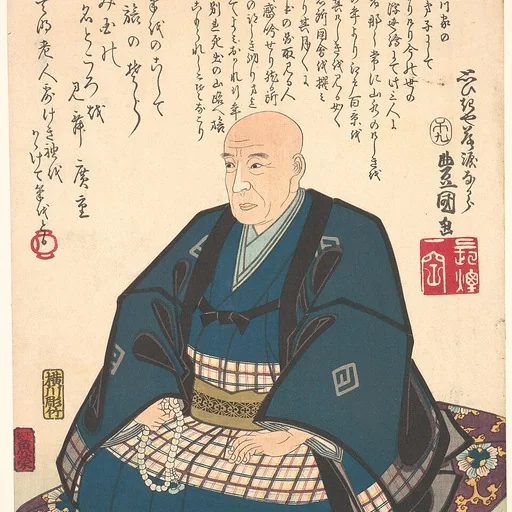
Artist
Utagawa Hiroshige (歌川 広重) or Andō Hiroshige (安藤 広重), born Andō Tokutarō (安藤 徳太郎; 1797 – 12 October 1858), was a Japanese ukiyo-e artist, considered the last great master of that tradition.