Artwork
東海道五十三次之内 鞠子 名物茶店|Mariko; Meibutsu Chaya
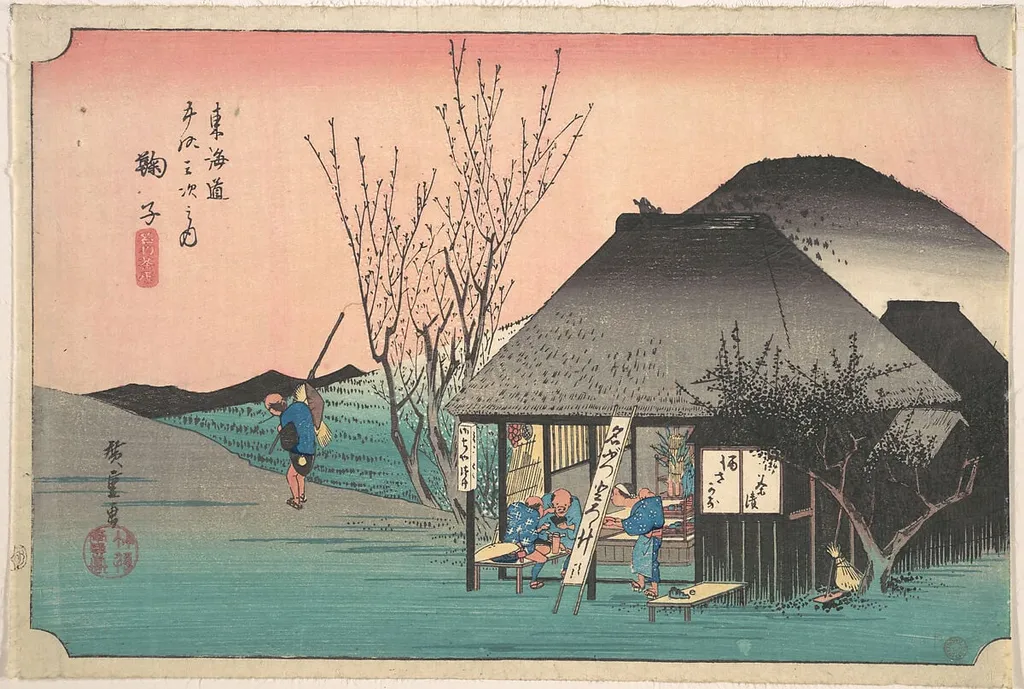
東海道五十三次之内 鞠子 名物茶店|Mariko; Meibutsu Chaya is an ink print by the Romanticist artist Utagawa Hiroshige. It dates from 1834 and is held in the collection of the Metropolitan Museum of Art.
About this work
Overview
Created around 1834 by Utagawa Hiroshige, this woodblock print is one of fifty-three scenes in the series *The Fifty-three Stations of the Tōkaidō*.
Created around 1834 by Utagawa Hiroshige, this woodblock print is one of fifty-three scenes in the series *The Fifty-three Stations of the Tōkaidō*. It depicts Mariko, a post station along the major highway connecting Edo and Kyoto. The print combines ink and color on paper, reflecting the ukiyo-e tradition while shifting focus from urban life to tranquil landscapes. It is currently in the collection of The Metropolitan Museum of Art.
Subject & Meaning
The scene centers on a modest tea house nestled among rolling hills and dense trees, a resting point for travelers on the Tōkaidō. A few figures linger outside, suggesting quiet moments of pause amid a long journey. The composition emphasizes stillness and natural harmony, reflecting the cultural value placed on rest and observation during travel. The tea house, as a meibutsu or notable landmark, symbolizes both practicality and regional identity.
Technique & Style
Hiroshige employed fine woodblock carving and layered color printing to achieve subtle gradations in sky and terrain. Soft pinks in the upper register suggest dusk, while earthy greens and browns define the landscape with restrained tonality. The use of perspective, with receding hills and diagonal tree lines, creates depth without Western linear techniques. Details like roof tiles and foliage are rendered with delicate lines, characteristic of Hiroshige’s lyrical approach to nature.
History & Provenance
The print was produced during the early 1830s as part of Hiroshige’s first major landscape series, commissioned for mass distribution. It gained popularity among merchants and travelers who collected the prints as souvenirs. The Metropolitan Museum of Art acquired it as part of its broader collection of Japanese prints, preserving it as a representative example of Edo-period commercial art and regional topography.
Context
During the Edo period, the Tōkaidō was a vital route for pilgrimage, trade, and official travel. Station towns like Mariko developed services such as tea houses to accommodate travelers. Hiroshige’s series documented these stops with geographic accuracy and poetic mood, contrasting with the more theatrical themes of earlier ukiyo-e. His work captured the quiet rhythms of everyday movement across Japan.
Legacy
Hiroshige’s *Tōkaidō* series influenced later artists in Japan and abroad, including Impressionists who admired its compositional balance and atmospheric effects. The print helped redefine ukiyo-e as a medium for landscape and emotional resonance rather than solely for entertainment. Today, it remains a key reference for understanding how Japanese artists interpreted place, time, and travel in the 19th century.
Artist & collection
Artist
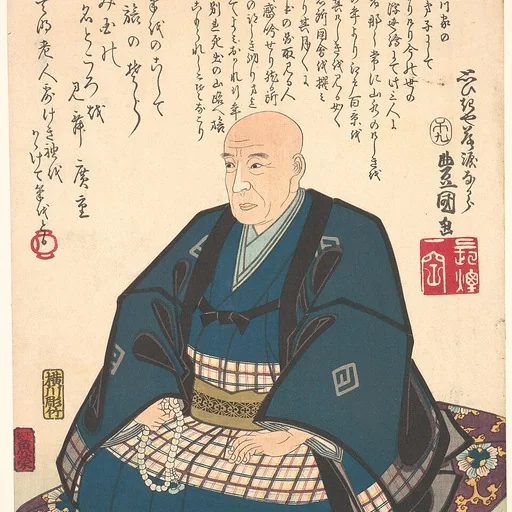
Utagawa Hiroshige (歌川 広重) or Andō Hiroshige (安藤 広重), born Andō Tokutarō (安藤 徳太郎; 1797 – 12 October 1858), was a Japanese ukiyo-e artist, considered the last great master of that tradition.

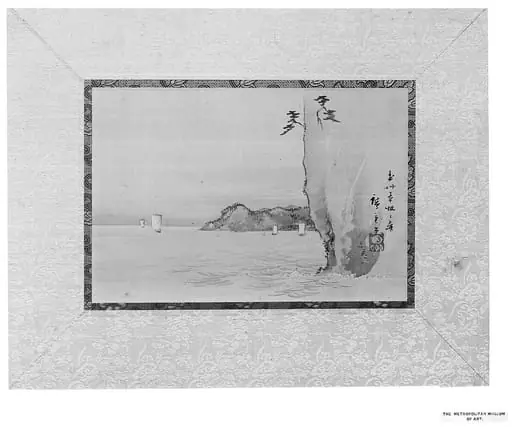
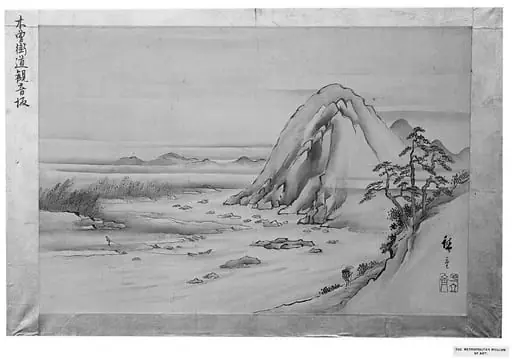
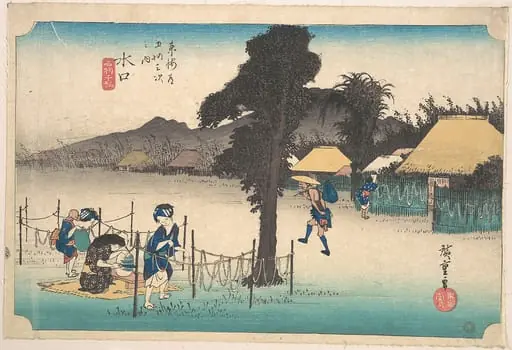 東海道五十三次之内 水口 名物干瓢|Mizukuchi, Meibutsu Kampyo
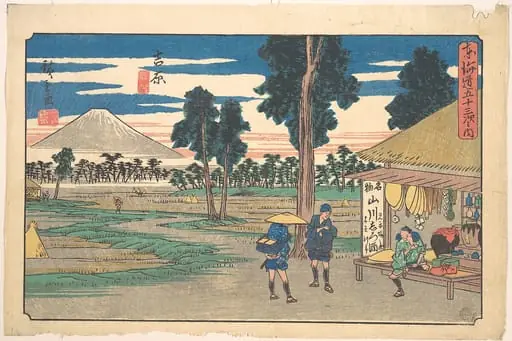 東海道五十三次之内 吉原|Yoshiwara
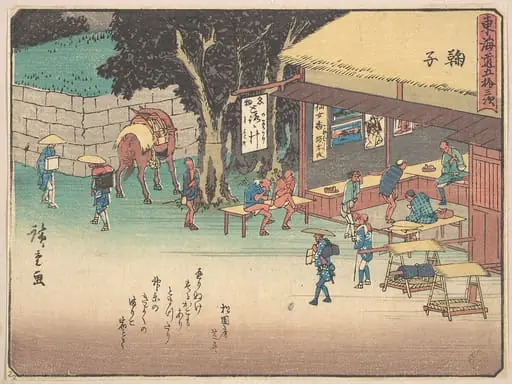 東海道五十三次 鞠子|Mariko
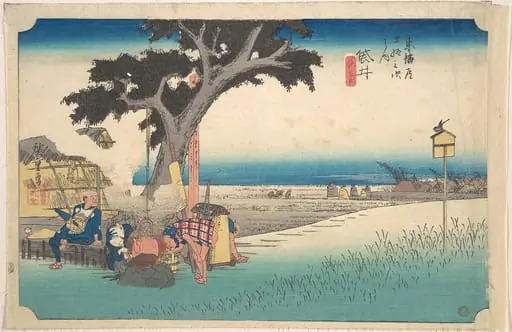 東海道五十三次之内 袋井 出茶屋の図|Fukuroi; De Chaya
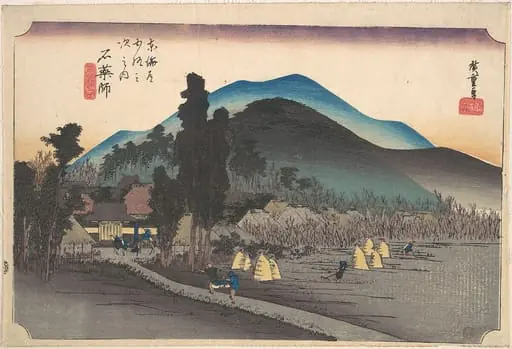 東海道五十三次之内 石薬師 石薬師寺|Ishiyakushi, Ishiyakushi Ji
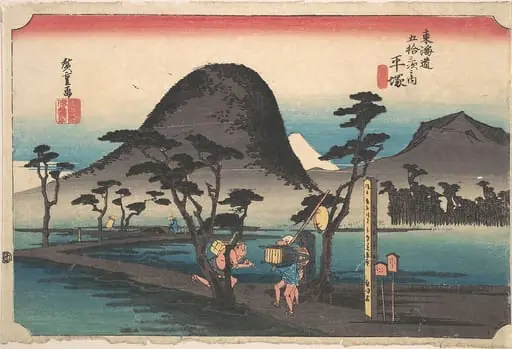 東海道五十三次之内 平塚 縄手道|Hiratsuka; Nawate Do
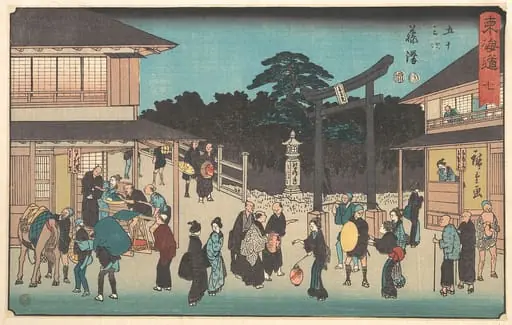 東海道五十三次 藤澤|Fujisawa
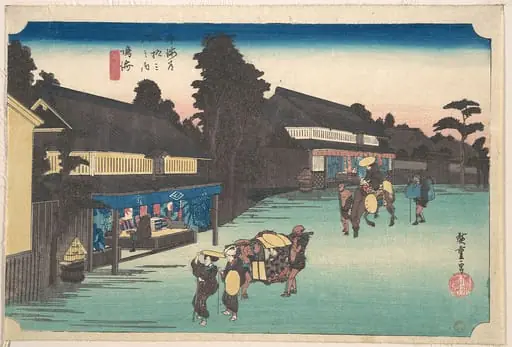 東海道五十三次之内 鳴海 名物有松絞|Narumi, Meibutsu Arimatsu Shibori
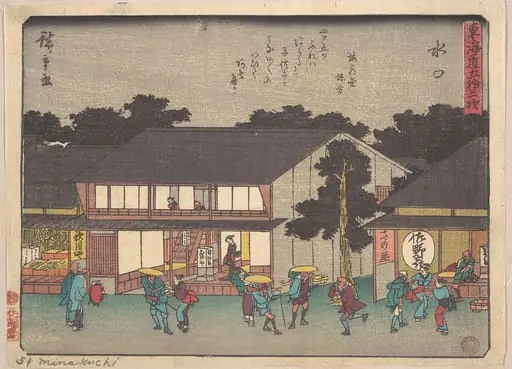 東海道五十三次 水口|Mizukuchi
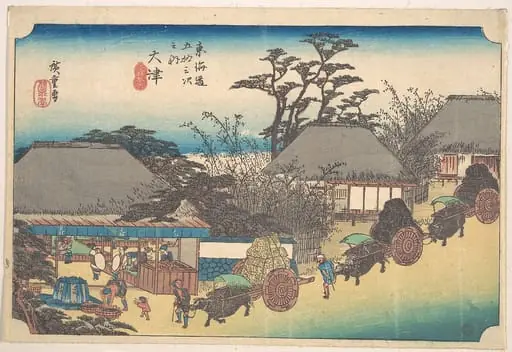 東海道五十三次之内 大津 走井茶屋|Otsu, Soii Chaya