Artwork
東海道五十三次 三島|Mishima, from the series Fifty-three Stations of the Tōkaidō Road (Tōkaidō gojūsan tsugi, Mishima), also known as the Kyōka (Witty Verse) Tōkaidō
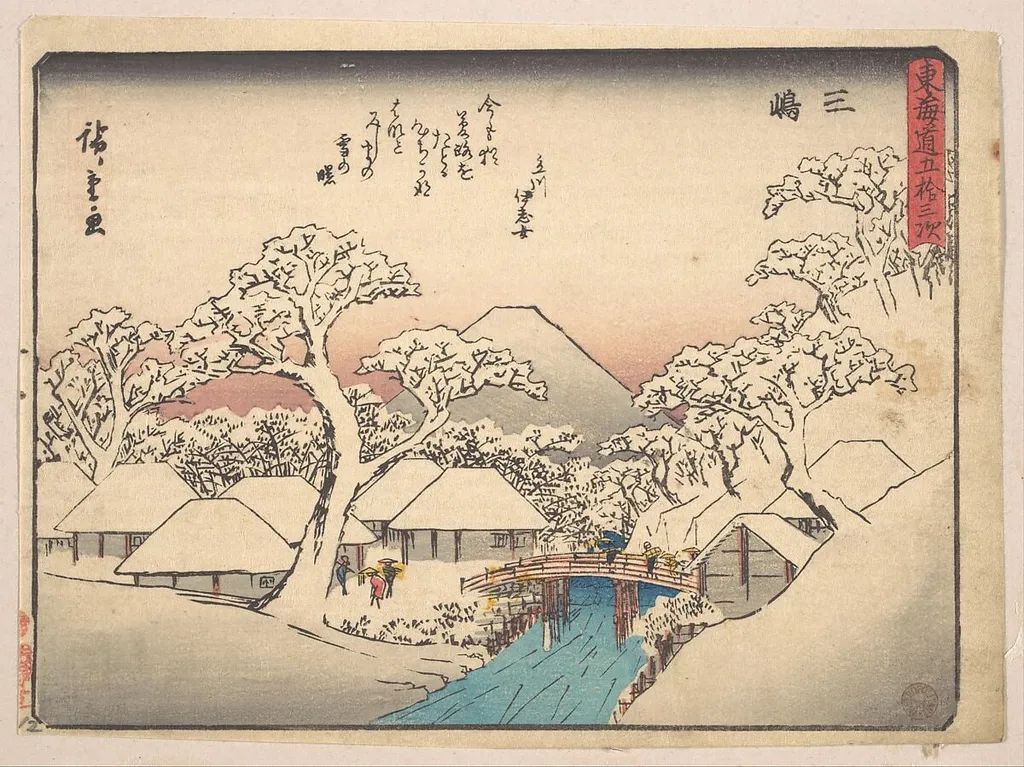
東海道五十三次 三島|Mishima, from the series Fifty-three Stations of the Tōkaidō Road (Tōkaidō gojūsan tsugi, Mishima), also known as the Kyōka (Witty Verse) Tōkaidō is an ink print by the Romanticist artist Utagawa Hiroshige. It dates from 1838 and is held in the collection of the Metropolitan Museum of Art.
About this work
Overview
Created circa 1838 by Utagawa Hiroshige, this woodblock print is one panel of his Fifty‑three Stations of the Tōkaidō series.
Created circa 1838 by Utagawa Hiroshige, this woodblock print is one panel of his Fifty‑three Stations of the Tōkaidō series. It portrays the post town of Mishima, a stop along the historic coastal road that linked Edo (Tokyo) with Kyoto. Executed in ink and color on paper, the image measures in the series’ characteristic horizontal format and is now part of the Metropolitan Museum of Art’s collection.
Subject & Meaning
The scene captures a tranquil riverside setting: a modest wooden bridge spans a narrow stream, flanked by low‑roofed structures and sparse trees. In the background, a distant mountain rises behind a line of figures walking the road. The composition conveys everyday travel and the gentle rhythm of the landscape, underscored by a brief red poem that adds a lyrical, yet unobtrusive, narrative layer.
Technique & Style
Hiroshige employed traditional ukiyo‑e woodblock methods, carving separate blocks for ink outlines and each color wash. Soft pinks in the sky and muted greens and blues on the ground are applied in layered pigments, while fine cross‑hatching creates subtle shadows. The artist’s use of diminishing scale for trees and buildings generates depth, and the restrained line work emphasizes atmosphere over detail.
History & Provenance
The Mishima print was produced as part of Hiroshige’s ambitious series that reoriented ukiyo‑e toward landscape and travel subjects. After its initial circulation in the late Edo period, the print entered various private collections before being acquired by the Metropolitan Museum of Art, where it is displayed as an example of early nineteenth‑century Japanese printmaking.
Artist & collection
Artist
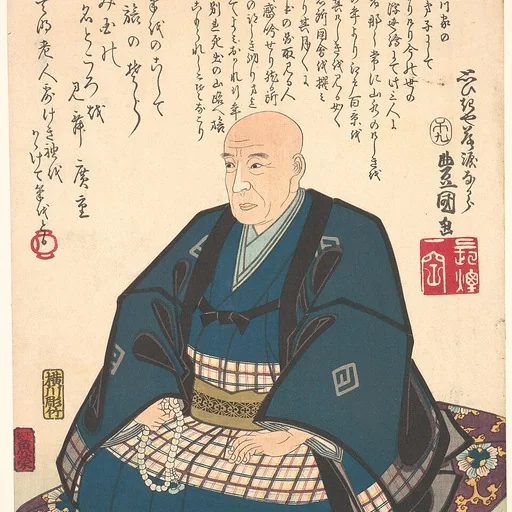
Utagawa Hiroshige (歌川 広重) or Andō Hiroshige (安藤 広重), born Andō Tokutarō (安藤 徳太郎; 1797 – 12 October 1858), was a Japanese ukiyo-e artist, considered the last great master of that tradition.

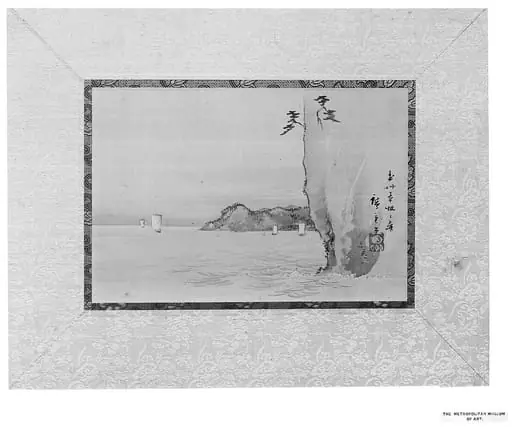
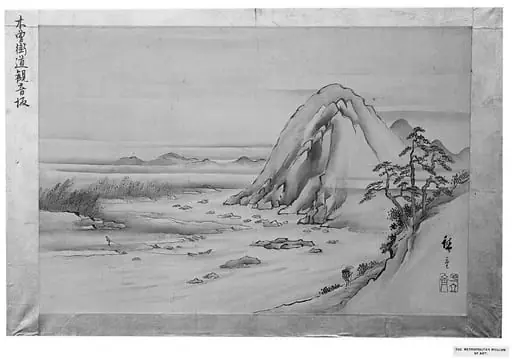
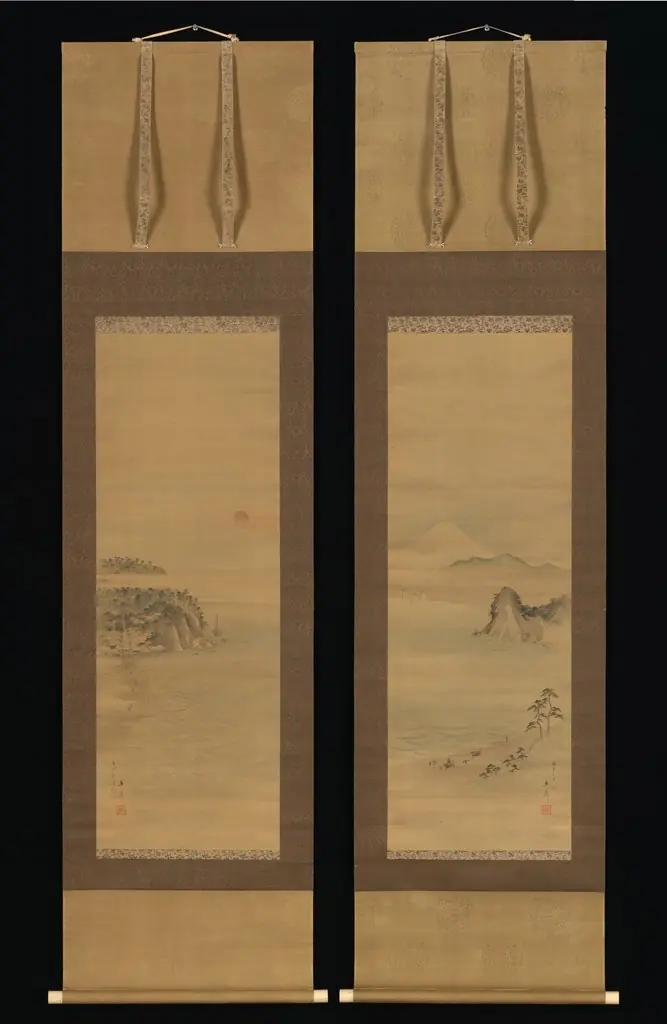
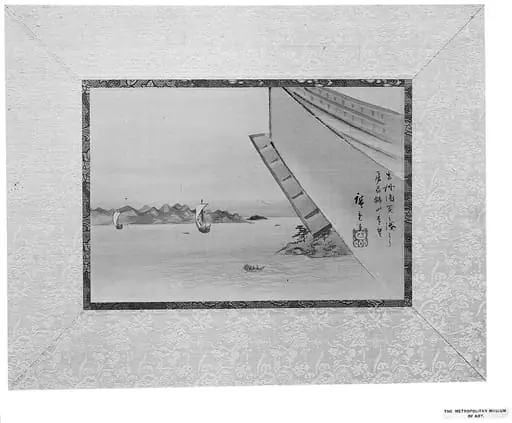
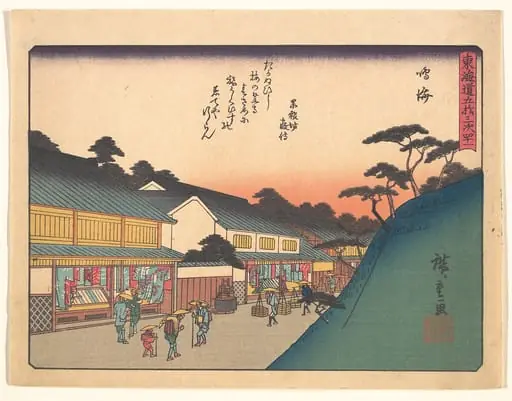 東海道五十三次 鳴海|Narumi, from the series The Fifty-three Stations of the Tōkaidō Road
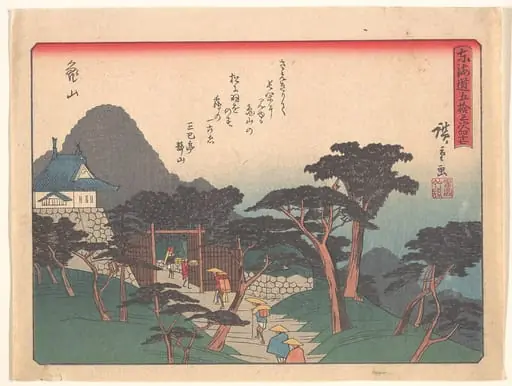 東海道五十三次 亀山|Kameyama, from the series The Fifty-three Stations of the Tōkaidō Road
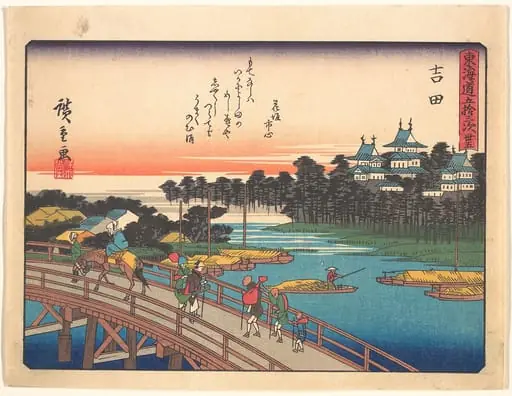 東海道五十三次 吉田|Yoshida, from the series The Fifty-three Stations of the Tōkaidō Road
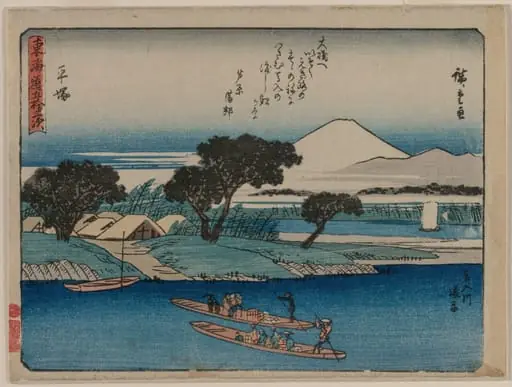 The Fifty-Three Stations of the Tokaido: Hiratsuka
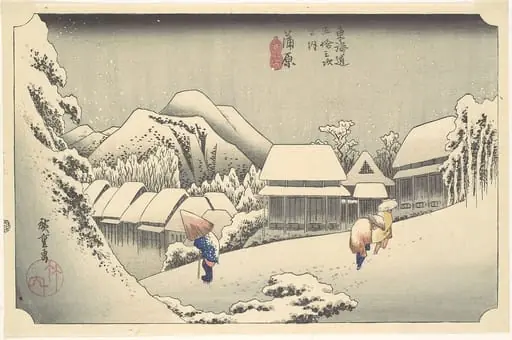 東海道五十三次之内 蒲原 夜の雪|Evening Snow at Kanbara, from the series "Fifty-three Stations of the Tōkaidō"
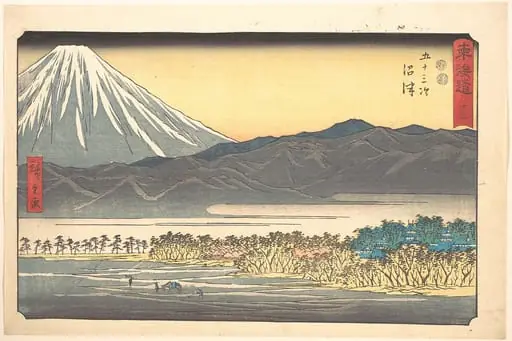 歌川広重画 東海道 十三 五十三次
沼津|Numazu, Number 13, from the series Fifty-Three Stations of the Tōkaidō (Tōkaidō gojūsan tsugi)
歌川広重画 東海道 十三 五十三次
沼津|Numazu, Number 13, from the series Fifty-Three Stations of the Tōkaidō (Tōkaidō gojūsan tsugi)