Artwork
東海道五十三次 亀山|Kameyama, from the series The Fifty-three Stations of the Tōkaidō Road
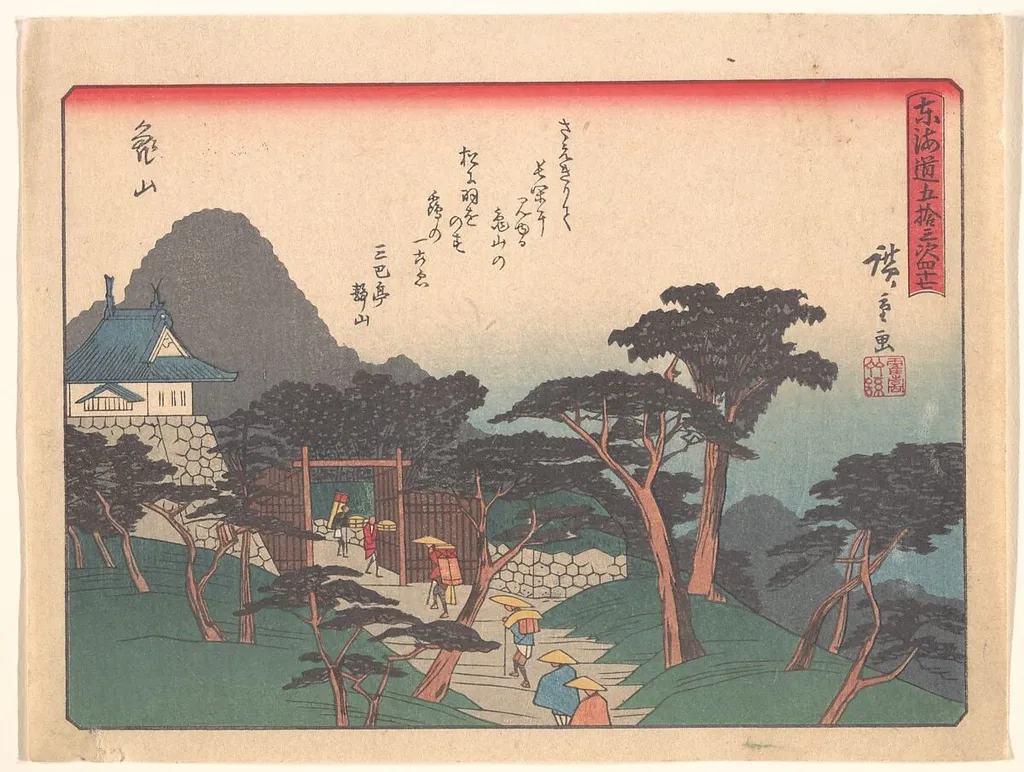
東海道五十三次 亀山|Kameyama, from the series The Fifty-three Stations of the Tōkaidō Road is an ink print by Utagawa Hiroshige. It is held in the collection of the Metropolitan Museum of Art.
About this work
Overview
This woodblock print, Kameyama, is part of a series by Utagawa Hiroshige depicting the Fifty-three Stations of the Tōkaidō Road, a historic route in Japan.
Subject & Meaning
The print shows a serene landscape with a mountain, trees, a stone wall, and a gate, capturing a tranquil scene along the Tōkaidō road. Figures walk along a path towards the gate, suggesting travel and passage.
Technique & Style
Executed in ink and color on paper, the print features a palette of greens, blues, and browns, characteristic of Hiroshige's landscape-focused ukiyo-e style. Japanese characters in the top-right corner provide context and identification.
History & Provenance
Created by Hiroshige, a prominent ukiyo-e artist, the series deviates from the genre's typical urban themes, instead emphasizing scenic views along a major travel route.
Artist & collection
Artist
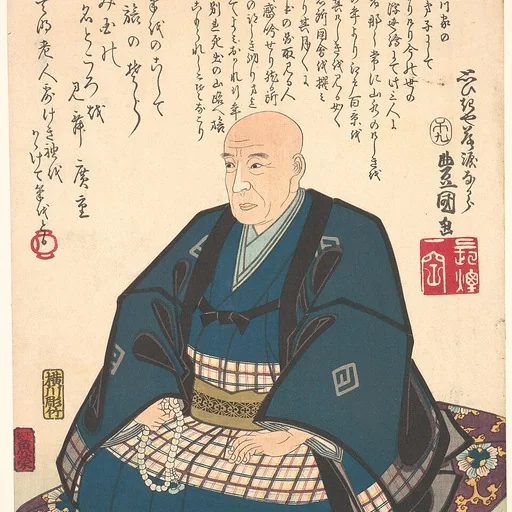
Utagawa Hiroshige (歌川 広重) or Andō Hiroshige (安藤 広重), born Andō Tokutarō (安藤 徳太郎; 1797 – 12 October 1858), was a Japanese ukiyo-e artist, considered the last great master of that tradition.

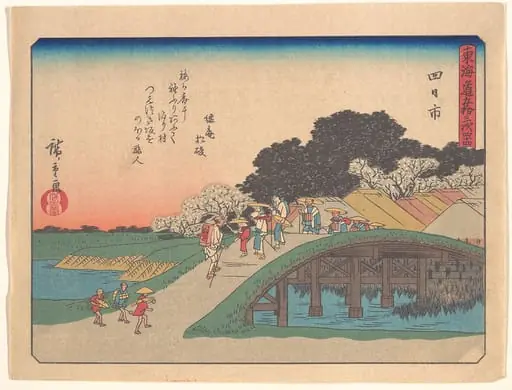 東海道五十三次 四日市|Yokkaichi, from the series The Fifty-three Stations of the Tōkaidō Road
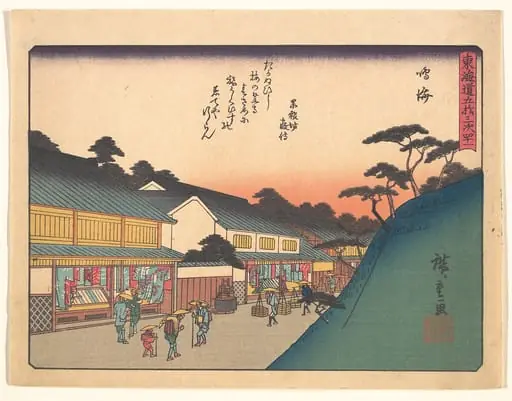 東海道五十三次 鳴海|Narumi, from the series The Fifty-three Stations of the Tōkaidō Road
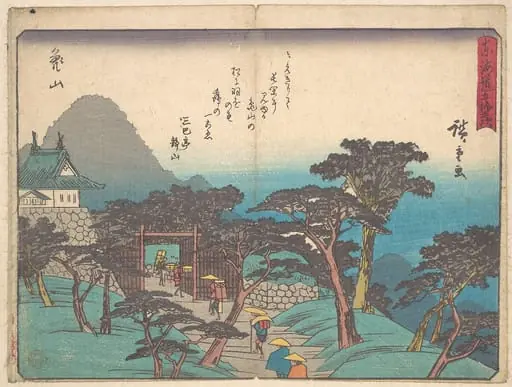 東海道五十三次 亀山|Kameyama
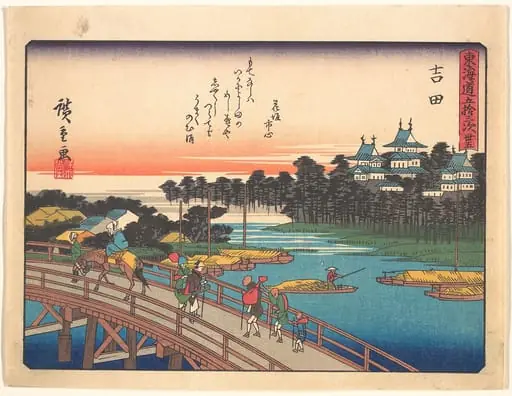 東海道五十三次 吉田|Yoshida, from the series The Fifty-three Stations of the Tōkaidō Road
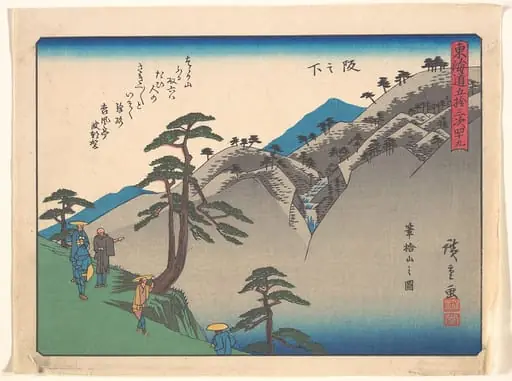 東海道五十三次 阪之下|Sakanoshita, from the series The Fifty-three Stations of the Tōkaidō Road
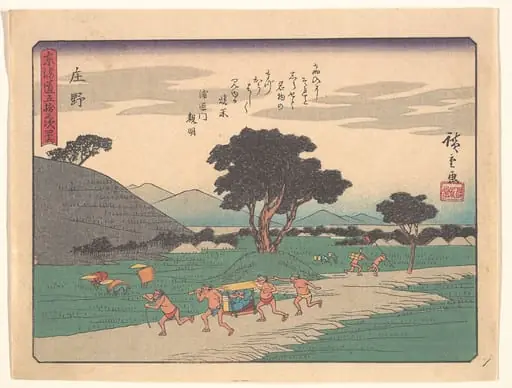 東海道五十三次 庄野|Shōno, from the series The Fifty-three Stations of the Tōkaidō Road
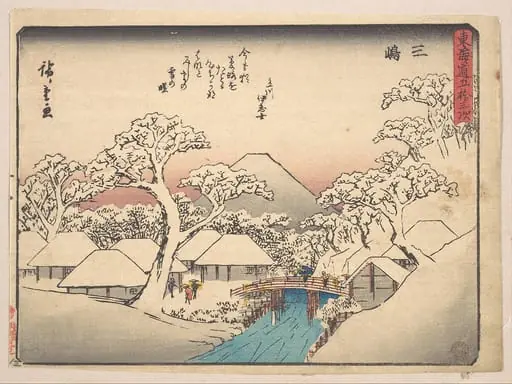 東海道五十三次 三島|Mishima, from the series Fifty-three Stations of the Tōkaidō Road (Tōkaidō gojūsan tsugi, Mishima), also known as the Kyōka (Witty Verse) Tōkaidō
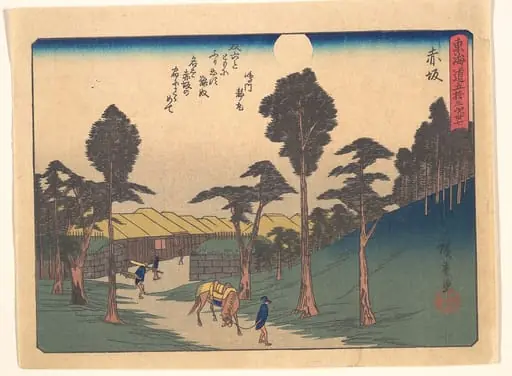 東海道五十三次 赤坂|Akasaka, from the series The Fifty-three Stations of the Tōkaidō Road
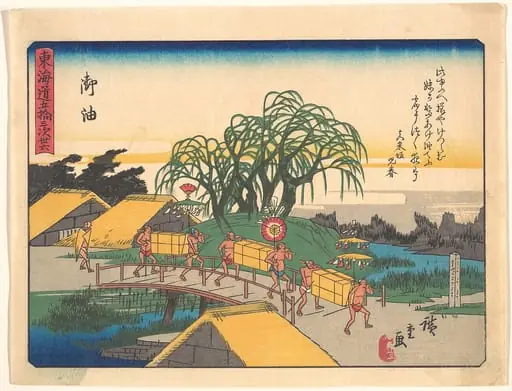 東海道五十三次 御油|Goyu, from the series The Fifty-three Stations of the Tōkaidō Road
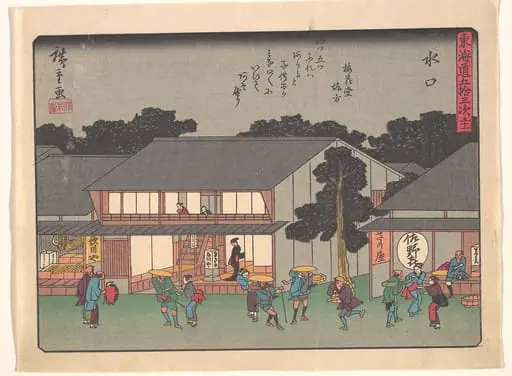 東海道五十三次 水口|Mizukuchi, from the series The Fifty-three Stations of the Tōkaidō Road
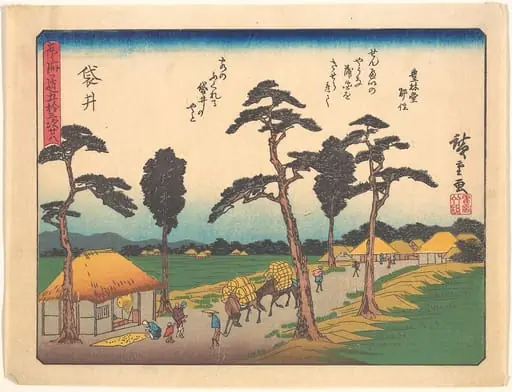 東海道五十三次 袋井|Fukuroi, from the series The Fifty-three Stations of the Tōkaidō Road