Artwork
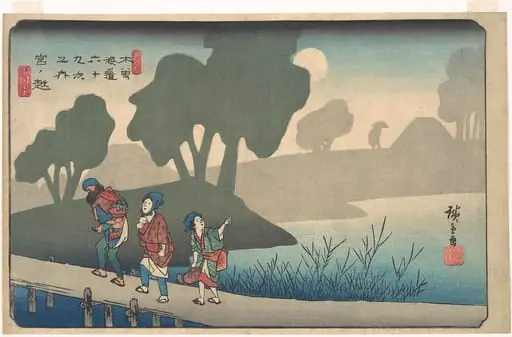
木曽海道六拾九次之内 宮ノ越|Moonlit Night at Miyanokoshi, from The Sixty-nine Stations of the Kisokaidō
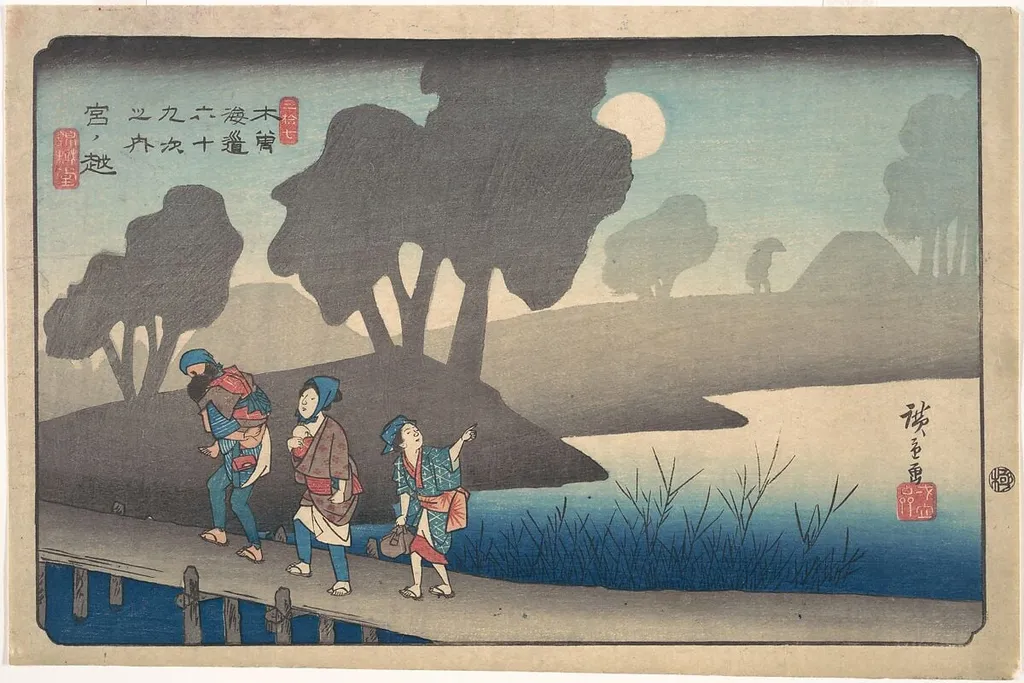
木曽海道六拾九次之内 宮ノ越|Moonlit Night at Miyanokoshi, from The Sixty-nine Stations of the Kisokaidō is an ink print by the Romanticist artist Utagawa Hiroshige. It dates from 1838 and is held in the collection of the Metropolitan Museum of Art.
About this work
Overview
Created around 1838 by Utagawa Hiroshige, this woodblock print is part of the series The Sixty-nine Stations of the Kisokaidō, which documents rest stops along a major highway connecting Edo and Kyoto. Executed in ink and color on paper, the work exemplifies Hiroshige’s shift from bustling urban subjects to serene natural landscapes, reflecting a broader trend in Edo-period printmaking toward contemplative, atmospheric scenes.
Subject & Meaning
The quiet movement suggests a journey undertaken under moonlight, evoking themes of transit, familial duty, and the stillness of night.
The scene captures four travelers crossing a bridge at night along the Kisokaidō. Two adults carry bundles, one holds an infant, and a child leads with a lantern. The quiet movement suggests a journey undertaken under moonlight, evoking themes of transit, familial duty, and the stillness of night. The absence of grand architecture or spectacle emphasizes the ordinary human experience within the landscape.
Technique & Style
Hiroshige employed flat areas of color and strong, simplified outlines to unify the composition. The moonlit sky is rendered in pale blue, contrasting with the deep indigo of the water and the dark silhouettes of trees. The travelers’ garments and the bridge’s railing share the same dark hue, creating visual cohesion. The restrained palette and lack of detail enhance the tranquil, almost meditative mood of the scene.
History & Provenance
Produced during the late Edo period, this print was part of a commercially successful series published by the firm Hoeido. Woodblock prints like this were widely distributed among the merchant class, serving both as travel guides and decorative art. While original impressions are rare today, the series remains one of the most reproduced in ukiyo-e history, preserved in major collections worldwide.
Context
The Kisokaidō was one of Japan’s five official highways, vital for travel, trade, and communication. As pilgrimage and tourism grew in the Edo period, landscape prints became popular souvenirs. Hiroshige’s focus on weather, time of day, and seasonal change distinguished his work from earlier ukiyo-e, aligning it with a growing cultural appreciation for nature’s quiet moments.
Legacy
Hiroshige’s approach to landscape influenced later Japanese and Western artists, including the Impressionists, who admired his compositional economy and atmospheric effects. Though his style was rooted in traditional printmaking, his emphasis on mood over narrative helped redefine the potential of the medium. This print remains a key example of how everyday scenes could convey profound stillness.
Artist & collection
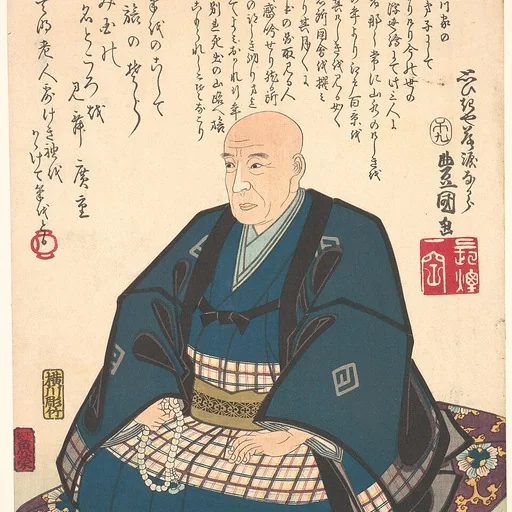
Artist
Utagawa Hiroshige (歌川 広重) or Andō Hiroshige (安藤 広重), born Andō Tokutarō (安藤 徳太郎; 1797 – 12 October 1858), was a Japanese ukiyo-e artist, considered the last great master of that tradition.

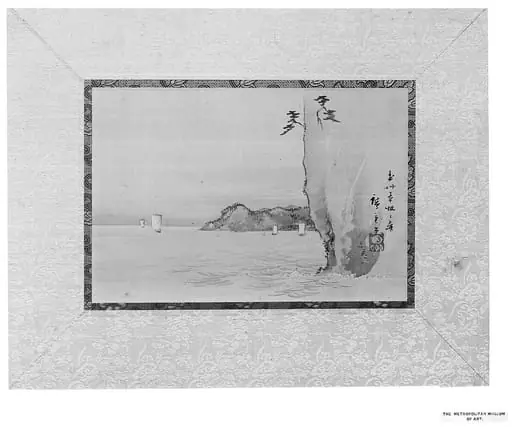
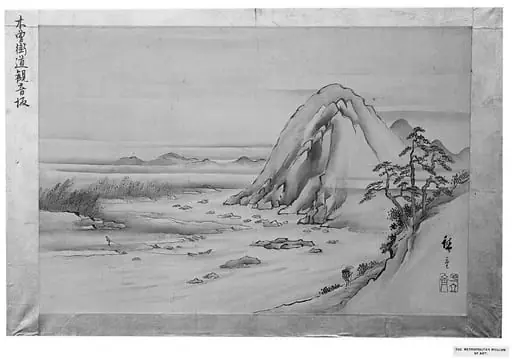
 木曽海道六拾九次之内 宮ノ越|Miyanokoshi Station
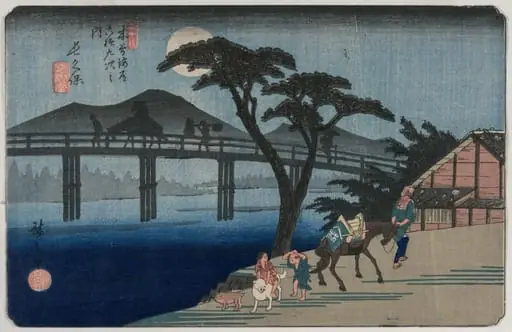 Nagakubo (Station 28) from the series Sixty-Nine Stations of the Kisokaido
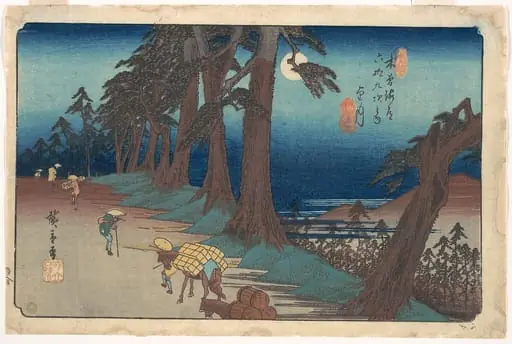 木曽海道六拾九次之内 望月|Mochizuki Station
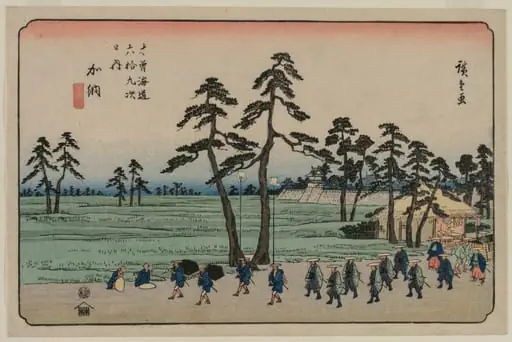 Kanō, from the series Sixty-nine Stations of the Kisokaidō
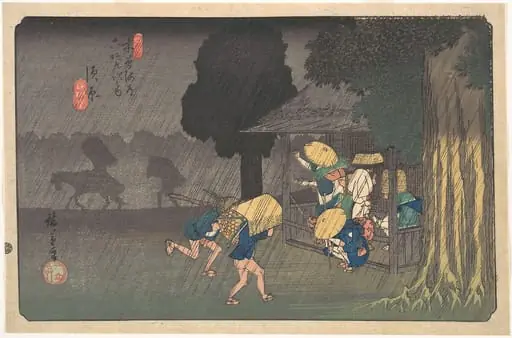 木曽海道六拾九次之内 須原|Suhara, from The Sixty-nine Stations of the Kisokaidō
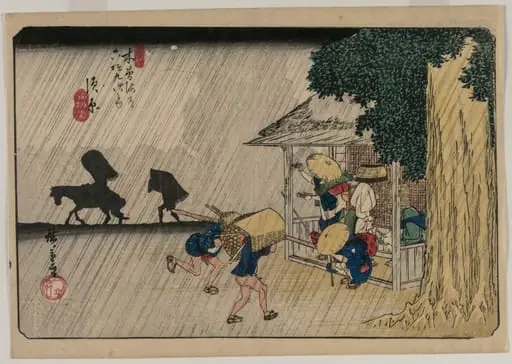 Suhara, from the series Sixty-Nine Stations of the Kisokaido
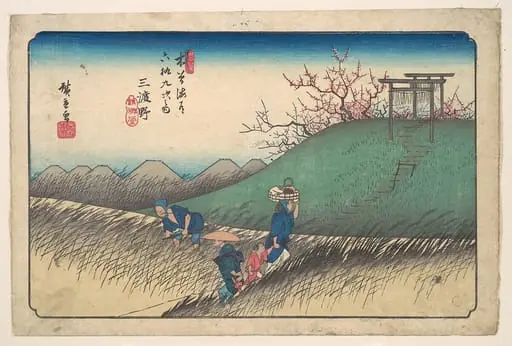 木曽海道六拾九次之内 三渡野|Santono Station
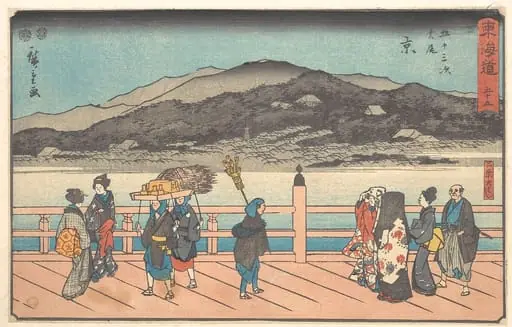 歌川広重画 「東海道 五十三次 大尾 京 三条大はし」|The Great Bridge at Sanjō (Taibi, Kyō, Sanjō Ōhashi), from the series The Tōkaidō Road: The Fifty-Three Stations (Tōkaidō: Gojūsan tsugi)
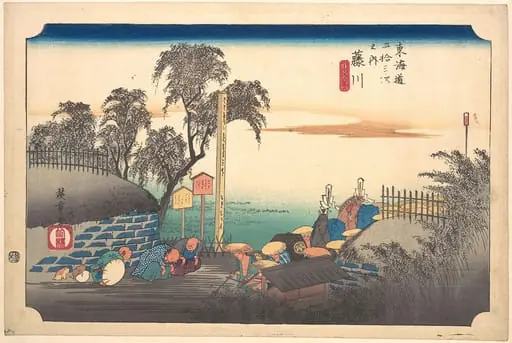 東海道五十三次之内 藤川 棒鼻の図|Station Thirty-Eight: Fujikawa, Scene at the Border, from the Fifty-Three Stations of the Tokaido
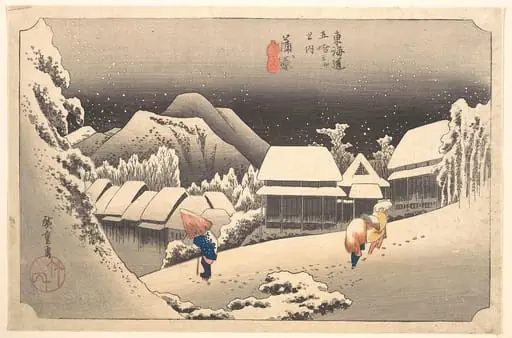 東海道五十三次之内 蒲原 夜の雪|Evening Snow
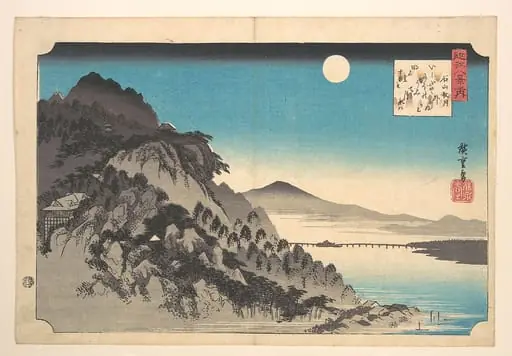 近江八景之内 石山秋月|The Autumn Full Moon at Ishiyama