Artwork
東海道五十三次 鳴海|Narumi
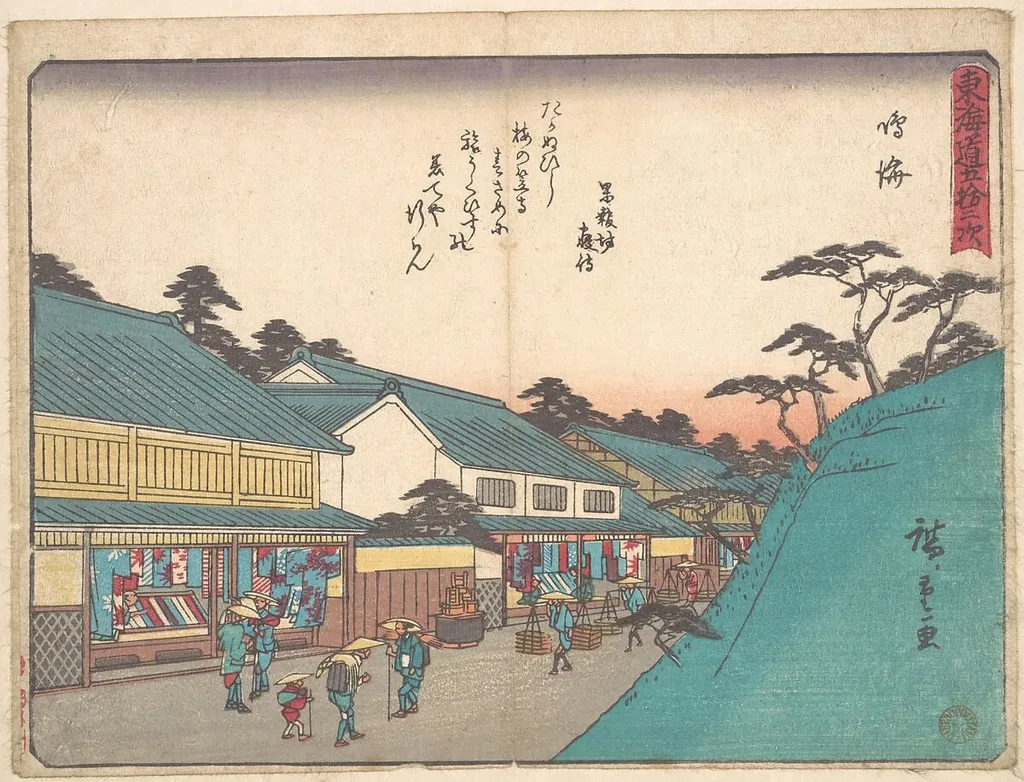
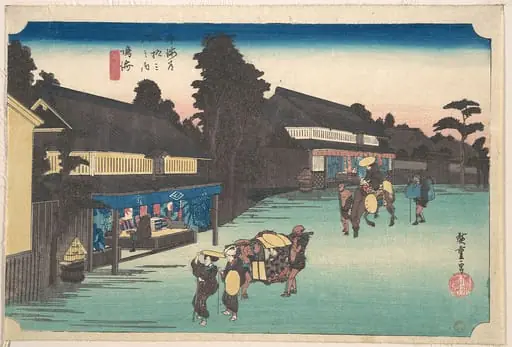
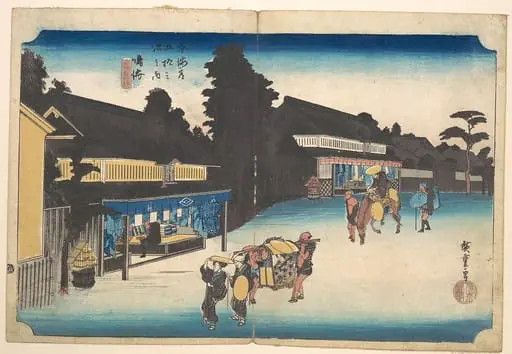
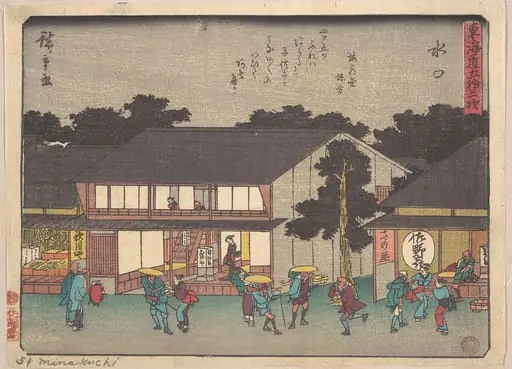
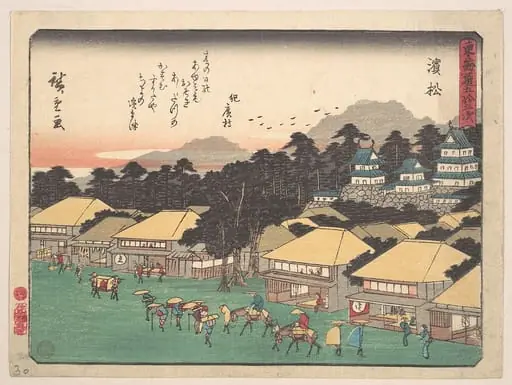
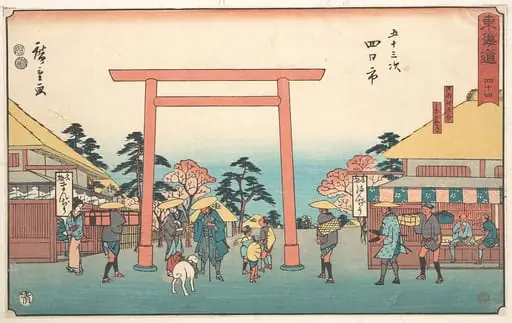
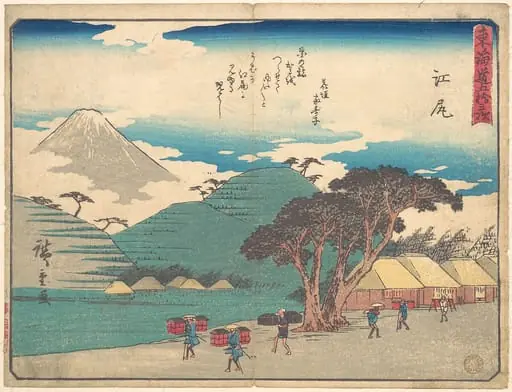
東海道五十三次 鳴海|Narumi is an ink print by the Romanticist artist Utagawa Hiroshige. It dates from 1838 and is held in the collection of the Metropolitan Museum of Art.
About this work
In the foreground, a group of people are gathered near a building, while others are walking along the street.
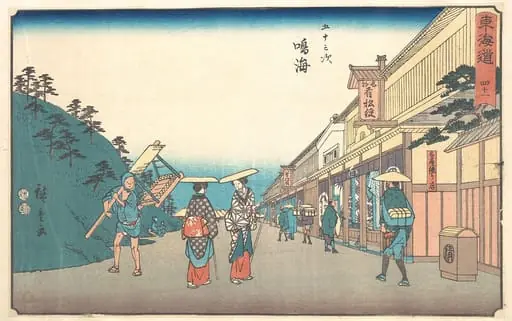
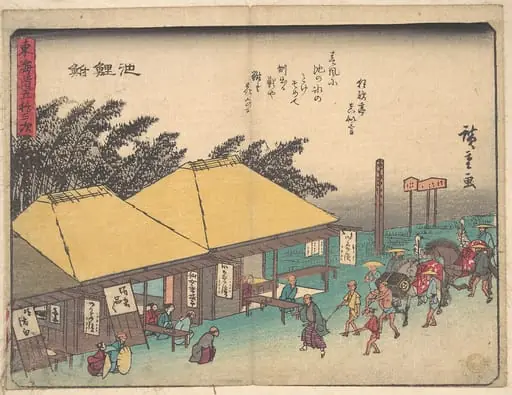
This image shows a scene of people walking along a street in front of houses. The houses are painted in shades of blue and white, with trees and hills in the background. People are carrying umbrellas and walking in different directions.
In the foreground, a group of people are gathered near a building, while others are walking along the street. The sky is a light color, and the overall atmosphere is peaceful.
The painting is a woodblock print, ink, and color on paper, created by Utagawa Hiroshige around 1838. It is held at The Metropolitan Museum of Art. If you're interested in learning more about the Romanticism movement, you can explore that next.
Overview
This woodblock print, 'Narumi,' is part of Utagawa Hiroshige's 'The Fifty-three Stations of the Tōkaidō' series, created around 1838. It depicts a tranquil scene along the historic Tōkaidō road, which connected Edo and Kyoto.
Subject & Meaning
The print shows people strolling along a street lined with blue and white houses, set against a backdrop of trees and hills. The scene captures everyday life, with individuals carrying umbrellas and moving in different directions, conveying a sense of peaceful activity.
Technique & Style
Executed in ink and color on paper, 'Narumi' exemplifies Hiroshige's skill in ukiyo-e, a genre he helped shift towards landscape and travel scenes, emphasizing atmospheric and seasonal details.
History & Provenance
Utagawa Hiroshige, born Andō Tokutarō in 1797, was a prominent Edo period artist. The print is now held at The Metropolitan Museum of Art.
Artist & collection
Artist
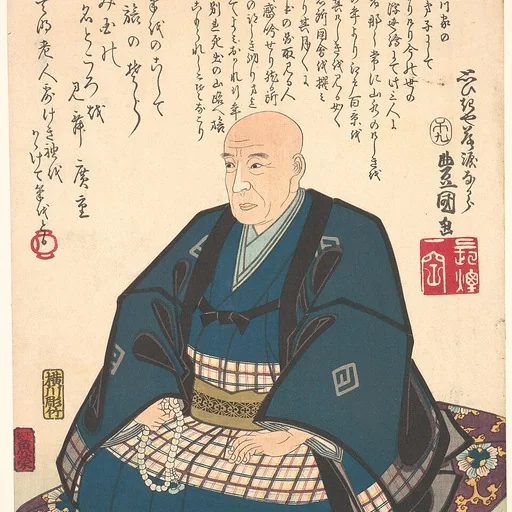
Utagawa Hiroshige (歌川 広重) or Andō Hiroshige (安藤 広重), born Andō Tokutarō (安藤 徳太郎; 1797 – 12 October 1858), was a Japanese ukiyo-e artist, considered the last great master of that tradition.