Artwork
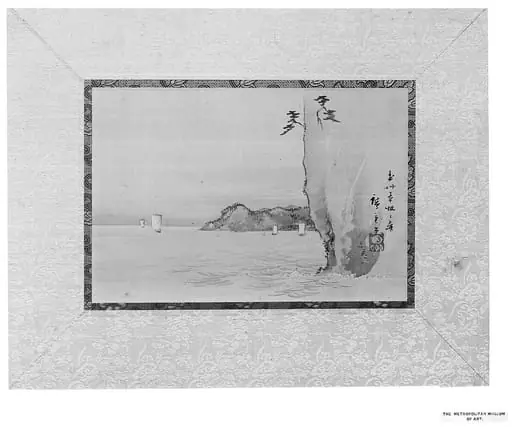
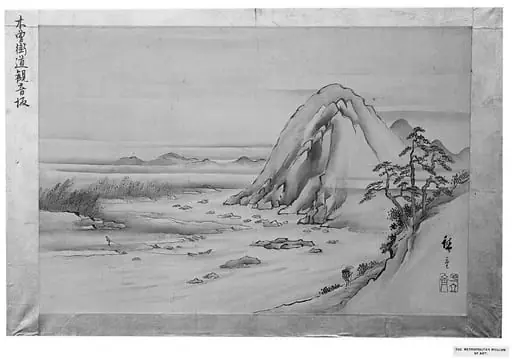
東海道五十三次 興津|Okitsu
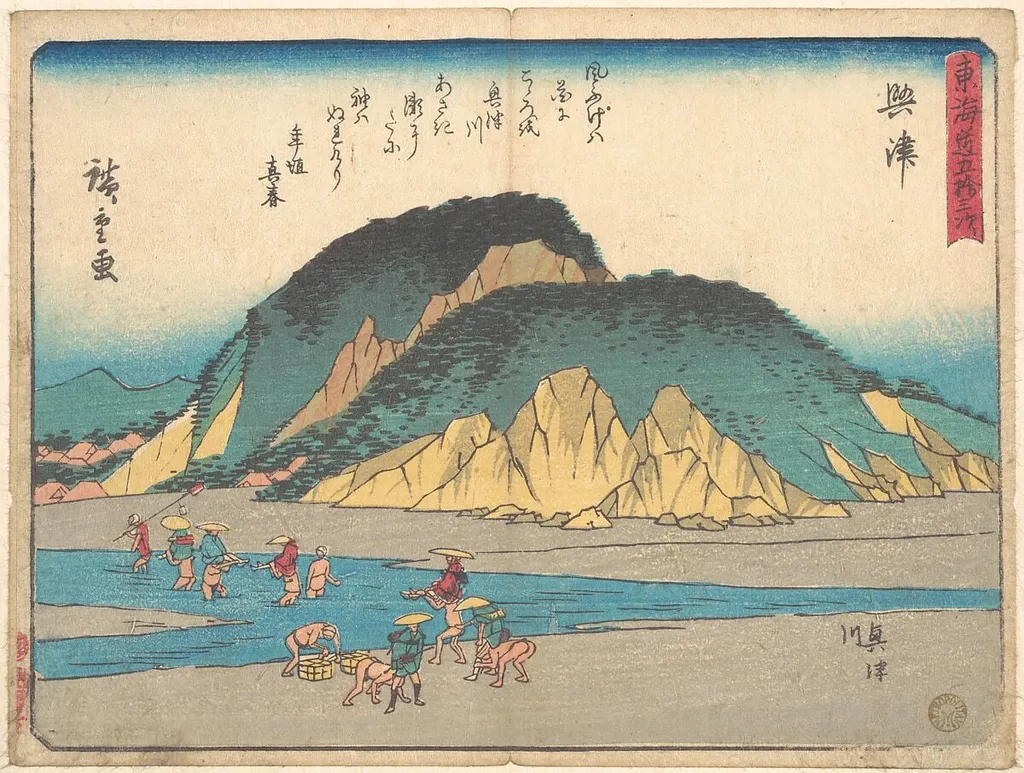
東海道五十三次 興津|Okitsu is an ink print by the Romanticist artist Utagawa Hiroshige. It dates from 1838 and is held in the collection of the Metropolitan Museum of Art.
About this work
Overview
Created around 1838 by Utagawa Hiroshige, *Okitsu* is one of fifty-three prints in the series *The Fifty-three Stations of the Tōkaidō*.
Created around 1838 by Utagawa Hiroshige, *Okitsu* is one of fifty-three prints in the series *The Fifty-three Stations of the Tōkaidō*. It depicts a stretch of the coastal road connecting Edo and Kyoto during the Edo period. Executed in ink and color on paper, the print exemplifies Hiroshige’s shift toward landscape-focused ukiyo-e, moving away from traditional depictions of actors and courtesans. Its horizontal format invites contemplation of the journey rather than a single moment.
Subject & Meaning
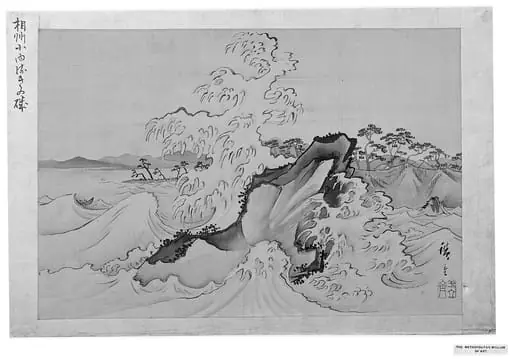
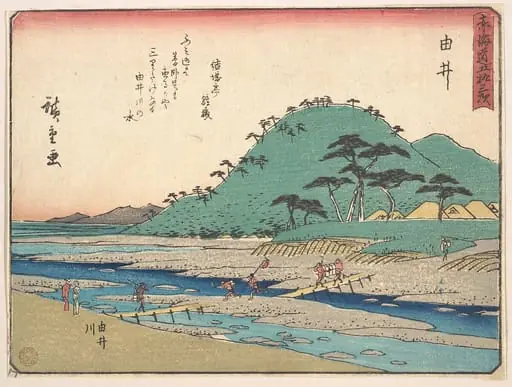
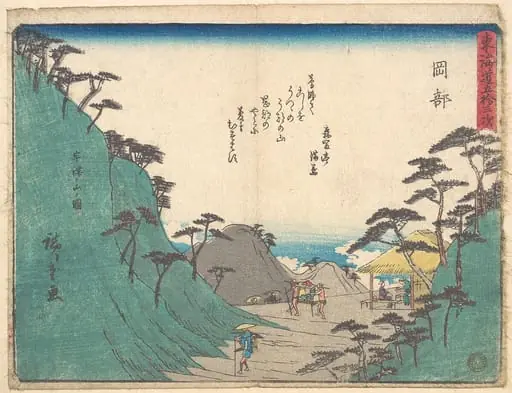
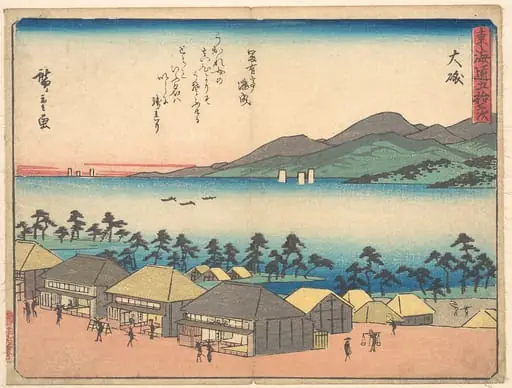
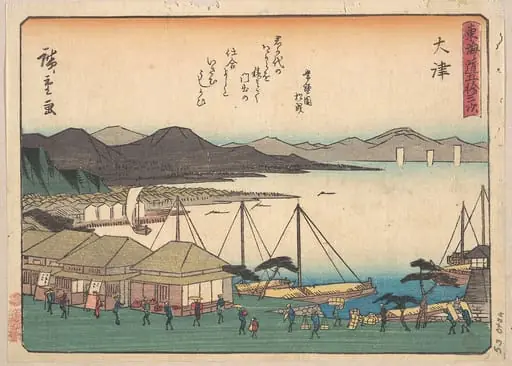
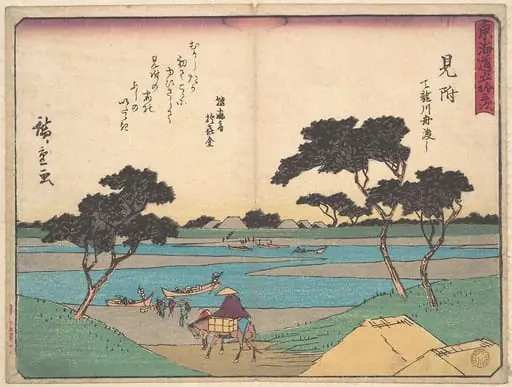
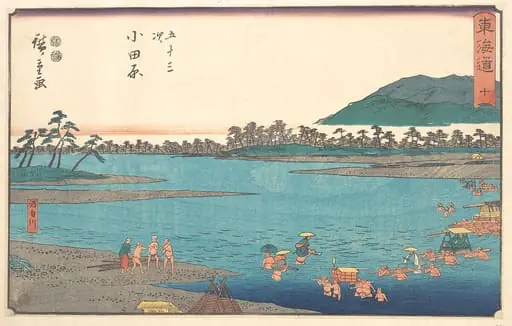
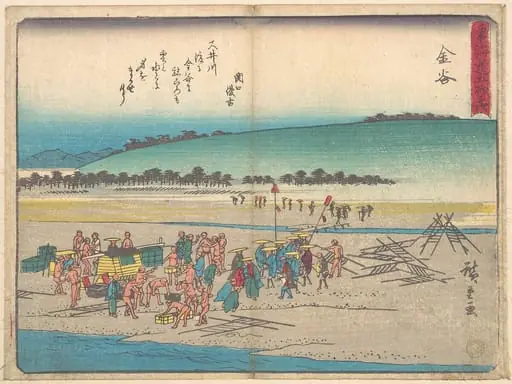
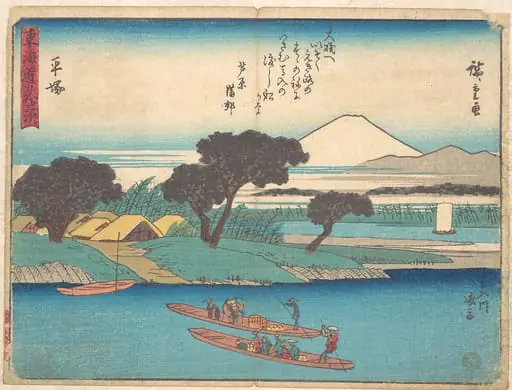
The scene captures a quiet stretch of the Tōkaidō near Okitsu, where a steep rocky cliff rises above a calm riverbank. Travelers in modest attire walk along the shore, one group guiding a cart pulled by a dog. The absence of grand architecture or dramatic action emphasizes the rhythm of daily travel. Small inscriptions along the borders hint at poetic reflections, grounding the image in literary tradition and the contemplative nature of the journey.
Technique & Style
Hiroshige employs flat, bright colors bounded by bold black outlines, characteristic of woodblock printing. The mountain is constructed with simplified, angular forms that convey solidity without realistic shading. Cross-hatching suggests texture on rock surfaces, while the sky and water are rendered in muted washes. The composition balances vertical rock with horizontal land and water, creating a sense of quiet stability. The print’s clarity and restraint reflect the precision of collaborative printmaking.
History & Provenance
The print was produced during Hiroshige’s most prolific period, when the *Tōkaidō* series gained widespread popularity across Japan. Published by Hoeidō, it was part of a commercial venture that made landscape art accessible to the urban middle class. Surviving impressions are held in major collections, including the Museum of Fine Arts, Boston, and the British Museum, attesting to its early and enduring circulation.
Context
During the Edo period, travel along the Tōkaidō was common among merchants, pilgrims, and officials. The road’s stations served as cultural touchpoints, and Hiroshige’s series responded to public interest in visual guides to these places. Unlike earlier ukiyo-e, which emphasized urban entertainment, this series captured the natural and human rhythms of travel, aligning with a broader cultural appreciation for seasonal change and quiet observation.
Legacy
Hiroshige’s *Okitsu* and the broader *Tōkaidō* series influenced later artists in Japan and Europe, particularly Impressionists and Post-Impressionists drawn to his compositional clarity and atmospheric effects. The print’s emphasis on landscape over narrative helped redefine Japanese printmaking’s potential. Today, it remains a key example of how everyday scenes, rendered with restraint, can convey deep emotional resonance.
Artist & collection
Artist
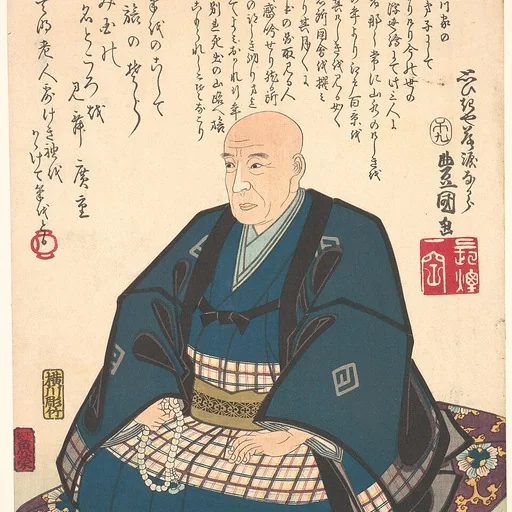
Utagawa Hiroshige (歌川 広重) or Andō Hiroshige (安藤 広重), born Andō Tokutarō (安藤 徳太郎; 1797 – 12 October 1858), was a Japanese ukiyo-e artist, considered the last great master of that tradition.