Artwork
東海道五十三次之内 石部 目川の里|Ishibe, Megawa Sato
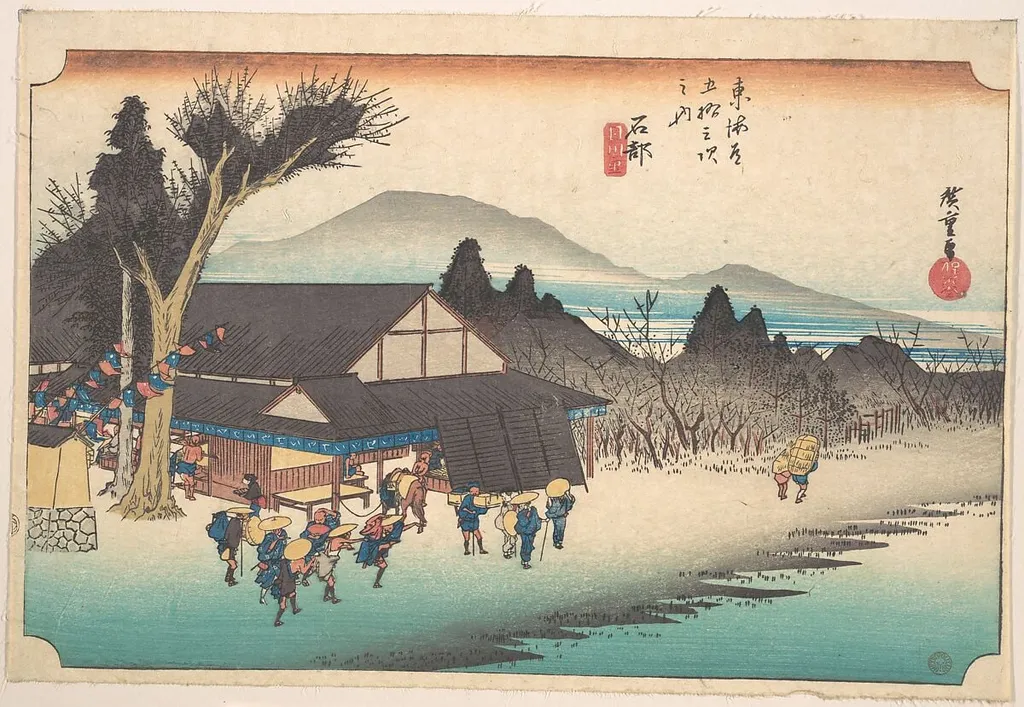
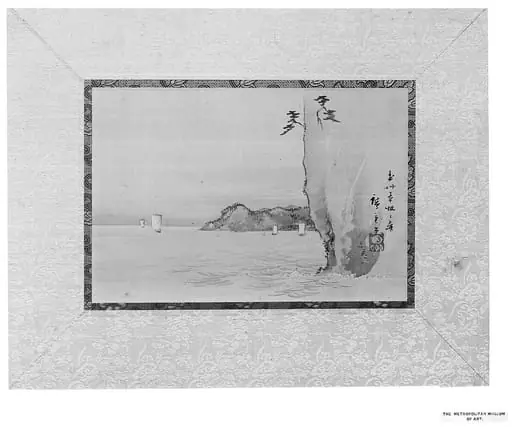
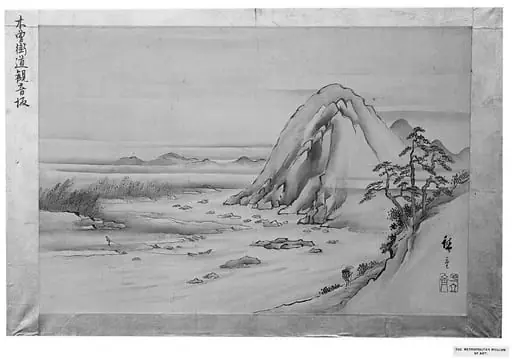
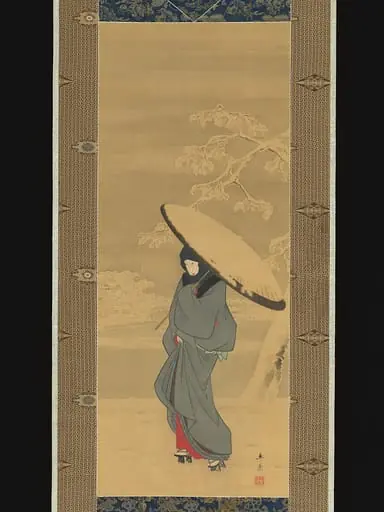
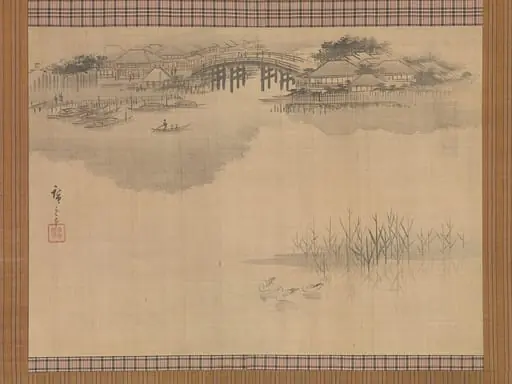
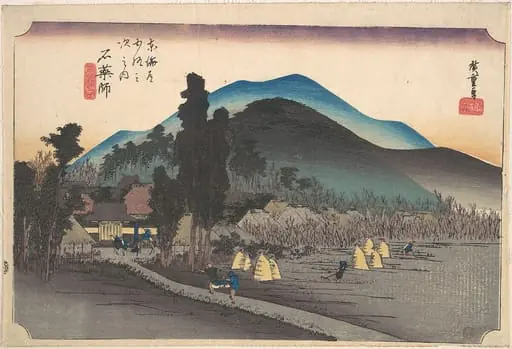
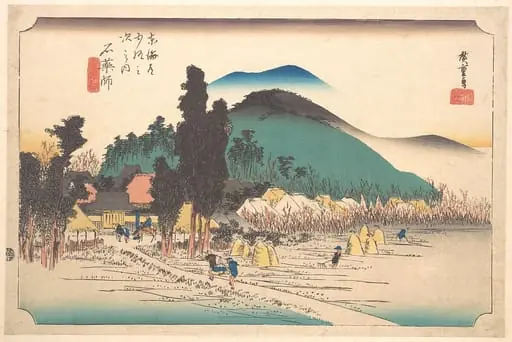
東海道五十三次之内 石部 目川の里|Ishibe, Megawa Sato is an ink print by the Romanticist artist Utagawa Hiroshige. It dates from 1834 and is held in the collection of the Metropolitan Museum of Art.
About this work
Overview
Created around 1834, this woodblock print by Utagawa Hiroshige is one of fifty-three scenes in the series *The Fifty-three Stations of the Tōkaidō*.
Created around 1834, this woodblock print by Utagawa Hiroshige is one of fifty-three scenes in the series *The Fifty-three Stations of the Tōkaidō*. It captures a modest riverside hamlet along Japan’s primary eastern highway, reflecting the artist’s shift from bustling urban subjects to tranquil rural landscapes. The work exemplifies the ukiyo-e tradition, using ink and color on paper to convey quiet moments of travel and daily life.
Subject & Meaning
The scene portrays Ishibe, a minor stop on the Tōkaidō, where travelers would rest between longer legs of their journey. Sparse dwellings with thatched roofs, figures carrying luggage or umbrellas, and a lone tree with bare branches suggest a pause in motion. The calm water and distant mountain frame the village as a place of stillness amid the broader flow of movement along the road, evoking the rhythm of pilgrimage and transit.
Technique & Style
Hiroshige employs flat areas of color and precise linear contours to suggest spatial depth without perspective distortion. Buildings recede along the riverbank through diminishing scale and layered tones, while the water mirrors the sky in muted hues. The composition avoids dramatic contrast, favoring subtle gradations that enhance the scene’s serenity. This restrained approach aligns with the aesthetic of *fūkeiga*—landscape painting rooted in observation rather than idealization.
History & Provenance
The print was produced during Hiroshige’s most prolific period, when the *Tōkaidō* series gained widespread popularity among merchants and travelers. Published by Hoeidō in Edo, it was part of a commercial venture that made landscape prints accessible beyond elite circles. Original impressions were widely distributed, and surviving examples are now held in major collections, including the British Museum and the Metropolitan Museum of Art.
Context
The Tōkaidō was the most traveled road in Edo-period Japan, connecting Edo with Kyoto and serving both official and civilian traffic. Hiroshige’s series responded to rising public interest in travel and regional identity. Unlike earlier ukiyo-e focused on courtesans or actors, these prints celebrated the natural and architectural character of provincial stations, reflecting a broader cultural fascination with place and journey.
Legacy
Hiroshige’s *Tōkaidō* prints influenced later generations of artists, both in Japan and abroad, particularly in the 19th-century European print movement. Their emphasis on atmosphere, seasonal change, and everyday scenery helped redefine landscape as a subject worthy of artistic attention. The series remains a key reference for understanding how Japanese visual culture interpreted space, movement, and quietude in the early modern era.
Artist & collection
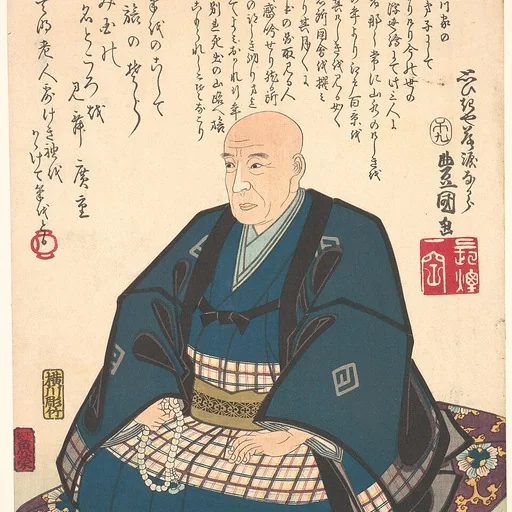
Artist
Utagawa Hiroshige (歌川 広重) or Andō Hiroshige (安藤 広重), born Andō Tokutarō (安藤 徳太郎; 1797 – 12 October 1858), was a Japanese ukiyo-e artist, considered the last great master of that tradition.