Artwork
東都司馬八景 高輪帰帆|River View at Takanawa
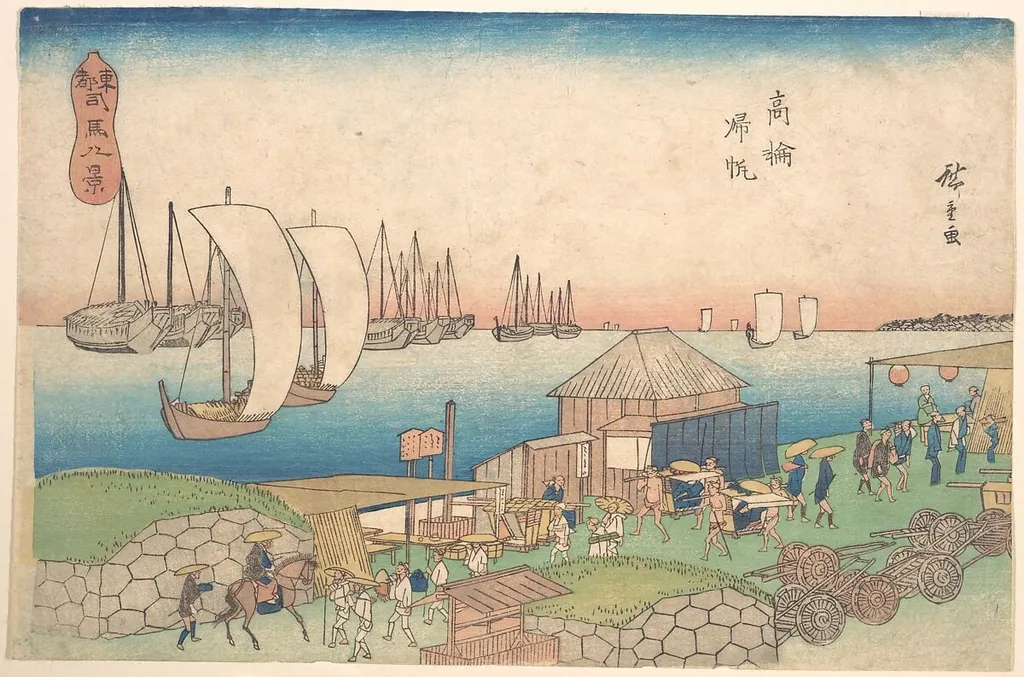
東都司馬八景 高輪帰帆|River View at Takanawa is an ink print by the Romanticist artist Utagawa Hiroshige. It dates from 1856 and is held in the collection of the Metropolitan Museum of Art.
About this work
Overview
Created around 1856, this woodblock print by Utagawa Hiroshige is one of eight scenes from the series *Eight Views of Musashi Province*. It captures a riverside landscape at Takanawa, near Edo, blending natural elements with human activity. The work exemplifies Hiroshige’s late-period focus on tranquil, everyday vistas, rendered through hand-carved blocks and layered pigments on paper.
Subject & Meaning
The scene depicts a bustling riverside at Takanawa, where sailing vessels rest along the water and travelers move between modest structures.
The scene depicts a bustling riverside at Takanawa, where sailing vessels rest along the water and travelers move between modest structures. Figures on horseback, laborers carrying goods, and pedestrians suggest the rhythm of regional transport and commerce. Rather than idealizing nature, the print honors the quiet functionality of daily life, reflecting the Edo-period value of observing the ordinary with quiet reverence.
Technique & Style
Hiroshige employed traditional ukiyo-e woodblock methods, using multiple carved blocks to apply ink and color in precise layers. His signature use of soft tonal transitions, especially in the sky and water, creates a sense of atmospheric depth. Delicate linework defines figures and architecture, while restrained color—pale blues and greens—enhances the subdued, contemplative mood of the composition.
History & Provenance
Produced during the final decades of the Edo period, this print emerged as demand for landscape prints grew among urban middle-class audiences. Though originally distributed as affordable multiples, surviving impressions are now held in major museum collections. Its attribution to Hiroshige is consistent with his known output and stylistic development in the 1850s, prior to his death in 1858.
Context
This print belongs to a wave of landscape series that redefined ukiyo-e beyond courtesans and actors. As travel became more accessible, prints like these catered to public interest in distant places and seasonal changes. Takanawa, a post station on the Tōkaidō road, was a familiar landmark, making such scenes both topographically accurate and emotionally resonant for contemporary viewers.
Legacy
Hiroshige’s approach influenced later Western artists, including the Impressionists, through his emphasis on light, perspective, and transient moments. While his prints were once mass-produced commodities, they are now studied for their technical precision and poetic sensitivity. This work remains a quiet testament to the Edo-period eye for harmony between human activity and the natural world.
Artist & collection
Artist
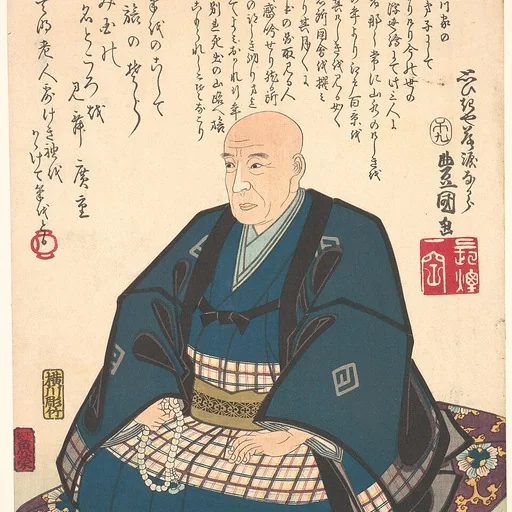
Utagawa Hiroshige (歌川 広重) or Andō Hiroshige (安藤 広重), born Andō Tokutarō (安藤 徳太郎; 1797 – 12 October 1858), was a Japanese ukiyo-e artist, considered the last great master of that tradition.

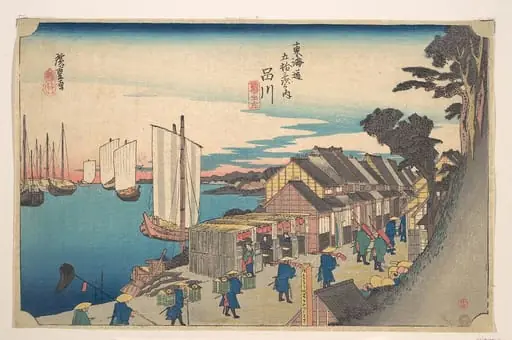 東海道五十三次之内 品川 諸侯出立|Shinagawa; Shoko Detachi
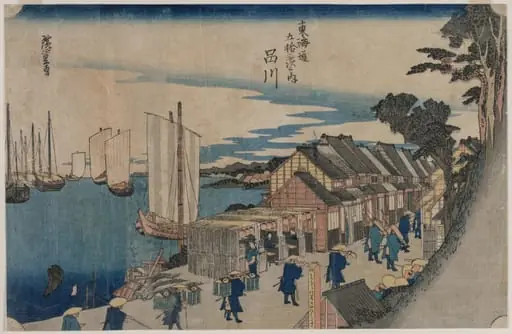 Shinagawa (from the series Fifty-three Stations of the Tokaido)
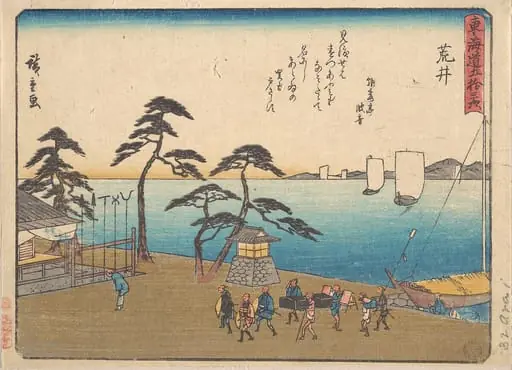 東海道五十三次 荒井|Arai
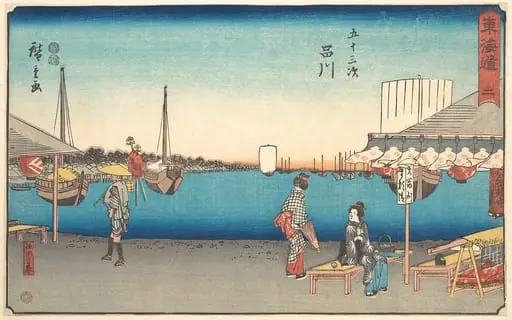 東海道五十三次 品川 鮫州の茶や|Shinagawa
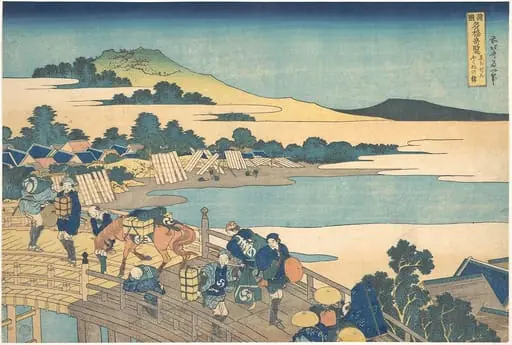 諸國名橋奇覧 ゑちぜんふくゐの橋|Fukui Bridge in Echizen Province (Echizen Fukui no hashi), from the series Remarkable Views of Bridges in Various Provinces (Shokoku meikyō kiran)
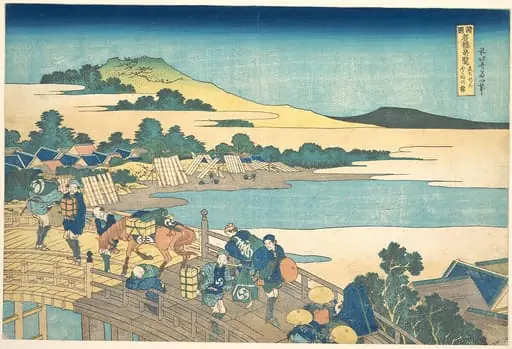 諸國名橋奇覧 ゑちぜんふくゐの橋|Fukui Bridge in Echizen Province (Echizen Fukui no hashi), from the series Remarkable Views of Bridges in Various Provinces (Shokoku meikyō kiran)
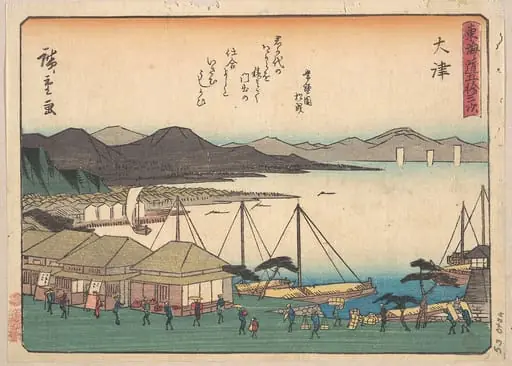 東海道五十三次 大津|Otsu
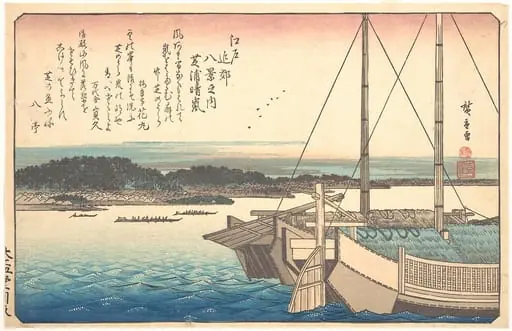 Shibaura Seiran|江戸近郊八景之内 芝浦晴嵐|Clearing Weather at Shibaura