Artwork
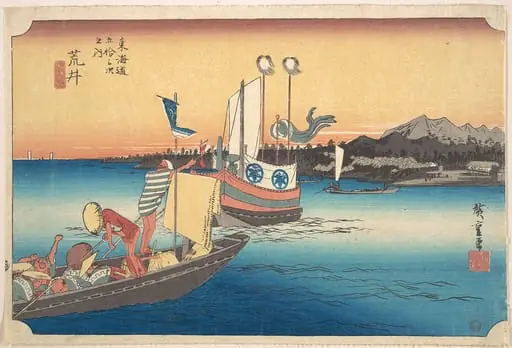
東海道五十三次 荒井|Arai
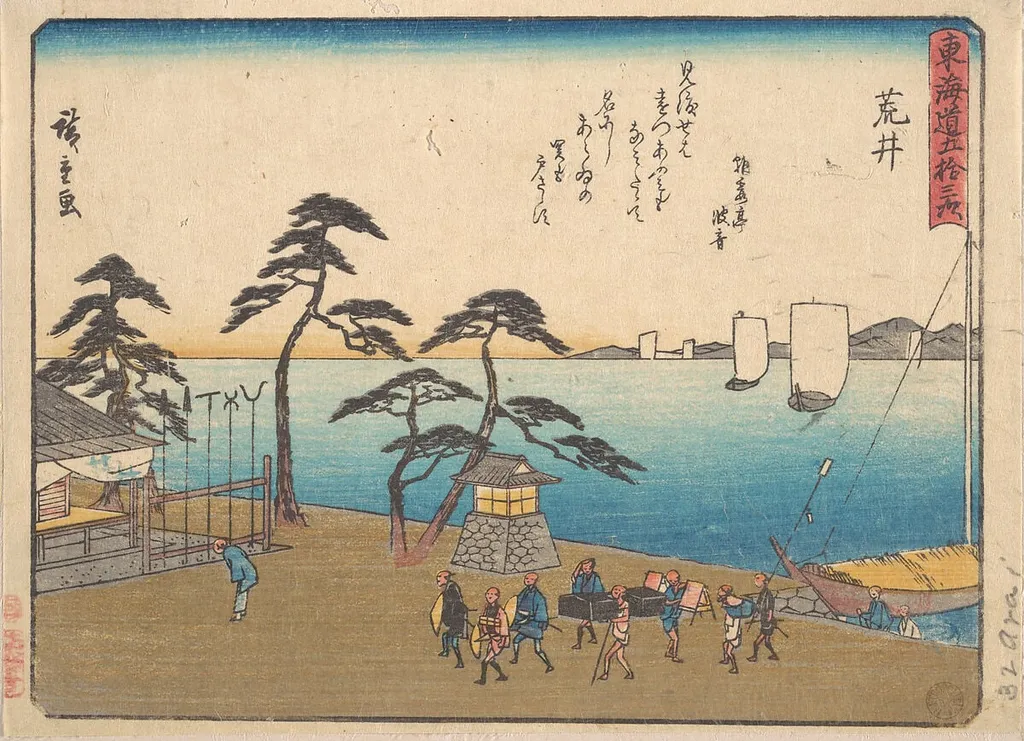
東海道五十三次 荒井|Arai is an ink print by the Romanticist artist Utagawa Hiroshige. It dates from 1838 and is held in the collection of the Metropolitan Museum of Art.
About this work
Overview
Executed in ink and color on paper, it adopts a horizontal format to convey the scenic and transient qualities of travel.
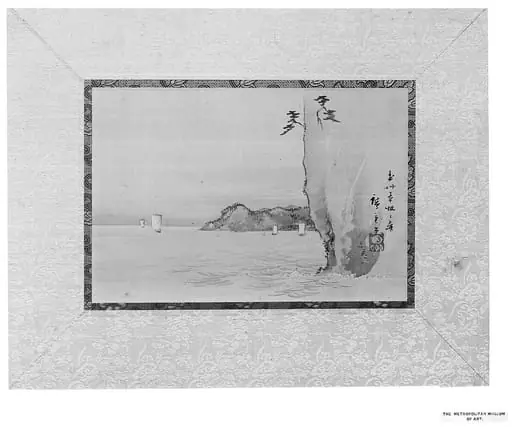
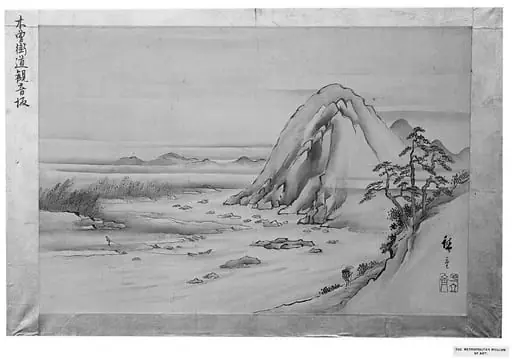
This woodblock print, *Arai*, forms part of Utagawa Hiroshige’s *The Fifty-three Stations of the Tōkaidō*, a series illustrating stops along the Tōkaidō road linking Edo and Kyoto. Created circa 1838, the work exemplifies the artist’s shift toward landscape subjects within the ukiyo-e tradition. Executed in ink and color on paper, it adopts a horizontal format to convey the scenic and transient qualities of travel.
Subject & Meaning
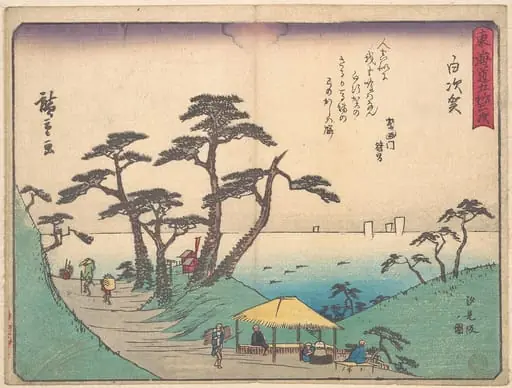
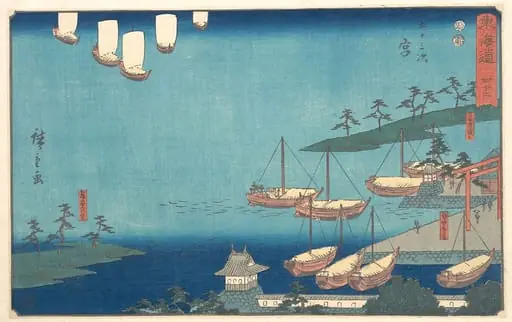
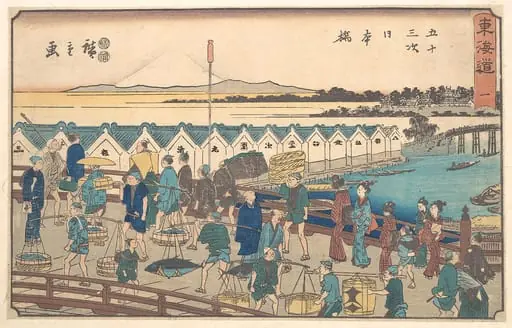
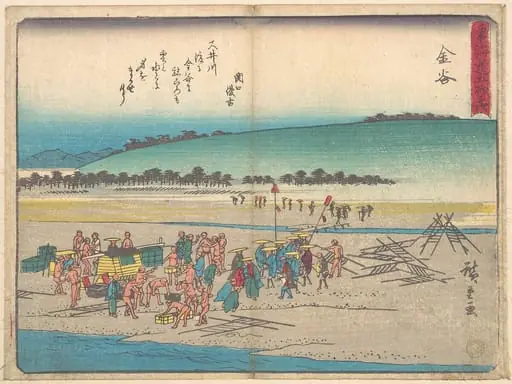
The composition centers on a riverside rest stop, where travelers pause amid a tranquil natural setting. A group bearing a stretcher suggests movement and human connection, while figures walking, sitting, or preparing boats evoke daily rhythms. The inclusion of a small stone marker and distant structures hints at both practical navigation and poetic reflection, reinforced by accompanying Japanese verse.
Technique & Style
Hiroshige employs restrained linework and flat, unmodulated color fields to achieve clarity and balance. Tall pine trees frame the scene, directing attention toward the sandy path and river. The soft blue sky and muted tones create an understated atmosphere, while the integration of text along the margins adds a narrative layer without disrupting the visual harmony.
History & Provenance
Produced during Japan’s Edo period, *Arai* belongs to a series that documented the Tōkaidō’s fifty-three post stations. Hiroshige, born Andō Tokutarō in 1797, rose to prominence by expanding ukiyo-e beyond urban themes to include landscapes. The print’s survival reflects its role in a broader artistic and commercial endeavor, circulated among audiences interested in travel and scenic representation.
Context
The Tōkaidō road served as a vital artery between Edo (modern Tokyo) and Kyoto, facilitating trade, pilgrimage, and official travel. Hiroshige’s series responded to a growing demand for images of Japan’s landscapes, capturing both the physical journey and the cultural significance of these routes. His work coincided with a period of relative stability, allowing leisure travel to flourish.
Legacy
Hiroshige’s *Fifty-three Stations of the Tōkaidō* contributed to the enduring popularity of landscape prints in ukiyo-e. *Arai* exemplifies his ability to distill complex scenes into compositions that balance observation with poetic suggestion. The series influenced later artists, both in Japan and abroad, reinforcing the genre’s capacity to document place while evoking mood.
Artist & collection
Artist
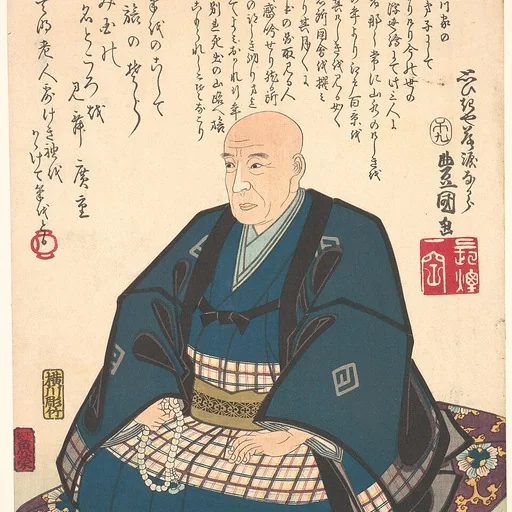
Utagawa Hiroshige (歌川 広重) or Andō Hiroshige (安藤 広重), born Andō Tokutarō (安藤 徳太郎; 1797 – 12 October 1858), was a Japanese ukiyo-e artist, considered the last great master of that tradition.