Artwork
忠臣蔵 五段目|Sadakuro Threatening to Kill Yoichibei
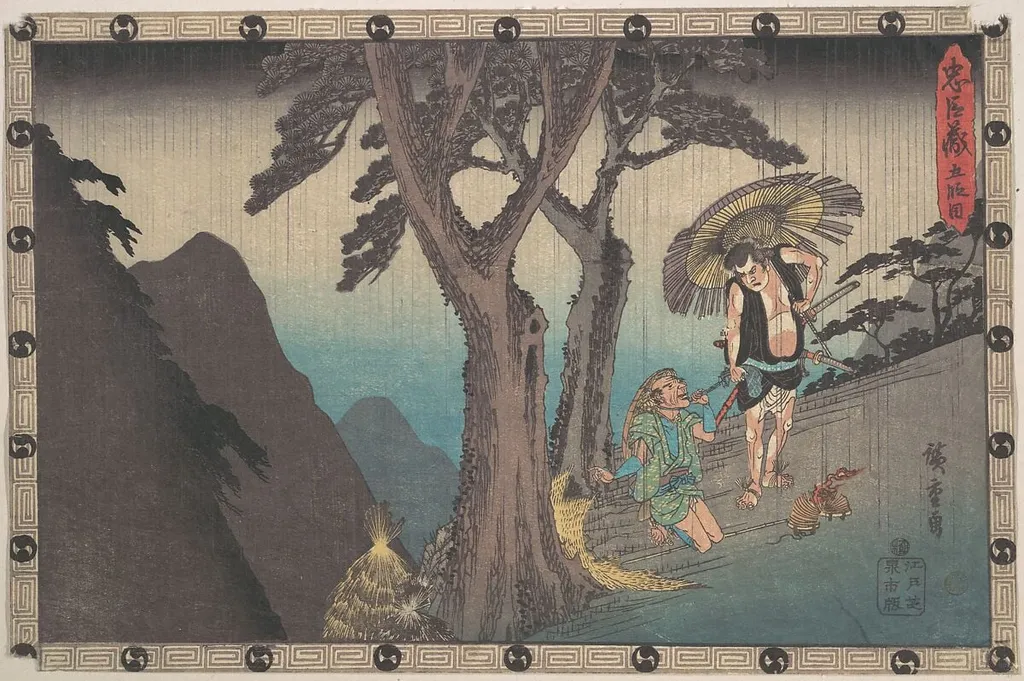
忠臣蔵 五段目|Sadakuro Threatening to Kill Yoichibei is an ink print by the Romanticist artist Utagawa Hiroshige. It dates from 1840 and is held in the collection of the Metropolitan Museum of Art.
About this work
Overview
Though Hiroshige is best known for landscapes, this work belongs to a series illustrating historical drama, marking a departure from his usual subjects.
Created around 1840 by Utagawa Hiroshige, this woodblock print captures a pivotal moment from the theatrical tale of Chūshingura. Though Hiroshige is best known for landscapes, this work belongs to a series illustrating historical drama, marking a departure from his usual subjects. Executed in ink and color on paper, it reflects the artist’s engagement with popular narrative traditions beyond scenic views.
Subject & Meaning
The scene depicts Sadakuro, a vengeful retainer, confronting Yoichibei, who is kneeling before him. Sadakuro holds a sword and an umbrella, symbols of his readiness for violence and his status. The tension between the figures embodies themes of loyalty, justice, and retribution central to the Chūshingura legend, a story of samurai honor following their lord’s death.
Technique & Style
Hiroshige employs fine, precise lines to render clothing, facial expressions, and textures, demonstrating mastery of the ukiyo-e woodblock process. The palette is restrained—dominated by muted browns, grays, and blues—enhancing the somber mood. Background elements like the tree and distant mountains are rendered with minimal detail, focusing attention on the psychological intensity of the central figures.
History & Provenance
The print is part of a series tied to the popular kabuki adaptation of Chūshingura, which was widely performed in Edo during the 1840s. It entered the collection of The Metropolitan Museum of Art, where it remains as a representative example of Hiroshige’s narrative prints. Its survival and preservation reflect the enduring interest in Edo-period theatrical imagery among collectors and institutions.
Context
During the 1840s, depictions of Chūshingura were common in print culture, serving as both entertainment and moral commentary. Though censorship restricted direct portrayals of contemporary events, historical tales like this one allowed artists to explore themes of duty and sacrifice. Hiroshige’s involvement in such series reveals the fluid boundaries between landscape, theater, and history in ukiyo-e production.
Legacy
This print contributes to the broader recognition of Hiroshige’s versatility beyond his famed landscapes. It illustrates how ukiyo-e artists adapted literary and theatrical sources for mass audiences, reinforcing the cultural resonance of samurai narratives. Today, it stands as a quiet but significant example of how printmaking preserved and transmitted Japan’s historical imagination.
Artist & collection
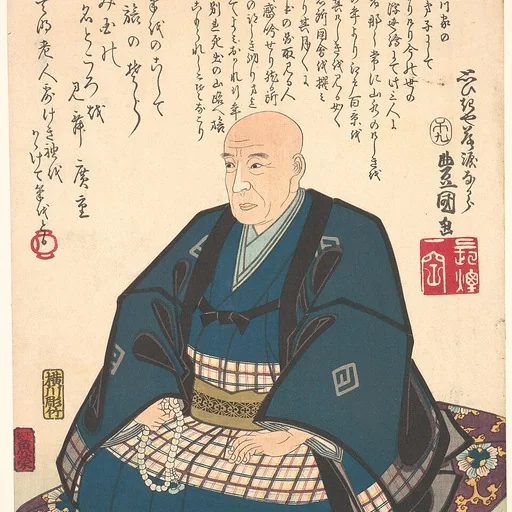
Artist
Utagawa Hiroshige (歌川 広重) or Andō Hiroshige (安藤 広重), born Andō Tokutarō (安藤 徳太郎; 1797 – 12 October 1858), was a Japanese ukiyo-e artist, considered the last great master of that tradition.

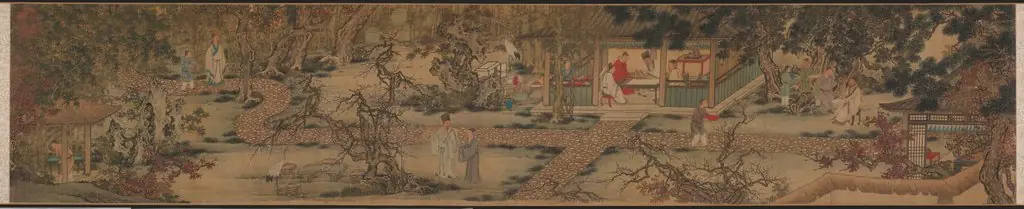 The Nine Elders of the Mountain of Fragrance
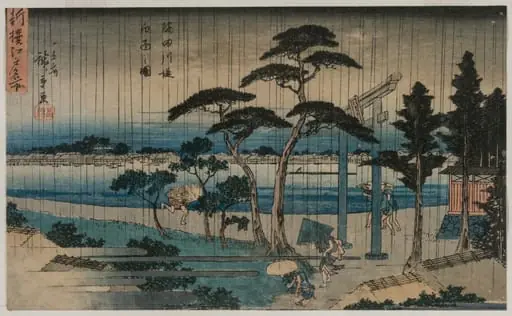 Picture of Light Rain on the Embankment of the Sumida River, from the series A New Selection of Famous Places in Edo
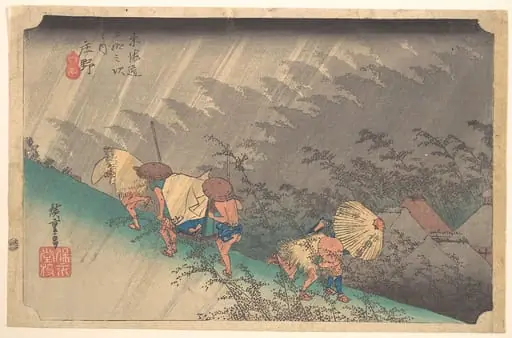 Shōno Hakuu|東海道五十三次之内 庄野 白雨|White Rain at Shōno
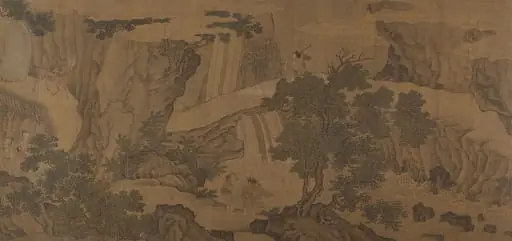 明 佚名 游仙圖 卷|Daoist Immortals in a Landscape
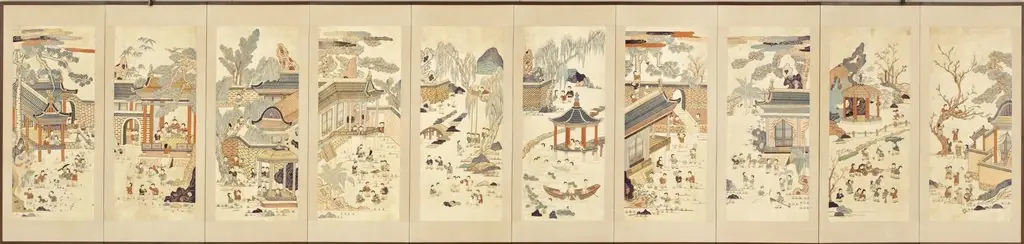 One Hundred Boys at Play
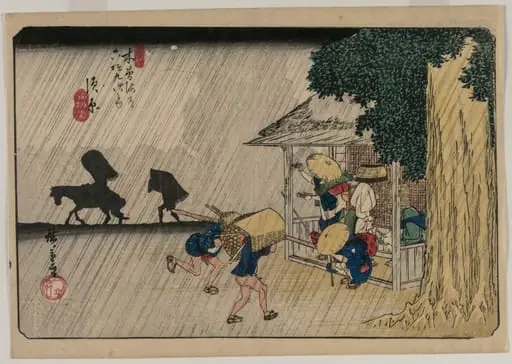 Suhara, from the series Sixty-Nine Stations of the Kisokaido
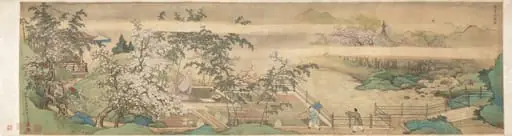 Cleansing Medicinal Herbs in the Stream on a Spring Day
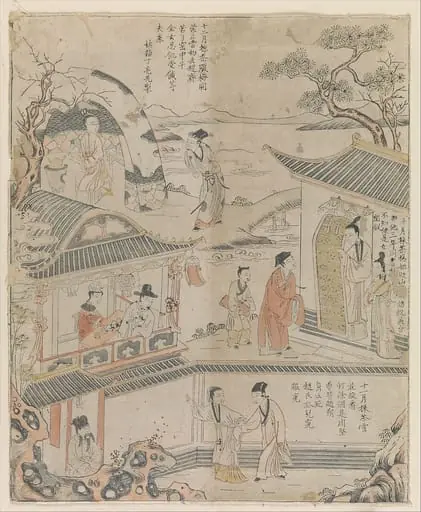 Untitled
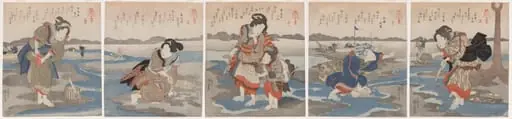 A Low Tide Pentaptych
 Watching Geese at Lan-t'ing Pavilion