Artwork
A Low Tide Pentaptych
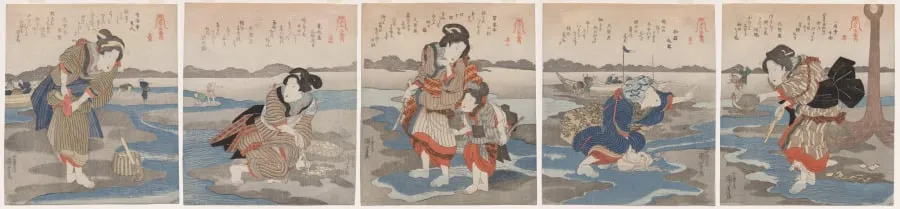
A Low Tide Pentaptych is a print by the Romanticist artist Utagawa Kuniyoshi. It dates from 1830 and is held in the collection of the Cleveland Museum of Art.
About this work
If you like this, look up *subject: japan, edo period (1615–1868)* to see more everyday scenes with hidden poetry.
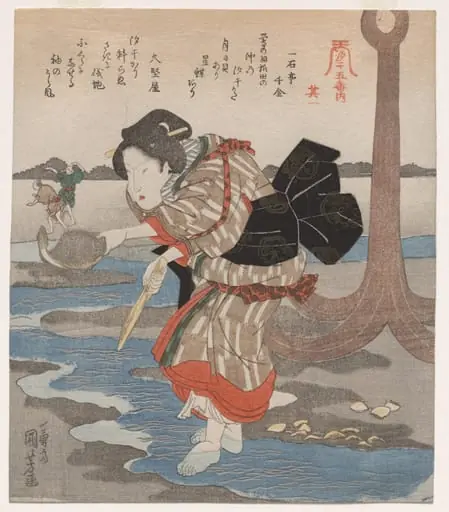
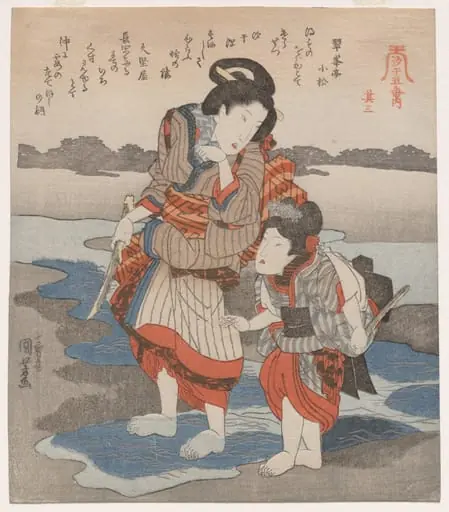
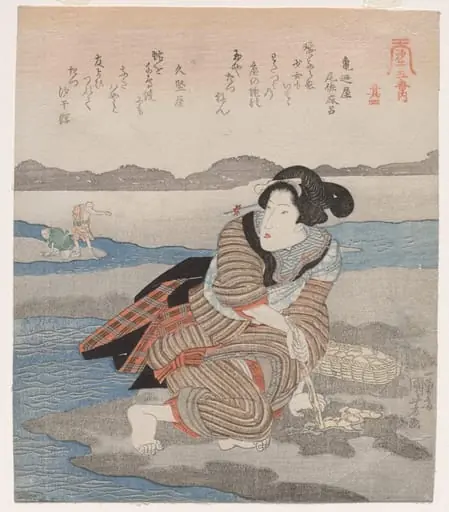
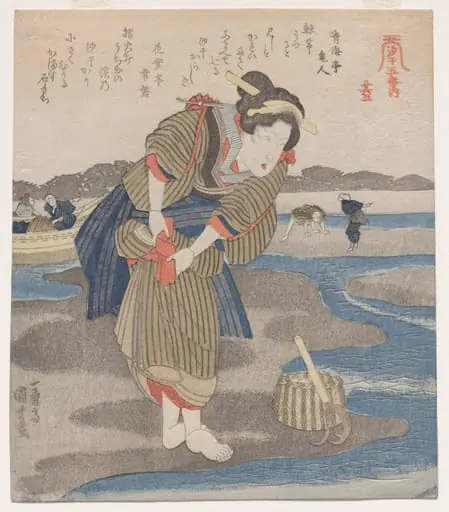
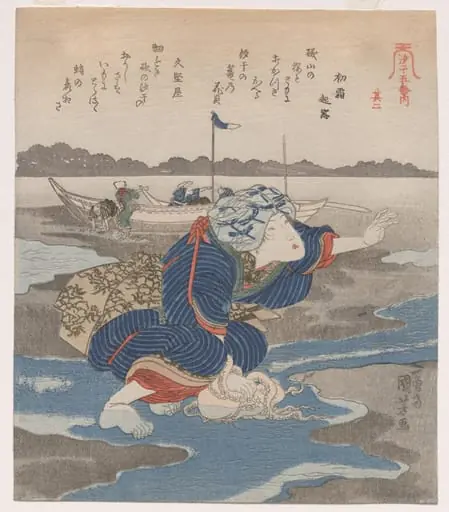
Five small prints show women in long robes bending over shallow water, gathering shellfish at low tide.
These aren’t ordinary prints—they’re *surimono*, fancy private commissions with poems on top. Ten poets wrote lines about the tide and abalone, turning a simple scene into a game of words and images. The poems were meant for friends, not the public.
If you like this, look up *subject: japan, edo period (1615–1868)* to see more everyday scenes with hidden poetry.
Overview
The work consists of five small surimono prints arranged as a pentaptych, each depicting women in long robes bent over shallow water as they gather shellfish during low tide. The upper margins of the panels are filled with ten short poems contributed by members of a private poetry salon, nine of which reference the low tide and one that likens abalone to a precious jewel.
Subject & Meaning
The images present a quotidian coastal activity—collecting sea life at the edge of the sea—while the accompanying verses transform the scene into a literary exercise. By pairing visual detail with poetic references to the tide and to abalone as a coveted object, the work invites contemplation of the relationship between nature’s rhythms and human desire.
Technique & Style
Executed as surimono, these prints were privately commissioned and intended for a limited audience. The artist employed fine woodblock carving and high-quality pigments to achieve delicate line work and subtle coloration, allowing the figures and water to be rendered with refined elegance. The poems are printed in a contrasting ink, integrated into the composition without disrupting the visual balance.
History & Provenance
Created in the Edo period, the pentaptych reflects the collaborative culture of poetry salons that flourished among the educated elite. The prints were not meant for commercial distribution but for circulation among friends, a practice typical of surimono production. Their survival in a museum collection today provides insight into the private artistic exchanges of the time.
Context
During the Edo era, surimono served as a vehicle for combining visual art with literary expression, often celebrating seasonal themes or social pastimes. This work aligns with that tradition, portraying a seasonal low‑tide activity while embedding seasonal poetry, thereby illustrating the period’s aesthetic emphasis on the harmony of text and image.
Artist & collection
Artist
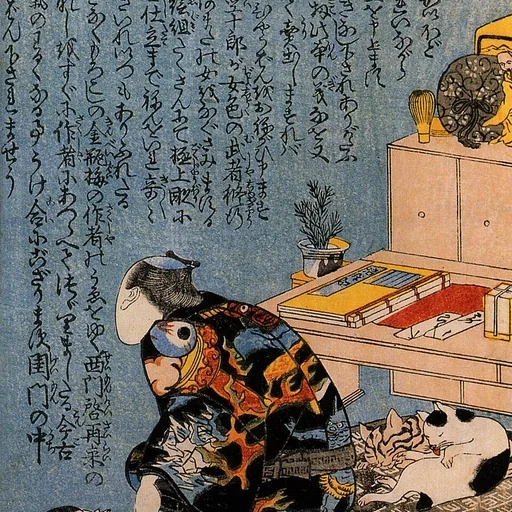
Kuniyoshi grew up in old Tokyo when the city was still called Edo. His dad ran a silk shop, but Kuniyoshi loved anything with pictures—scrolls, screens, comic books. He talked his way into the Utagawa school, a kind of…

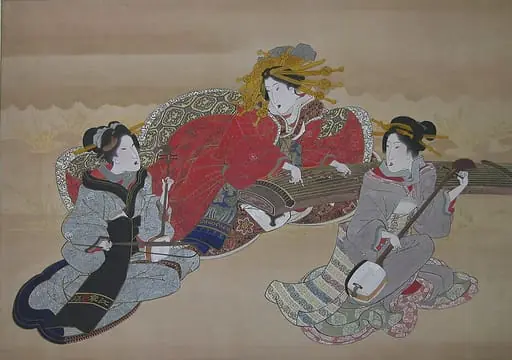 Untitled
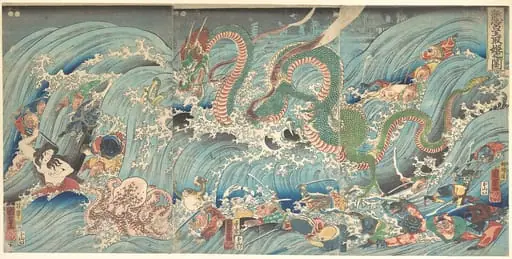 Ryugu Tamatori Hime no su|Recovering the Stolen Jewel from the Palace of the Dragon King
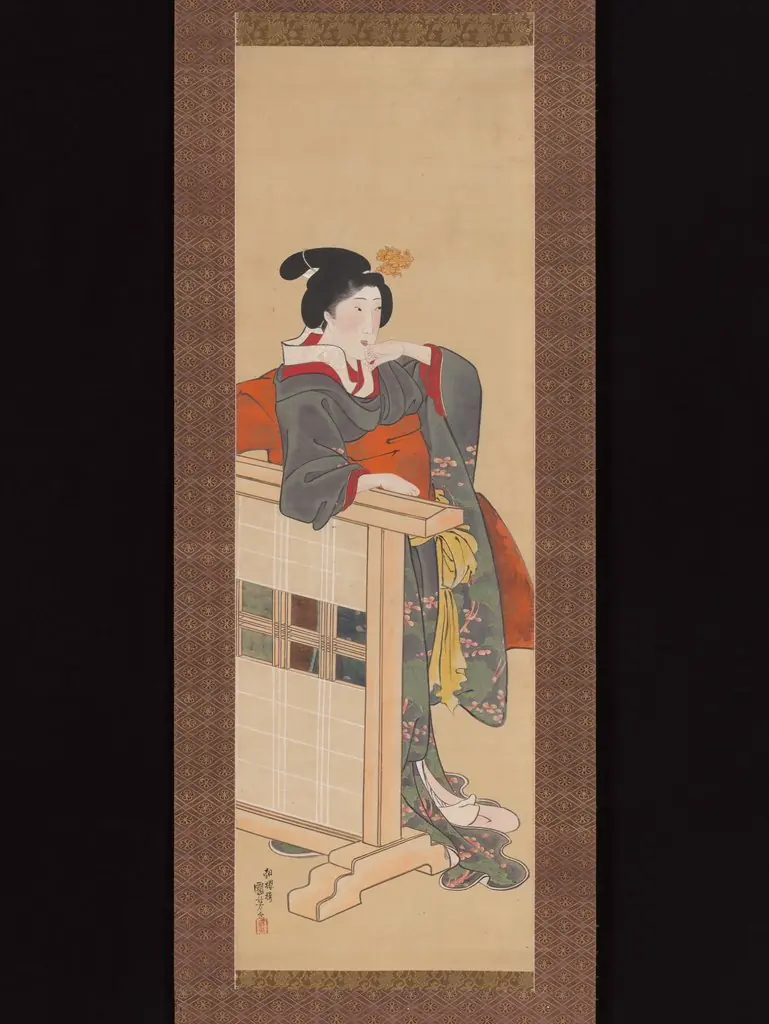 Lady-in-Waiting at Edo Castle
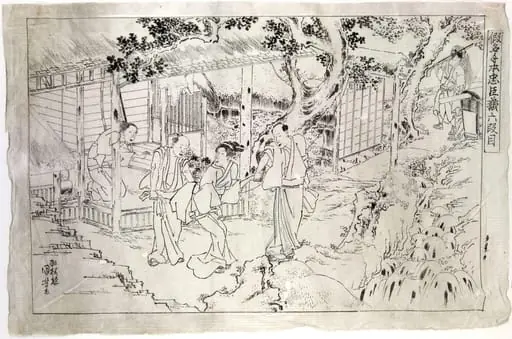 Treasury of the Forty-seven Loyal Retainers
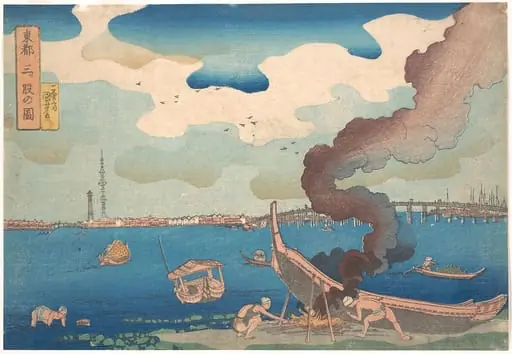 Toto Mitsumata no zu|Picture of Mitsumata
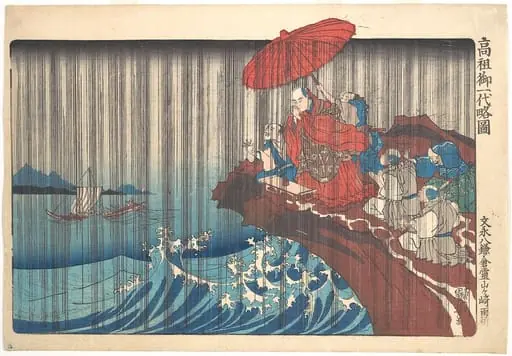 歌川国芳画 「高祖御一代略図 鎌倉霊山ヶ崎雨祈」|Concise Illustrated Biography of Monk Nichiren: Prayer for Rain Answered at Ryōzengasaki in Kamakura
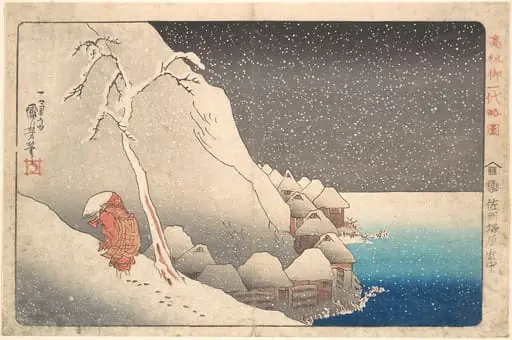 歌川国芳画 「高祖御一代略図 佐州塚原雪中」|Concise Illustrated Biography of Monk Nichiren: In Snow at Tsukahara on Sado Island
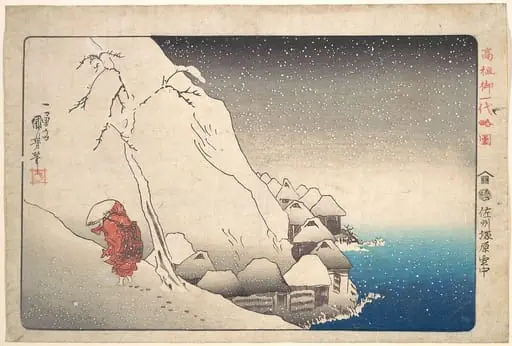 Sashu Tsukahara setchu|Nichiren in Snow at Tsukahara, Sodo Province