Artwork
東海道五十三次 三島|Mishima
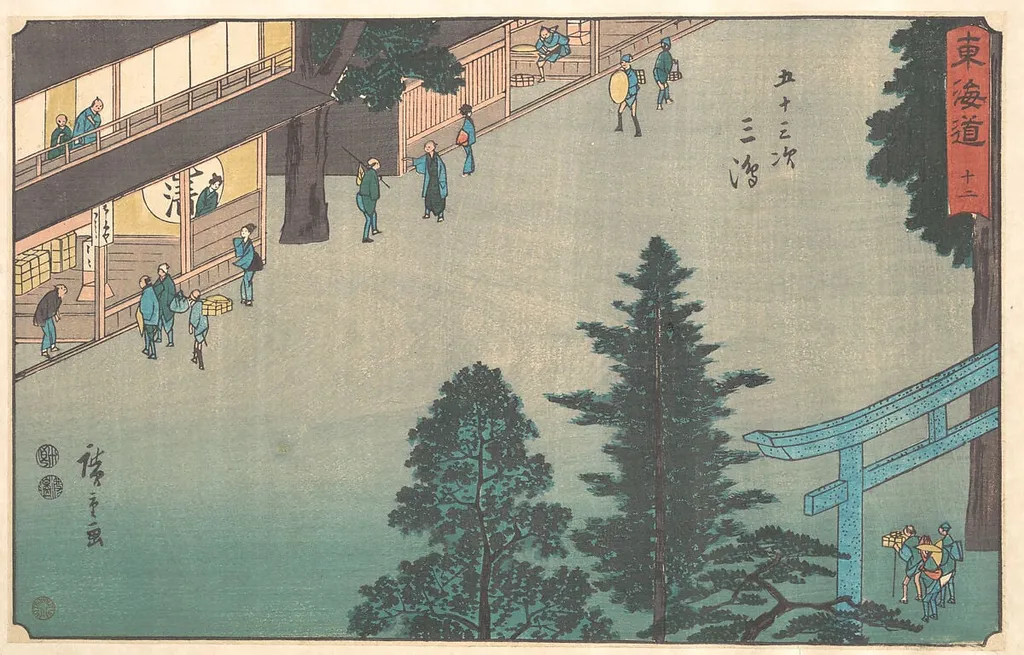
東海道五十三次 三島|Mishima is an ink print by the Romanticist artist Utagawa Hiroshige. It dates from 1840 and is held in the collection of the Metropolitan Museum of Art.
About this work
Overview
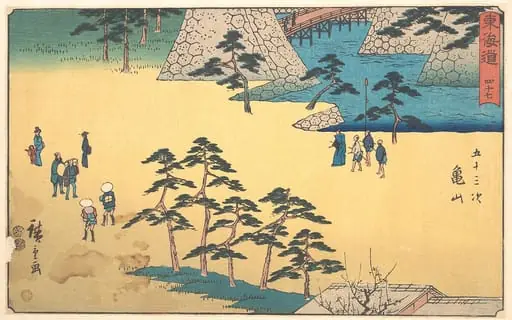
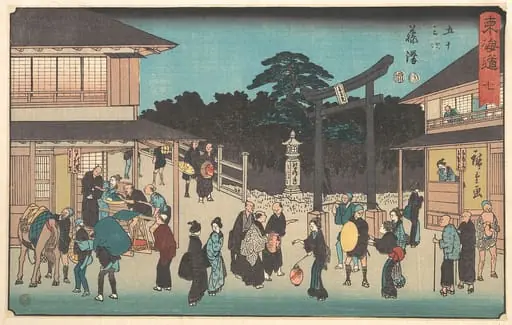
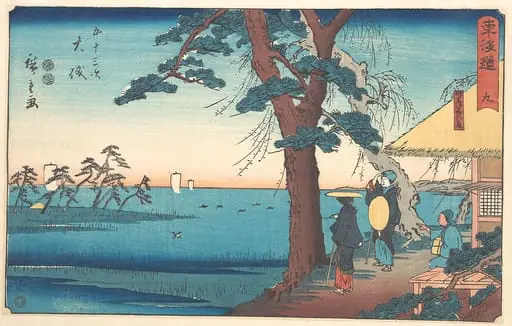
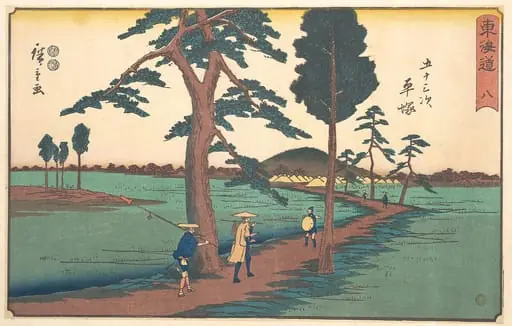
Created around 1840 by Utagawa Hiroshige, this woodblock print is one of fifty-three scenes in the series *The Fifty-three Stations of the Tōkaidō*.
Created around 1840 by Utagawa Hiroshige, this woodblock print is one of fifty-three scenes in the series *The Fifty-three Stations of the Tōkaidō*. It depicts a moment along the historic road connecting Edo and Kyoto, rendered in ink and color on paper. Unlike earlier ukiyo-e works centered on theater and pleasure quarters, Hiroshige turned his focus to the natural and human rhythms of travel, establishing a new direction in Japanese printmaking.
Subject & Meaning
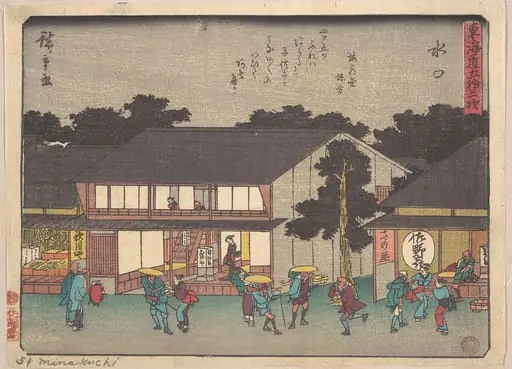
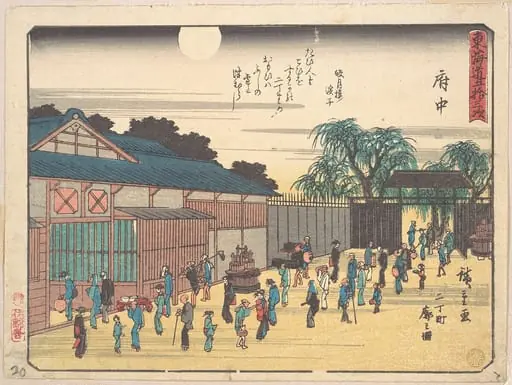
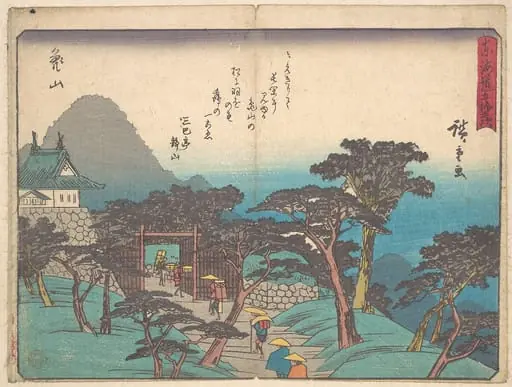
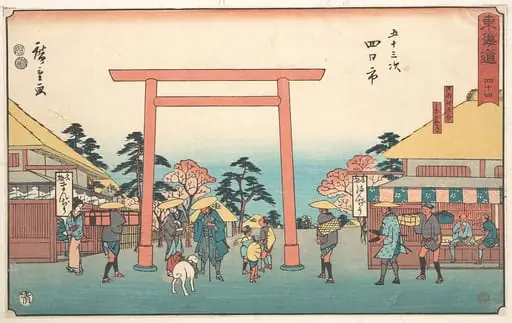
The scene captures the quiet bustle of Mishima, a post station along the Tōkaidō. Travelers on foot and horseback move through a landscape marked by a wooden gate, a bridge with blue railings, and a prominent pine tree. Figures in the windows of a two-story building suggest daily life unfolding beyond the road. The composition conveys the transient nature of journeying, honoring the ordinary rhythms of movement and rest along a vital national route.
Technique & Style
Hiroshige employed flat areas of color and precise linework to suggest spatial depth, using subtle gradations of blue in the background to imply distance. The figures are rendered with minimal detail yet convey individual motion and purpose. The placement of the central pine anchors the scene, while the diagonal of the bridge and the horizontal lines of buildings create a balanced, quiet composition. These techniques reflect the refined aesthetic of ukiyo-e landscape printing at its peak.
History & Provenance
The print was produced during the early 1840s as part of Hiroshige’s most celebrated series, commissioned for a broad public audience. Woodblock prints like this were mass-produced and widely distributed, making them accessible to merchants and travelers. While original impressions from this edition are rare today, their circulation helped solidify Hiroshige’s reputation and shaped how generations viewed Japan’s landscapes.
Context
The Tōkaidō was the most important travel corridor in Edo-period Japan, used by samurai, pilgrims, and merchants. As peace stabilized the country, travel became more common, and visual records of the route appealed to a growing literate class. Hiroshige’s series responded to this cultural shift, transforming practical waystations into poetic moments that resonated beyond their geographic function.
Legacy
Hiroshige’s *Tōkaidō* series influenced both Japanese and Western artists, contributing to the global appreciation of Japanese printmaking. His emphasis on atmosphere, seasonal change, and everyday life in landscape became a model for later generations. Though produced for popular consumption, these prints now serve as key documents of Edo-period society, mobility, and visual culture.
Artist & collection
Artist
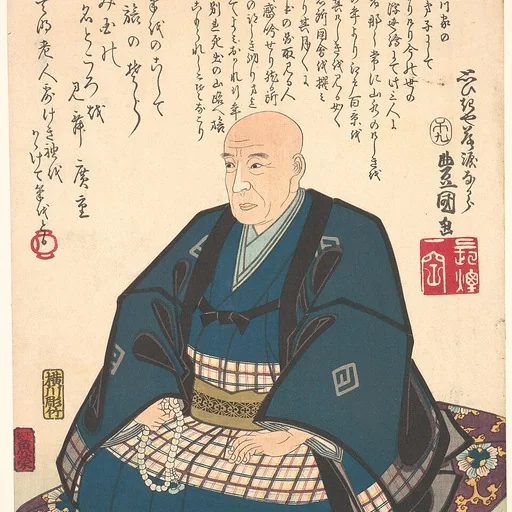
Utagawa Hiroshige (歌川 広重) or Andō Hiroshige (安藤 広重), born Andō Tokutarō (安藤 徳太郎; 1797 – 12 October 1858), was a Japanese ukiyo-e artist, considered the last great master of that tradition.