Artwork
東海道五十三次 宮|Miya, from the series The Fifty-three Stations of the Tōkaidō Road
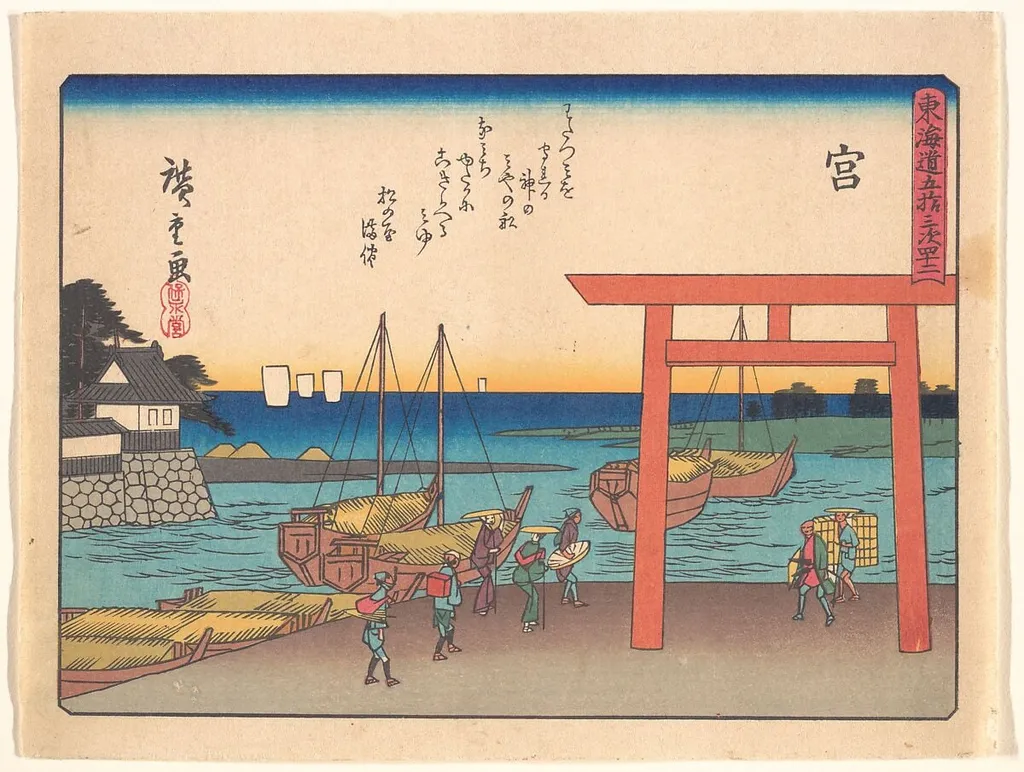
東海道五十三次 宮|Miya, from the series The Fifty-three Stations of the Tōkaidō Road is an ink print by Utagawa Hiroshige. It is held in the collection of the Metropolitan Museum of Art.
About this work
Overview
Rendered in ink and color on paper, the composition follows a horizontal format, emphasizing spatial depth and atmospheric detail.
This woodblock print is one of fifty-three scenes from Utagawa Hiroshige’s series depicting stations along the Tōkaidō Road, the main highway linking Edo and Kyoto. Created in the 1830s, not 1916 as sometimes misstated, it belongs to the ukiyo-e tradition but shifts focus from urban pleasure quarters to the quiet rhythms of travel and landscape. Rendered in ink and color on paper, the composition follows a horizontal format, emphasizing spatial depth and atmospheric detail.
Subject & Meaning
The scene captures Miya, a post station near the shore of Ise Bay, where travelers encountered a prominent red torii gate marking the approach to a shrine. Figures in modest attire move along the beach, some carrying goods, others pausing near anchored boats. The calm water and distant buildings suggest a moment of rest amid journeying. The gate and shrine subtly invoke spiritual transition, framing the scene as both a physical and symbolic passage.
Technique & Style
Hiroshige employed precise woodblock carving and layered color printing to achieve subtle gradations in sky and water. Bold, flat areas of deep blue, warm ochre, and crisp white define forms without heavy shading, creating clarity and rhythm. The composition balances foreground activity with a receding horizon, using the torii as a visual anchor. Text at the top, part of the print’s labeling, integrates seamlessly into the design rather than interrupting it.
History & Provenance
The print was produced in the early 1830s by Hiroshige’s publisher, Hoeido, as part of a commercially successful series that popularized landscape ukiyo-e. Early impressions were widely distributed among merchants and travelers, contributing to the series’ enduring presence in Japanese print culture. Surviving examples are held in major collections worldwide, with provenance tracing back to Edo-period ownership and later Western acquisitions in the late 19th century.
Context
During the Edo period, the Tōkaidō Road was a vital artery for commerce, pilgrimage, and official travel. Hiroshige’s series responded to growing public interest in regional geography and travel literature. Unlike earlier ukiyo-e focused on courtesans or actors, this work elevated everyday landscapes and transient moments, reflecting broader cultural shifts toward appreciation of nature and the passage of time.
Legacy
Hiroshige’s Tōkaidō series influenced generations of artists, including Western Impressionists who admired its flattened perspective and poetic economy. The print’s emphasis on atmosphere over narrative helped redefine landscape as a subject worthy of artistic contemplation. Today, it remains a key reference in the study of Japanese printmaking and the visual culture of travel in pre-modern Japan.
Artist & collection
Artist
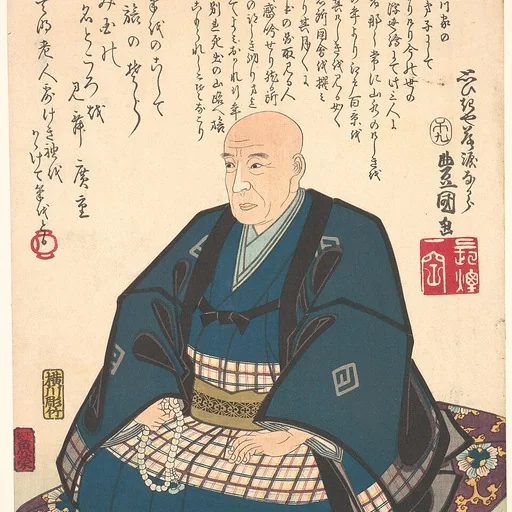
Utagawa Hiroshige (歌川 広重) or Andō Hiroshige (安藤 広重), born Andō Tokutarō (安藤 徳太郎; 1797 – 12 October 1858), was a Japanese ukiyo-e artist, considered the last great master of that tradition.

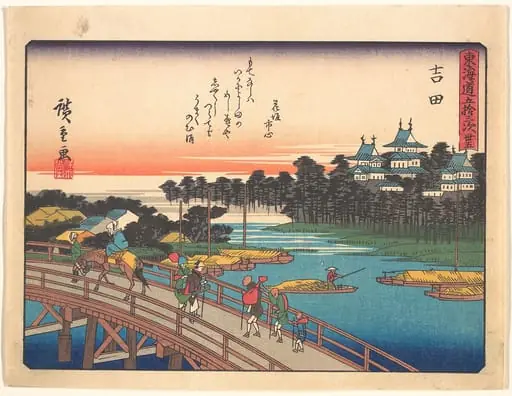 東海道五十三次 吉田|Yoshida, from the series The Fifty-three Stations of the Tōkaidō Road
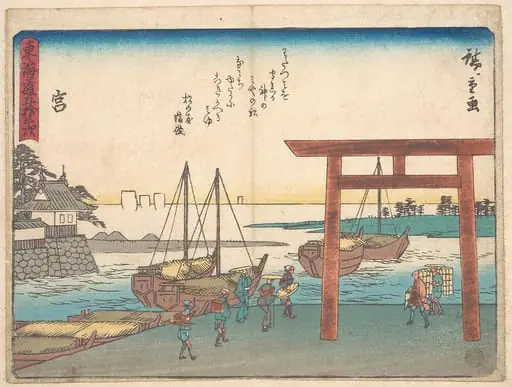 東海道五十三次 宮|Miya
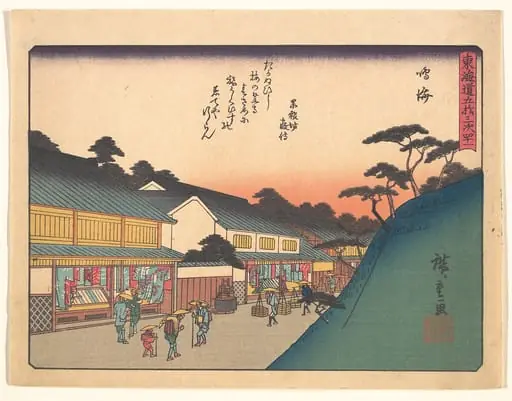 東海道五十三次 鳴海|Narumi, from the series The Fifty-three Stations of the Tōkaidō Road
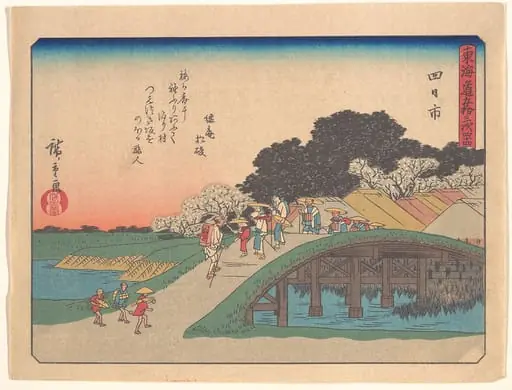 東海道五十三次 四日市|Yokkaichi, from the series The Fifty-three Stations of the Tōkaidō Road
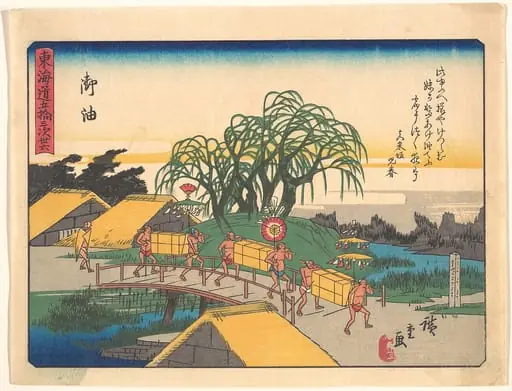 東海道五十三次 御油|Goyu, from the series The Fifty-three Stations of the Tōkaidō Road
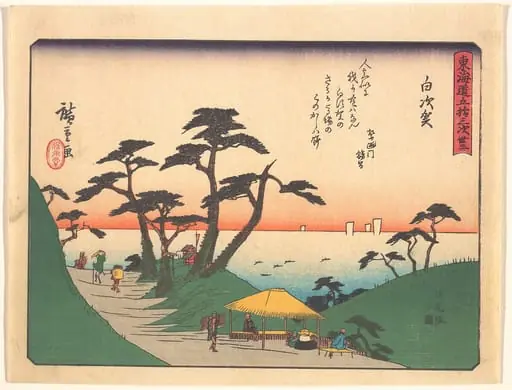 東海道五十三次 白須賀|Shirasuka, from the series The Fifty-three Stations of the Tōkaidō Road
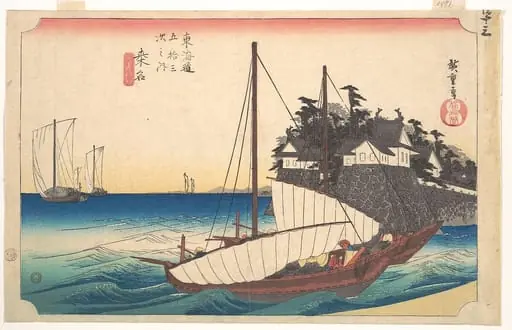 東海道五十三次之内 桑名 七里渡口|Station Forty-Three: Kuwana, Seven-Ri Ferry at the Port, from the Fifty-Three Stations of the Tokaido
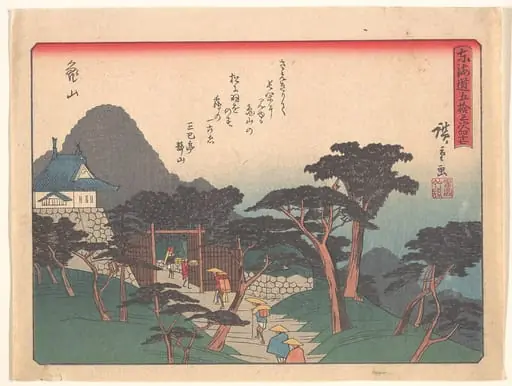 東海道五十三次 亀山|Kameyama, from the series The Fifty-three Stations of the Tōkaidō Road
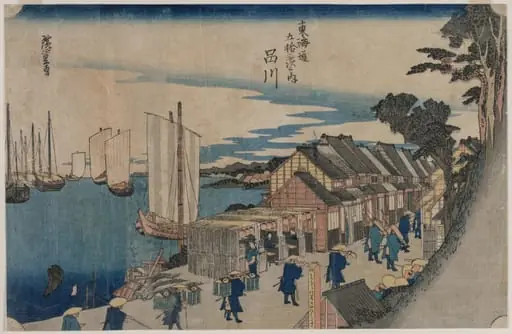 Shinagawa (from the series Fifty-three Stations of the Tokaido)
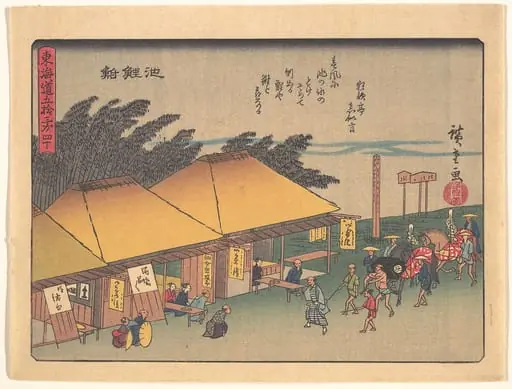 東海道五十三次 池鯉鮒|Chiryūshuku, from the series The Fifty-three Stations of the Tōkaidō Road
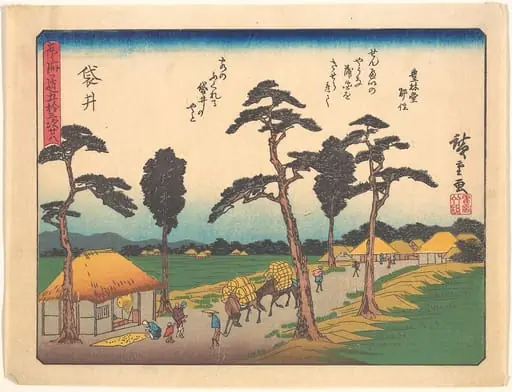 東海道五十三次 袋井|Fukuroi, from the series The Fifty-three Stations of the Tōkaidō Road