Artwork
江戸名所 上野不忍の池|Ueno, Shinobazu no Ike
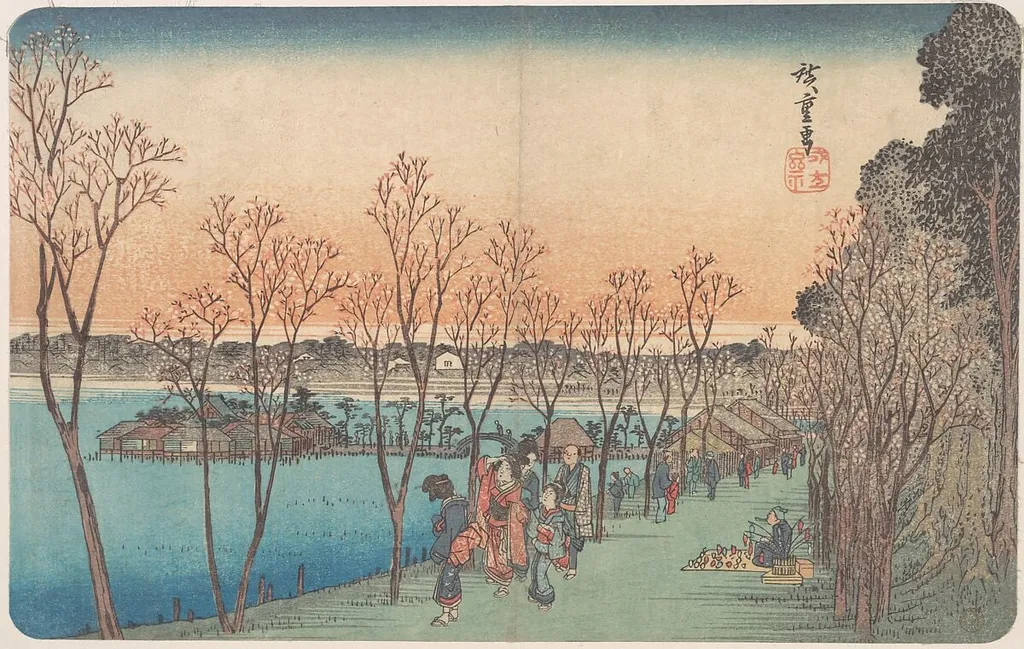
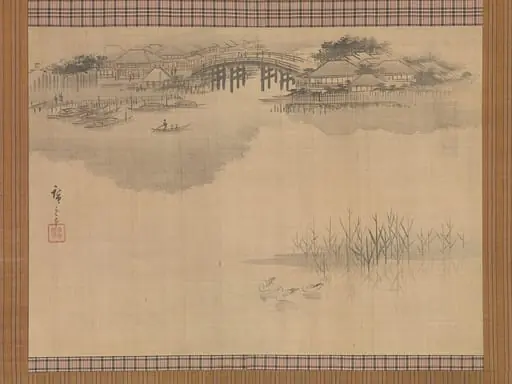
江戸名所 上野不忍の池|Ueno, Shinobazu no Ike is an ink print by the Romanticist artist Utagawa Hiroshige. It dates from 1835 and is held in the collection of the Metropolitan Museum of Art.
About this work
Overview
Part of a series documenting famous Edo locations, it diverges from the era’s typical focus on bustling urban life by emphasizing quiet natural scenery.
Created around 1835 by Utagawa Hiroshige, this woodblock print captures Shinobazu Pond in Ueno, Tokyo, during winter. Part of a series documenting famous Edo locations, it diverges from the era’s typical focus on bustling urban life by emphasizing quiet natural scenery. The print’s subdued palette and tranquil composition reflect Hiroshige’s interest in atmospheric landscapes, aligning with the broader ukiyo-e tradition while shifting its emotional tone toward contemplation.
Subject & Meaning
The scene portrays a frozen pond surrounded by leafless trees, with a handful of figures moving along the shore, some sheltered by umbrellas. The stillness of the winter landscape suggests solitude and seasonal transition. The sparse human presence underscores nature’s dominance, inviting quiet reflection rather than narrative drama. This approach aligns with Edo-period aesthetics that valued impermanence and subtle beauty in everyday environments.
Technique & Style
Hiroshige employed fine woodblock carving to render delicate tree branches that resemble ink brushwork, their sinuous lines echoing calligraphic forms. Muted blues and browns are layered to suggest mist and cold air, while minimal color areas enhance the sense of atmospheric depth. Cross-hatching and graded ink tones create texture in the water and sky without overt detail, relying on suggestion rather than realism to convey mood and space.
History & Provenance
The print was produced during Hiroshige’s early mature period, when he was refining his landscape series. It entered The Metropolitan Museum of Art’s collection through established channels of early 20th-century Japanese art acquisition. Its preservation reflects growing Western interest in ukiyo-e during the Meiji era, though it was originally made for domestic audiences seeking familiar, poetic views of Edo’s outskirts.
Context
During the Edo period, ukiyo-e prints were mass-produced for the urban middle class, often depicting theaters, courtesans, or travel routes. Hiroshige’s focus on tranquil, seasonal landscapes like Shinobazu Pond offered an alternative—quiet escapes from city life. This print belongs to a wave of works that redefined ukiyo-e by elevating nature and mood over spectacle, anticipating later artistic shifts in both Japan and Europe.
Legacy
Hiroshige’s winter landscapes influenced later artists in Japan and abroad, particularly 19th-century European impressionists drawn to his compositional economy and atmospheric effects. While not widely celebrated in his lifetime outside Japan, this print now stands as an example of how ukiyo-e could convey introspection through restraint. Its presence in major Western collections underscores its role in shaping global perceptions of Japanese visual culture.
Artist & collection
Artist
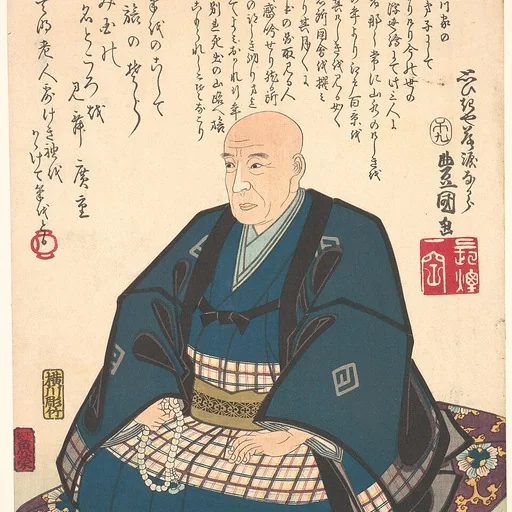
Utagawa Hiroshige (歌川 広重) or Andō Hiroshige (安藤 広重), born Andō Tokutarō (安藤 徳太郎; 1797 – 12 October 1858), was a Japanese ukiyo-e artist, considered the last great master of that tradition.