Artwork
近江八景之内 瀬田夕照|Long Bridge of Seta
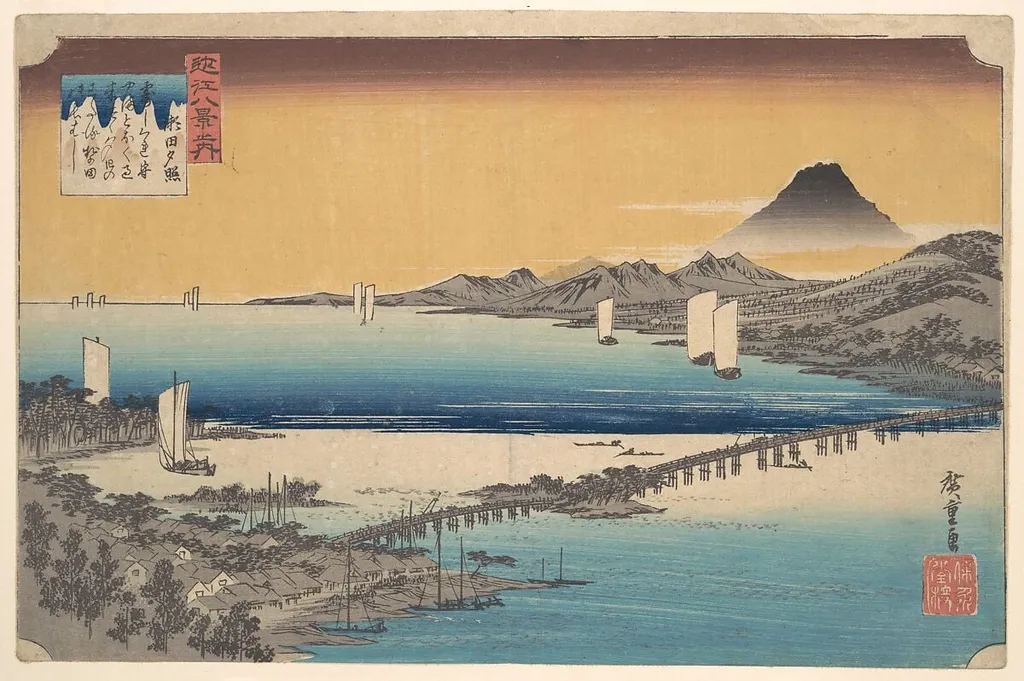
近江八景之内 瀬田夕照|Long Bridge of Seta is an ink print by the Romanticist artist Utagawa Hiroshige. It dates from 1828 and is held in the collection of the Metropolitan Museum of Art.
About this work
Overview
Long Bridge of Seta, a woodblock print from Utagawa Hiroshige's *Eight Views of Ōmi* series (1828), captures a serene dusk scene of Seta's bridge, village, and surrounding landscape in ink and color on paper.
Subject & Meaning
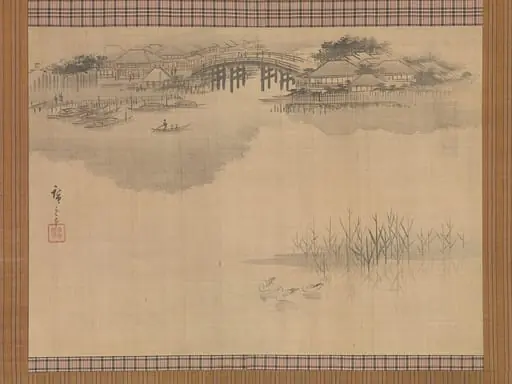
The print depicts a tranquil riverscape with a long wooden bridge, adjacent village, boats, trees, and distant mountains set against a soft orange sky at sunset. The composition conveys a sense of peace and natural harmony.
Technique & Style
Hiroshige employed simple lines, flat colors (predominantly blues and browns), and subtle cross-hatching to achieve depth. The bridge appears to float, while tiny figures on it provide scale, exemplifying his innovative approach to atmospheric landscape ukiyo-e.
History & Provenance
Created in 1828 by Utagawa Hiroshige, a prominent Edo period ukiyo-e artist known for landscapes, *Long Bridge of Seta* is part of his *Eight Views of Ōmi* series, diverging from the typical ukiyo-e focus on urban scenes.
Context
This work reflects Hiroshige's contribution to the evolution of ukiyo-e by emphasizing serene, natural landscapes over traditional urban or figurative subjects, aligning with the series' theme of capturing scenic views of the Ōmi region.
Legacy
*Long Bridge of Seta* showcases Hiroshige's distinctive style and thematic shift in ukiyo-e, influencing later artists with its harmonious balance of nature and human presence, and remains a notable example of his landscape-focused oeuvre.
Artist & collection
Artist
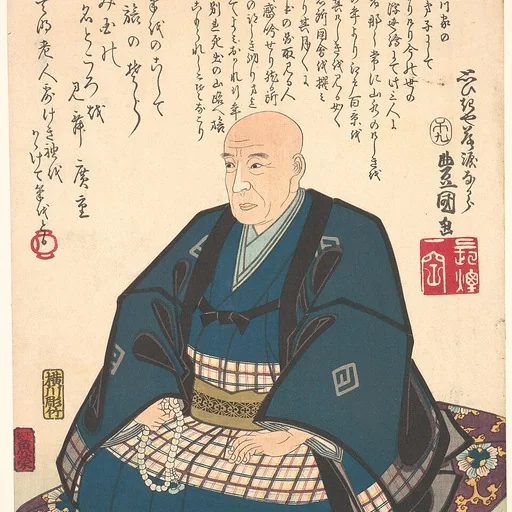
Utagawa Hiroshige (歌川 広重) or Andō Hiroshige (安藤 広重), born Andō Tokutarō (安藤 徳太郎; 1797 – 12 October 1858), was a Japanese ukiyo-e artist, considered the last great master of that tradition.

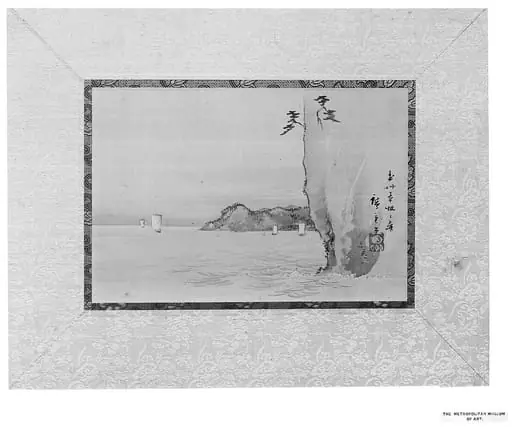
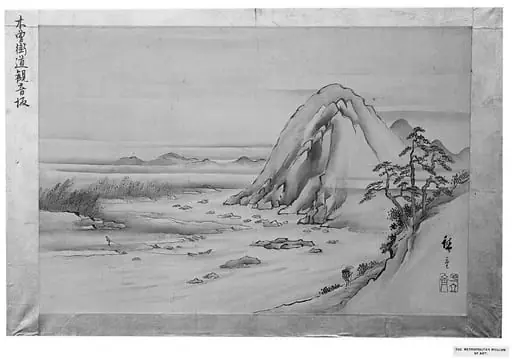
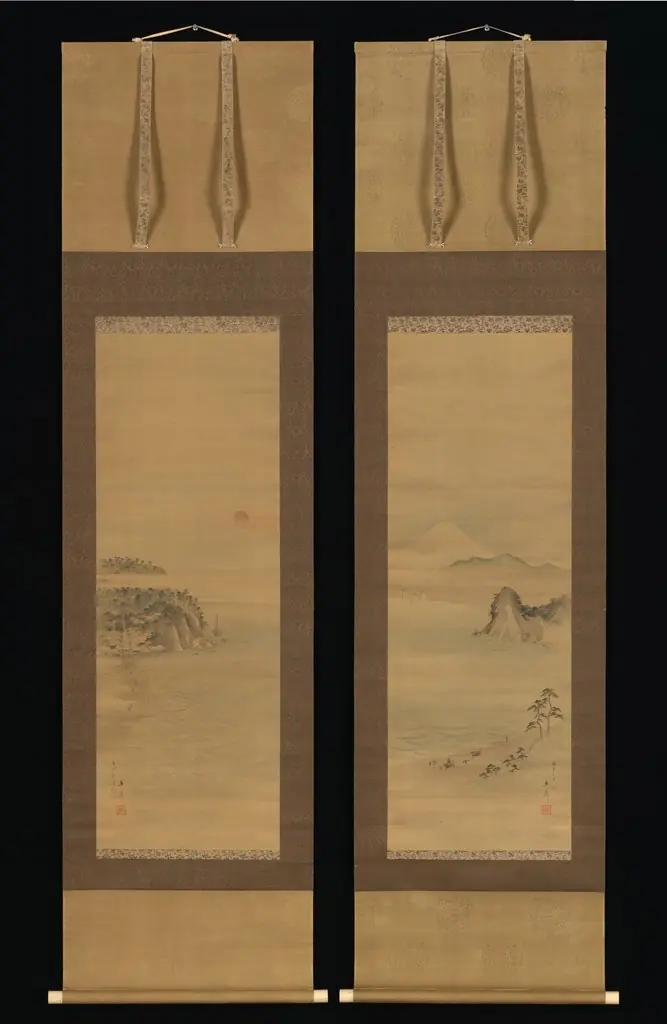
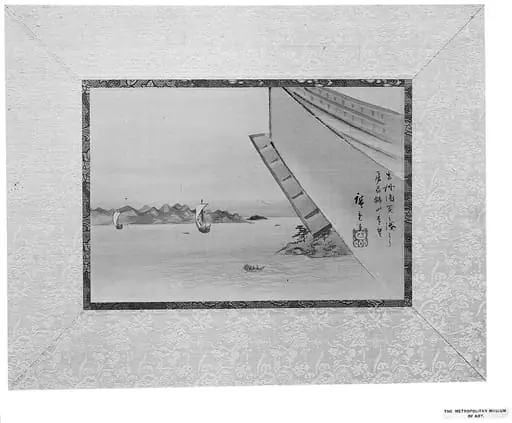
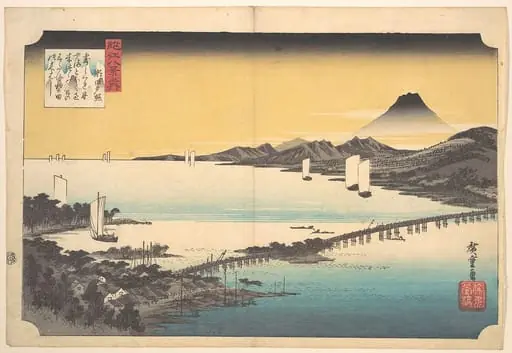 近江八景之内 瀬田夕照|Sunset at Seta
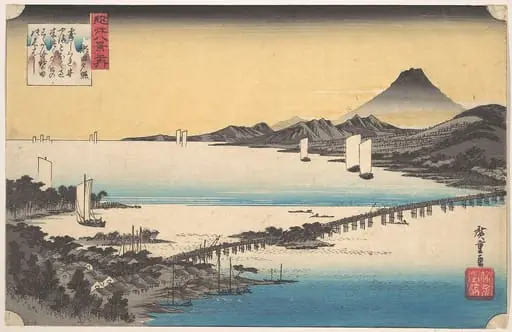 近江八景之内 瀬田夕照|Sunset at Seta
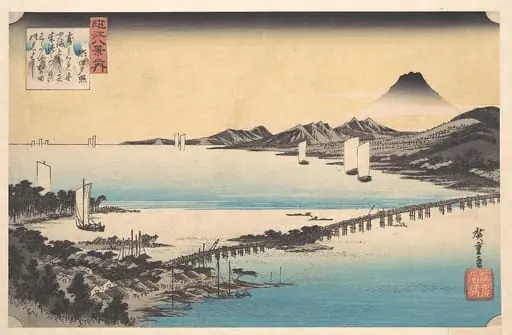 近江八景之内 瀬田夕照|Seta no Sekisho. Sunset, Seta. Lake Biwa
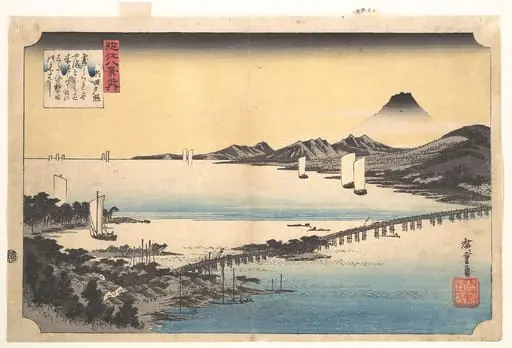 歌川広重画 近江八景の内 瀬田夕照|Sunset Glow at Seta (Seta sekishō), from the series Eight Views of Ōmi Province (Ōmi hakkei)
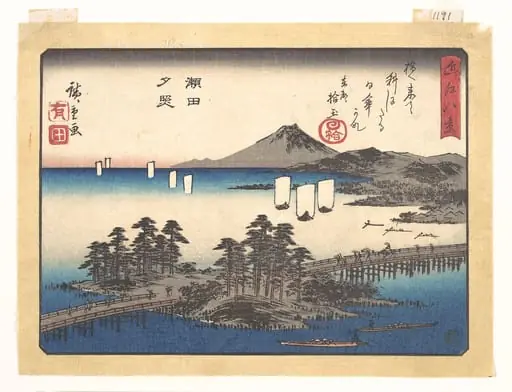 歌川広重画 「近江八景 瀬田夕照」|Sunset Glow at Seta, from the series Eight Views of Ōmi (Ōmi hakkei)
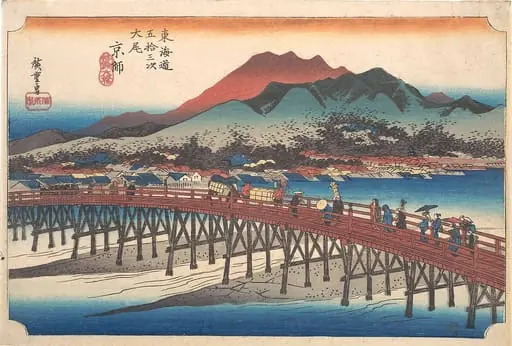 歌川広重画 「東海道五十三次 大尾 京師 三条大橋」|Kyoto: The Great Bridge at Sanjō (Taibi, Keishi, Sanjō Ōhashi), from the series Fifty-Three Stations of the Tōkaidō (Tōkaidō gojūsan tsugi)
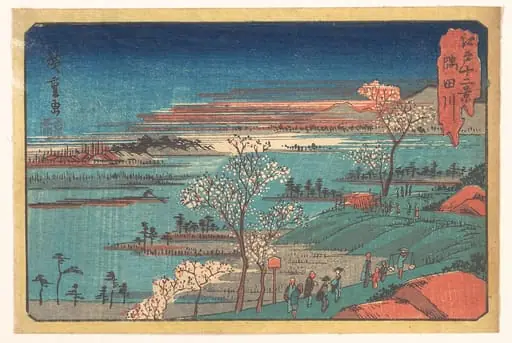 江戸十二景 隅田川|Gotenyama-no Hana
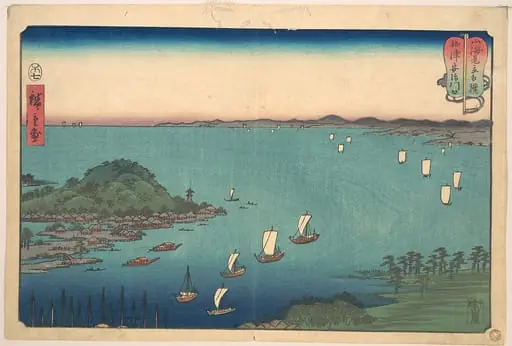 山海見立相撲 摂津安治川口|The Harbor of Ajikawa, Settsu Province
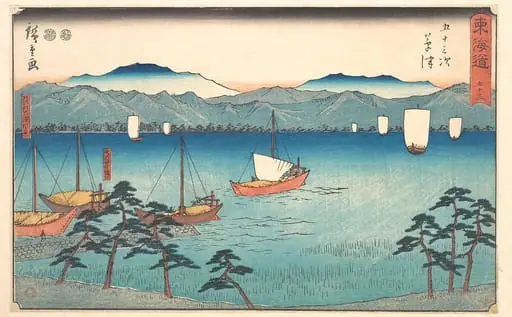 東海道五十三次 草津 矢ばせの渡口 琵琶湖風景|Kusatsu