Artwork
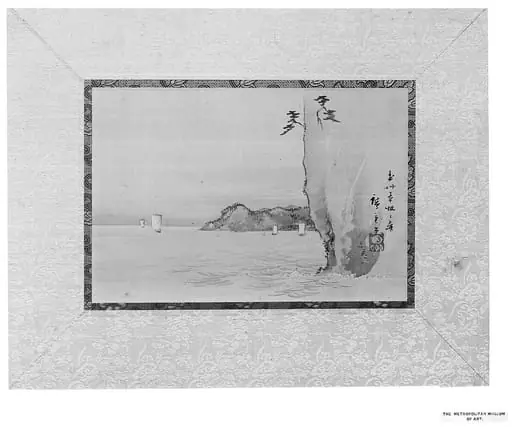
東海道五十三次 舞坂|Maizaka
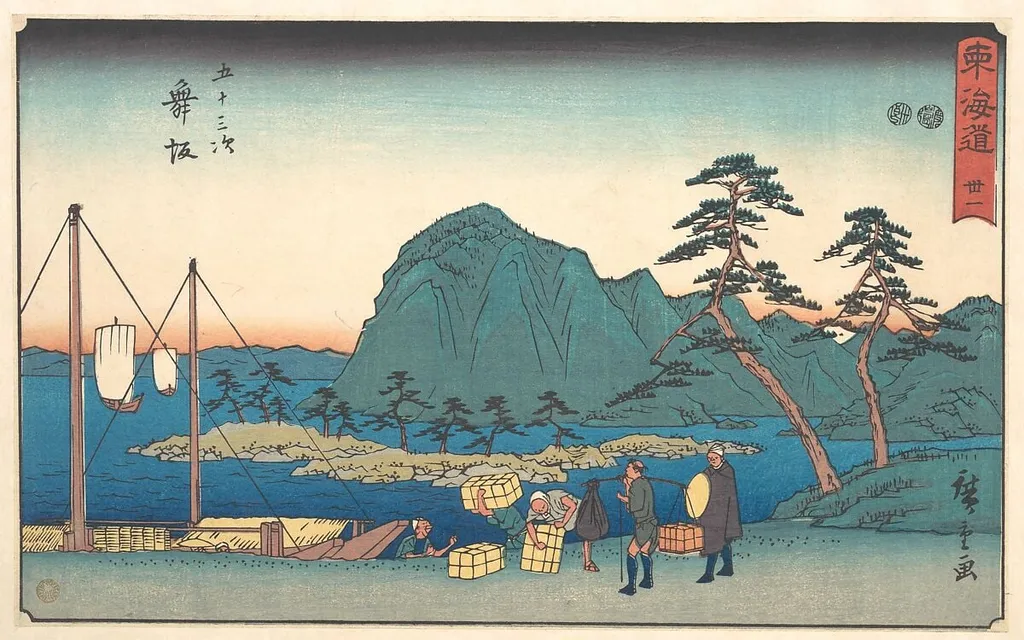
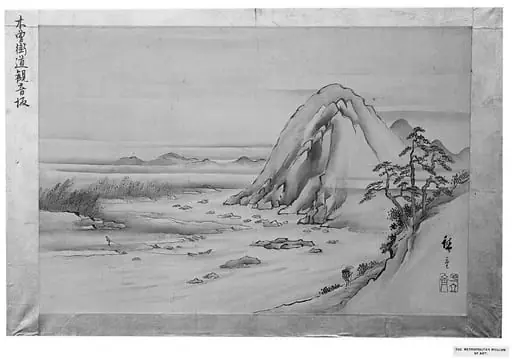
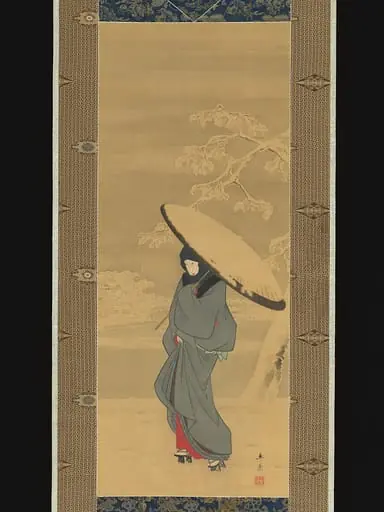
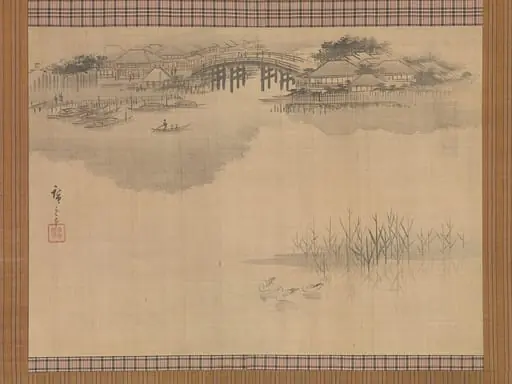
東海道五十三次 舞坂|Maizaka is an ink print by the Romanticist artist Utagawa Hiroshige. It dates from 1840 and is held in the collection of the Metropolitan Museum of Art.
About this work
Overview
It exemplifies Hiroshige’s shift from scenes of urban life to contemplative landscapes, reflecting the growing popularity of travel in late Edo-period Japan.
Created around 1840 by Utagawa Hiroshige, *Maizaka* is one of fifty-three prints in the series *The Fifty-three Stations of the Tōkaidō*. This woodblock print, made with ink and color on paper, captures a quiet moment along the coastal road linking Edo and Kyoto. It exemplifies Hiroshige’s shift from scenes of urban life to contemplative landscapes, reflecting the growing popularity of travel in late Edo-period Japan.
Subject & Meaning
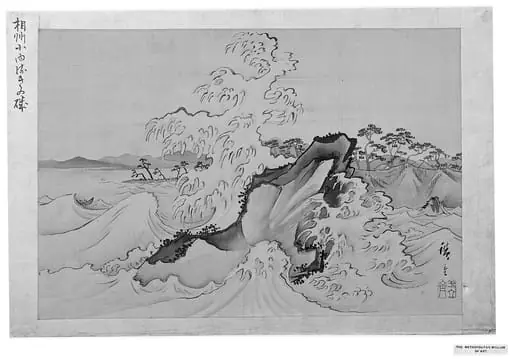
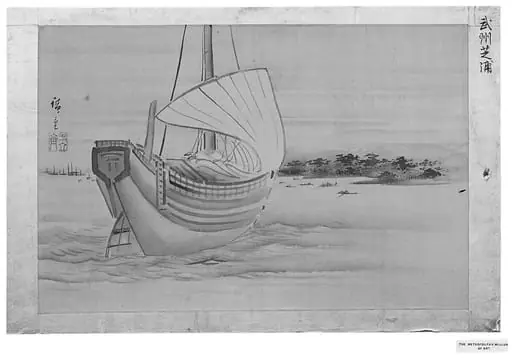
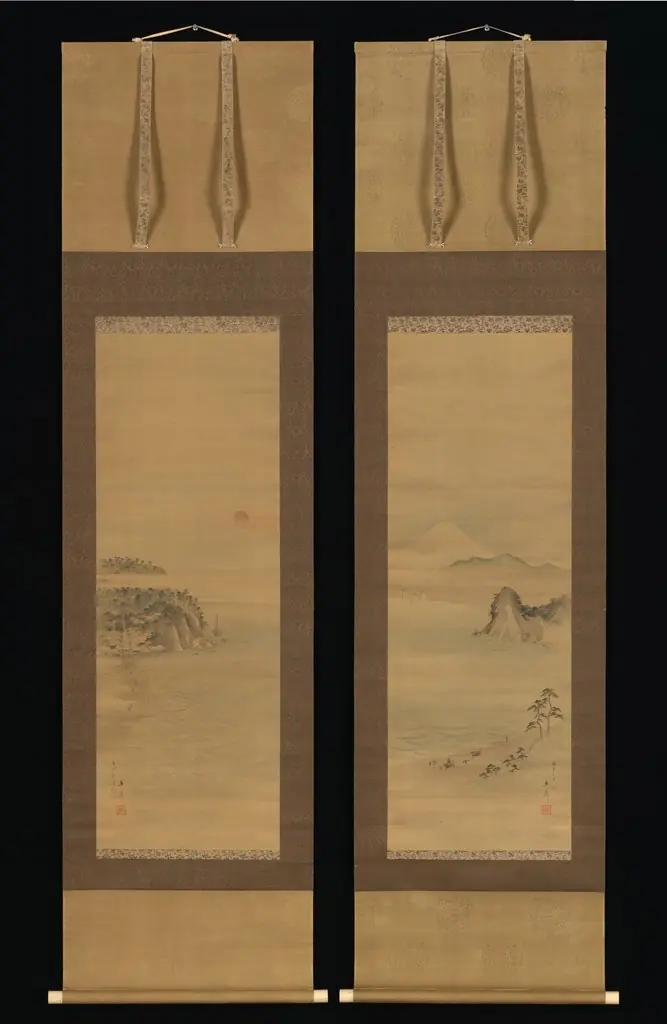
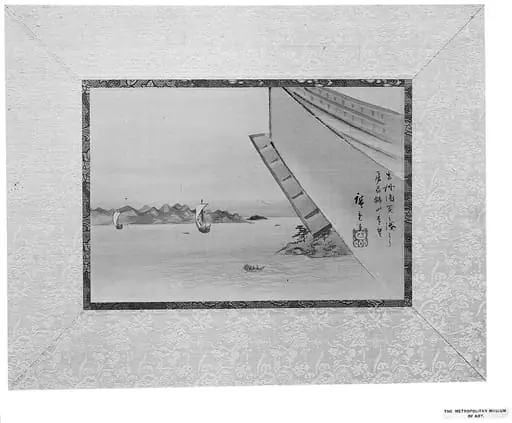
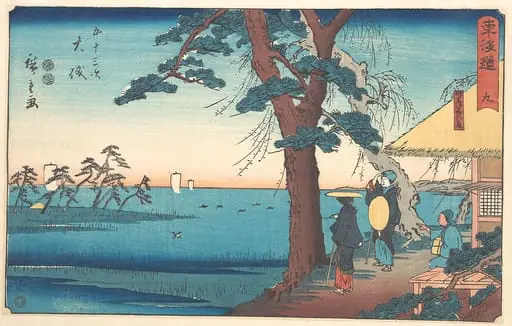
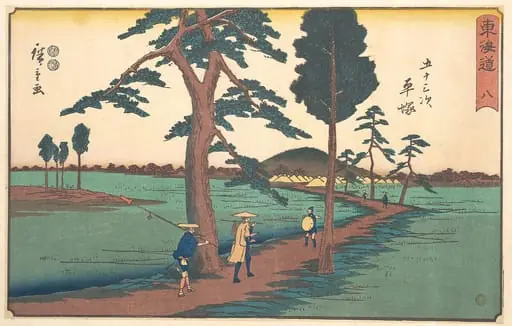
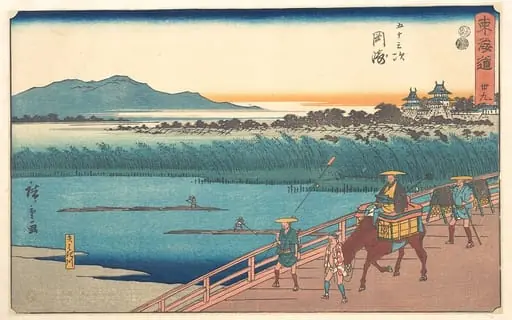
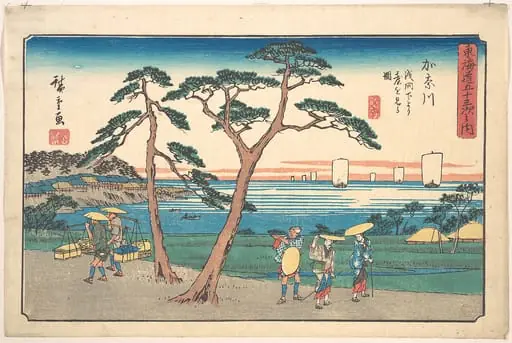
The scene depicts a modest harbor at Maizaka, where four figures attend to cargo on the shore. A single boat with a white sail rests nearby, suggesting transit or trade. The towering green mountain behind them dominates the composition, dwarfing human activity. This contrast emphasizes nature’s scale and the quiet rhythm of daily life along the route, evoking solitude rather than grandeur.
Technique & Style
Hiroshige employs flat planes of color and precise outlines to suggest depth without traditional perspective. The pale, washed sky hints at twilight, while the mountain’s solid form anchors the image. Figures are minimized in scale, reinforcing the landscape’s dominance. The print’s restrained palette and deliberate composition reflect the ukiyo-e tradition’s emphasis on mood over detail, prioritizing atmosphere over realism.
History & Provenance
The print was produced during Hiroshige’s most prolific period, when the *Tōkaidō* series gained widespread circulation. It entered the collection of The Metropolitan Museum of Art through documented acquisitions of Japanese prints in the early 20th century. Its preservation reflects broader Western interest in Edo-period woodblock prints as artistic artifacts rather than mere commercial products.
Context
The Tōkaidō road was a vital artery for travelers, merchants, and pilgrims during the Edo period. Hiroshige’s series documented each station with attention to seasonal change and local character. *Maizaka* reflects the quiet, functional side of this journey—less about spectacle, more about the rhythm of movement and rest. Such prints were affordable and widely distributed, shaping public perception of Japan’s geography.
Legacy
Hiroshige’s *Tōkaidō* series influenced later generations of artists, both in Japan and abroad, particularly in the development of landscape printmaking. *Maizaka* exemplifies his ability to transform ordinary moments into enduring visual poetry. Its quiet composition and emotional restraint continue to inform how natural scenes are rendered in print, bridging traditional Japanese aesthetics with modern visual language.
Artist & collection
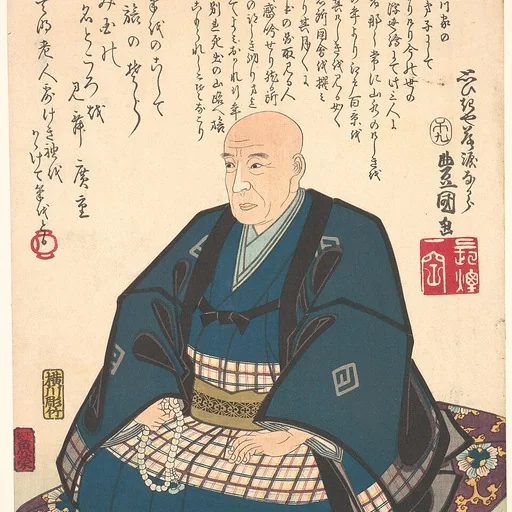
Artist
Utagawa Hiroshige (歌川 広重) or Andō Hiroshige (安藤 広重), born Andō Tokutarō (安藤 徳太郎; 1797 – 12 October 1858), was a Japanese ukiyo-e artist, considered the last great master of that tradition.