Artwork
Yahagi Bridge at Okazaki (Station 39), From the series Fifty-Three Stations of the Tokaido
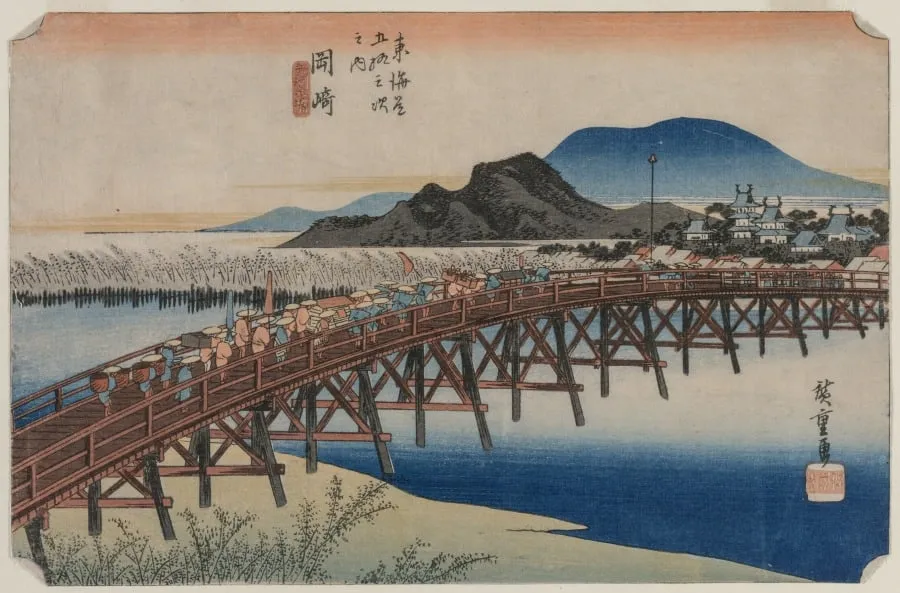
Yahagi Bridge at Okazaki (Station 39), From the series Fifty-Three Stations of the Tokaido is a print by the Romanticist artist Utagawa Hiroshige. It dates from 1833 and is held in the collection of the Cleveland Museum of Art.
About this work
Overview
It captures a quiet moment along the journey, emphasizing the natural and architectural elements of the landscape rather than human drama.
Created in 1833 by Utagawa Hiroshige, this woodblock print is the thirty-ninth station in his series depicting the Tōkaidō road, the main route connecting Edo and Kyoto. It captures a quiet moment along the journey, emphasizing the natural and architectural elements of the landscape rather than human drama. The composition follows a horizontal format typical of Hiroshige’s landscape prints, distinguishing his work from earlier ukiyo-e focused on actors and courtesans.
Subject & Meaning
The scene portrays Yahagi Bridge spanning the Yahagi River near Okazaki, with travelers crossing or pausing along its length. Tall reeds frame the left edge, while distant buildings and a dark mountain suggest the quiet presence of settlement and terrain. The absence of action or spectacle invites contemplation, reflecting the meditative rhythm of travel in Edo-period Japan. The print conveys stillness as an essential part of the journey, not merely a pause between destinations.
Technique & Style
Hiroshige employed bold, flat areas of color—soft pink in the sky, deep blue in the water—with clean, precise lines to define forms. The wooden bridge curves gently across the composition, its simplicity enhancing the calm atmosphere. The use of atmospheric perspective, with the mountain receding into the haze, and the careful placement of reeds and figures, demonstrate his mastery of spatial depth in woodblock printing without relying on Western linear perspective.
History & Provenance
The print was produced as part of Hiroshige’s first major landscape series, published by Hoeidō in the early 1830s. It quickly gained popularity for its evocative depiction of everyday travel scenes. Original impressions were widely distributed among merchants and travelers, and surviving copies today are held in major museum collections, including the Museum of Fine Arts, Boston, and the British Museum, attesting to its enduring presence in print history.
Context
During the Edo period, the Tōkaidō was a vital artery for commerce, pilgrimage, and official travel. Hiroshige’s series responded to public interest in illustrated guides to the road, but elevated the genre by focusing on seasonal changes, weather, and mood. Unlike earlier prints centered on urban life, this work reflects a growing cultural appreciation for nature and the quiet rhythms of provincial landscapes.
Legacy
Hiroshige’s approach influenced later Japanese artists and, through exports to Europe, impacted 19th-century Western landscape painting and printmaking. His emphasis on atmosphere, subtle color, and everyday scenery helped redefine the potential of woodblock prints as vehicles for poetic observation. The series remains a foundational reference in the study of Japanese visual culture and the evolution of landscape representation.
Artist & collection
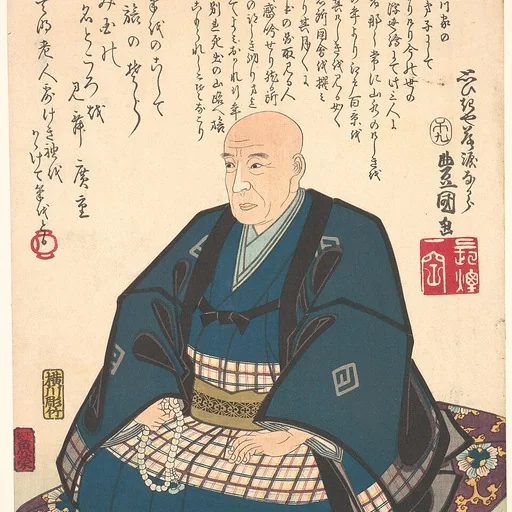
Artist
Utagawa Hiroshige (歌川 広重) or Andō Hiroshige (安藤 広重), born Andō Tokutarō (安藤 徳太郎; 1797 – 12 October 1858), was a Japanese ukiyo-e artist, considered the last great master of that tradition.

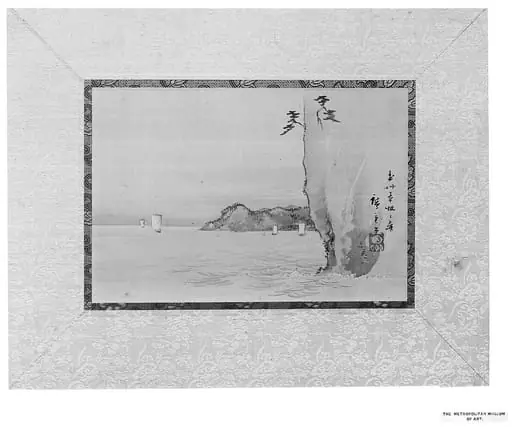
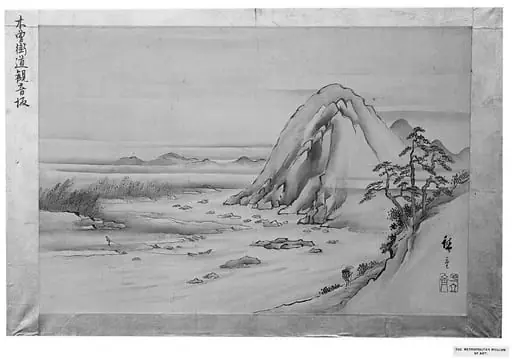
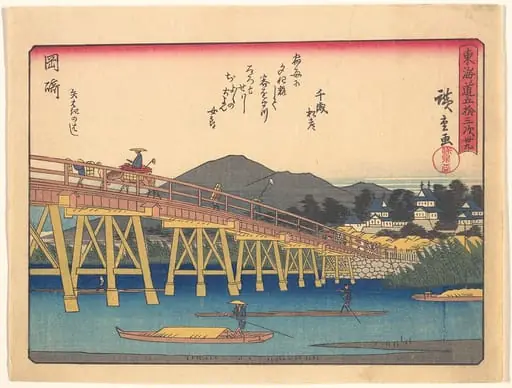 東海道五十三次 岡崎|Okazaki, from the series The Fifty-three Stations of the Tōkaidō Road
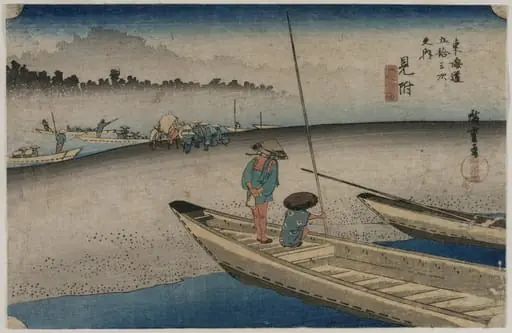 Picture of the Tenryu River near Mitsuke (Station 29), from the series Fifty-Three Stations of the Tokaido
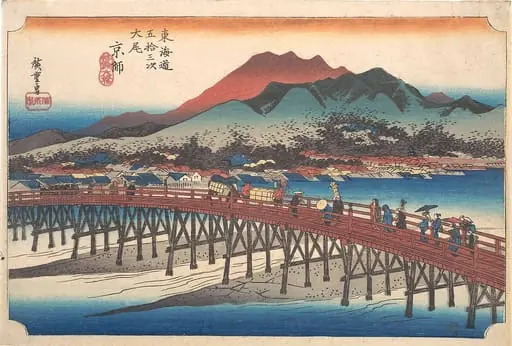 歌川広重画 「東海道五十三次 大尾 京師 三条大橋」|Kyoto: The Great Bridge at Sanjō (Taibi, Keishi, Sanjō Ōhashi), from the series Fifty-Three Stations of the Tōkaidō (Tōkaidō gojūsan tsugi)
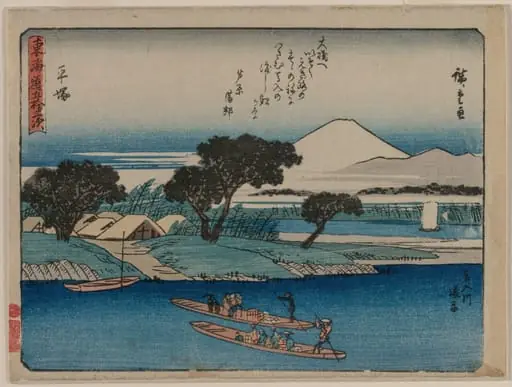 The Fifty-Three Stations of the Tokaido: Hiratsuka
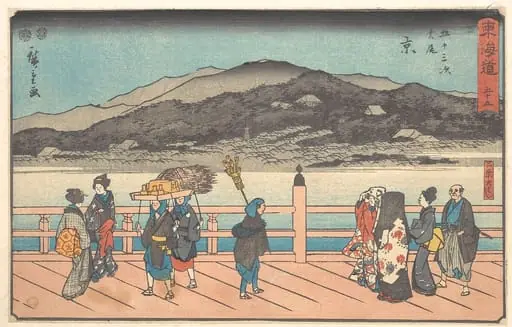 歌川広重画 「東海道 五十三次 大尾 京 三条大はし」|The Great Bridge at Sanjō (Taibi, Kyō, Sanjō Ōhashi), from the series The Tōkaidō Road: The Fifty-Three Stations (Tōkaidō: Gojūsan tsugi)
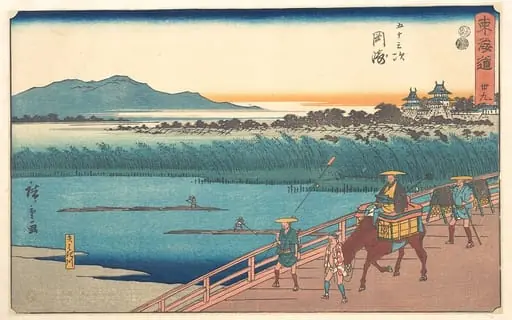 東海道五十三次 岡崎 矢はぎ川|Okazaki
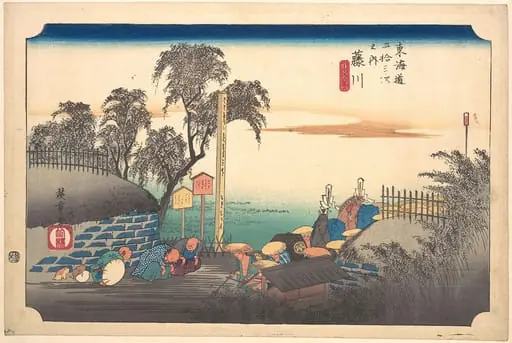 東海道五十三次之内 藤川 棒鼻の図|Station Thirty-Eight: Fujikawa, Scene at the Border, from the Fifty-Three Stations of the Tokaido
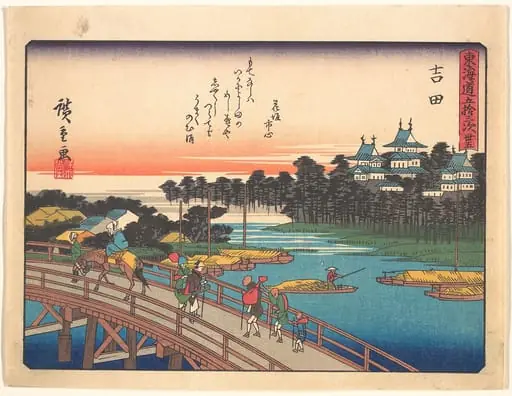 東海道五十三次 吉田|Yoshida, from the series The Fifty-three Stations of the Tōkaidō Road
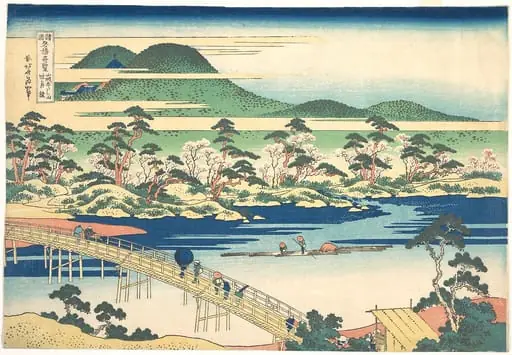 諸國名橋奇覧 山城あらし山吐月橋 |Togetsu Bridge at Arashiyama in Yamashiro, from the series Remarkable Views of Bridges in Various Provinces (Shokoku meikyō kiran)