Artwork
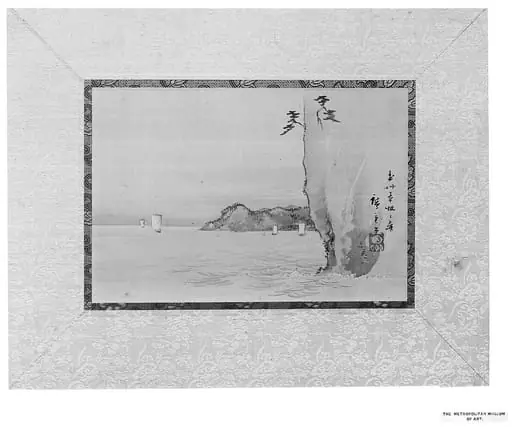
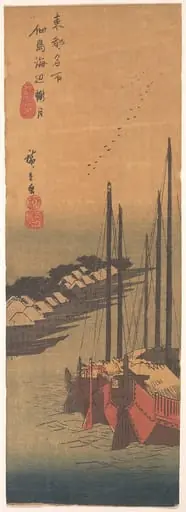
東都名所 佃島海辺朧月|Tsukudajima Kaihin Rōgetsu
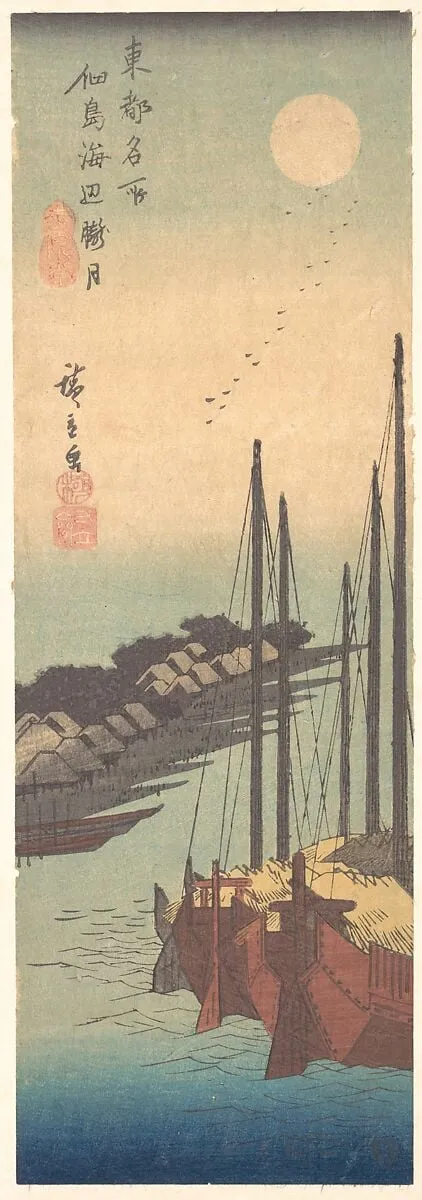
東都名所 佃島海辺朧月|Tsukudajima Kaihin Rōgetsu is an ink print by the Romanticist artist Utagawa Hiroshige. It dates from 1836 and is held in the collection of the Metropolitan Museum of Art.
About this work
Overview
Created around 1836 by Utagawa Hiroshige, this woodblock print captures a nocturnal view of Tsukudajima’s shoreline in Edo.
Created around 1836 by Utagawa Hiroshige, this woodblock print captures a nocturnal view of Tsukudajima’s shoreline in Edo. Part of a series documenting the city’s outskirts, it blends natural scenery with quiet human presence. Rendered in ink and color on paper, the work exemplifies Hiroshige’s focus on atmospheric landscapes rather than bustling urban life, offering a contemplative counterpoint to typical ukiyo-e subjects.
Subject & Meaning
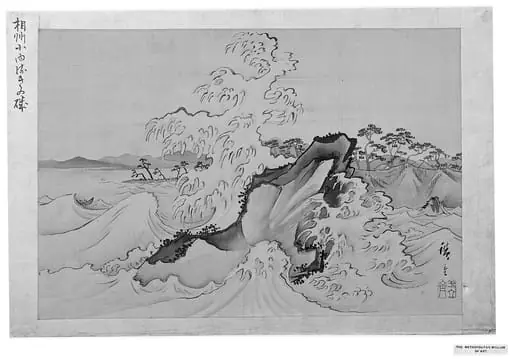
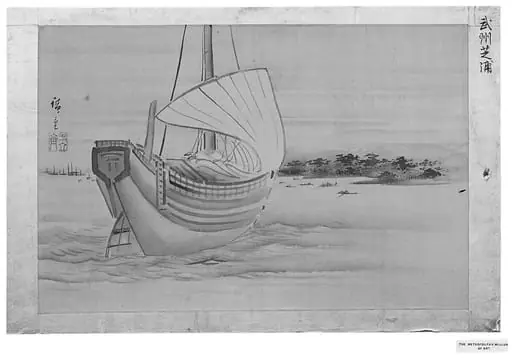
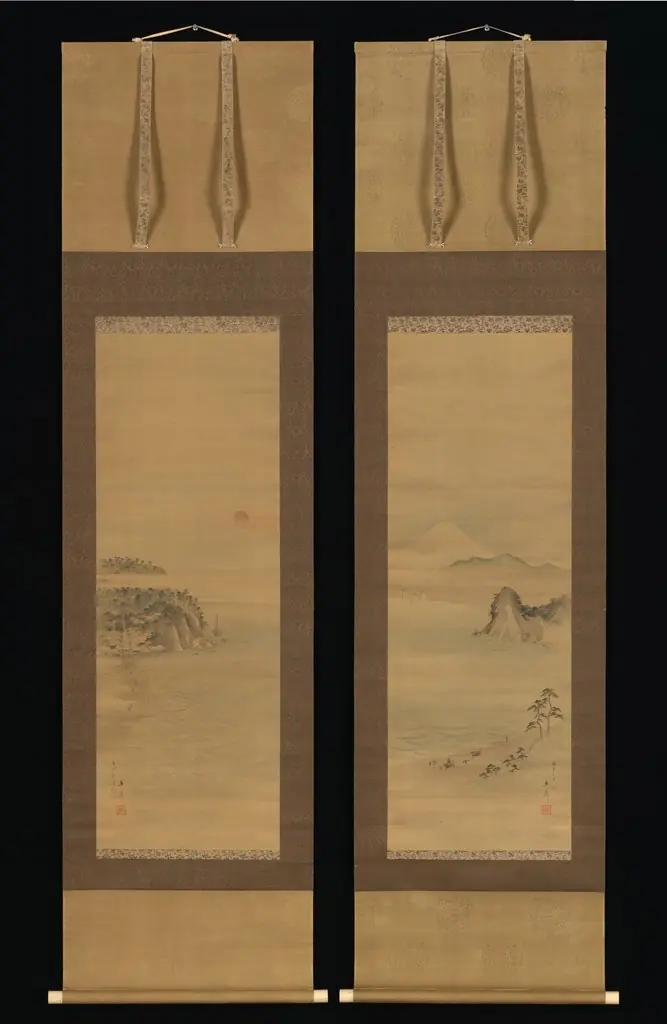
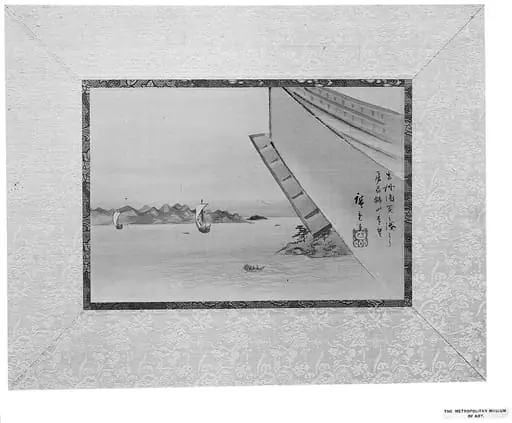
The scene portrays two anchored fishing boats beside a line of modest homes under a full moon. The stillness of the water and the slanted masts suggest a pause in daily labor, evoking solitude rather than activity. The moon’s pale light unifies the composition, transforming the harbor into a tranquil, almost meditative space. This quiet moment reflects a broader interest in the rhythms of Edo’s peripheral communities and their relationship with nature.
Technique & Style
Hiroshige employed fine, abbreviated brushwork to suggest the texture of wood, water, and mist. The boats and waves are rendered with loose, rapid lines that blur edges, creating a hazy, luminous effect. Color is applied sparingly, emphasizing tonal gradations over bold contrasts. This technique, common in his later works, enhances the sense of nightfall and atmospheric moisture, distinguishing the print through its subdued, poetic realism.
History & Provenance
The print was produced during Hiroshige’s early period of landscape-focused series, before his more famous travel albums. It likely circulated as a single-sheet print among Edo’s middle class, valued for its depiction of familiar local scenery. While specific early ownership records are sparse, it remains part of the broader corpus of Hiroshige’s Edo-themed prints, preserved in museum collections for its representational clarity and emotional tone.
Context
In the 1830s, ukiyo-e artists increasingly turned to landscapes as urban audiences sought depictions of nature and travel. Tsukudajima, a small island near Edo’s harbor, was known for its fishing community and moon-viewing traditions. Hiroshige’s choice of this location aligns with a growing cultural appreciation for quiet, seasonal moments, contrasting with the more theatrical scenes of kabuki or courtesans that dominated earlier prints.
Legacy
This print contributes to Hiroshige’s reputation as a master of mood and subtle detail in landscape printmaking. Its emphasis on light, stillness, and everyday environment influenced later Japanese artists and, through Western exposure, helped shape 19th-century European perceptions of Japanese aesthetics. Though not widely exhibited today, it remains a quiet example of how ukiyo-e could convey introspection through ordinary scenes.
Artist & collection
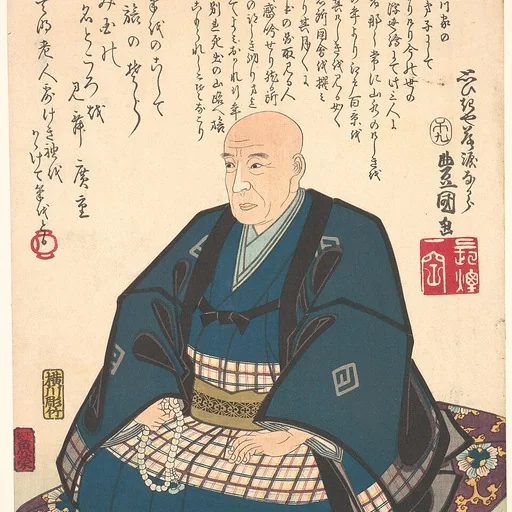
Artist
Utagawa Hiroshige (歌川 広重) or Andō Hiroshige (安藤 広重), born Andō Tokutarō (安藤 徳太郎; 1797 – 12 October 1858), was a Japanese ukiyo-e artist, considered the last great master of that tradition.