Artwork
東都名所 佃島海辺朧月|Tsukudajima no Oborozuki
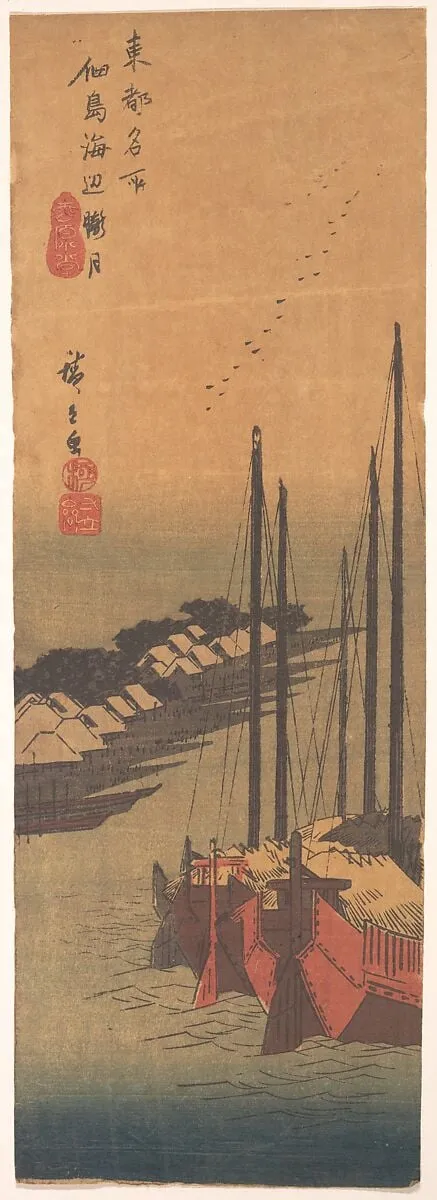
東都名所 佃島海辺朧月|Tsukudajima no Oborozuki is an ink print by the Romanticist artist Utagawa Hiroshige. It dates from 1828 and is held in the collection of the Metropolitan Museum of Art.
About this work
Overview
Part of a series documenting local landscapes, it reflects Hiroshige’s interest in everyday views beyond the city’s bustling centers.
Created in 1828 by Utagawa Hiroshige, this woodblock print captures a quiet coastal scene at Tsukudajima, a small island near Edo. Part of a series documenting local landscapes, it reflects Hiroshige’s interest in everyday views beyond the city’s bustling centers. Rendered in ink and color on paper, the work exemplifies his mastery of mood and subtle tonal variation, distinguishing it from more theatrical ukiyo-e subjects.
Subject & Meaning
The scene depicts a tranquil harbor at twilight, with three tall vessels moored along a wooden pier. Behind them, modest thatched-roof dwellings climb a gentle slope, suggesting a working community tied to the sea. The faint glow of the moon and low-flying birds evoke a moment of stillness, emphasizing the quiet rhythm of daily life. Rather than celebrating grandeur, the image honors the understated beauty of Edo’s periphery.
Technique & Style
Hiroshige employed delicate gradations of blue, gray, and earth tones to suggest the hazy transition from day to night. The moon’s reflection on the water is rendered with minimal ink washes, creating a luminous yet restrained effect. Lines are soft, forms simplified, and details subdued—hallmarks of his atmospheric approach. The print’s composition guides the eye from the dark hulls toward the pale sky, reinforcing the sense of quietude.
History & Provenance
The print was produced during Hiroshige’s early period, when he was refining his landscape-focused style. It belongs to a series that documented Edo’s lesser-known locales, reflecting growing public interest in regional travel and seasonal beauty. The work entered The Metropolitan Museum of Art’s collection through established channels of Japanese print acquisition in the 20th century, where it remains part of a significant ukiyo-e archive.
Context
In the 1820s, ukiyo-e artists increasingly turned from kabuki actors and courtesans to natural scenery, responding to urban dwellers’ desire for escapism. Tsukudajima, a fishing community, offered a peaceful contrast to Edo’s density. Hiroshige’s choice to depict such a site aligns with broader cultural shifts toward appreciating transient, everyday moments—what would later be called mono no aware.
Legacy
This print exemplifies Hiroshige’s influence on later landscape traditions, both in Japan and the West. His use of mood, light, and spatial ambiguity inspired 19th-century European artists, including the Impressionists. While not widely celebrated in his lifetime as his later series would be, works like this laid the groundwork for his enduring reputation as a poet of place through print.
Artist & collection
Artist
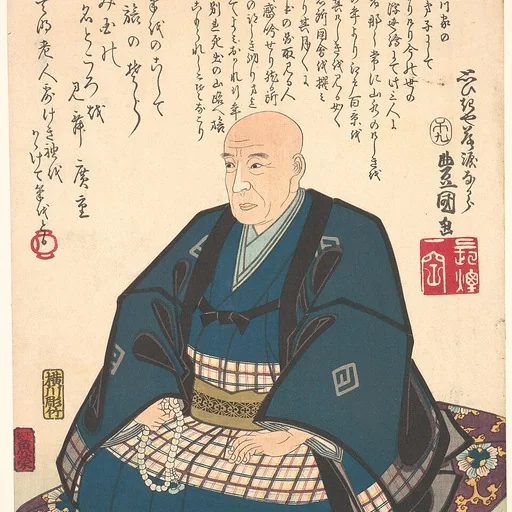
Utagawa Hiroshige (歌川 広重) or Andō Hiroshige (安藤 広重), born Andō Tokutarō (安藤 徳太郎; 1797 – 12 October 1858), was a Japanese ukiyo-e artist, considered the last great master of that tradition.

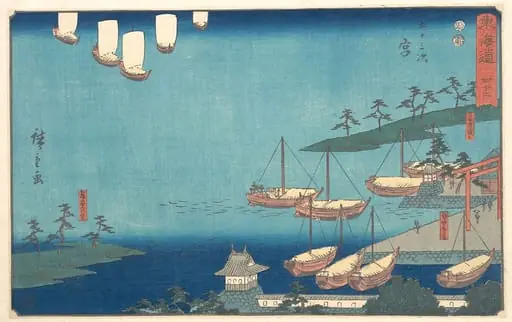 東海道五十三次 宮 七里の渡し 熱田鳥居 寝覚の里|Miya
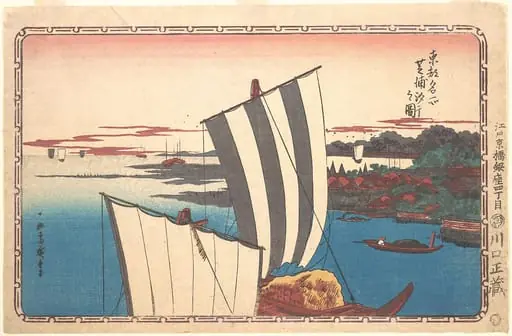 Shibaura, shiohi-gari no zu|東都名所 芝浦汐干之図|Shell Gathering at Shibaura
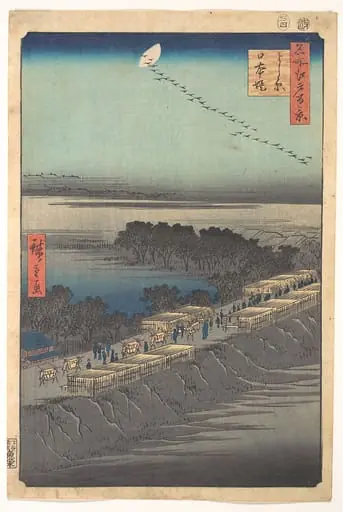 「名所江戸百景 よし原 日本堤」|“Nihon Embankment at Yoshiwara,” from the series One Hundred Famous Views of Edo (Meisho Edo hyakkei, Yoshiwara, Nihonzutsumi)
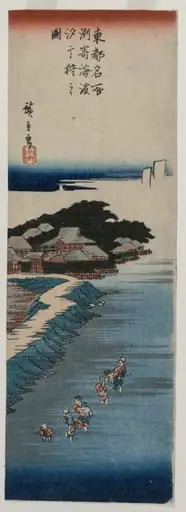 Gathering Shells at Low Tide at Susaki; from the series 100 Views of Famous Places in Edo
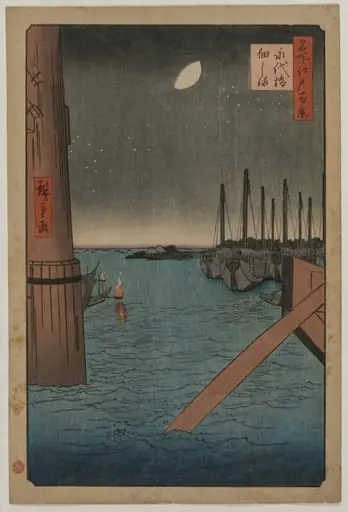 Tsukudajima from Eitai Bridge, from the series One Hundred Views of Famous Places in Edo
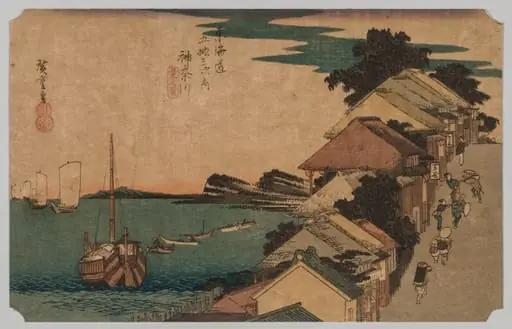 Kanagawa, Inland Sea: Top of the Street
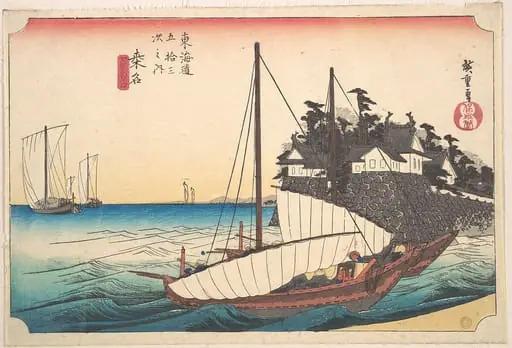 東海道五十三次之内 桑名 七里渡口|Kuwana, Shichi-Ri Watashi Guchi