Artwork
六十余州名所図会 対馬 海岸夕晴|Tsushima Kaigan Yubare
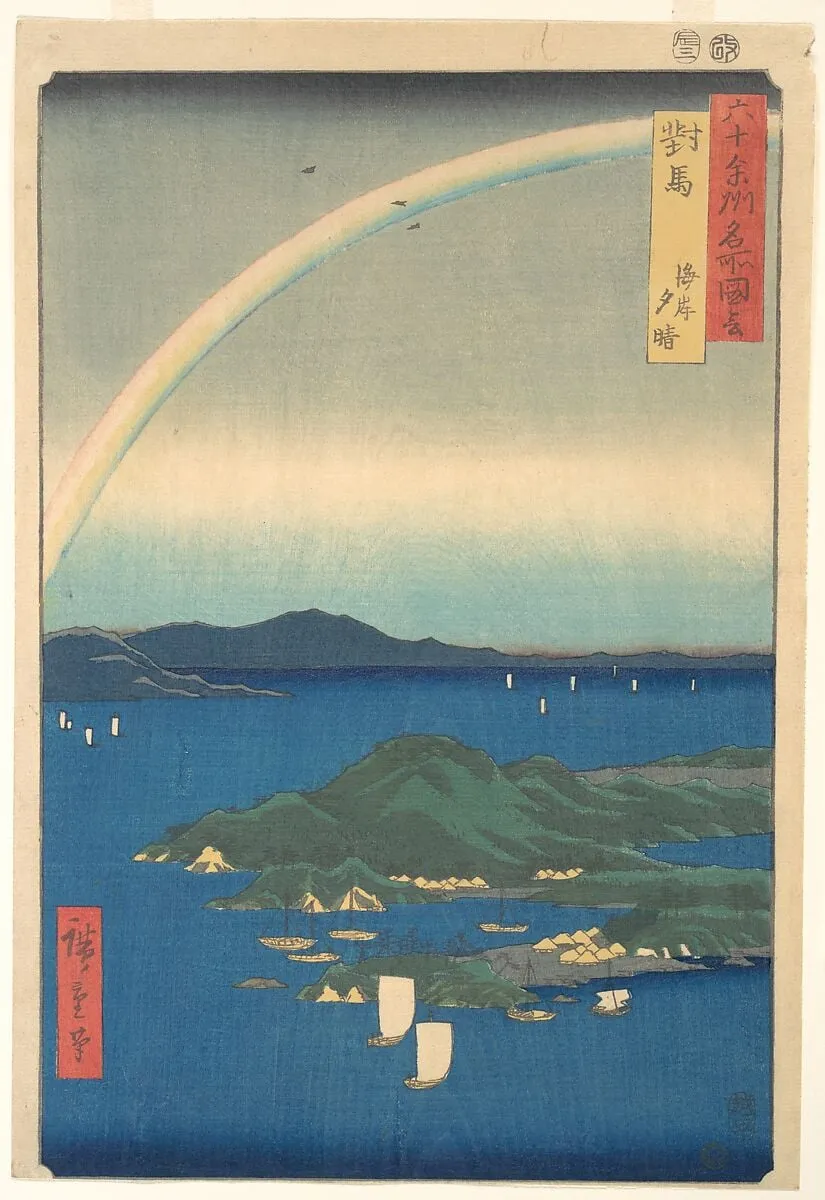
六十余州名所図会 対馬 海岸夕晴|Tsushima Kaigan Yubare is an ink print by the Impressionist artist Utagawa Hiroshige. It dates from 3 and is held in the collection of the Metropolitan Museum of Art.
About this work
Overview
Utagawa Hiroshige’s woodblock print *Tsushima Kaigan Yubare* belongs to his series documenting provincial landscapes. Executed in ink and color on paper, the image captures a tranquil coastal scene on Tsushima Island and is part of the Metropolitan Museum of Art’s collection.
Subject & Meaning
The composition presents a calm sea of bright blue, a modest island dotted with verdant hills, and a few fishing vessels near the shore. A solitary rainbow arches across a pale sky, providing a focal point that contrasts with the otherwise serene seascape.
Technique & Style
Created through traditional Japanese woodblock printing, the work combines line work in ink with layered color washes. Hiroshige’s handling of atmospheric perspective—fading hills receding into distant mountains—exemplifies his approach to rendering depth and weather effects in ukiyo‑e landscapes.
History & Provenance
Produced during the Edo period as part of Hiroshige’s *Sixth Collection of Views of Provinces*, the print later entered the collection of the Metropolitan Museum of Art, where it remains on display as an example of 19th‑century Japanese printmaking.
Context
The image reflects the broader ukiyo‑e interest in travel and regional scenery that flourished in the mid‑1800s. Tsushima, situated between Japan and Korea, was a frequent subject for artists documenting Japan’s coastal geography and maritime culture.
Artist & collection
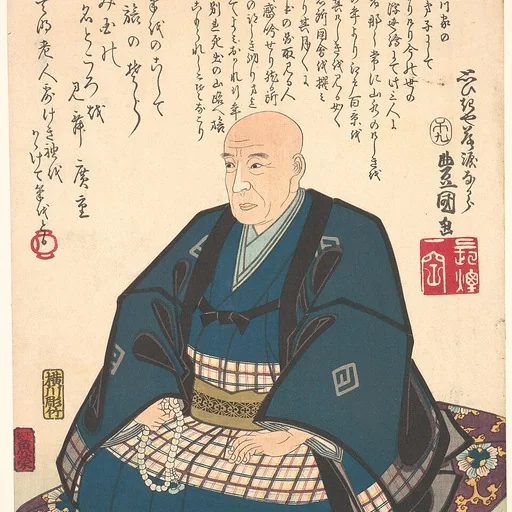
Artist
Utagawa Hiroshige (歌川 広重) or Andō Hiroshige (安藤 広重), born Andō Tokutarō (安藤 徳太郎; 1797 – 12 October 1858), was a Japanese ukiyo-e artist, considered the last great master of that tradition.

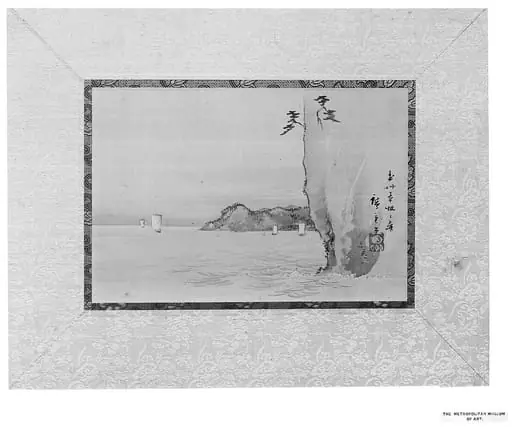
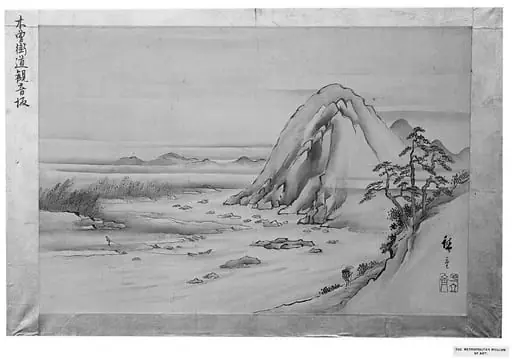
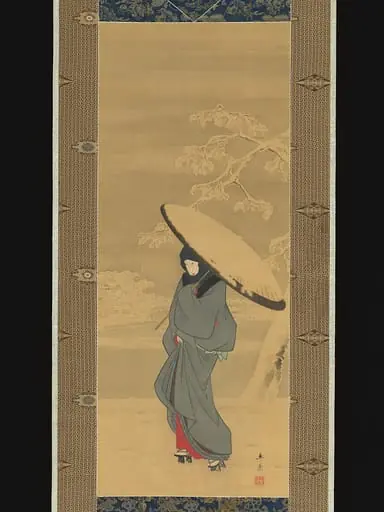
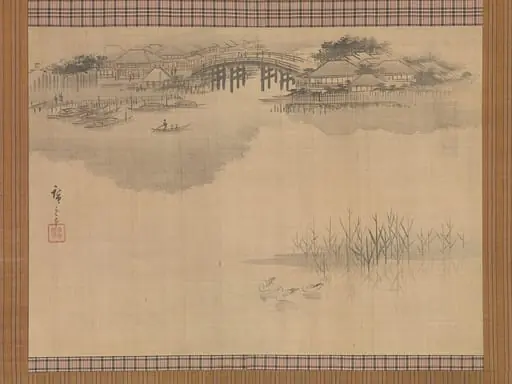
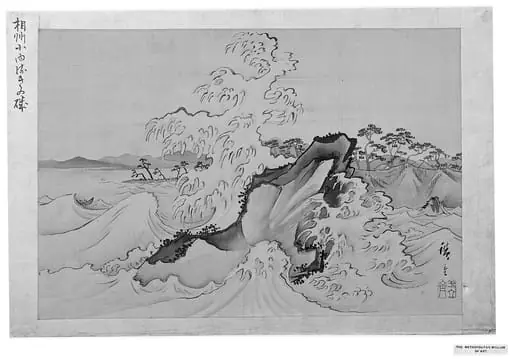
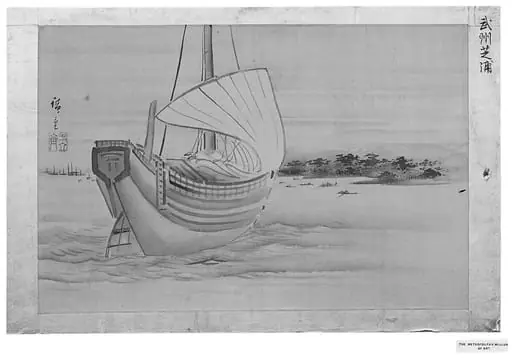
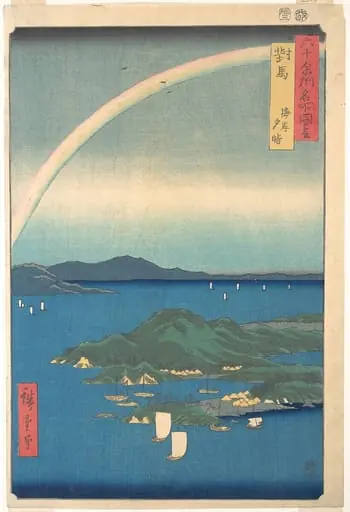 六十余州名所図会 対馬 海岸 夕晴|Evening Glow, Tsushima Province, from the series Views of Famous Places in the Sixty-Odd Provinces
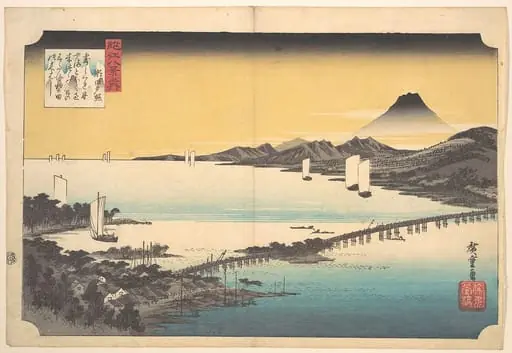 近江八景之内 瀬田夕照|Sunset at Seta
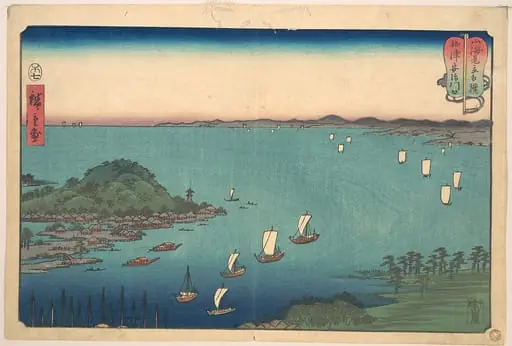 山海見立相撲 摂津安治川口|The Harbor of Ajikawa, Settsu Province
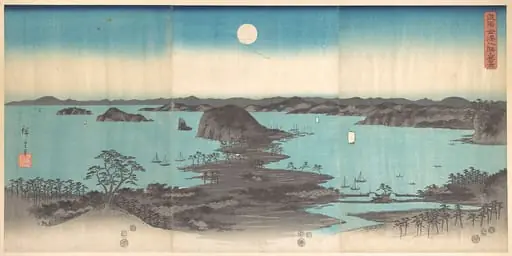 雪月花 武陽金沢八勝夜景|Panorama of the Eight Views of Kanasawa under a Full Moon
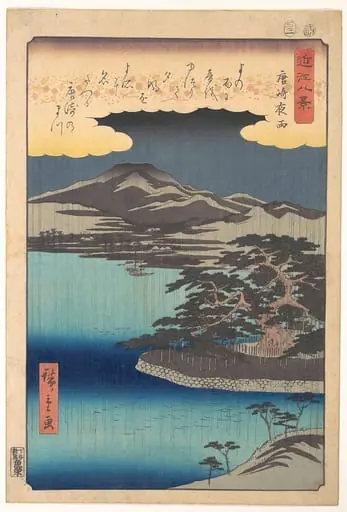 Karasaki ya'u|近江八景 唐崎夜雨|Pine Tree at Karasaki
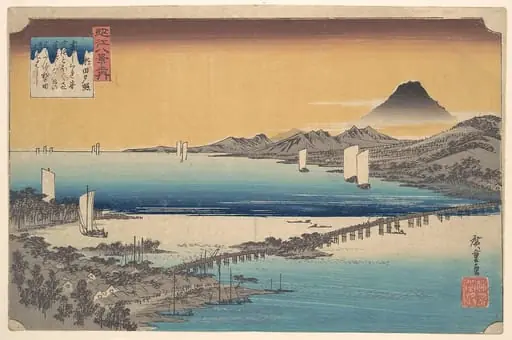 近江八景之内 瀬田夕照|Long Bridge of Seta