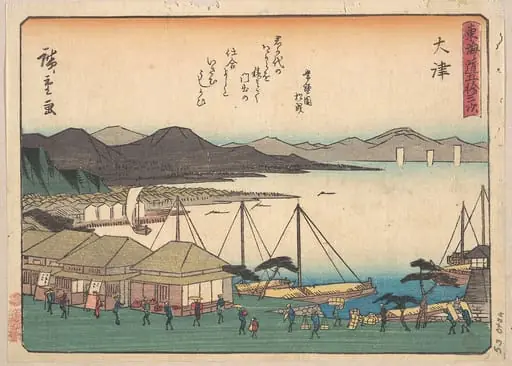
Artwork
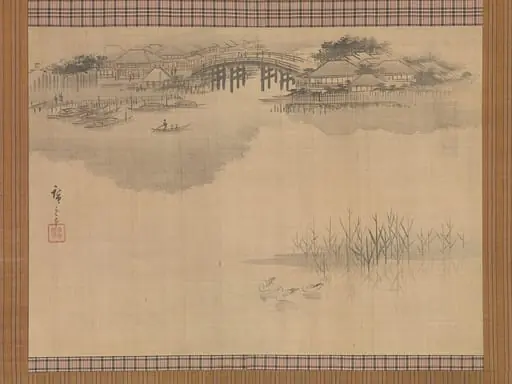
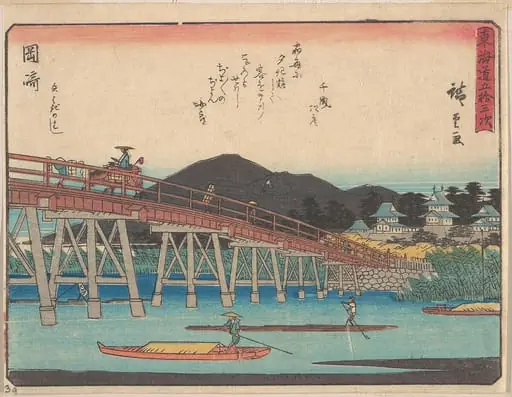
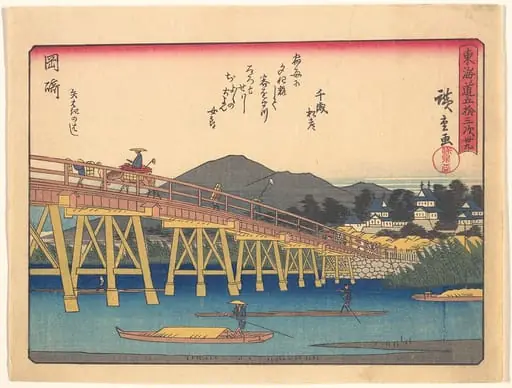
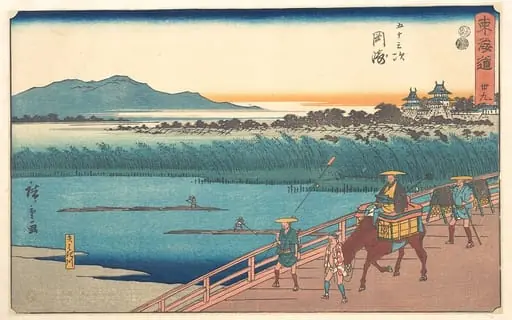
東海道五十三次之内 岡崎 矢矧の橋|Okazaki, Tenshin no Hashi
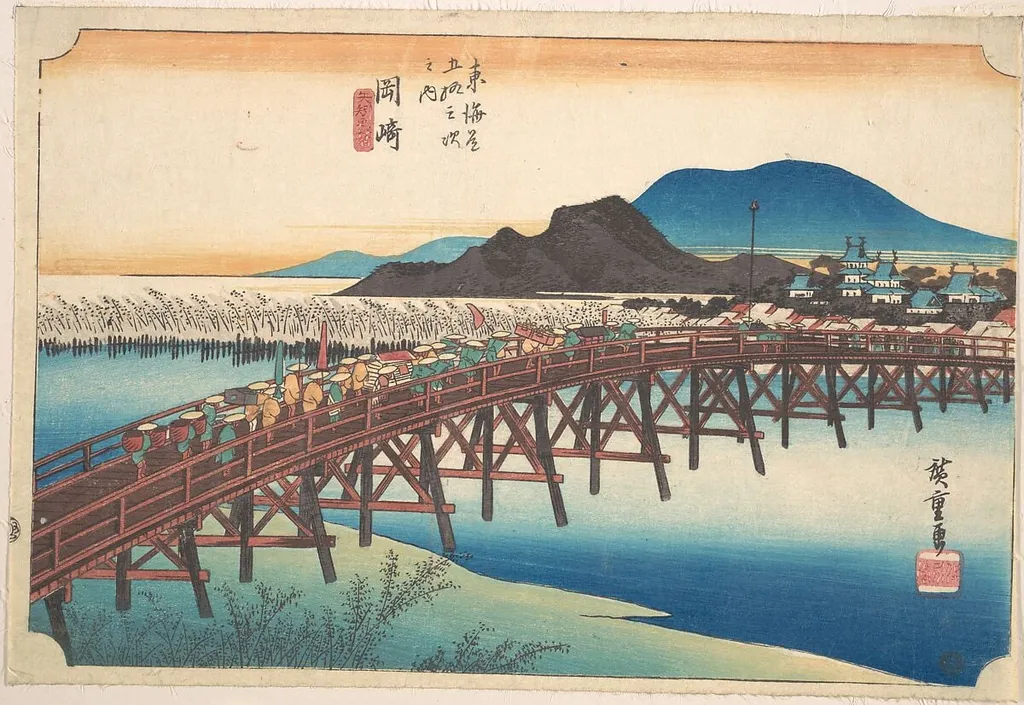
東海道五十三次之内 岡崎 矢矧の橋|Okazaki, Tenshin no Hashi is an ink print by the Romanticist artist Utagawa Hiroshige. It dates from 1834 and is held in the collection of the Metropolitan Museum of Art.
About this work
Overview
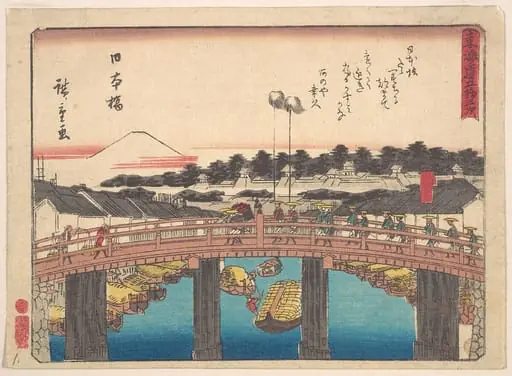
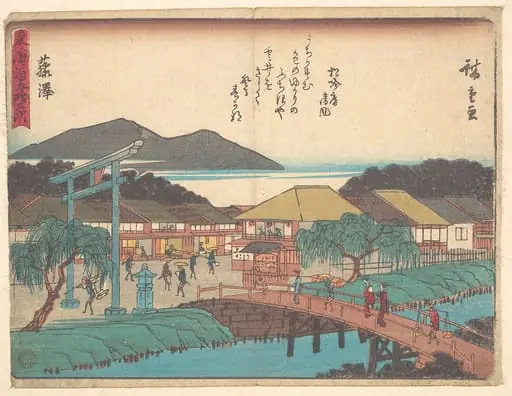
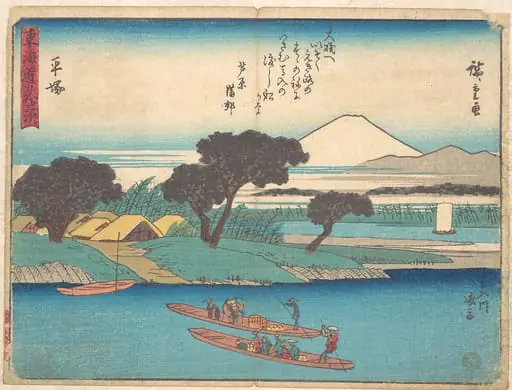
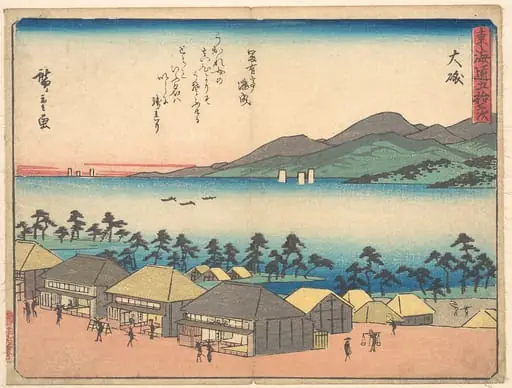
Utagawa Hiroshige’s print *Okazaki, Tenshin no Hashi* dates to about 1834 and belongs to his celebrated series *The Fifty‑three Stations of the Tōkaidō*. Executed as a horizontal woodblock sheet, the image records a particular post‑town along the historic Tōkaidō highway, a route that linked Edo (Tokyo) with Kyoto during the Edo period.
Subject & Meaning
The scene centers on a long wooden bridge spanning a tranquil river, crossed by pedestrians in modest attire, some bearing umbrellas or parcels. Beyond the bridge a small town clusters against a distant mountain, suggesting a moment of ordinary travel and commerce along the highway.
Technique & Style
Hiroshige employed the traditional ukiyo‑e method of carving separate blocks for ink outlines and color washes. The palette is restrained, dominated by soft blues and greens, while the composition balances the sturdy bridge’s linearity with the gentle sweep of sky and water.
History & Provenance
Produced as part of the *Tōkaidō* series, the print circulated widely in the 1830s, catering to a market of travelers and collectors fascinated by scenic depictions of the road. Original impressions remain in several museum collections, reflecting the series’ enduring popularity.
Context
While many ukiyo‑e works focused on urban pleasures, Hiroshige’s series turned attention to rural landscapes and the everyday life of travelers. This shift mirrored a growing public interest in the geography and scenery of Japan’s interior during the late Edo period.
Artist & collection
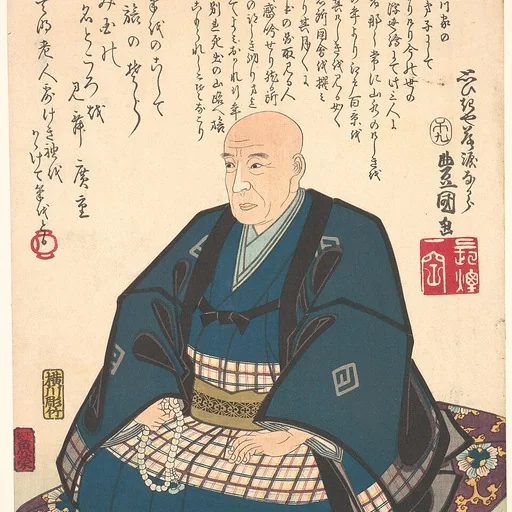
Artist
Utagawa Hiroshige (歌川 広重) or Andō Hiroshige (安藤 広重), born Andō Tokutarō (安藤 徳太郎; 1797 – 12 October 1858), was a Japanese ukiyo-e artist, considered the last great master of that tradition.