Artwork
Ukeji, Akiba no Keidai|名所江戸百景 請地秋葉の境内|Inside the Akiba Shrine at Ukeji
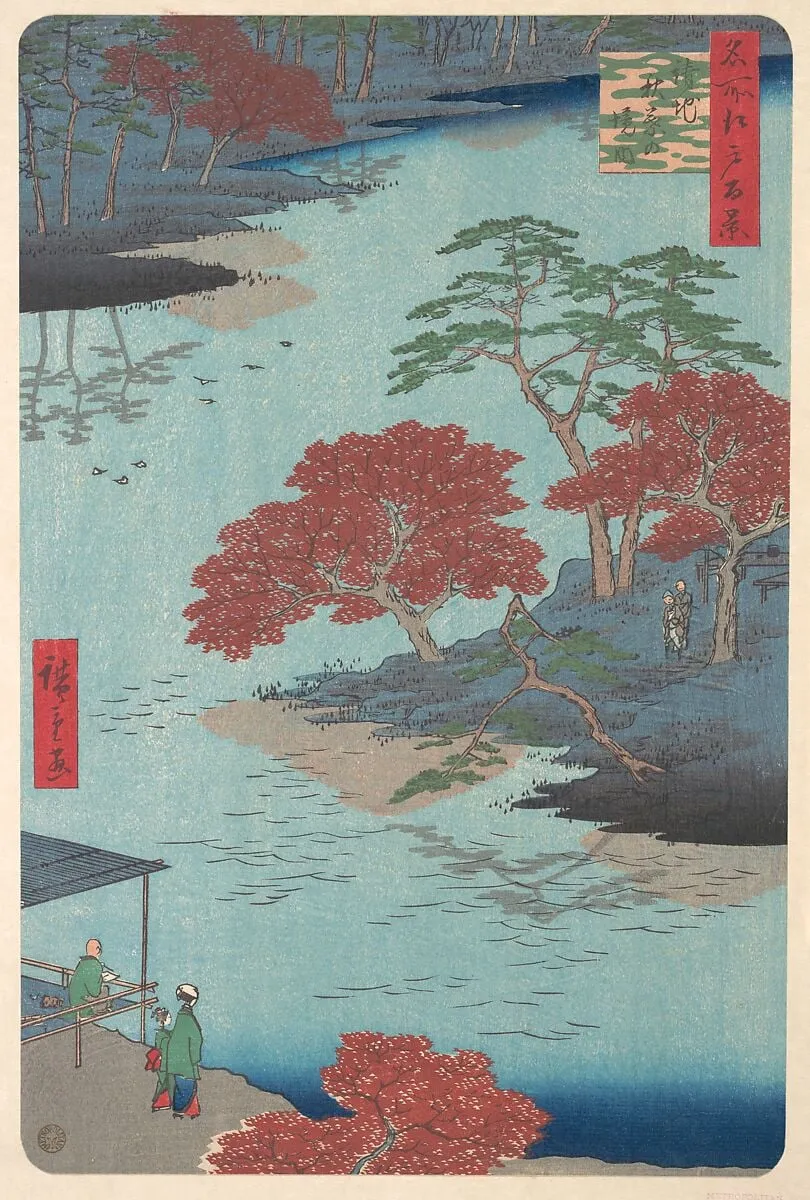
Ukeji, Akiba no Keidai|名所江戸百景 請地秋葉の境内|Inside the Akiba Shrine at Ukeji is an ink print by the Impressionist artist Utagawa Hiroshige. It dates from 8 and is held in the collection of the Metropolitan Museum of Art.
About this work
Overview
The composition follows the vertical format common to the series, emphasizing layered space and quiet atmosphere over bustling activity.
Created by Utagawa Hiroshige in the 1850s, this woodblock print is one of 118 images in the series *One Hundred Famous Views of Edo*. It portrays the grounds of Akiba Shrine, a site of spiritual significance in the eastern outskirts of Edo. The composition follows the vertical format common to the series, emphasizing layered space and quiet atmosphere over bustling activity. Hiroshige’s focus on sacred and natural landscapes marked a shift from the more common ukiyo-e themes of theater and pleasure quarters.
Subject & Meaning
The scene captures the tranquil precincts of Akiba Shrine, where visitors pause along a path or bridge overlooking water. The presence of figures—some near, others distant—suggests quiet pilgrimage or daily contemplation rather than festival or spectacle. The shrine’s architecture is rendered subtly, integrated into the surrounding trees and water, reflecting a harmony between human devotion and the natural world. This quietude aligns with Edo-period ideals of serenity in sacred spaces.
Technique & Style
Hiroshige employed fine woodblock carving and layered color printing to achieve subtle gradations of blue in the sky and water, creating atmospheric depth. The use of muted reds, greens, and browns grounds the scene in seasonal realism, while delicate linework defines foliage and architectural details. His technique avoids bold outlines, favoring tonal transitions that evoke mood over clarity. This approach reflects his signature style: landscapes imbued with poetic stillness through controlled, nuanced color application.
History & Provenance
The print was produced during the final years of Hiroshige’s life, as the *One Hundred Famous Views of Edo* series gained popularity among Edo’s middle class. Published by Uoya Eikichi, the series was widely distributed, making Hiroshige’s landscapes accessible beyond elite circles. Original impressions survive in major collections, including the Museum of Fine Arts, Boston, and the British Museum, attesting to the print’s early circulation and enduring material integrity.
Context
In mid-19th century Edo, shrine visits were common among townspeople seeking spiritual respite. Akiba Shrine, dedicated to fire protection, held particular relevance in a city prone to conflagrations. Hiroshige’s depiction reflects a broader cultural turn toward documenting everyday sacred spaces, not just famous landmarks. His series coincided with rising urban literacy and print culture, offering citizens a visual catalog of their city’s quiet corners.
Legacy
Hiroshige’s *One Hundred Famous Views of Edo* influenced later Western artists, including Impressionists who admired his compositional asymmetry and atmospheric effects. While not as widely celebrated as his contemporaries in his lifetime, this print exemplifies his quiet revolution in ukiyo-e: elevating ordinary landscapes into subjects worthy of artistic contemplation. Today, it remains a key reference for understanding how Japanese printmakers redefined the relationship between people, place, and perception.
Artist & collection
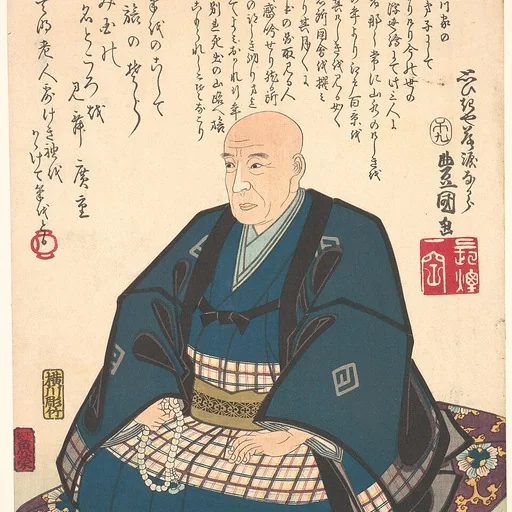
Artist
Utagawa Hiroshige (歌川 広重) or Andō Hiroshige (安藤 広重), born Andō Tokutarō (安藤 徳太郎; 1797 – 12 October 1858), was a Japanese ukiyo-e artist, considered the last great master of that tradition.

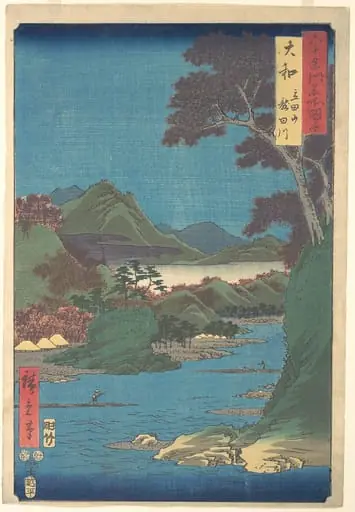 六十余州名所図会 大和 立田山 龍田川|Yamato, Tatsutayama, Tatsutagawa
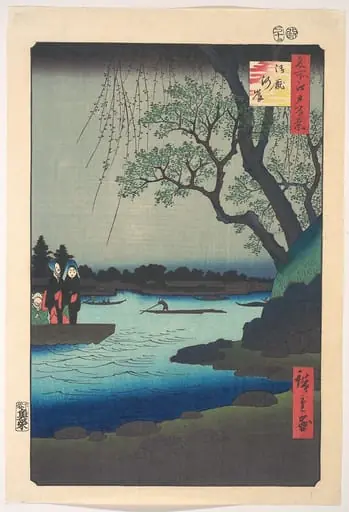 名所江戸百景 御厩河岸|Ommayagashi, Sumida River
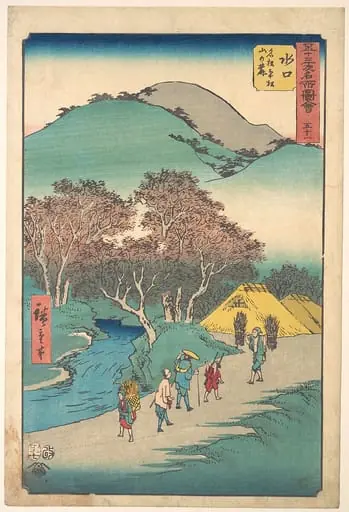 五十三次名所図会 水口|Mizukuchi
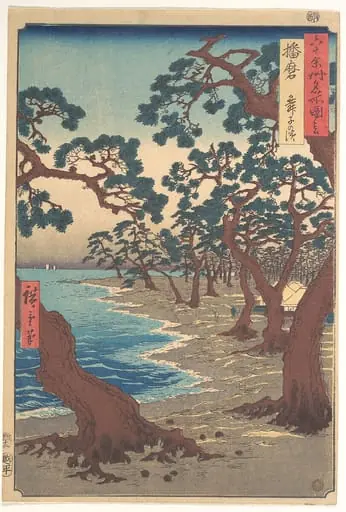 六十余州名所図会 播磨 舞子の浜|Harima, Maiko no Hama
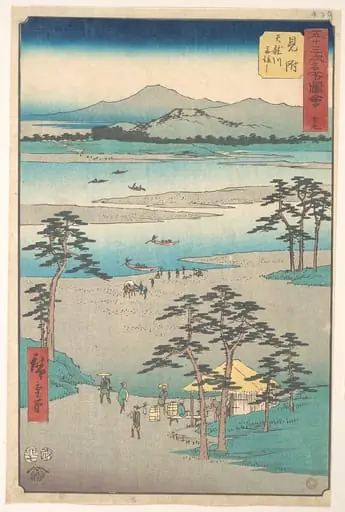 五十三次名所図会 見付 天竜川舟渡し|Mitsuke
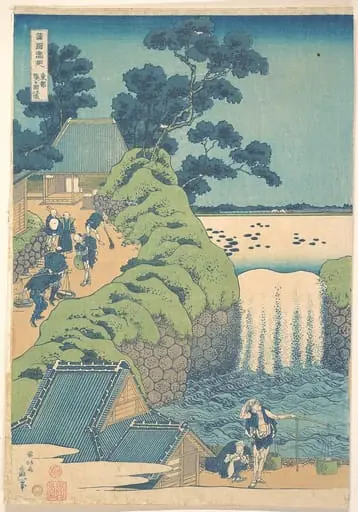 諸國瀧廻 東都葵ヶ岡の瀧|Fall of Aoiga Oka, Yedo
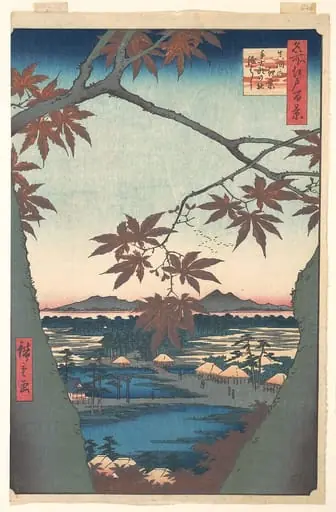 名所江戸百景 真間の紅葉手古那の社継はし|Maples at Mama, from the series One Hundred Famous Views of Edo
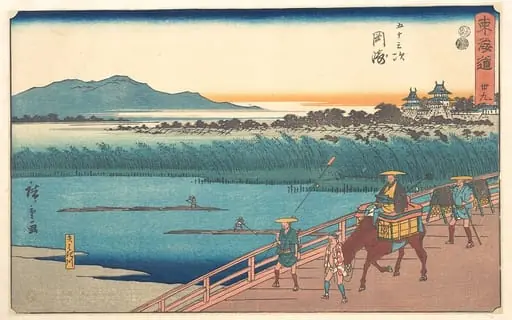 東海道五十三次 岡崎 矢はぎ川|Okazaki