Artwork
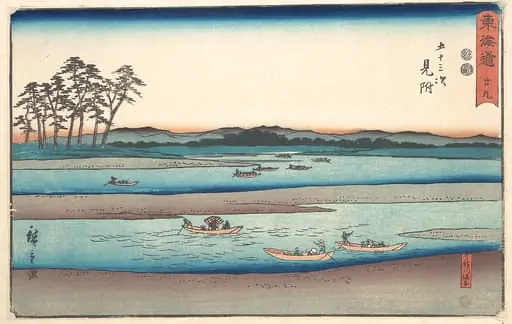
五十三次名所図会 見付 天竜川舟渡し|Mitsuke
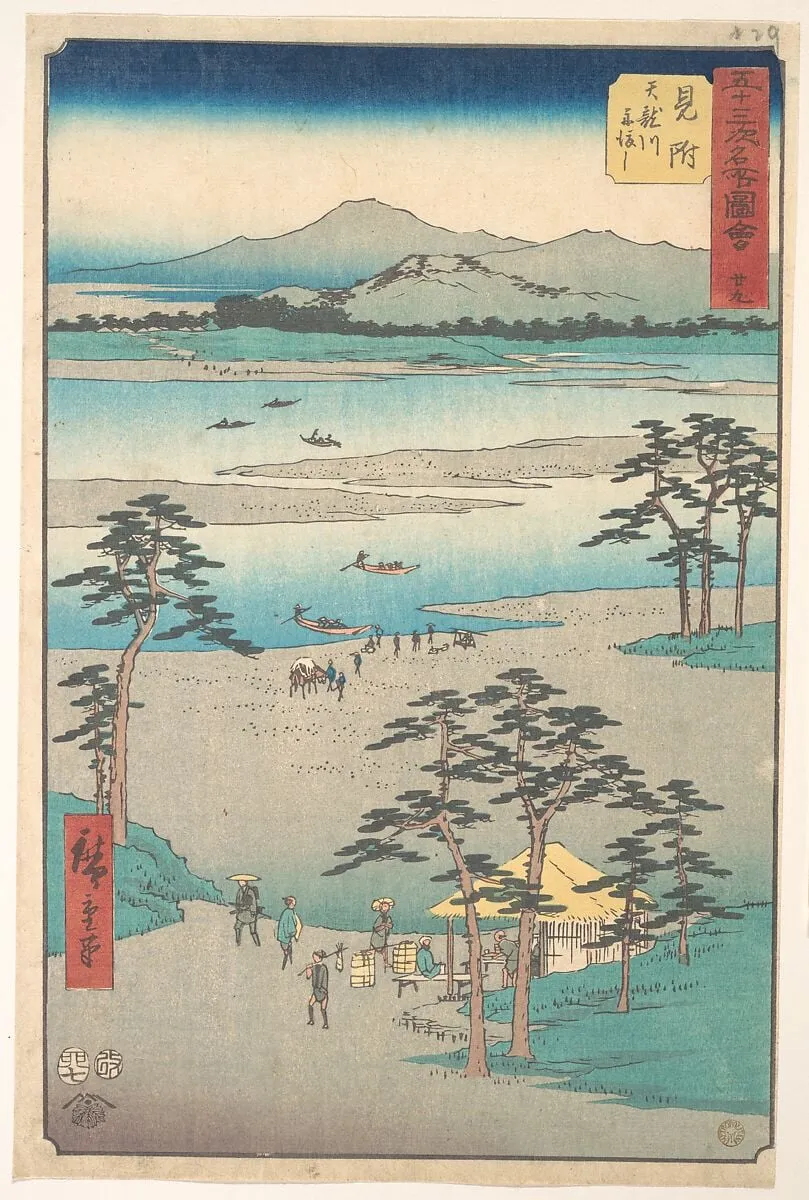
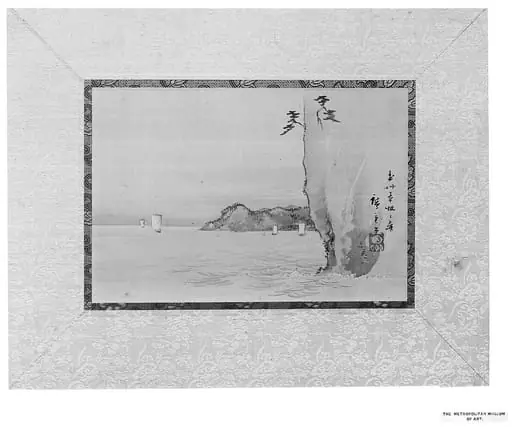
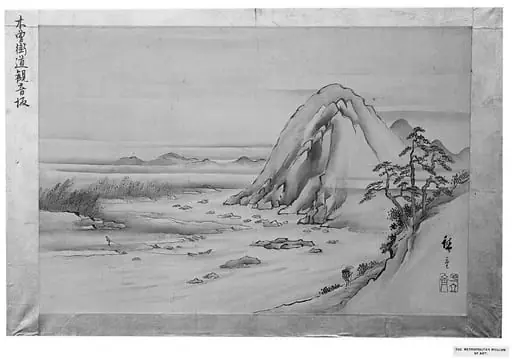
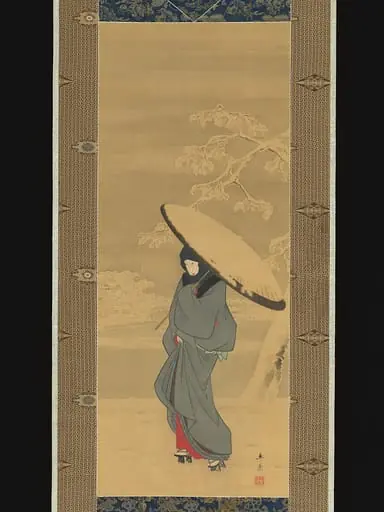
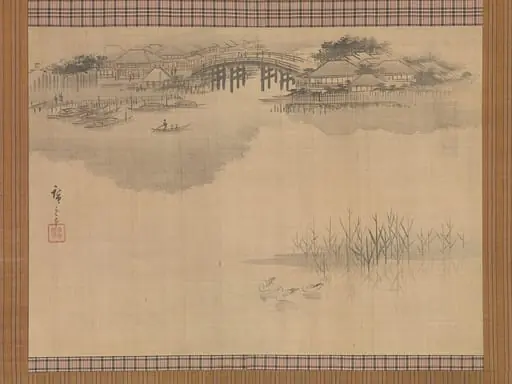
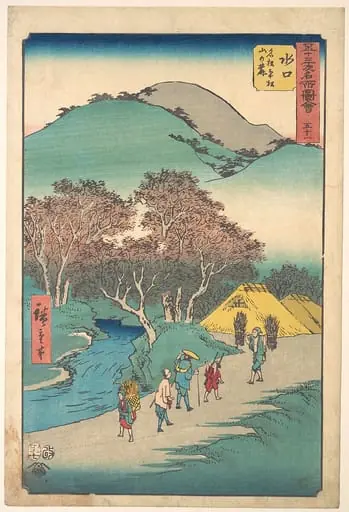
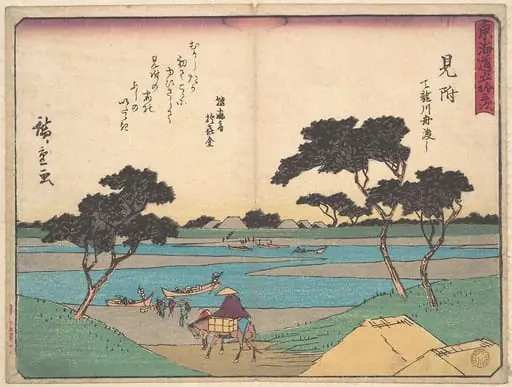
五十三次名所図会 見付 天竜川舟渡し|Mitsuke is an ink print by the Impressionist artist Utagawa Hiroshige. It dates from 1855 and is held in the collection of the Metropolitan Museum of Art.
About this work
Overview
The scene depicts Mitsuke, the twenty-sixth station, where travelers cross the Tenryū River by ferry.
Created in 1855 by Utagawa Hiroshige, this woodblock print is part of the series *The Fifty-three Stations of the Tōkaidō*, which documents the journey along Japan’s main coastal highway. The scene depicts Mitsuke, the twenty-sixth station, where travelers cross the Tenryū River by ferry. Unlike many ukiyo-e works centered on city life, Hiroshige focused on the quiet rhythms of travel and the natural world, transforming everyday landscapes into contemplative compositions.
Subject & Meaning
The print captures a moment of transit rather than spectacle: a few figures wait near a riverside shelter, while a small ferry carries passengers across calm water. The stillness of the scene suggests pause and reflection, aligning with the broader theme of the Tōkaidō as a path of personal journey. The distant mountain and sparse human presence emphasize nature’s enduring scale, subtly reinforcing the impermanence of human movement within it.
Technique & Style
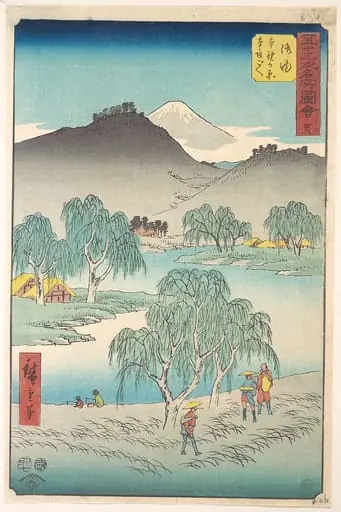
Hiroshige employed soft, muted tones—blues, greens, and earthy browns—to evoke a serene atmosphere. The composition uses minimal detail and clean outlines to suggest depth, with tiny figures and boats scaled to highlight the vastness of the landscape. The yellow sign in the upper corner, likely a station identifier, adds a subtle note of practicality. The print’s restrained palette and spatial economy reflect a poetic approach to landscape, prioritizing mood over narrative detail.
History & Provenance
Produced during the late Edo period, this print was part of a commercially successful series commissioned by the publisher Hoeidō. Hiroshige’s *Tōkaidō* prints were widely distributed, appealing to both travelers and urban dwellers seeking vicarious experiences of the road. The work survives in multiple impressions across international collections, testament to its enduring circulation and the popularity of landscape ukiyo-e in the mid-nineteenth century.
Context
The Tōkaidō connected Edo with Kyoto, serving as a vital route for merchants, pilgrims, and officials. While many ukiyo-e artists depicted bustling urban scenes, Hiroshige turned attention to the quiet interludes between stations—river crossings, weather changes, and seasonal shifts. His focus on nature and transit reflected a growing cultural interest in travel as a meditative experience, not merely a physical journey.
Legacy
Hiroshige’s *Tōkaidō* series influenced later generations of artists, both in Japan and abroad, particularly in the development of Western landscape printmaking. His emphasis on atmosphere, seasonal nuance, and spatial harmony contributed to the global appreciation of Japanese aesthetics. Though produced for mass consumption, these prints continue to be studied for their subtle emotional resonance and formal restraint.
Artist & collection
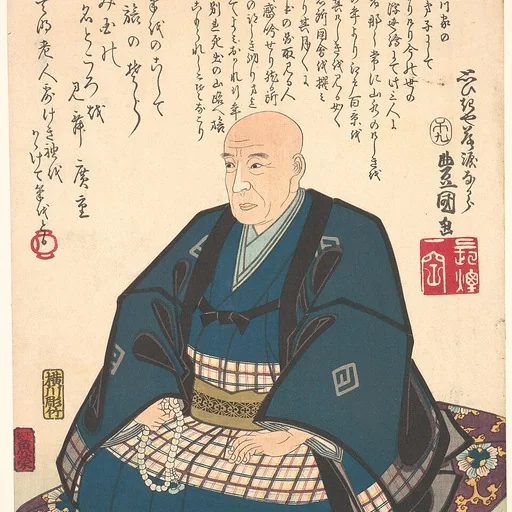
Artist
Utagawa Hiroshige (歌川 広重) or Andō Hiroshige (安藤 広重), born Andō Tokutarō (安藤 徳太郎; 1797 – 12 October 1858), was a Japanese ukiyo-e artist, considered the last great master of that tradition.