Artwork
東都名所 浅草金龍山年の市|Year End Fair at Kinryuzan Temple
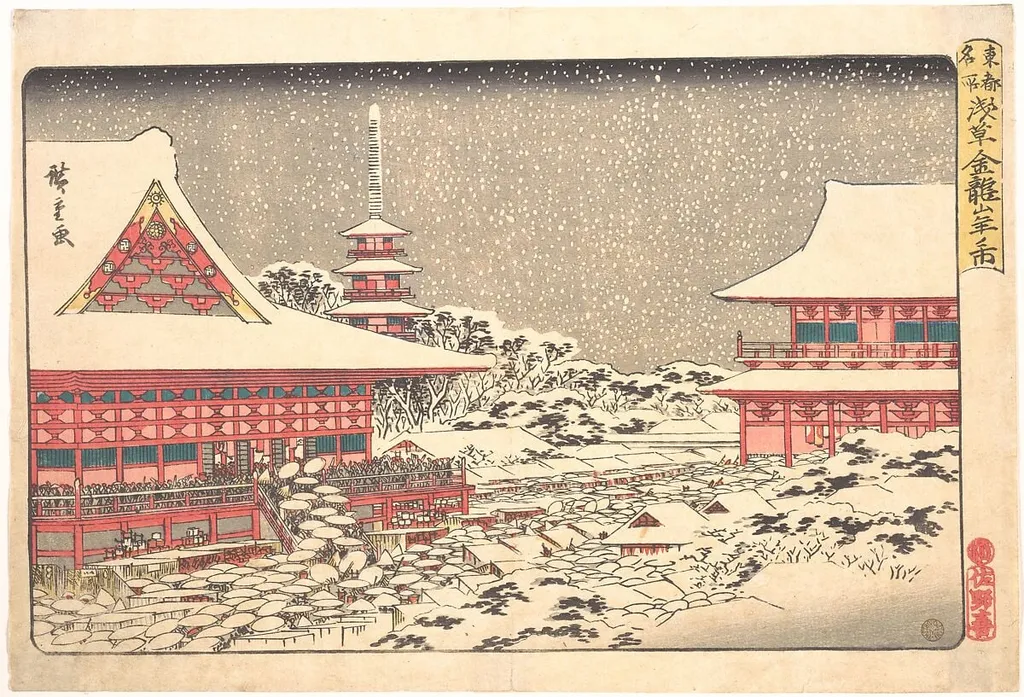
東都名所 浅草金龍山年の市|Year End Fair at Kinryuzan Temple is an ink print by the Romanticist artist Utagawa Hiroshige. It dates from 1836 and is held in the collection of the Metropolitan Museum of Art.
About this work
Overview
Utagawa Hiroshige’s woodblock print, dated circa 1836, portrays a winter festival at Kinryūzan Temple in Asakusa, Edo. The composition captures a bustling crowd gathered before two prominent red‑pink structures whose roofs are blanketed in snow, under a muted gray sky.
Subject & Meaning
The scene records a year‑end celebration, emphasizing communal activity in a snowy urban setting. Figures, some sheltering themselves with umbrellas, convey the everyday ritual of seasonal festivity, while the temple’s architecture anchors the event in a specific religious locale.
Technique & Style
Executed in ink and color on paper, the print employs traditional ukiyo‑e woodblock methods. Hiroshige’s use of delicate washes for snow and restrained palette for the sky creates a subdued atmosphere, while bold outlines define the buildings and crowd, reflecting his landscape‑focused approach.
History & Provenance
Created during the late Edo period, the work belongs to Hiroshige’s extensive output that includes series such as *The Fifty‑three Stations of the Tōkaidō* and *One Hundred Famous Views of Edo*. It remains a representative example of his festival imagery, held in several museum collections worldwide.
Context
While ukiyo‑e often highlighted courtesans and actors, Hiroshige’s interest lay in ordinary urban scenes and seasonal change. This print, with its winter setting and public gathering, aligns with broader 19th‑century Japanese interest in documenting daily life and the natural environment.
Artist & collection
Artist
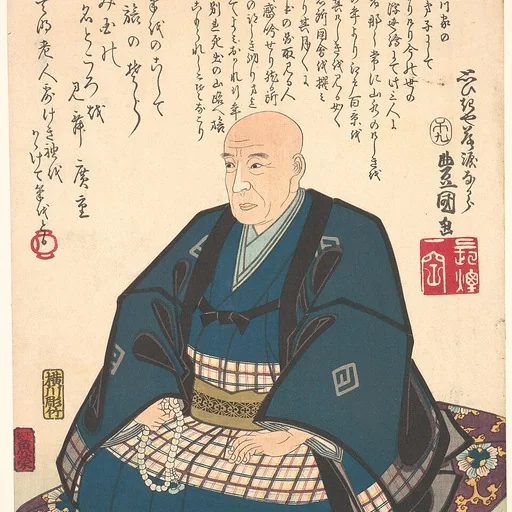
Utagawa Hiroshige (歌川 広重) or Andō Hiroshige (安藤 広重), born Andō Tokutarō (安藤 徳太郎; 1797 – 12 October 1858), was a Japanese ukiyo-e artist, considered the last great master of that tradition.

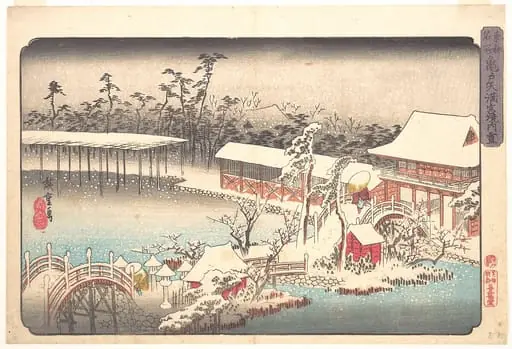 Kameido Tenmangu keidai no yuki|東都名所 亀戸天満宮境内雪|Tenmangū Shrine at Kameido in Snow
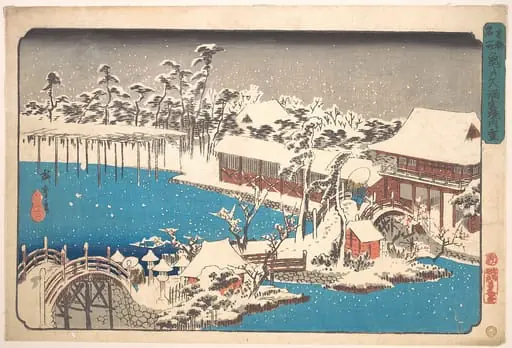 東都名所 亀戸天満宮境内雪|Kameido Tenmangu Keidai no Yuki
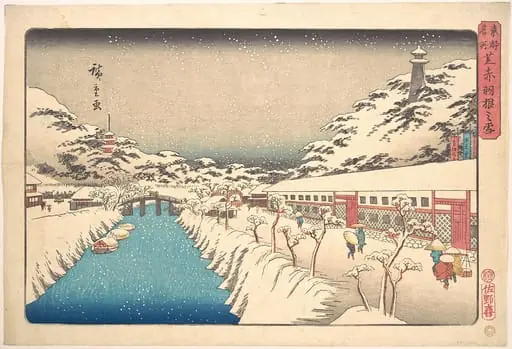 東都名所 芝赤羽根之雪|Shiba, Akabane no Yuki
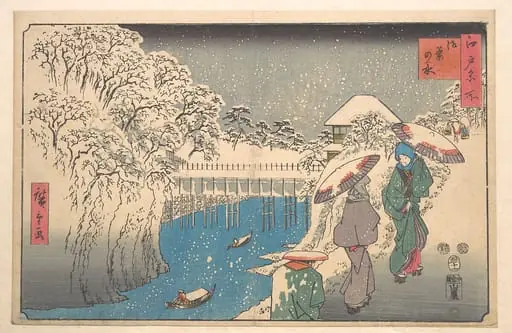 江戸名所 御茶之水|Ochanomizu
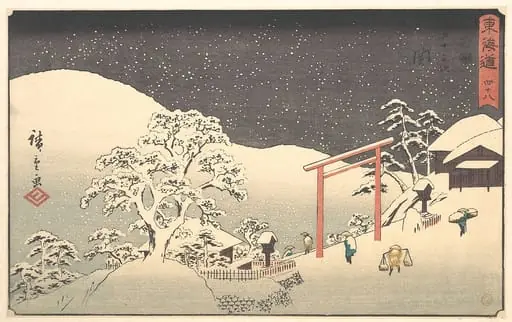 東海道五十三次 関|Seki
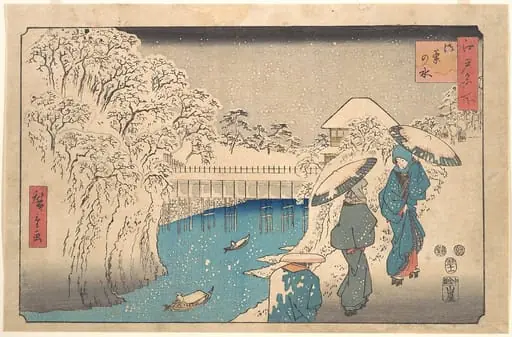 江戸名所 御茶の水|Meguro
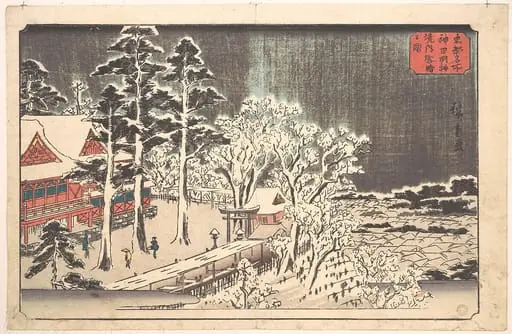 東都名所 神田明神境内雪晴之図|“Clear Weather after Snow in the Precincts of the Kanda Myōjin Shrine” (Kanda Myōjin keidai yukibare no zu), from the series Famous Places in the Eastern Capital (Tōto meisho)
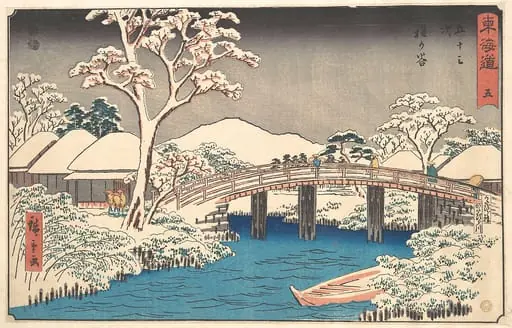 東海道五十三次 程ヶ谷 かたびら橋 かたびら川|Hodogaya
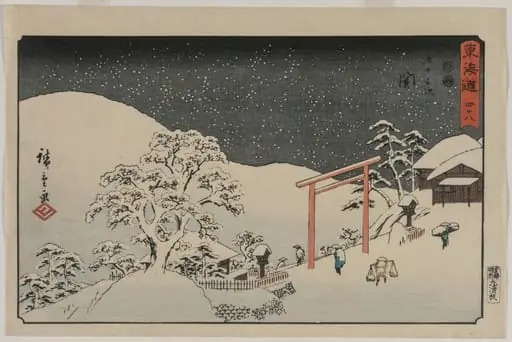 Seki, from the series The Fifty-Three Stations of the Tōkaidō