Artwork
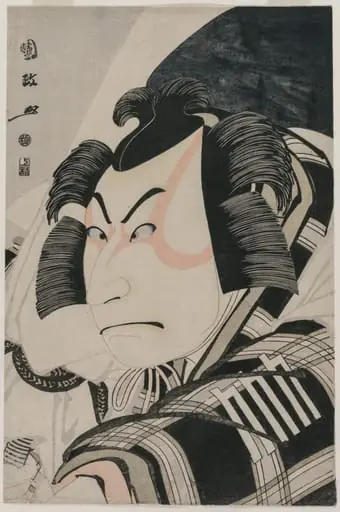
Portrait of the Actor Nakayama Tomisaburo as a Woman
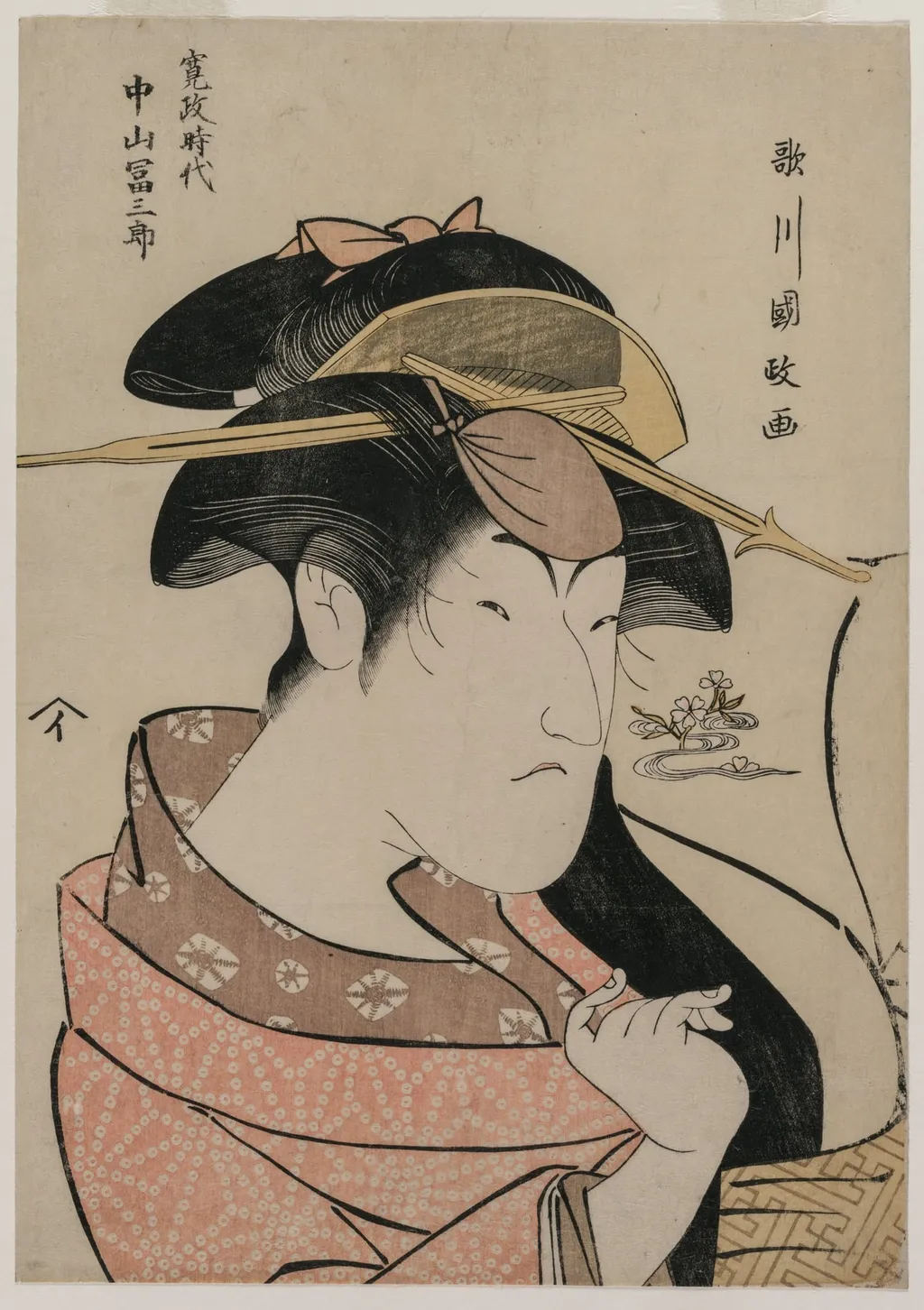
Portrait of the Actor Nakayama Tomisaburo as a Woman is a print by the Romanticist artist Utagawa Kunimasa. It dates from 1800 and is held in the collection of the Cleveland Museum of Art.
About this work
Overview
Portrait of the Actor Nakayama Tomisaburo as a Woman is a Japanese ukiyo-e woodblock print created by Utagawa Kunimasa around 1800. The work belongs to the yakusha-e genre, which focuses on portraits of kabuki actors in character.
Subject & Meaning
The print depicts Nakayama Tomisaburo, a kabuki actor, dressed in female attire, indicating the actor's portrayal of a female role on stage. The calm facial expression, combined with the hat and fan, subtly suggests the blurring of real and performed identity.
Technique & Style
Executed in the traditional ukiyo-e technique, the print features a simple, expressive background with bold brushstrokes, contrasting with the detailed, patterned clothing of the subject. The composition highlights Kunimasa's balance between simplicity and nuanced detail.
History & Provenance
Created circa 1800 by Utagawa Kunimasa, a member of the Utagawa school, the print reflects the artist's specialization in yakusha-e and bijin-ga. Kunimasa's career was influenced by his apprenticeship under Utagawa Toyokuni in Edo.
Context
This work is contextualized within the flourishing kabuki theater and ukiyo-e print culture of late 18th-century Edo. It showcases the societal acceptance of male actors portraying female roles (onnagata) in traditional Japanese theater.
Artist & collection
Artist
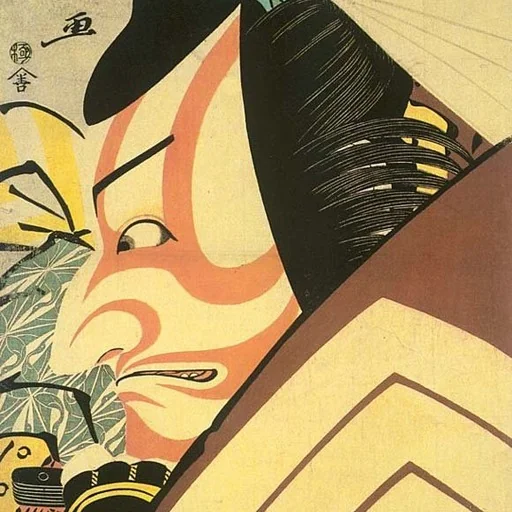
Utagawa Kunimasa (歌川 国政; 1773 – December 26, 1810) was a Japanese ukiyo-e artist of the Utagawa school.

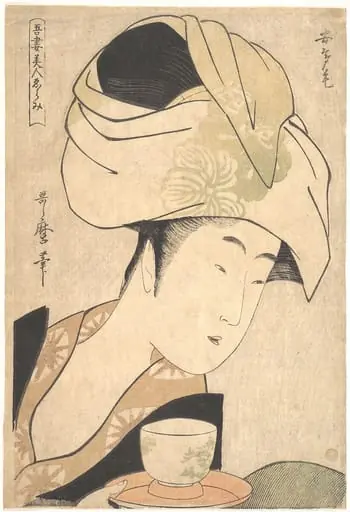 吾妻美人ゑらみ|A Tea-house Waitress
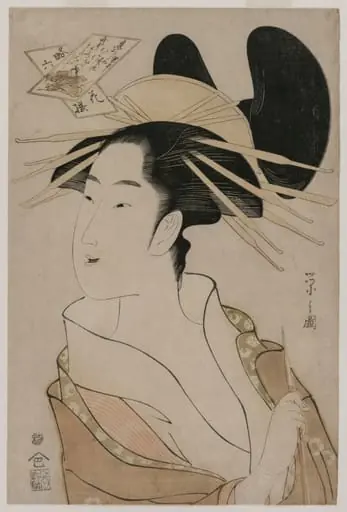 Portrait of a Courtesan Holding a Pipe (from the series The Six Immortal Poets in Modern Dress)
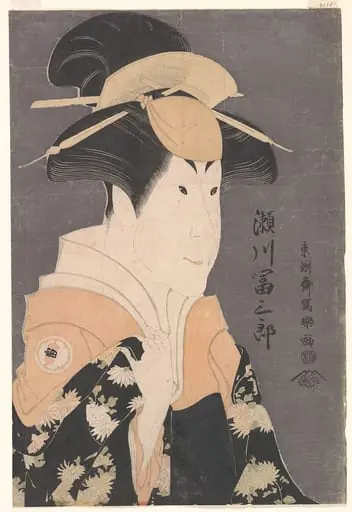 Untitled
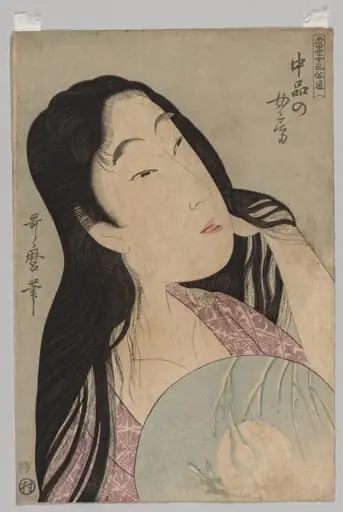 Bust of Woman with Loose Hair Holding Fan
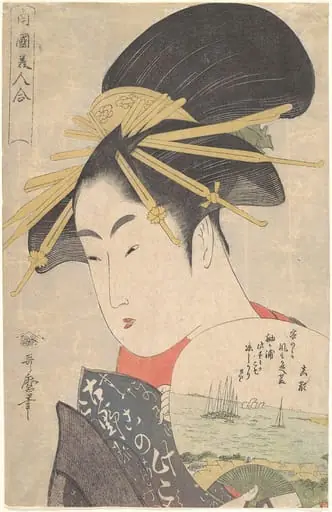 喜多川歌麿画 「南国美人合」 此すミ|The Courtesan Konosumi, from the series “Beauties of the Southern Quarter”(Nangoku bijin awase)
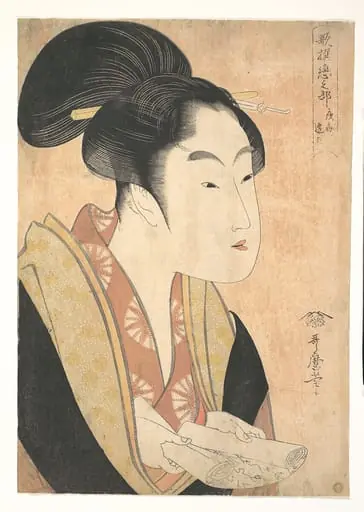 歌撰恋之部 夜毎に逢恋|A Young Woman Reading A Letter
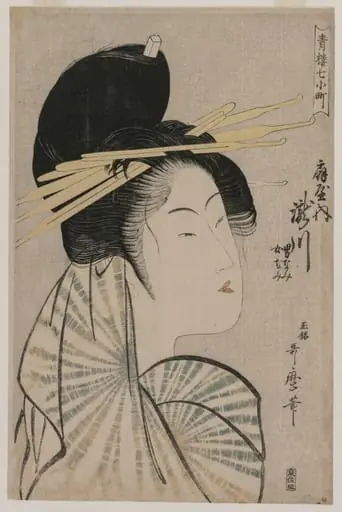 The Courtesan Takigawa of Ogiya (from the series Seven Aspects of Komachi in the Green Houses)
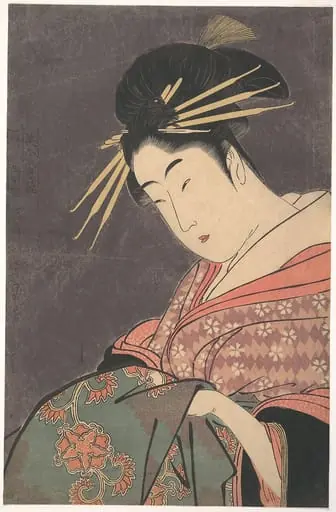 喜多川歌麿画 「美人気量競 五明楼 花扇」|“Hanaōgi of the Gomeirō,” from the series Comparing the Charms of Beauties (Bijin kiryō kurabe: Gomeirō Hanaōgi)
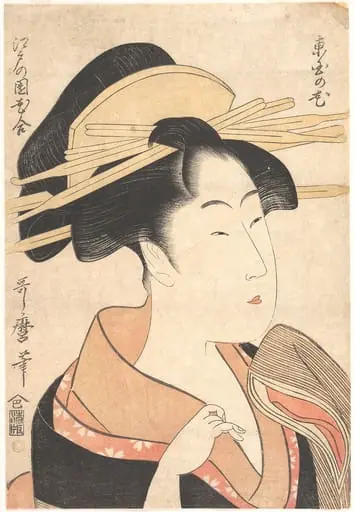 江戸の園花合 東屋の花|Azumaya no Hana
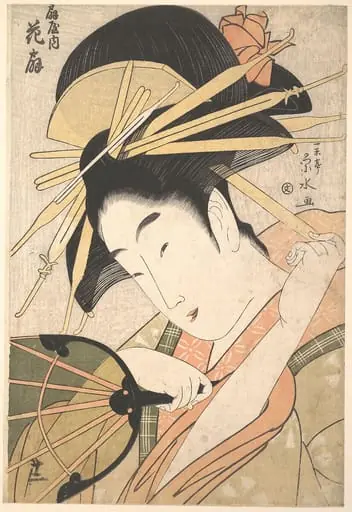 一楽亭栄水画 「扇屋内 花扇」|The Courtesan Hanaōgi of the Ōgiya Brothel (Ōgiya no uchi Hanaōgi)
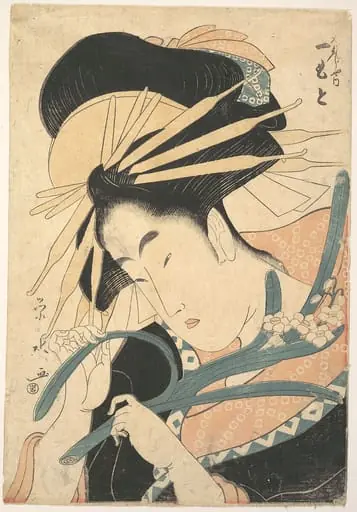 Untitled