Artwork
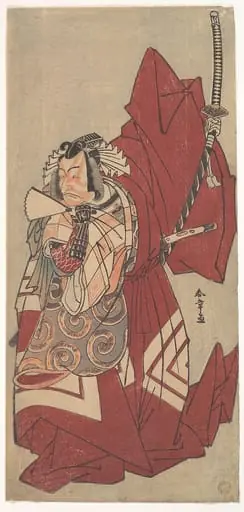
Nakamura Nakazo II as Matsuomaru in the Carriage-Stopping Scene
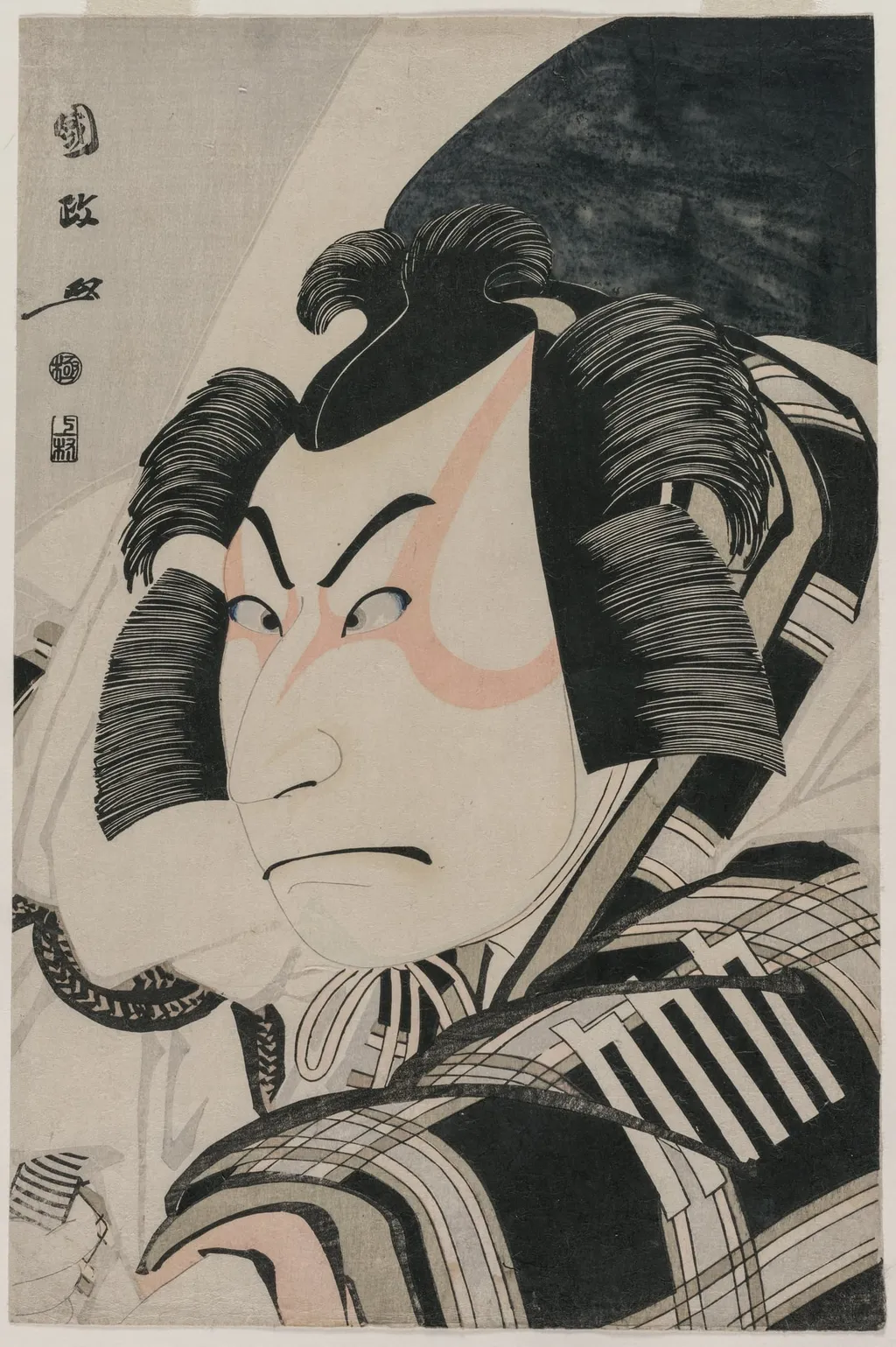
Nakamura Nakazo II as Matsuomaru in the Carriage-Stopping Scene is a print by the Romanticist artist Utagawa Kunimasa. It dates from 1796 and is held in the collection of the Cleveland Museum of Art.
About this work
Overview
The print belongs to a series documenting key scenes from contemporary theater, reflecting the popularity of kabuki in Edo-period urban culture.
Created in 1796 by Utagawa Kunimasa, this woodblock print captures a moment from a kabuki performance featuring the actor Nakamura Nakazo II in the role of Matsuomaru. Kunimasa, trained under Utagawa Toyokuni, specialized in yakusha-e—portraits of actors in dramatic roles. The print belongs to a series documenting key scenes from contemporary theater, reflecting the popularity of kabuki in Edo-period urban culture.
Subject & Meaning
The scene depicts Matsuomaru, a character known for his emotional intensity, halting a carriage in a moment of urgent confrontation. The portrayal emphasizes the actor’s physical presence and expressive gesture, central to kabuki’s theatrical language. Rather than illustrating narrative progression, the image isolates a climactic instant, inviting viewers to recognize the actor’s skill in conveying inner turmoil through posture and costume.
Technique & Style
Kunimasa employed bold outlines, strong contrasts, and flattened spatial composition to heighten the drama. His use of color was restrained yet precise, focusing attention on the actor’s kimono and facial expression. While influenced by Toyokuni’s decorative sensibility, the print also shows the heightened realism and emotional intensity associated with Sharaku’s work, though without Sharaku’s extreme stylization.
History & Provenance
The print was produced during a period of flourishing kabuki culture in Edo, when actor portraits were widely collected by theatergoers. Kunimasa, originally from Aizu and trained in dyeing before becoming an artist, worked within the Utagawa school’s commercial print system. This piece likely circulated as a single-sheet print, sold at theaters or print shops, and survives today as part of institutional and private collections of Edo-period ukiyo-e.
Context
In late 18th-century Edo, kabuki theater was a dominant form of popular entertainment, and actor prints served as both souvenirs and cultural artifacts. Kunimasa’s work emerged amid a competitive market of printmakers, each vying to capture the charisma of leading performers. This print reflects the close relationship between stage performance and mass-produced imagery, where fame was mediated through the woodblock medium.
Legacy
Kunimasa’s prints, though less celebrated than those of Sharaku or Hokusai, contributed to the evolution of actor portraiture by balancing theatricality with psychological nuance. His work helped standardize visual conventions for depicting kabuki roles, influencing later generations of ukiyo-e artists. This print remains a documented example of how performance and print culture intersected in early modern Japan.
Own this work as a print
Artist & collection
Artist
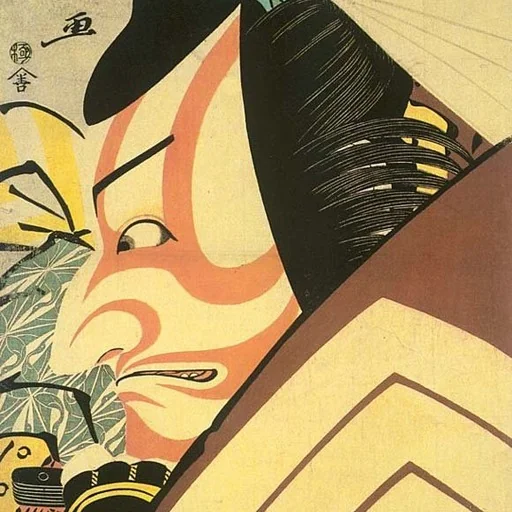
Utagawa Kunimasa (歌川 国政; 1773 – December 26, 1810) was a Japanese ukiyo-e artist of the Utagawa school.

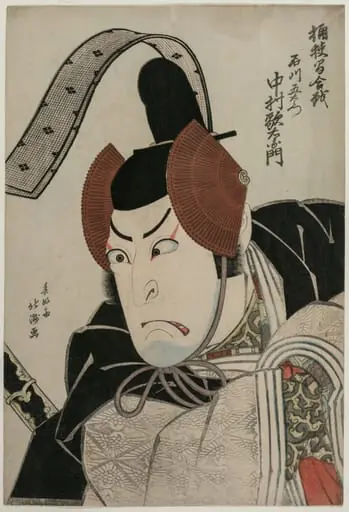 Actor Nakamura Utaemon III (Shikan) as Ishikawa Goemon at the Battle of Okehazama (Okehazama Gassen)
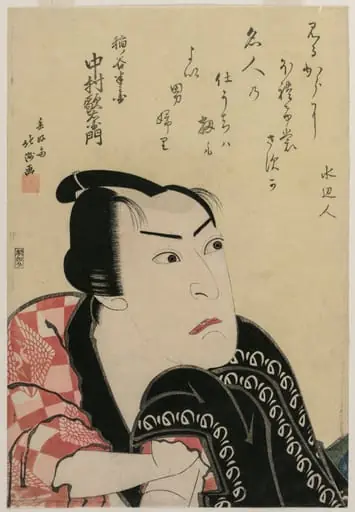 Nakamura Utaemon as Inanoya Hanbei
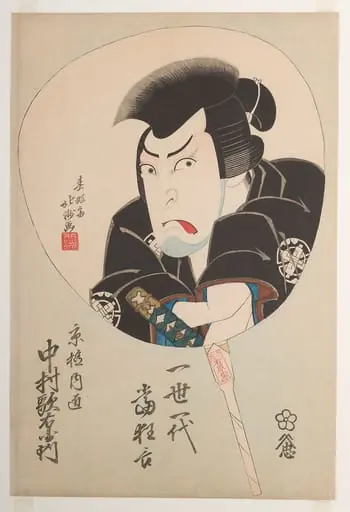 春好斎北洲画 三代目中村歌右衛門 『一世一代当狂言』|Kabuki Actor Nakamura Utaemon III as the Sword Master Kyōgoku Takumi, from the series Issei ichidai atari Kyōgen (Hits of a Lifetime of Kyōgen)
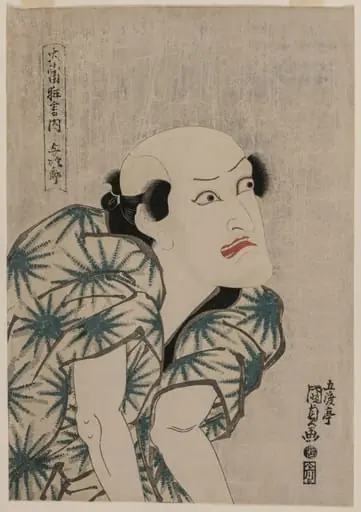 Nakamura Utaemon III as the Monkey Trainer Yojiro (from the series Famous Kabuki Plays)
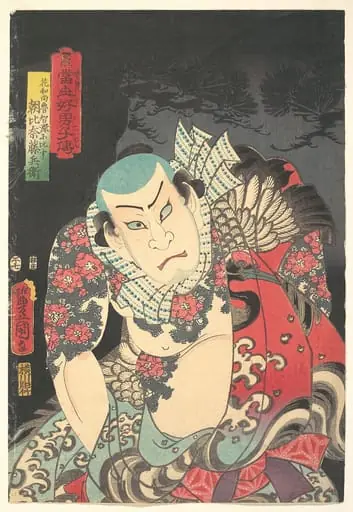 当世好男子伝」松 「花和尚魯智深に比す朝比奈藤兵衛」|The Actor Nakamura Fukusuke I as Asahina Tōbei, likened to Lu Zhishen the Tattooed Priest (Kaoshō Rochishin ni hisu), from the “Pine” triptych of the series A Modern Water Margin (Tōsei suikoden)
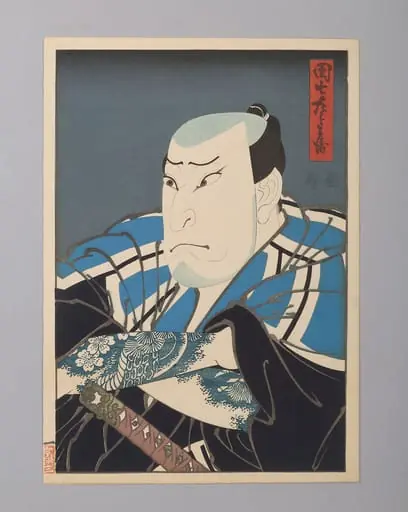 「団七九郎兵衛」|Nakamura Utaemon IV as Danshichi Kurobei
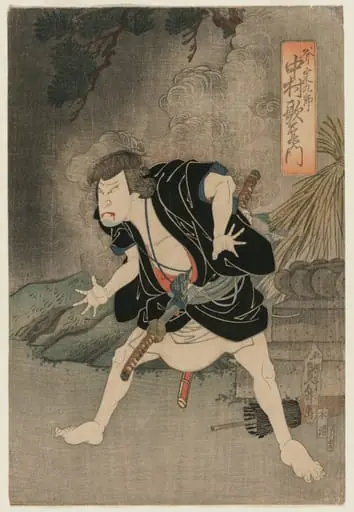 Nakamura Utaemon IV as Ono Sadakuro in Act Five of Kanadehon Chushingura, Naka Theater
 五代目市川団十郎|Kabuki Actor Ichikawa Danjūrō V in a Shibaraku (Stop Right There!) Role as Hannya no Gorō
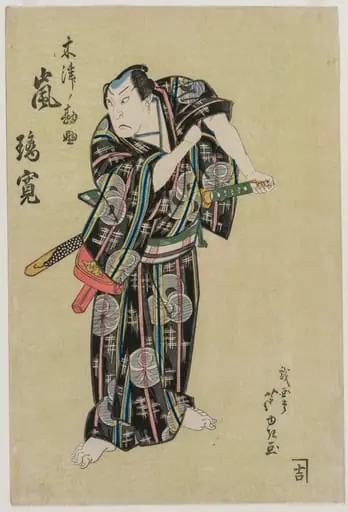 Arashi Rikan II as Kizu Kansuke