Artwork
一楽亭栄水画 「扇屋内 花扇」|The Courtesan Hanaōgi of the Ōgiya Brothel (Ōgiya no uchi Hanaōgi)
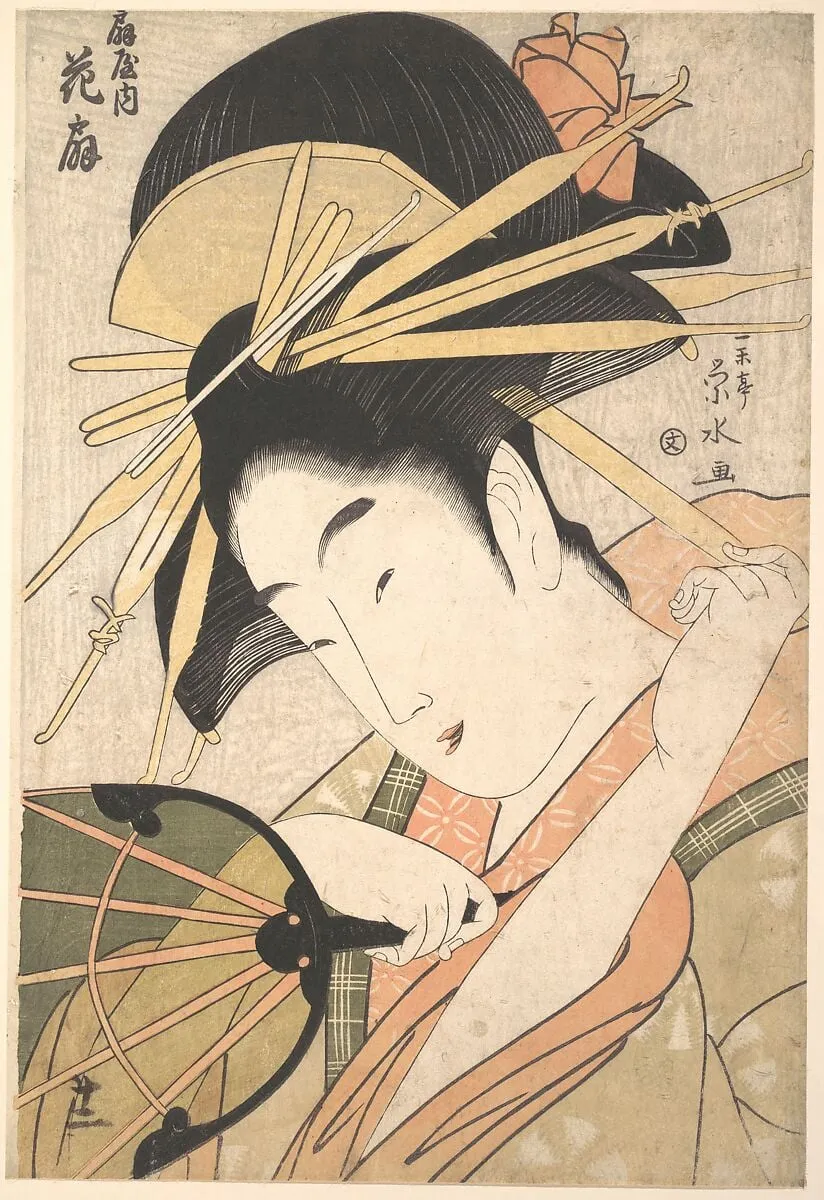
一楽亭栄水画 「扇屋内 花扇」|The Courtesan Hanaōgi of the Ōgiya Brothel (Ōgiya no uchi Hanaōgi) is an ink print by the Romanticist artist Ichirakutei Eisui. It dates from 1794 and is held in the collection of the Metropolitan Museum of Art.
About this work
Overview
Created around 1794 by Ichirakutei Eisui, this woodblock print depicts a courtesan from the Ōgiya brothel in Edo.
Created around 1794 by Ichirakutei Eisui, this woodblock print depicts a courtesan from the Ōgiya brothel in Edo. Rendered in ink and color on paper, it belongs to the ukiyo-e tradition of Japanese printmaking. The work is part of The Metropolitan Museum of Art’s collection and reflects the refined aesthetic of late 18th-century urban portraiture, capturing a moment of quiet introspection rather than overt display.
Subject & Meaning
The figure is Hanaōgi, a high-ranking courtesan associated with the Ōgiya establishment. Her pose—hand raised near her face, gaze lowered—suggests contemplation or modesty, common tropes in portraits of courtesans meant to convey emotional depth. The fan she holds is both a personal accessory and a symbol of her profession, linking her identity to the world of entertainment and refined social ritual.
Technique & Style
Eisui employed fine linework and layered color to achieve subtle tonal variation, particularly in the kimono’s green-and-white sash and the fan’s striped pattern. The background is left unadorned, focusing attention on the figure’s form and expression. The print’s composition follows the bijinga tradition, emphasizing elegance through restrained detail and careful balance, avoiding theatricality in favor of quiet poise.
History & Provenance
The print was produced during a period when ukiyo-e artists frequently depicted famous courtesans as cultural icons. While specific ownership records before its acquisition by The Metropolitan Museum of Art are not documented, its survival in good condition suggests it was preserved within collector circles. It entered the museum’s collection as part of its broader effort to represent Japanese print culture.
Context
In late 18th-century Edo, courtesans were central figures in the pleasure quarters, their images circulated as both entertainment and status symbols. Artists like Eisui worked within established conventions, producing portraits that balanced individual recognition with idealized beauty. This print reflects the commercial print market’s demand for images of celebrated women, blending realism with stylized grace.
Legacy
Though Eisui is less widely known than contemporaries like Utamaro, this work exemplifies the nuanced portraiture of the period. It contributes to the historical record of how women in the pleasure quarters were visually constructed and consumed. Today, it stands as a quiet testament to the artistry and social dynamics of Edo’s urban culture, preserved for study rather than spectacle.
Artist & collection


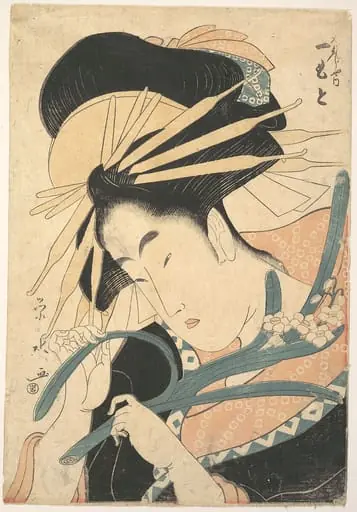
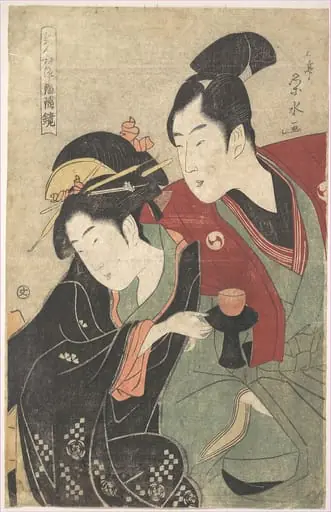
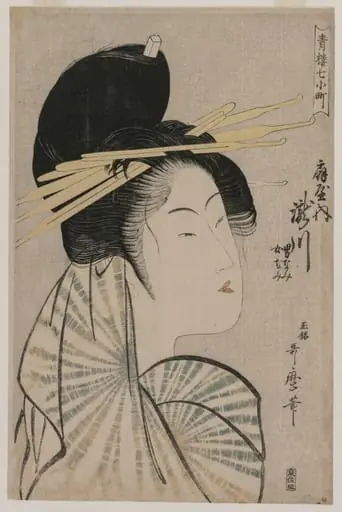 The Courtesan Takigawa of Ogiya (from the series Seven Aspects of Komachi in the Green Houses)
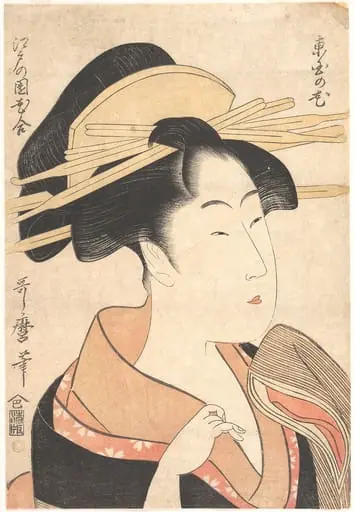 江戸の園花合 東屋の花|Azumaya no Hana
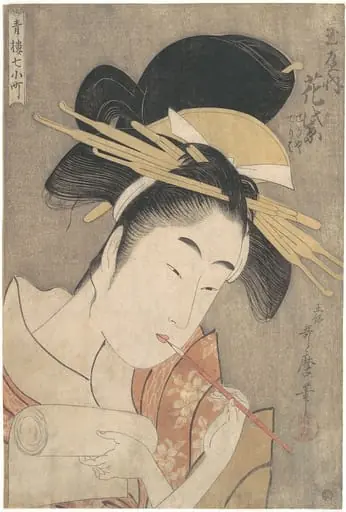 『青楼七小町』 「玉屋内花紫」|“Hanamurasaki of the Tamaya,” from the series Seven Komachi of the Pleasure Quarters (Seirō Nana Komachi)
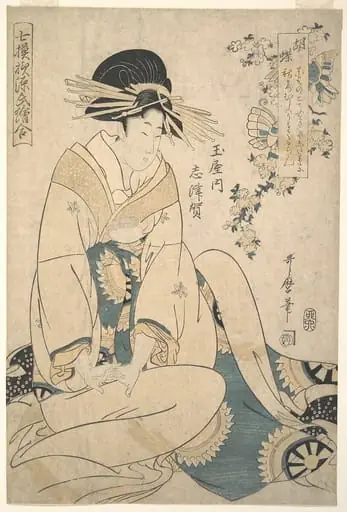 玉屋内 志津賀|A Courtesan
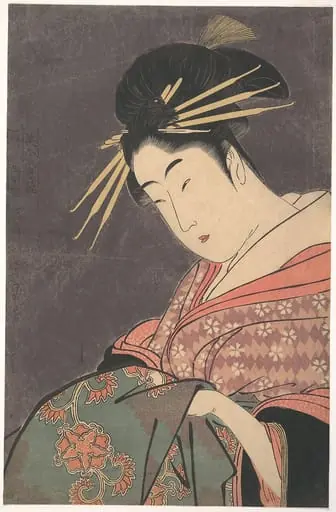 喜多川歌麿画 「美人気量競 五明楼 花扇」|“Hanaōgi of the Gomeirō,” from the series Comparing the Charms of Beauties (Bijin kiryō kurabe: Gomeirō Hanaōgi)
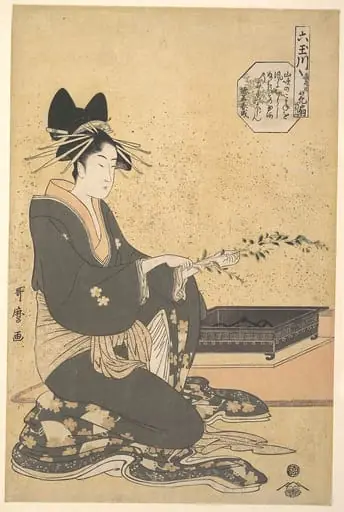 喜多川歌麿画 六玉川 扇屋内 花扇 扇屋内花扇|The Oiran Hanaogi of Ogiya, from the series “Six Jewel Rivers” (Mutamagawa)
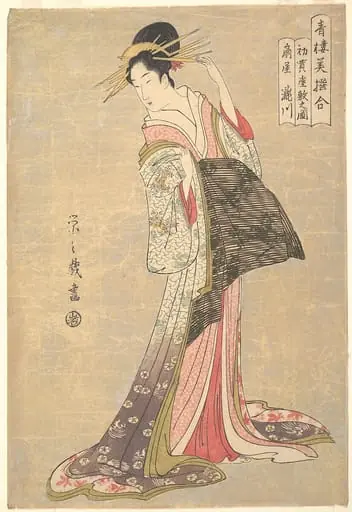 鳥文斎栄之画 「青楼美撰合 初売座敷之図 扇屋滝川」|Takigawa of the Ōgiya Brothel: The First Reception Room Appointment of the New Year (Hatsu-uri zashiki no zu: Ōgiya Takigawa), from the series A Comparison of Selected Beauties of the Pleasure Quarters (Seirō bisen awase)
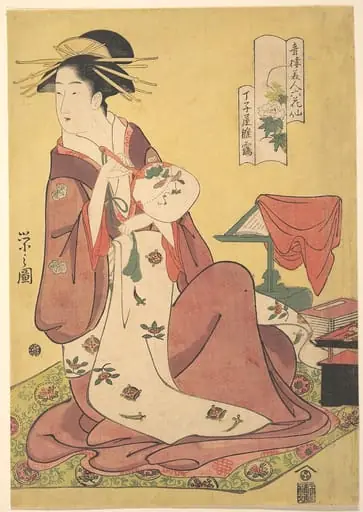 鳥文斎栄之画 「青楼美人六花仙 丁子屋雛鶴鸖」|The Courtesan Hinazuru of the Chōjiya Brothel (Chōjiya Hinazuru), from the series Beauties of the Pleasure Quarters as Six Floral Immortals (Seirō bijin rokkasen)