Artwork
喜多川歌麿画 「美人気量競 五明楼 花扇」|“Hanaōgi of the Gomeirō,” from the series Comparing the Charms of Beauties (Bijin kiryō kurabe: Gomeirō Hanaōgi)
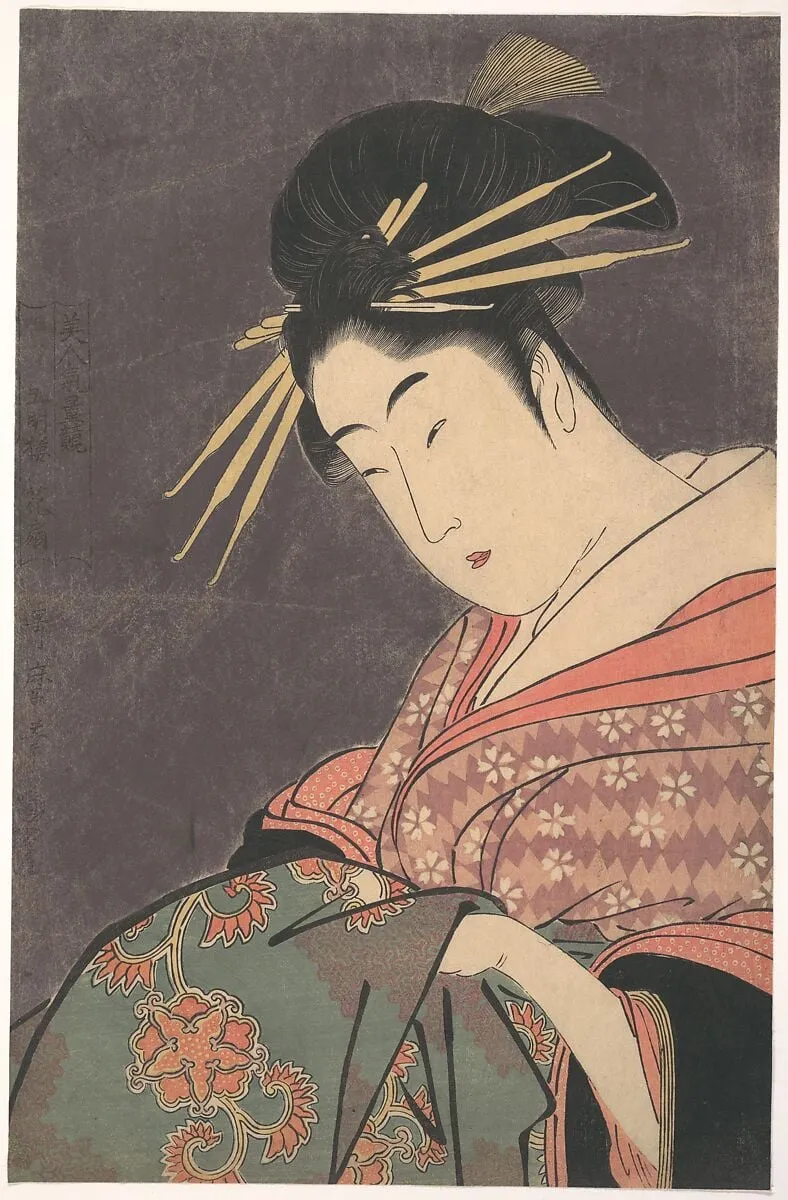
喜多川歌麿画 「美人気量競 五明楼 花扇」|“Hanaōgi of the Gomeirō,” from the series Comparing the Charms of Beauties (Bijin kiryō kurabe: Gomeirō Hanaōgi) is an ink print by the Romanticist artist Kitagawa Utamaro. It dates from 1794 and is held in the collection of the Metropolitan Museum of Art.
About this work
Overview
Created around 1794, this woodblock print by Kitagawa Utamaro forms part of his series "Bijin kiryō kurabe" (Comparing the Charms of Beauties). The work, titled "Hanaōgi of the Gomeirō," is currently in the collection of the Metropolitan Museum of Art and exemplifies the late‑eighteenth‑century Japanese interest in portraiture of fashionable women.
Subject & Meaning
The image presents a young woman with luminous, unblemished skin and a composed expression. Her hair is styled in a sleek updo, secured with two slender hairpins that subtly emerge. She is dressed in a soft pink collar and a kimono patterned with intertwined green and pink blossoms, holding a delicately decorated fan that reinforces the theme of refined femininity.
Technique & Style
The careful rendering of texture—particularly the sheen of the silk and the translucency of the fan—demonstrates the artist’s mastery of ukiyo‑e print methods.
Utamaro employs precise line work and a restrained palette, allowing the figure to dominate the composition. The background is rendered in a uniform dark tone, which isolates the subject and accentuates the subtle gradations of ink and color on her garments and accessories. The careful rendering of texture—particularly the sheen of the silk and the translucency of the fan—demonstrates the artist’s mastery of ukiyo‑e print methods.
History & Provenance
The print was produced in the Edo period, a time when ukiyo‑e prints circulated widely among urban audiences. It entered the Metropolitan Museum of Art’s collection through acquisition in the twentieth century, joining a broader assemblage of Japanese prints that document the era’s popular visual culture.
Context
Utamaro’s series compared the allure of various courtesans and fashionable women, reflecting contemporary fascination with beauty standards and the social roles of women in pleasure districts. By focusing on everyday elegance rather than overt drama, the work aligns with the artist’s broader aim to capture intimate, momentary expressions of grace.
Artist & collection


 Untitled
 Untitled
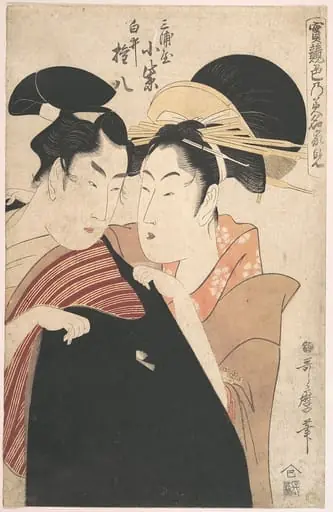 実競色乃美名家見 三浦屋小紫 白井権八|The Lovers Miura-ya Komurasaki and Shirai Gonpachi.
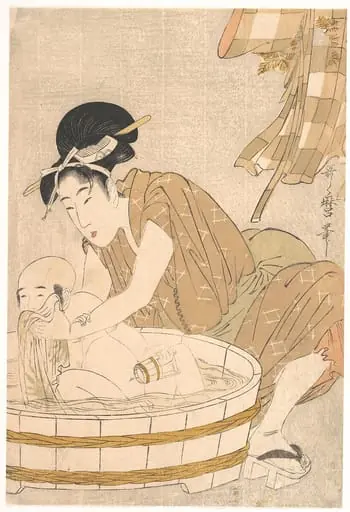 行水|Bathtime (Gyōzui)
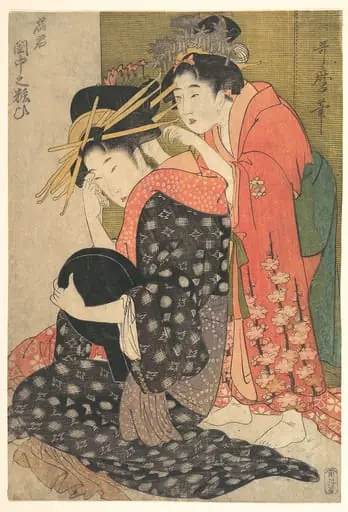 名君 閨中の粧ひ|The Oiran Yoso-oi Seated at Her Toilet
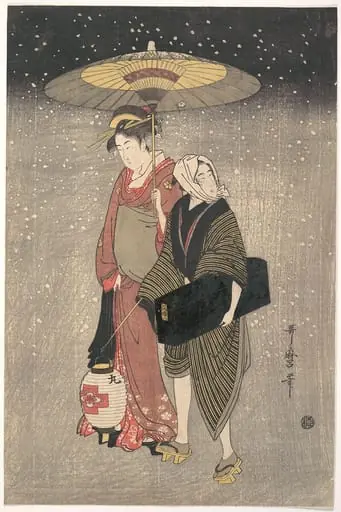 Untitled
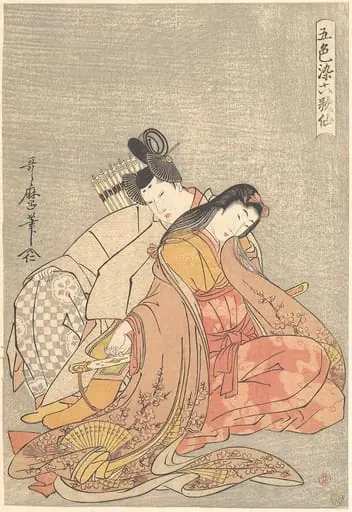 『五色染六歌仙』 在原業平と小野小町|“The Poet Ariwara no Narihira (825–880) and Ono no Komachi,” from the series Five Colors of Love for the Six Poetic Immortals (Goshiki-zome rokkasen)
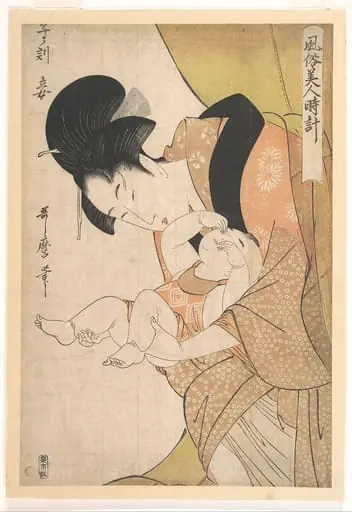 風俗美人時計 子ノ刻 妾|Midnight: Mother and Sleepy Child
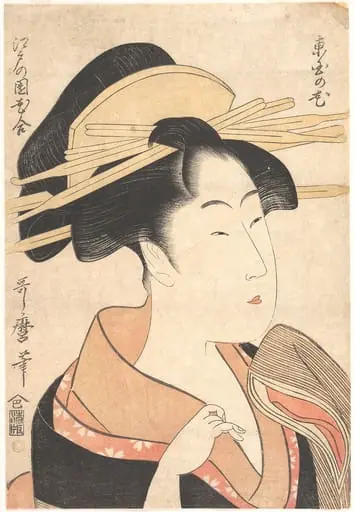 江戸の園花合 東屋の花|Azumaya no Hana
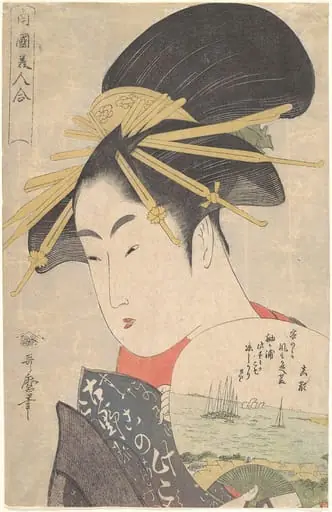 喜多川歌麿画 「南国美人合」 此すミ|The Courtesan Konosumi, from the series “Beauties of the Southern Quarter”(Nangoku bijin awase)
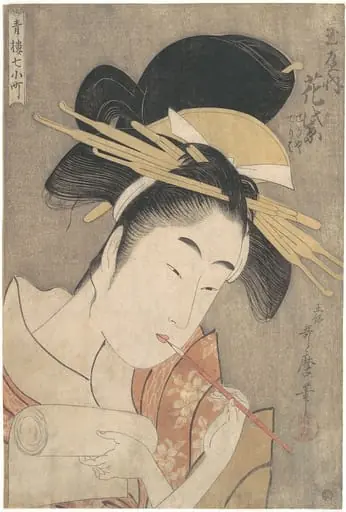 『青楼七小町』 「玉屋内花紫」|“Hanamurasaki of the Tamaya,” from the series Seven Komachi of the Pleasure Quarters (Seirō Nana Komachi)
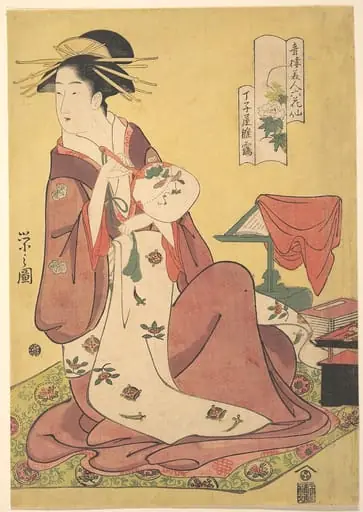 鳥文斎栄之画 「青楼美人六花仙 丁子屋雛鶴鸖」|The Courtesan Hinazuru of the Chōjiya Brothel (Chōjiya Hinazuru), from the series Beauties of the Pleasure Quarters as Six Floral Immortals (Seirō bijin rokkasen)
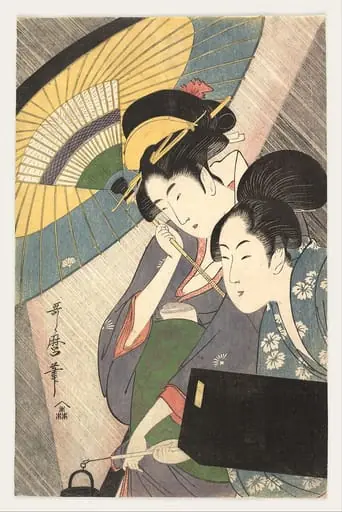 喜多川歌麿画 夜の雨に芸者と三味線箱を持つ女|Geisha and Attendant on a Rainy Night
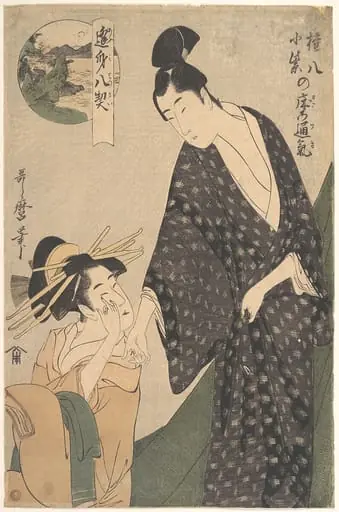 逢身八契 権八小紫の床の通気|Gonpachi ni Komurasaki no Toko no Tsuki