Artwork
春好斎北洲画 初代市川鰕十郎 「紅紫大坂潤」|Kabuki Actor Ichikawa Ebijūrō I as Tōken (China Dog) Jūbei, in the play Benimurasaki ai de someage (Red and Purple, Rich Dyes of Osaka)
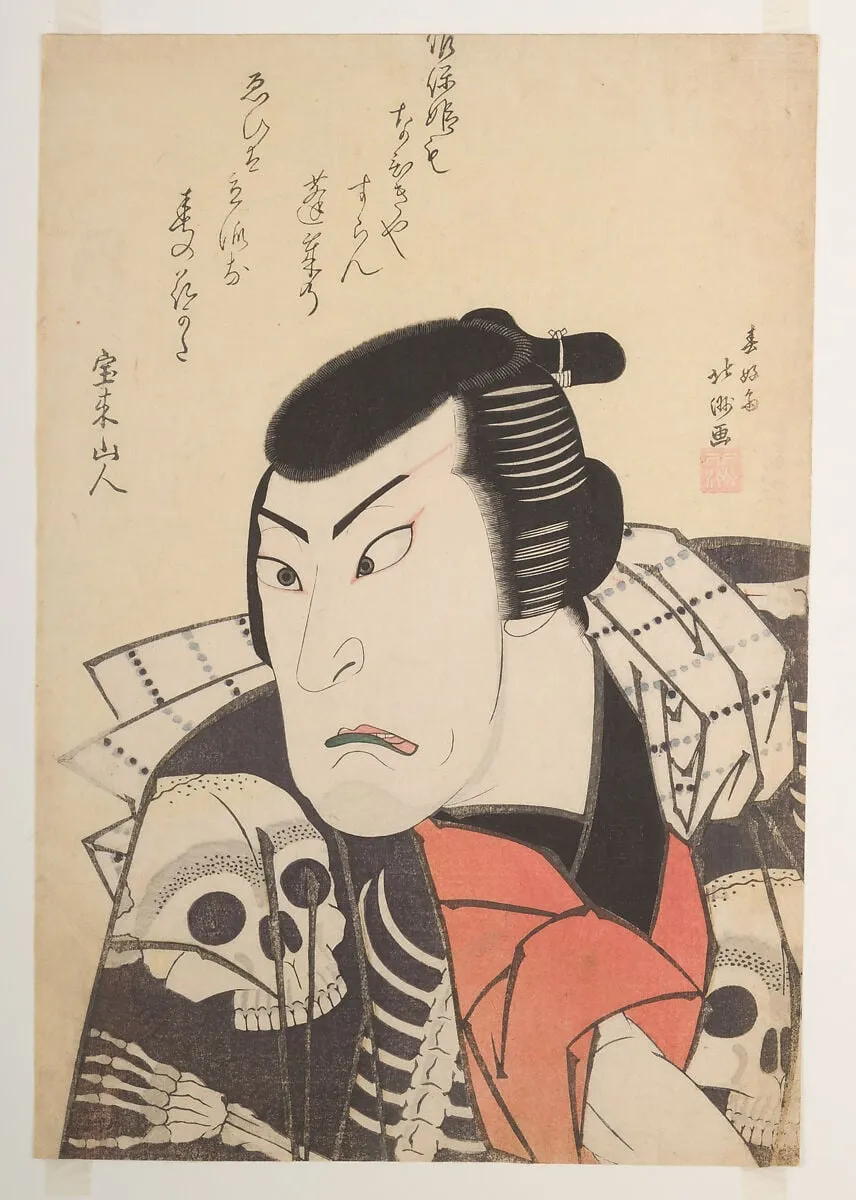
春好斎北洲画 初代市川鰕十郎 「紅紫大坂潤」|Kabuki Actor Ichikawa Ebijūrō I as Tōken (China Dog) Jūbei, in the play Benimurasaki ai de someage (Red and Purple, Rich Dyes of Osaka) is an ink print by the Romanticist artist Shunkōsai Hokushū. It dates from 1822 and is held in the collection of the Metropolitan Museum of Art.
About this work
Overview
This 1822 woodblock print, executed by the Edo‑period artist Shunkōsai Hokushū, portrays a kabuki performer in full costume. The image is part of the Metropolitan Museum of Art’s collection and illustrates a scene from the popular play Benimurasaki ai de someage, known in English as “Red and Purple, Rich Dyes of Osaka.”
Subject & Meaning
The figure represents Ichikawa Ebijūrō I in the role of Tōken Jūbei, a character often identified with the “China Dog” archetype. The actor’s solemn expression, stylized hair knot, and white ribbon convey the dramatic intensity typical of kabuki protagonists, while the accompanying kanji above his head identify the role and the play’s title.
Technique & Style
Created using traditional ukiyo‑e woodblock methods, the print combines black ink outlines with vivid pigments on paper. The black robe with a red collar is patterned with stylized white bones and skull motifs, adding texture. Bold line work and a warm beige background enhance contrast, while the precise carving allows fine detail in the costume’s decorative elements.
History & Provenance
Shunkōsai Hokushū produced this work during the late Edo period, a time when actor prints were a major commercial genre. The piece entered the Metropolitan Museum of Art’s collection through acquisition in the early 20th century, where it remains catalogued as an example of early 19th‑century kabuki portraiture.
Artist & collection

Artist
Shunkōsai Hokushū spent his life in Osaka, where the city’s lively theater scene shaped his work.

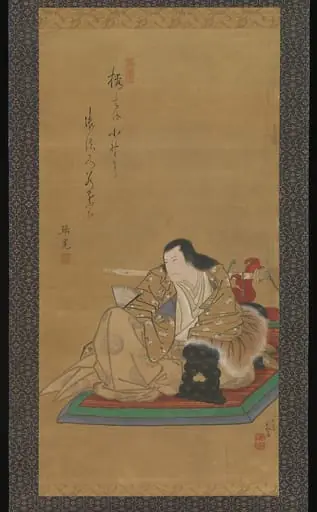 初代嵐橘三郎 (二代目嵐吉三郎) の惟高親王|The Actor Arashi Kitsusaburō I (Kichisaburō II) as Prince Koretaka
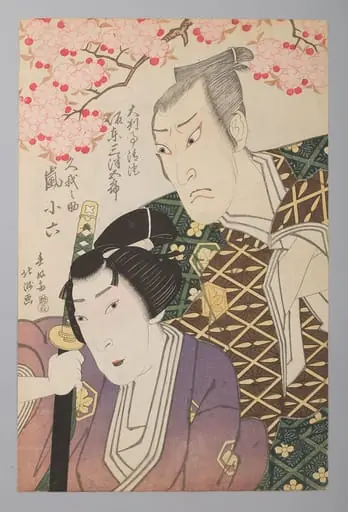 「大判事清澄 坂東三津五郎」(三代)・「久我之助 嵐小六」(四代)|Bandō Mitsugorō III as Daihanji Kiyozumi and Arashi Koroku IV as Koganosuke
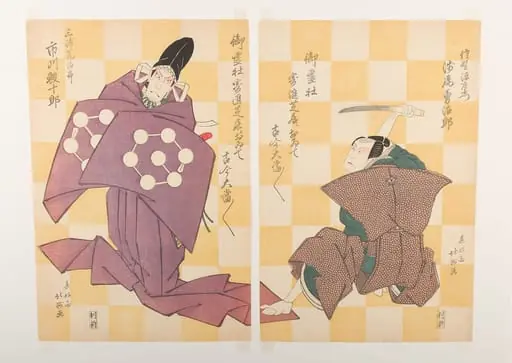 春好斎北洲画 初代浅尾勇次郎・初代市川鰕十郎 『傾城佐野の船橋』|Kabuki Actors Asao Yūjirō as Sano Genzaemon and Ichikawa Ebijūrō I as Miura Arajirō, in the play Keisei Sano no Funabashi
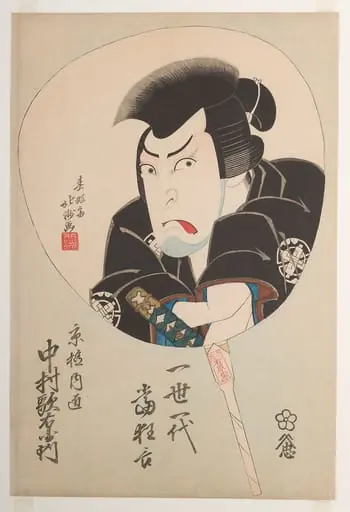 春好斎北洲画 三代目中村歌右衛門 『一世一代当狂言』|Kabuki Actor Nakamura Utaemon III as the Sword Master Kyōgoku Takumi, from the series Issei ichidai atari Kyōgen (Hits of a Lifetime of Kyōgen)
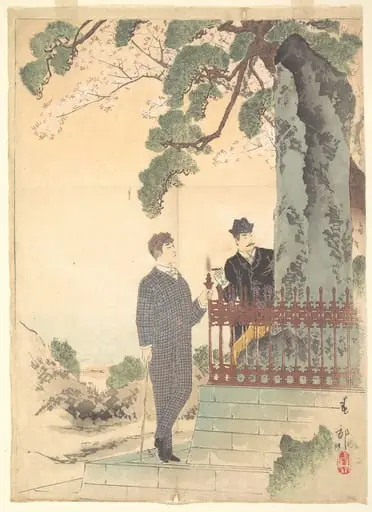 Untitled
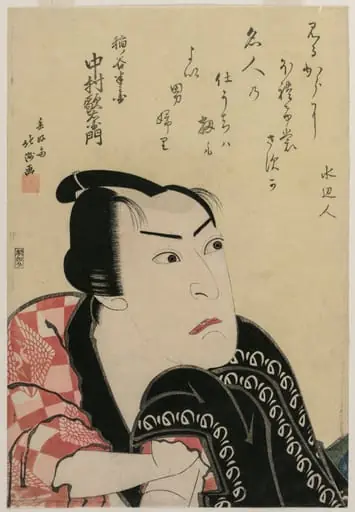 Nakamura Utaemon as Inanoya Hanbei
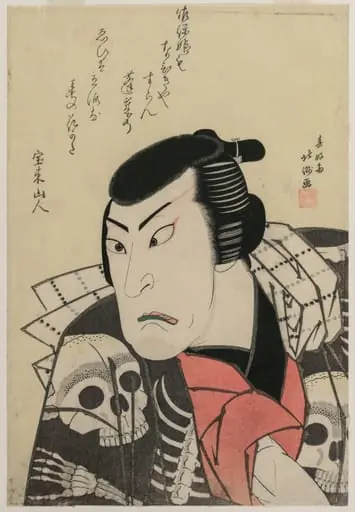 Actor Ichikawa Ebijūrō I as Tōken (China Dog) Jūbei, in the play Red and Purple, Rich Dyes of Osaka (Benimurasaki ai de someage)
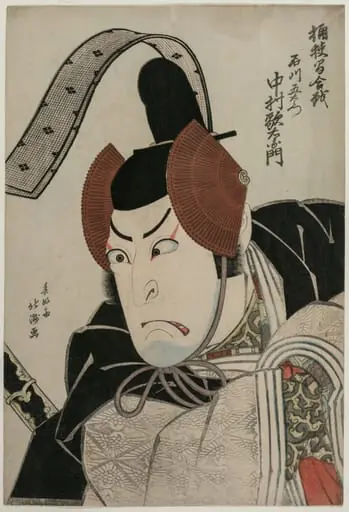 Actor Nakamura Utaemon III (Shikan) as Ishikawa Goemon at the Battle of Okehazama (Okehazama Gassen)
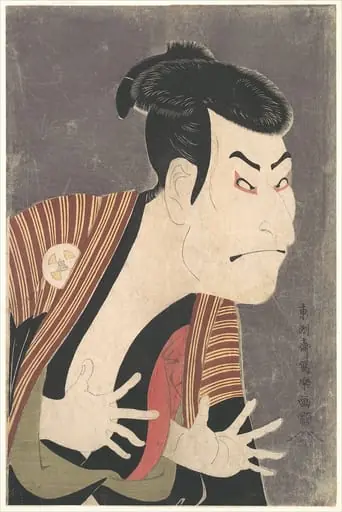 東洲斎写楽画 三代目大谷鬼次の奴江戸兵衛|Kabuki Actor Ōtani Oniji III as Yakko Edobei
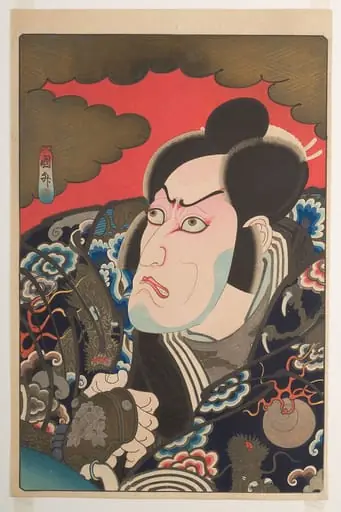 歌川国升画 五代目市川海老蔵 「熊谷次郎直実」|Kabuki Actor Ichikawa Ebizō V as Kumagai Jirō Naozane
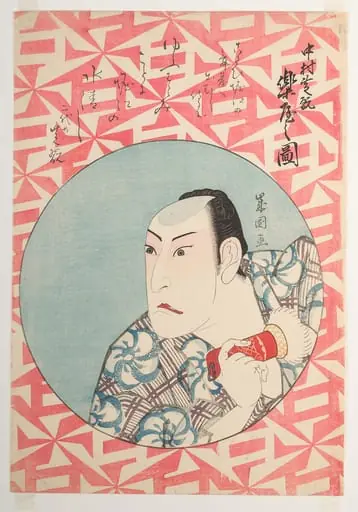 壽陽堂歳国画 『中村芝翫 楽屋之図』|Kabuki Actor Nakamura Shikan Backstage (Nakamura Shikan rakuya no zu)
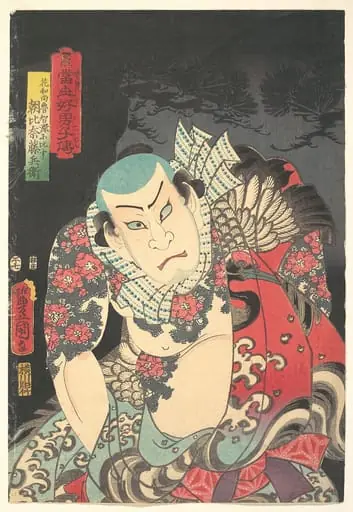 当世好男子伝」松 「花和尚魯智深に比す朝比奈藤兵衛」|The Actor Nakamura Fukusuke I as Asahina Tōbei, likened to Lu Zhishen the Tattooed Priest (Kaoshō Rochishin ni hisu), from the “Pine” triptych of the series A Modern Water Margin (Tōsei suikoden)
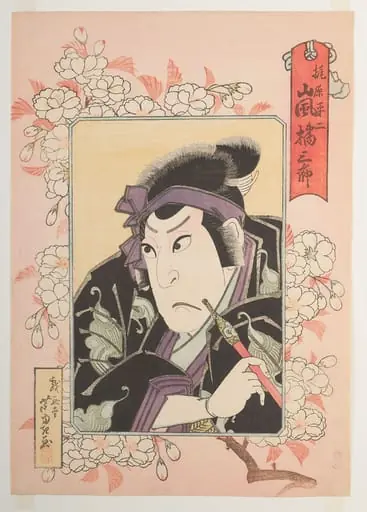 戯画堂芦幸画 二代目嵐橘三郎 「ひらかな盛衰記」|Kabuki Actor Arashi Kitsusaburō II as Kajiwara Heiji, in the play Hiragana seisuiki (Records of the Battles between the Minamoto and Taira Clans in the Japanese Syllabary)
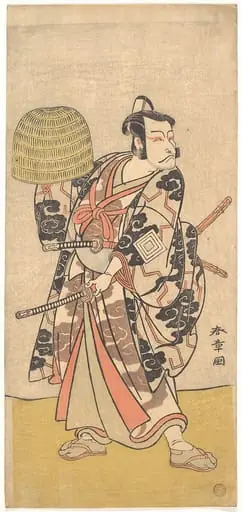 勝川春章画 五代目市川團十郎|Kabuki Actor Ichikawa Danjūrō V
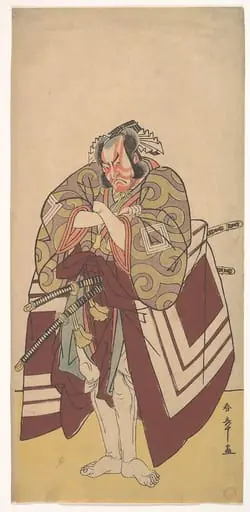 五代目市川団十郎|Kabuki Actor Ichikawa Danjūrō V in a Shibaraku (Stop Right There!) Role
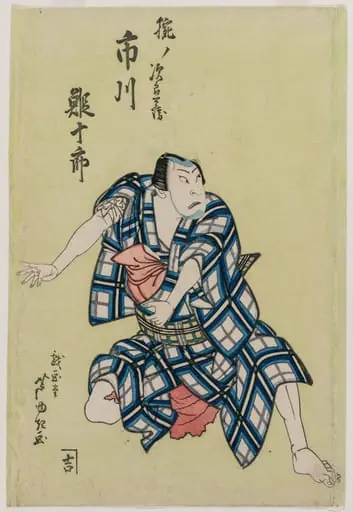 Ichikawa Ebijuro II as Ude no Jirobei
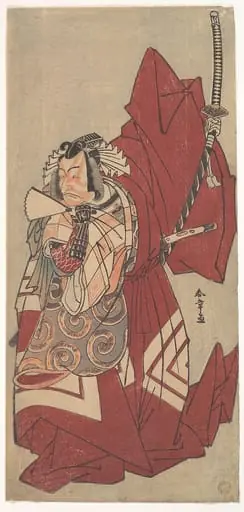 五代目市川団十郎|Kabuki Actor Ichikawa Danjūrō V in a Shibaraku (Stop Right There!) Role as Hannya no Gorō