Artwork
Third Print from A Low Tide Pentaptych
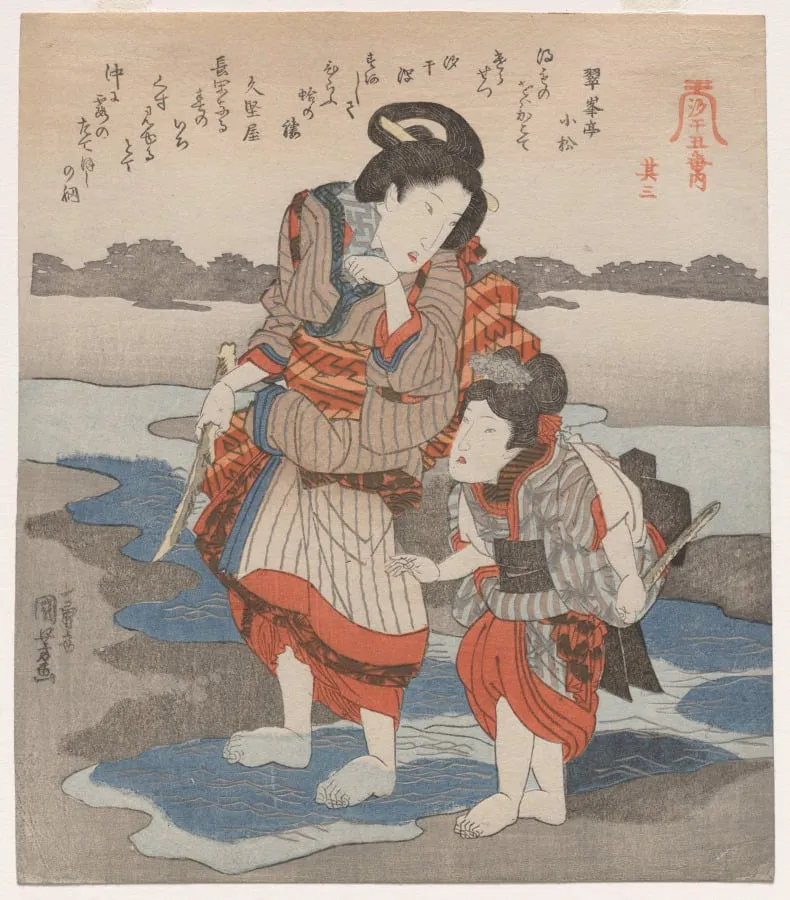
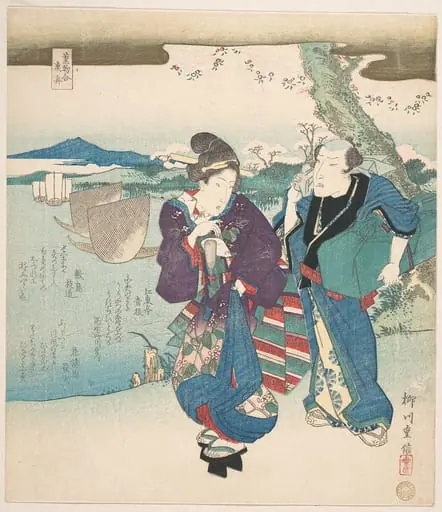
Third Print from A Low Tide Pentaptych is a print by the Romanticist artist Utagawa Kuniyoshi. It dates from 1830 and is held in the collection of the Cleveland Museum of Art. This print is one of five surimono in a series depicting people collecting sea life at low tide.
About this work
Here’s the plain-English rewrite: This print shows people bending over tide pools at low water, gathering crabs and shellfish.
Here’s the plain-English rewrite:
This print shows people bending over tide pools at low water, gathering crabs and shellfish. One man holds a basket while another points at a small octopus. The sea glows under pale sky.
The prints were made for poetry lovers, not shops. Ten short poems run across the top of the five sheets, two per print. They joke about the best shell to find or how fast the tide can rise.
Check out the next gallery if you like prints with hidden words. Look for prints by Utagawa Kuniyoshi (Japanese, 1797–1861).
Overview
This print is one of five surimono in a series depicting people collecting sea life at low tide. It features everyday individuals gathering crabs, shellfish, and other marine life in tide pools, with a serene pale sky above.
Subject & Meaning
The scene focuses on the leisurely activity of beachcombing, highlighting the interaction between people and nature. The inclusion of poems suggests the print's appeal to poetry enthusiasts, with humorous verses referencing the pursuit of desirable shells and the unpredictability of the tide.
Technique & Style
As a surimono, this print showcases refined techniques characteristic of privately commissioned works. The composition balances lively figures with the natural setting, while the upper section dedicated to poetry integrates literary and visual elements.
History & Provenance
Produced in Edo (modern-day Tokyo), this print is associated with a poetry circle led by Hisakataya Misora, who contributed four of the ten poems across the series. The potential April production aligns with the favorable timing for the depicted activity.
Context
Unlike commercially available prints, this surimono was crafted for a specific, poetry-inclined audience. For similar works with integrated literature, see prints by Utagawa Kuniyoshi, known for incorporating hidden words or poetic elements.
Artist & collection
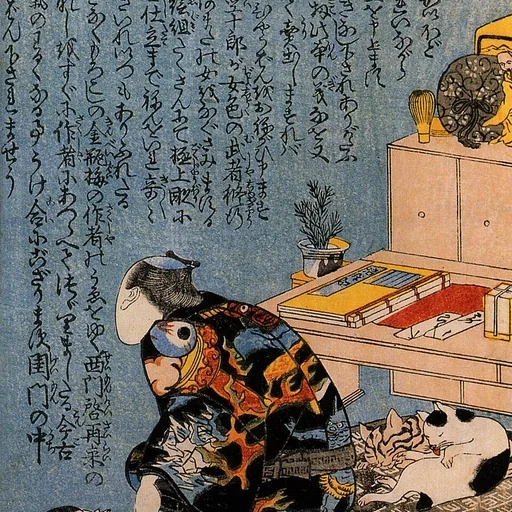
Artist
Kuniyoshi grew up in old Tokyo when the city was still called Edo. His dad ran a silk shop, but Kuniyoshi loved anything with pictures—scrolls, screens, comic books. He talked his way into the Utagawa school, a kind of…

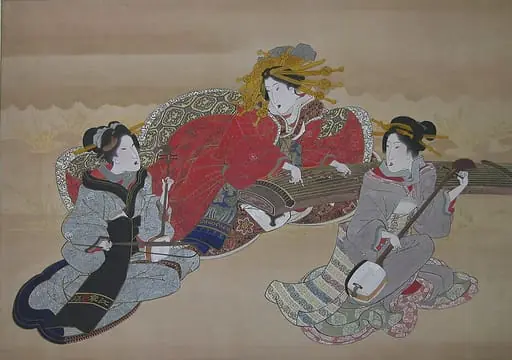 Untitled
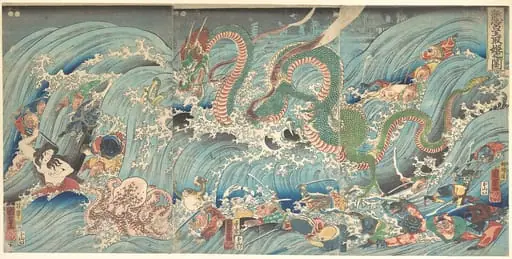 Ryugu Tamatori Hime no su|Recovering the Stolen Jewel from the Palace of the Dragon King
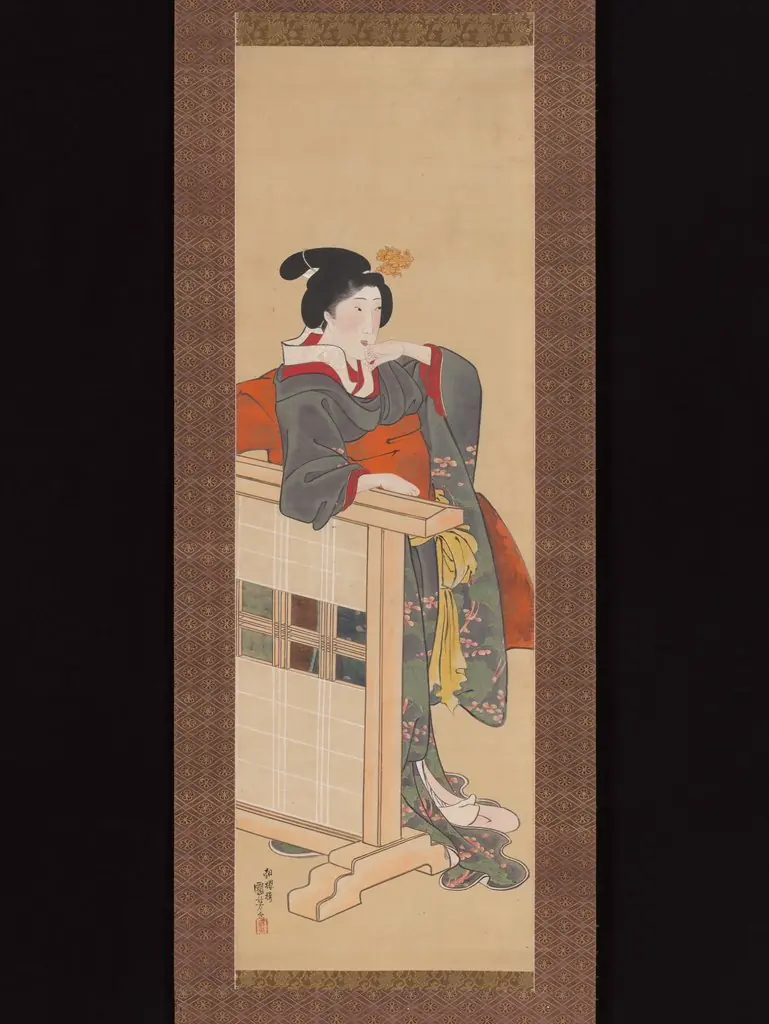 Lady-in-Waiting at Edo Castle
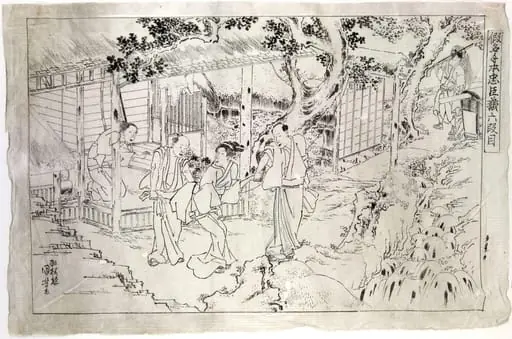 Treasury of the Forty-seven Loyal Retainers
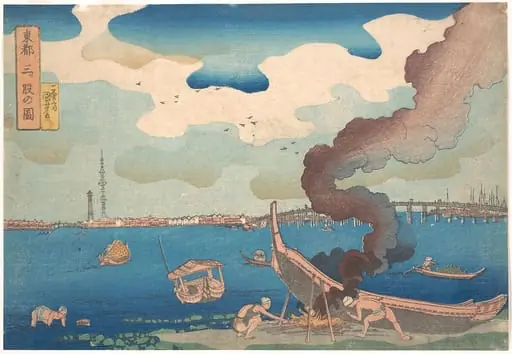 Toto Mitsumata no zu|Picture of Mitsumata
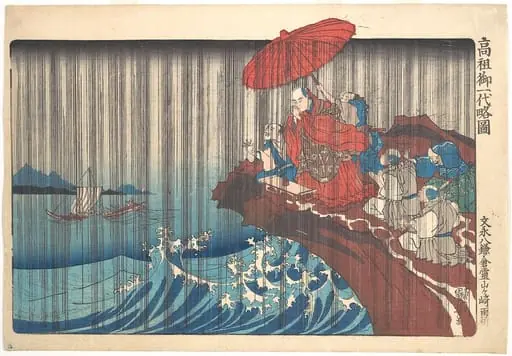 歌川国芳画 「高祖御一代略図 鎌倉霊山ヶ崎雨祈」|Concise Illustrated Biography of Monk Nichiren: Prayer for Rain Answered at Ryōzengasaki in Kamakura
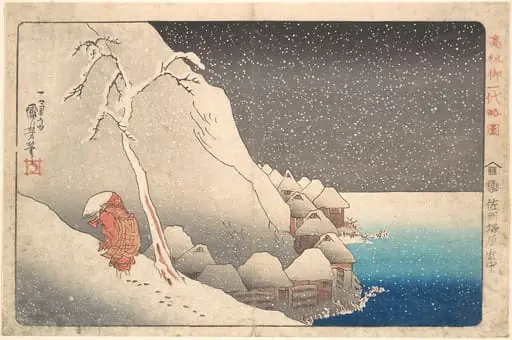 歌川国芳画 「高祖御一代略図 佐州塚原雪中」|Concise Illustrated Biography of Monk Nichiren: In Snow at Tsukahara on Sado Island
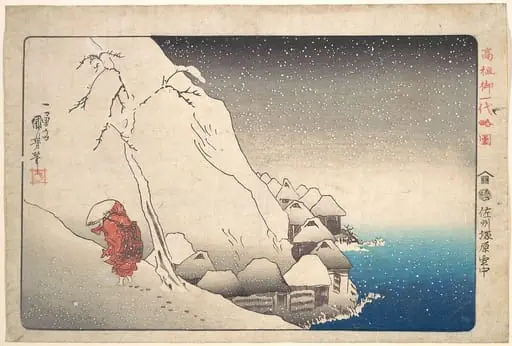 Sashu Tsukahara setchu|Nichiren in Snow at Tsukahara, Sodo Province