Artwork
Daikoku and rats bringing rice bales to Ebisu
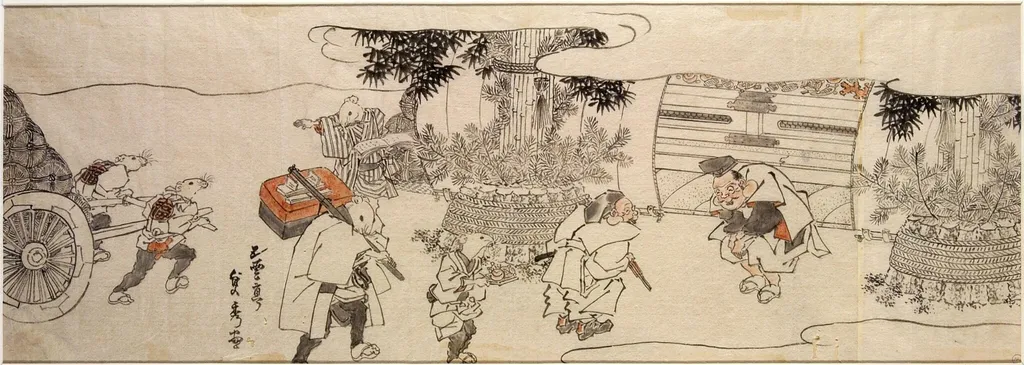
Daikoku and rats bringing rice bales to Ebisu is a paint painting by the Ukiyo-e artist Utagawa (Gountei) Sadahide. It dates from 1850 and is held in the collection of the Victoria and Albert Museum.
About this work
Overview
Daikoku and rats bringing rice bales to Ebisu is a painting on paper by Utagawa Sadahide, created in 1850, utilizing ink and colour. The artwork depicts a lively scene of rats engaged in transporting rice, alongside a figure identified as Daikoku, amidst a rural backdrop.
Subject & Meaning
The painting showcases Daikoku, a deity associated with wealth and fertility, in a unique collaboration with rats, who are diligently hauling and carrying rice bales. This scene may symbolize the themes of industry, abundance, and the harmony between divine and natural labor.
Technique & Style
Utagawa Sadahide employed simple lines and flat colours in the composition, eschewing deep shadows for a more two-dimensional aesthetic, characteristic of certain ukiyo-e traditions.
History & Provenance
Originally owned by Mr. Hogitaro Inada, the painting was acquired by the collection in 1909, with its provenance confirmed through the Asia Department registers during a 2022 research project.
Context
This work reflects Utagawa Sadahide's propensity to reinterpret everyday and mythological themes, often with a touch of whimsy, as evident in his other works that playfully engage with common scenes.
Artist & collection

Artist
Utagawa Sadahide , also known as Gountei Sadahide, was a Japanese artist best known for his prints in the ukiyo-e style as a member of the Utagawa school.

 Untitled
 Untitled
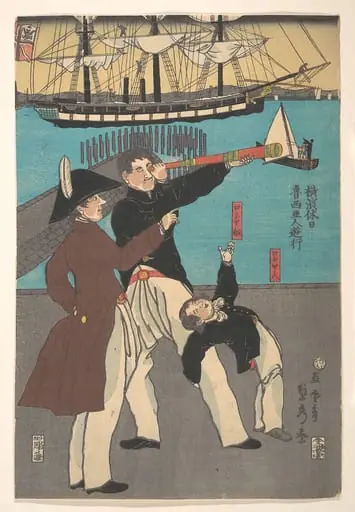 歌川五雲亭貞秀画 『横浜休日 魯西亜人遊行』|Russians Enjoying a Holiday in Yokohama (Yokohama kyūjitsu Roshiajin yūkō)
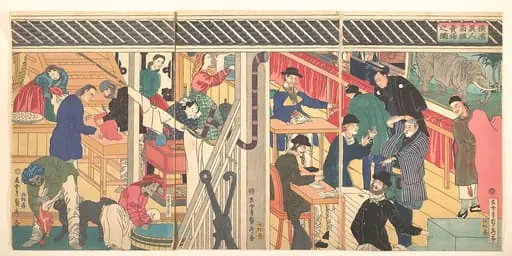 「横浜異人商館買場之圖」|Foreign Business Establishment in Yokohama (Yokohama ijin shōkan uriba no zu)
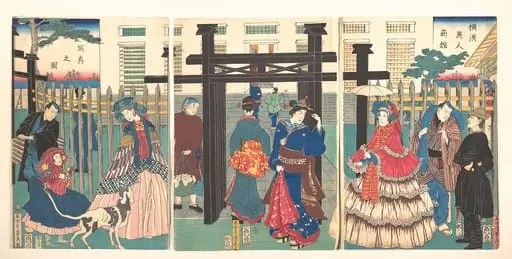 歌川五雲亭貞秀画 『横浜異人商館 写真之図』|Foreign Business Establishment in Yokohama (Yokohama ijin shōkan shashin no zu)
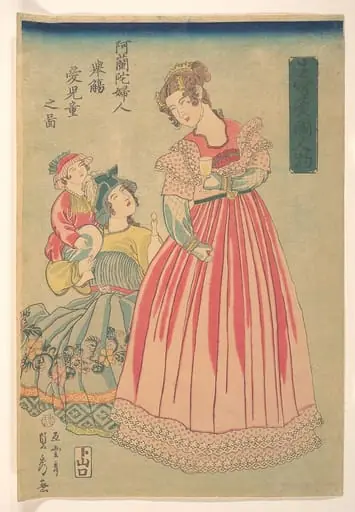 歌川五雲亭貞秀画 『生写異国人物 阿蘭陀婦人舉觴 愛児童之図』|Dutch Woman and Child (Seisha ikoku jinbutsu Oranda fujin aijidō no zu)
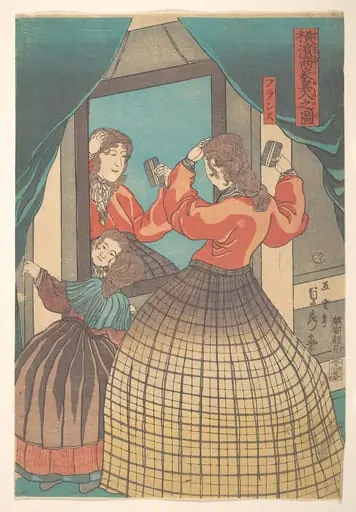 歌川五雲亭貞秀画 『横浜商家異人之図』|French Woman and Girl, from the series Foreign Merchants in Yokohama (Yokohama shōka ijin no zu)
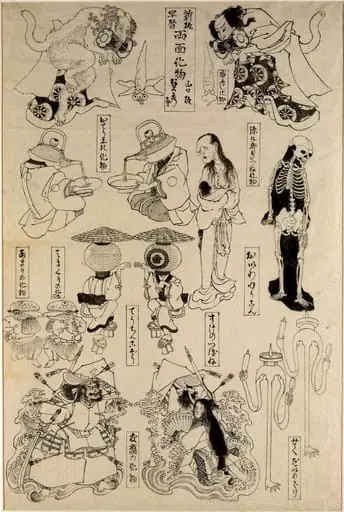 Fox-Genkurô and Others