Artwork
歌川五雲亭貞秀画 『横浜休日 魯西亜人遊行』|Russians Enjoying a Holiday in Yokohama (Yokohama kyūjitsu Roshiajin yūkō)
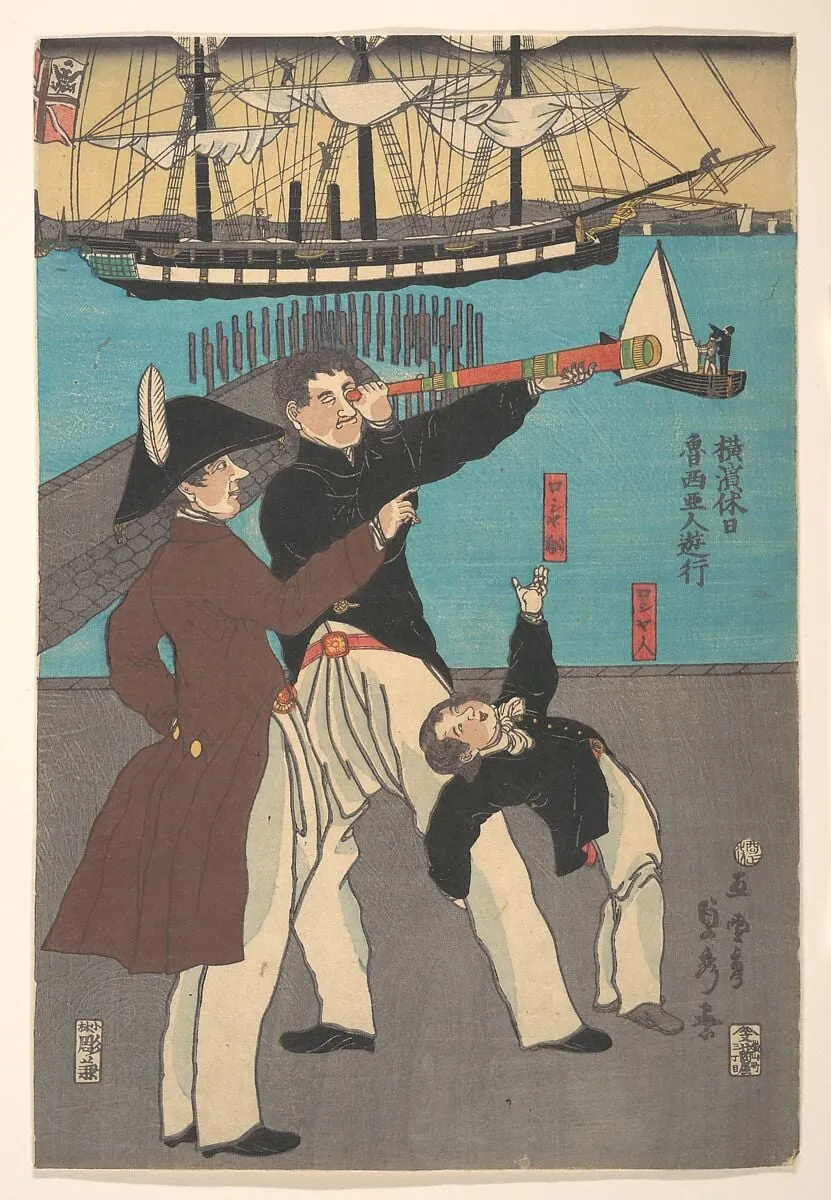
歌川五雲亭貞秀画 『横浜休日 魯西亜人遊行』|Russians Enjoying a Holiday in Yokohama (Yokohama kyūjitsu Roshiajin yūkō) is an ink print by the Impressionist artist Utagawa (Gountei) Sadahide. It dates from 1861 and is held in the collection of the Metropolitan Museum of Art.
About this work
Overview
The scene portrays Russian visitors enjoying a day ashore, framed by the presence of a ship and a telescope, signaling both arrival and observation.
Created in 1861 by Utagawa Sadahide, this nishiki-e woodblock print captures a moment of cultural encounter in Yokohama during Japan’s early opening to foreign influence. The scene portrays Russian visitors enjoying a day ashore, framed by the presence of a ship and a telescope, signaling both arrival and observation. As one of many prints documenting Yokohama’s international port life, it reflects the curiosity and documentation of foreign presence in a rapidly changing Japan.
Subject & Meaning
The print depicts Russian travelers strolling through Yokohama’s foreign settlement, dressed in distinctive attire and engaging with unfamiliar surroundings. Their presence, alongside the ship and telescope, suggests themes of travel, observation, and cross-cultural exchange. Rather than idealizing or caricaturing, the scene presents a quiet, observational record of foreigners navigating a newly accessible Japanese port, hinting at the broader shifts in Japan’s global engagement.
Technique & Style
Executed in the nishiki-e tradition, the print employs multiple woodblocks to layer ink and color with precision. Fine lines define figures and architecture, while subtle gradients in sky and water convey depth. Sadahide’s attention to detail in clothing, ship rigging, and landscape elements reflects his training in topographical and genre printmaking, blending documentary realism with the decorative conventions of ukiyo-e.
History & Provenance
Produced in 1861, the print emerged during the final years of the Tokugawa shogunate, as Yokohama became a designated treaty port for foreign trade. Sadahide, known for his depictions of foreign residents and port life, created this work for a domestic audience eager to visualize the outside world. Its survival in private and institutional collections attests to its role as a historical record of early Meiji-era cultural transition.
Context
In the early 1860s, Japan’s isolationist policies were ending, and Yokohama became a hub for foreign diplomats, merchants, and travelers. Artists like Sadahide responded by documenting these encounters, offering Japanese viewers a visual window into the foreign communities now present in their ports. This print belongs to a broader genre of 'Yokohama-e'—prints that captured the spectacle and novelty of international life in the treaty ports.
Legacy
Sadahide’s work, including this print, contributed to a visual archive of Japan’s encounter with the West during a pivotal historical moment. While not widely known outside specialist circles, these prints remain valuable for their unembellished portrayal of cross-cultural interaction. They inform modern understandings of how Japanese artists interpreted and mediated foreign presence during the transition from Edo to Meiji society.
Artist & collection

Artist
Utagawa Sadahide , also known as Gountei Sadahide, was a Japanese artist best known for his prints in the ukiyo-e style as a member of the Utagawa school.

 Untitled
 Untitled
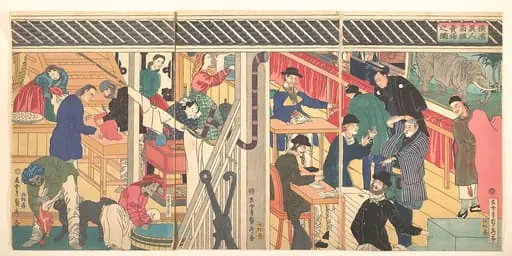 「横浜異人商館買場之圖」|Foreign Business Establishment in Yokohama (Yokohama ijin shōkan uriba no zu)
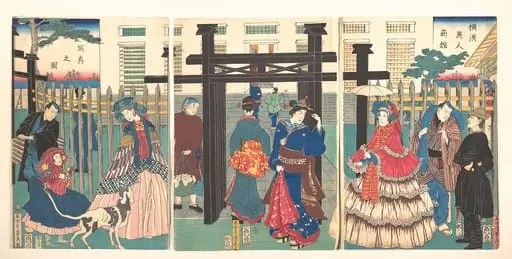 歌川五雲亭貞秀画 『横浜異人商館 写真之図』|Foreign Business Establishment in Yokohama (Yokohama ijin shōkan shashin no zu)
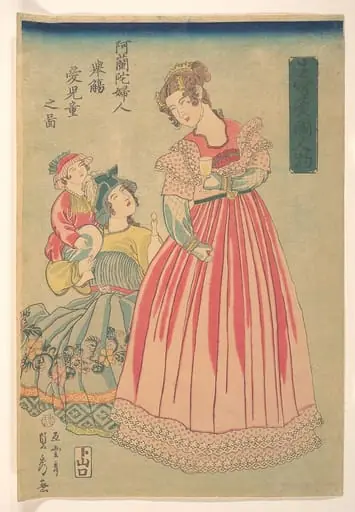 歌川五雲亭貞秀画 『生写異国人物 阿蘭陀婦人舉觴 愛児童之図』|Dutch Woman and Child (Seisha ikoku jinbutsu Oranda fujin aijidō no zu)
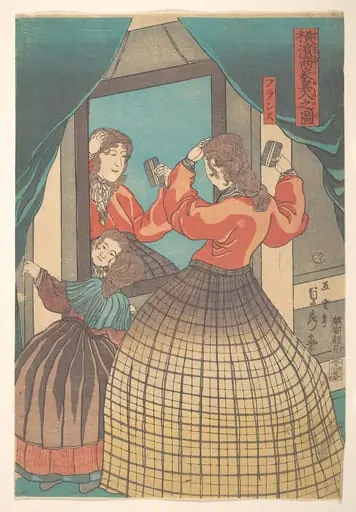 歌川五雲亭貞秀画 『横浜商家異人之図』|French Woman and Girl, from the series Foreign Merchants in Yokohama (Yokohama shōka ijin no zu)
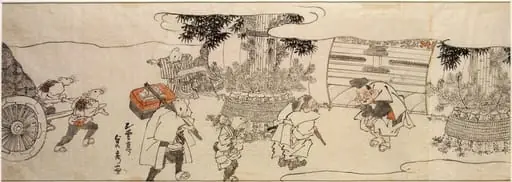 Daikoku and rats bringing rice bales to Ebisu
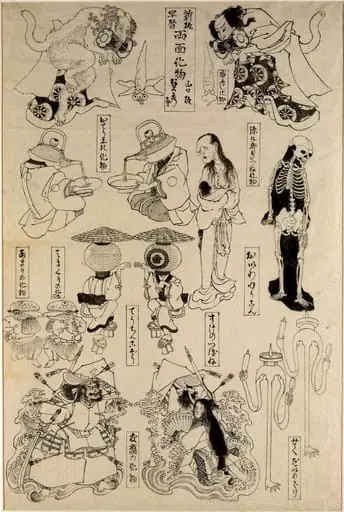 Fox-Genkurô and Others
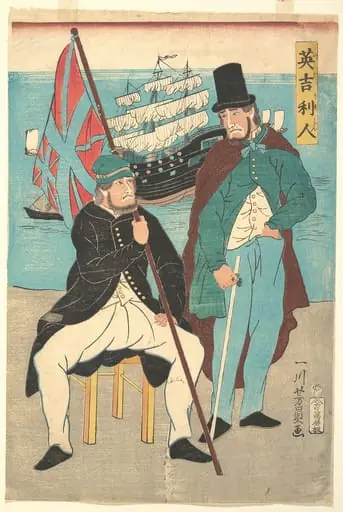 Igirisujin|Englishmen
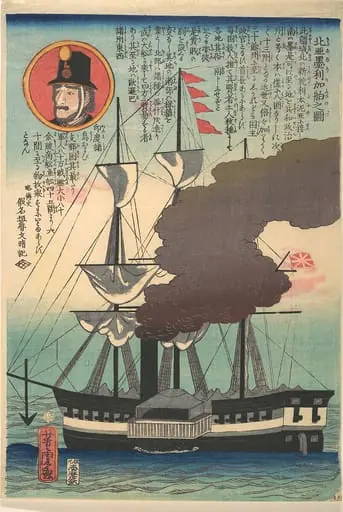 Kita Amerka fune no zu|North American Ship
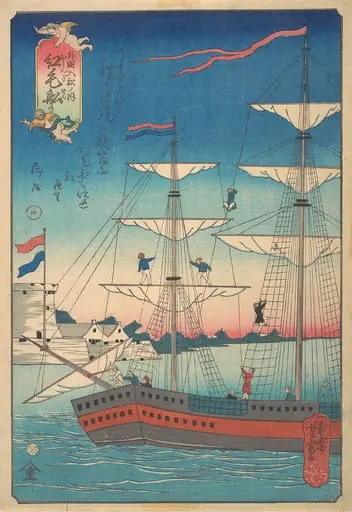 Orandasen|Dutch Ship
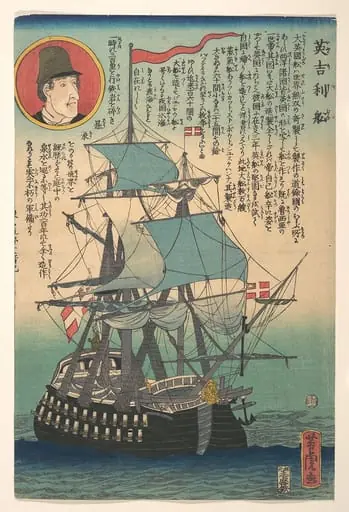 Igirisu fune|English Ship
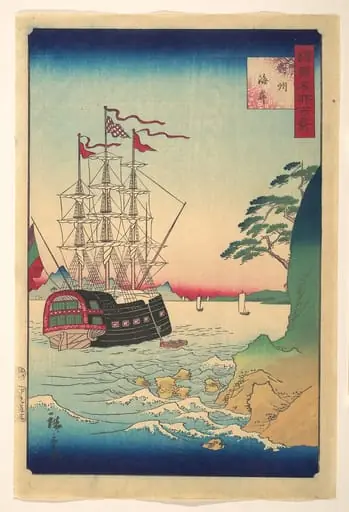 諸国名所百景 對州海岸|Dutch Ship at Anchor off the Coast of Tsushima
![Hatoba no kihan|Returning Sails at the Wharves [American couple], by Utagawa Yoshitora](https://artifactworldgallery.com/img/utagawa-yoshitora--hatoba-no-kihan-returning-sails-at-the-wharves-american-coup--7cbb23b38d23029d-w320.webp) Hatoba no kihan|Returning Sails at the Wharves [American couple]
Hatoba no kihan|Returning Sails at the Wharves [American couple]![Nōgei no seiran|Returning Sails at Nōgei [American couple riding over the Nōgei Bridge], by Utagawa Yoshitora](https://artifactworldgallery.com/img/utagawa-yoshitora--nogei-no-seiran-returning-sails-at-nogei-american-couple-rid--332c5cab5263a5c5-w320.webp) Nōgei no seiran|Returning Sails at Nōgei [American couple riding over the Nōgei Bridge]
Nōgei no seiran|Returning Sails at Nōgei [American couple riding over the Nōgei Bridge]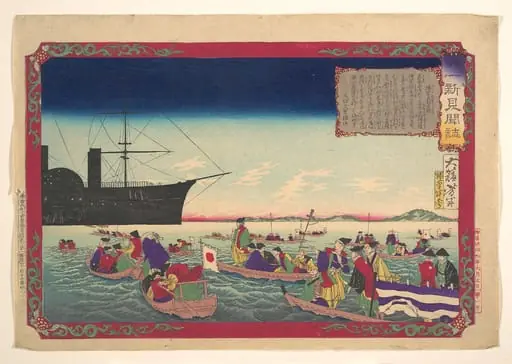 皇国一新見聞誌|Chronicle of the Imperial Restoration (Kōkoku isshin kenbunshi)
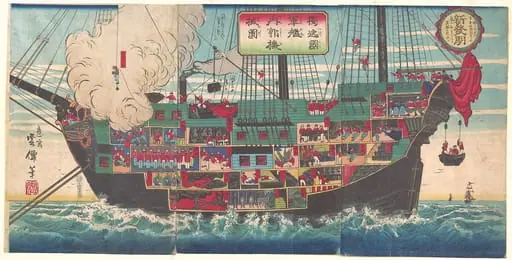 Doitsukokukan naibu kikai|The Interior Works of an Armed Japanese Battleship