Artwork
Fox-Genkurô and Others
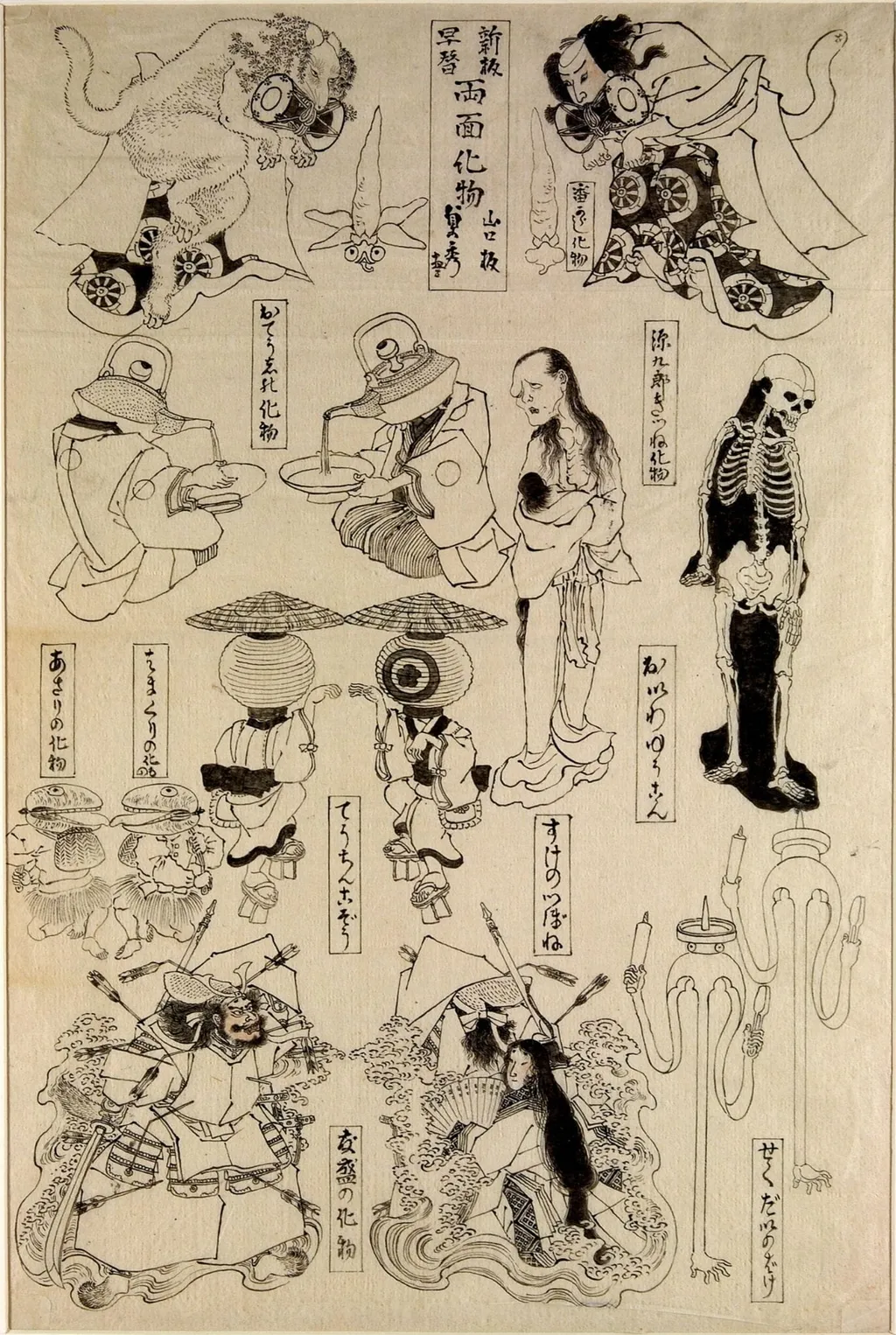
Fox-Genkurô and Others is a paint painting by the Romanticist artist Utagawa (Gountei) Sadahide. It dates from 1837 and is held in the collection of the Victoria and Albert Museum. This sheet is a printed design intended for use as a children's toy, not a standalone artwork.
About this work
Overview
It features multiple creatures depicted in dual-profile format—each figure appears as both human and animal, mirrored along a shared outline.
This sheet is a printed design intended for use as a children's toy, not a standalone artwork. It features multiple creatures depicted in dual-profile format—each figure appears as both human and animal, mirrored along a shared outline. The design allowed users to cut out the forms, glue them back-to-back, and manipulate them as flipable puppets. Due to heavy handling and the perishable nature of the medium, surviving examples are exceptionally rare.
Subject & Meaning
The figures represent bakemono, Japanese term for 'things that change,' embodying the idea of shape-shifting spirits. One prominent figure alternates between Genkurô, a fox spirit in human guise, and its true fox form. The visual doubling underscores transformation as both magical and absurd, with the human disguise rendered no more dignified than the animal original. The humor lies in the ambiguity of identity—neither form is clearly superior.
Technique & Style
The artist employed bold, continuous outlines to unify both profiles of each creature, enabling seamless flipping when constructed. Details are minimal but expressive, emphasizing silhouette over texture. The composition is densely packed, with overlapping figures arranged to maximize utility on a single sheet. The style is playful and economical, prioritizing functionality for interactive use over decorative refinement.
History & Provenance
Produced by Sadahide in the mid-19th century, this design was part of a popular genre of printed playthings sold in urban markets. These sheets were mass-produced for domestic use, particularly among children, and were not preserved as art objects. Their fragility and repeated handling explain the scarcity of surviving examples; most were discarded after use or deteriorated through frequent manipulation.
Context
In Edo-period Japan, printed images often served utilitarian or recreational purposes beyond decoration. Toy prints like this one reflected a broader culture of visual play, where folklore and everyday life intersected. The popularity of shape-shifting spirits in ukiyo-e and folk tales made such designs relatable and entertaining, blending myth with domestic amusement in accessible form.
Legacy
Few examples of these interactive prints remain, making this sheet a rare witness to a lost tradition of participatory art. Its survival offers insight into how popular imagery was repurposed in daily life, beyond gallery display. Modern collections, such as those at the Victoria and Albert Museum, hold comparable fragments, preserving evidence of a playful, transient art form once common in Japanese households.
Own this work as a print
Artist & collection

Artist
Utagawa Sadahide , also known as Gountei Sadahide, was a Japanese artist best known for his prints in the ukiyo-e style as a member of the Utagawa school.

 Untitled
 Untitled
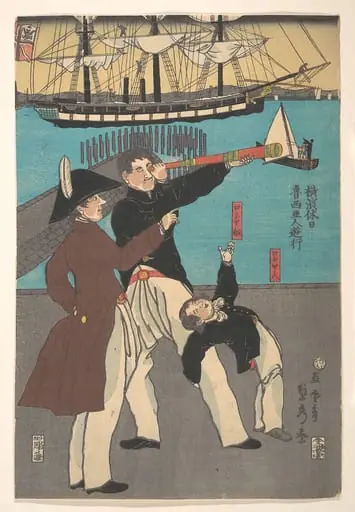 歌川五雲亭貞秀画 『横浜休日 魯西亜人遊行』|Russians Enjoying a Holiday in Yokohama (Yokohama kyūjitsu Roshiajin yūkō)
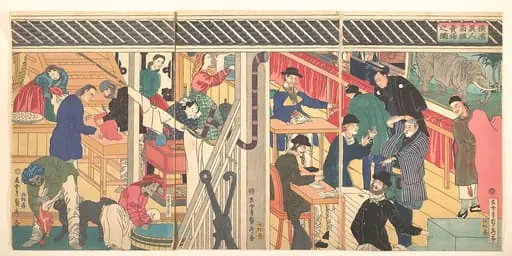 「横浜異人商館買場之圖」|Foreign Business Establishment in Yokohama (Yokohama ijin shōkan uriba no zu)
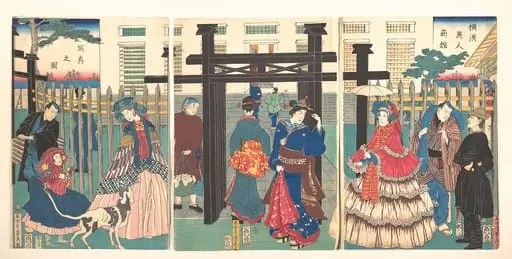 歌川五雲亭貞秀画 『横浜異人商館 写真之図』|Foreign Business Establishment in Yokohama (Yokohama ijin shōkan shashin no zu)
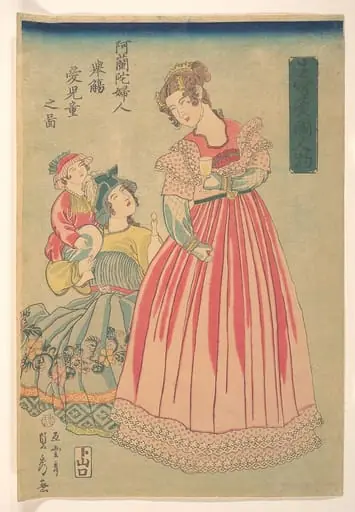 歌川五雲亭貞秀画 『生写異国人物 阿蘭陀婦人舉觴 愛児童之図』|Dutch Woman and Child (Seisha ikoku jinbutsu Oranda fujin aijidō no zu)
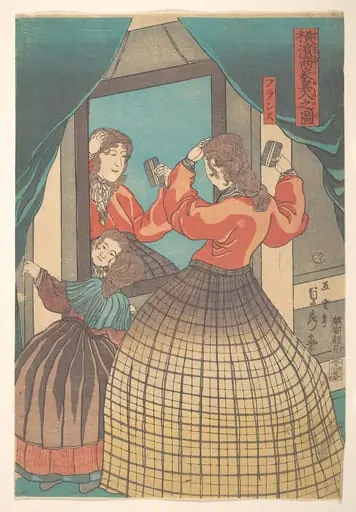 歌川五雲亭貞秀画 『横浜商家異人之図』|French Woman and Girl, from the series Foreign Merchants in Yokohama (Yokohama shōka ijin no zu)
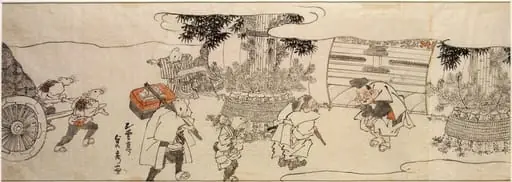 Daikoku and rats bringing rice bales to Ebisu
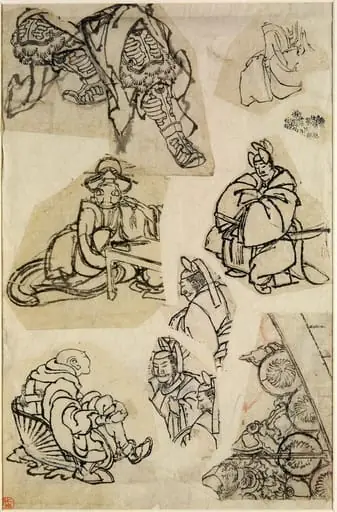 Sketches
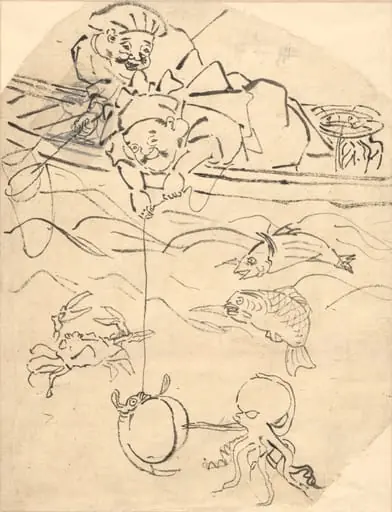 Daikoku and Ebisu, Two of the Seven Gods of Happiness
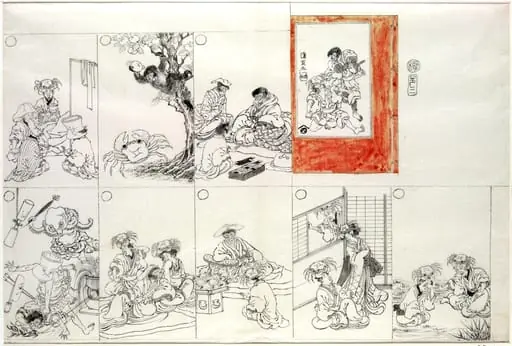 Battle of the Monkey and the Crab
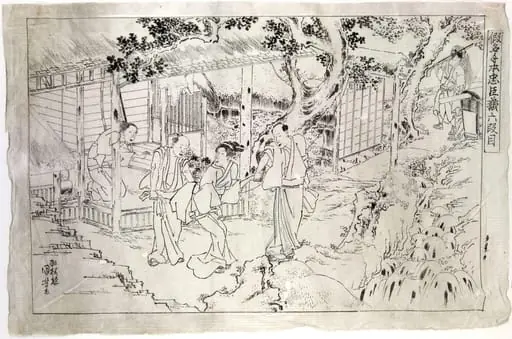 Treasury of the Forty-seven Loyal Retainers
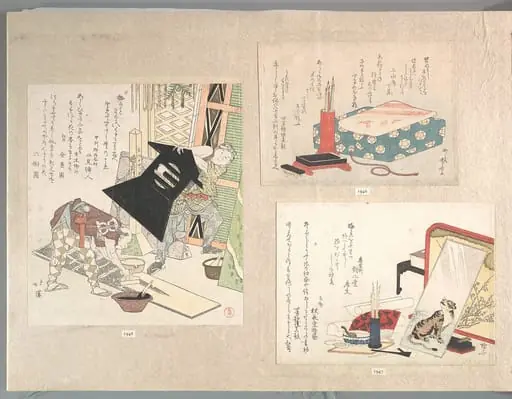 文具一式|Writing Set and Poem Card Box (Shikishi-bako), from Spring Rain Surimono Album (Harusame surimono-jō), vol. 1
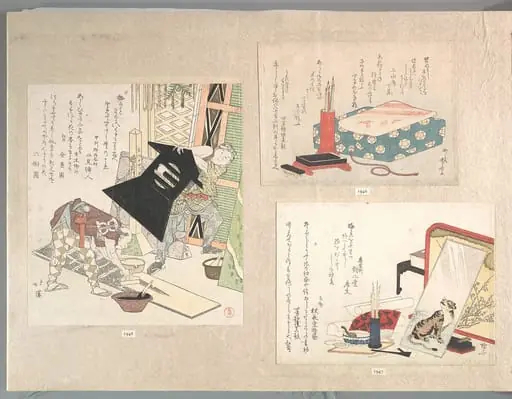 衝立、虎図、文具一式|Desk Screen, Writing Set, Painting of Tiger, and Mounting Paraphernalia, from Spring Rain Surimono Album (Harusame surimono-jō, vol. 1)
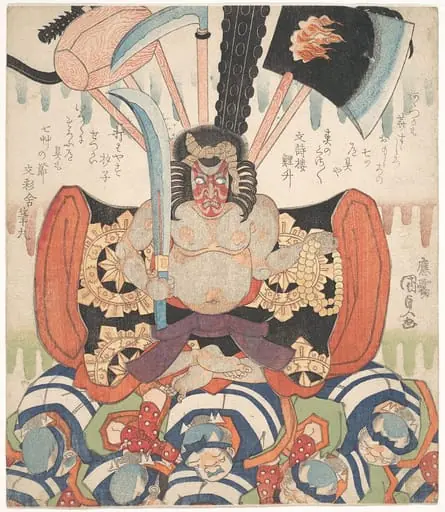 Untitled