Artwork
Mendicant Monk in Katsushika and Others
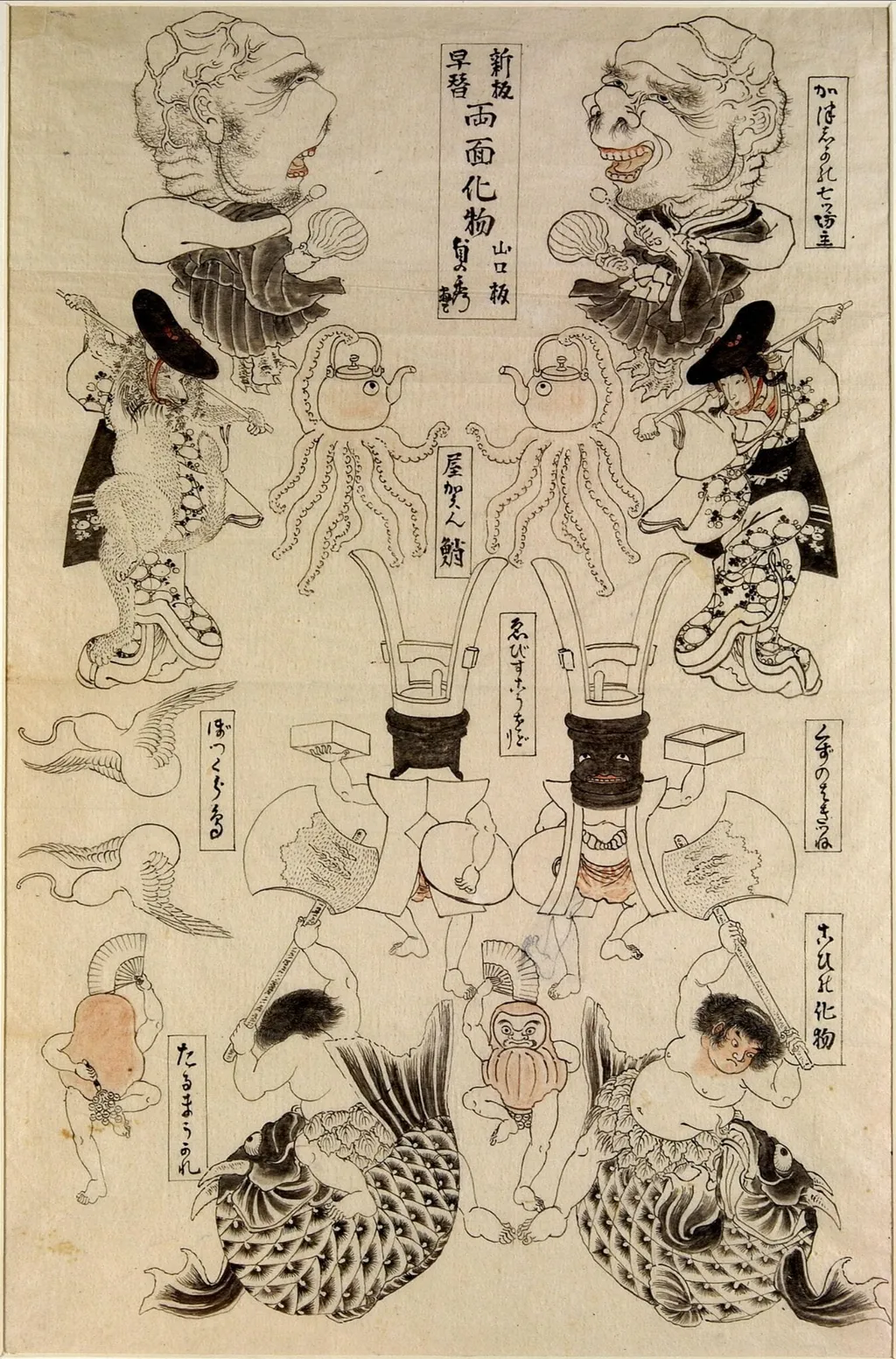
Mendicant Monk in Katsushika and Others is a paint painting by the Romanticist artist Utagawa (Gountei) Sadahide. It dates from 1837 and is held in the collection of the Victoria and Albert Museum. This sheet is a preparatory design for a printed image intended as a children’s toy.
About this work
Overview
It features a single outline of a mendicant monk, mirrored on either side of the page, allowing the figure to be cut out, doubled, and glued back-to-back.
This sheet is a preparatory design for a printed image intended as a children’s toy. It features a single outline of a mendicant monk, mirrored on either side of the page, allowing the figure to be cut out, doubled, and glued back-to-back. The result was a three-dimensional puppet that could be manipulated to suggest transformation—a physical embodiment of the Japanese concept of bakemono, or 'things that change.' Few examples survive due to their interactive, disposable nature.
Subject & Meaning
The figure depicts a mendicant monk, a common subject in Edo-period popular culture, reimagined as a supernatural entity. The dual-facing form visually represents the idea of transformation central to the term bakemono. By presenting one figure as two reversed profiles, the design invites the viewer to perceive identity as fluid, blurring the line between human and spirit. The monk’s appearance, neither fearsome nor sacred, suggests a humorous, everyday encounter with the uncanny.
Technique & Style
The drawing employs clean, precise linework typical of ukiyo-e design, with no shading or color, emphasizing form over detail. The symmetry and economy of the outline suggest it was made for reproduction, not display. The artist, Sadahide, favors clarity and wit over ornamentation, aligning with the print’s function as a toy. The absence of background or context focuses attention entirely on the figure’s reversible structure, reinforcing its interactive purpose.
History & Provenance
Created in the mid-19th century by Utagawa Sadahide, this sheet belongs to a small group of prints designed for play rather than collection. Their fragility and use as paper toys led to widespread loss; few survive intact. The sheet’s existence today is likely due to its preservation by a collector who recognized its novelty. It reflects a lesser-known facet of Edo print culture—where art and play intersected in domestic settings.
Context
During the Edo period, popular prints often served multiple roles: decoration, instruction, or entertainment. This design fits within a tradition of visual puzzles and paper toys, such as cut-out figures and flip books. The theme of transformation resonated with folk beliefs and theatrical performances, where spirits and disguises were common. Sadahide’s work taps into this cultural current, using the medium’s reproducibility to turn art into a tactile experience.
Legacy
This sheet stands as a rare artifact of ephemeral print culture, illustrating how artistic production could extend beyond the wall or book into the realm of play. Its survival offers insight into how ordinary people engaged with visual culture—not as passive viewers, but as active participants. Modern scholars value it not for its aesthetic grandeur, but for its testimony to the playful, transient nature of everyday art in Edo society.
Own this work as a print
Artist & collection

Artist
Utagawa Sadahide , also known as Gountei Sadahide, was a Japanese artist best known for his prints in the ukiyo-e style as a member of the Utagawa school.

 Untitled
 Untitled
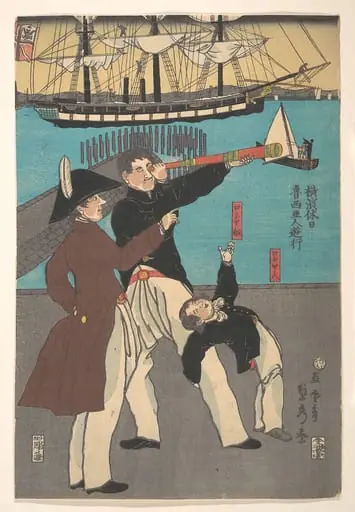 歌川五雲亭貞秀画 『横浜休日 魯西亜人遊行』|Russians Enjoying a Holiday in Yokohama (Yokohama kyūjitsu Roshiajin yūkō)
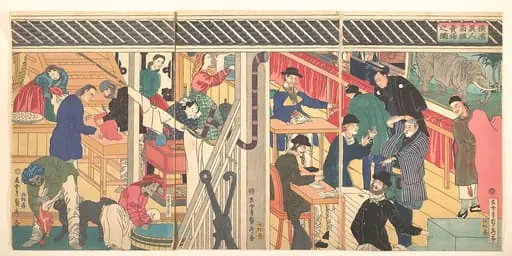 「横浜異人商館買場之圖」|Foreign Business Establishment in Yokohama (Yokohama ijin shōkan uriba no zu)
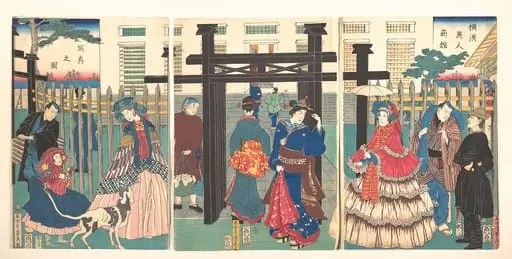 歌川五雲亭貞秀画 『横浜異人商館 写真之図』|Foreign Business Establishment in Yokohama (Yokohama ijin shōkan shashin no zu)
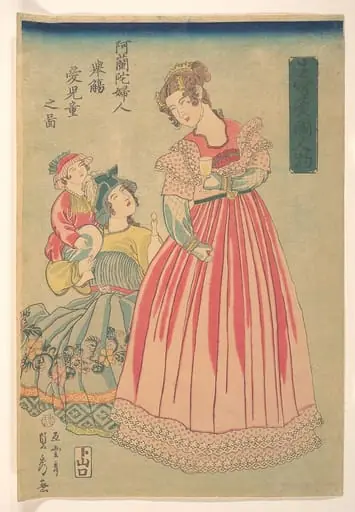 歌川五雲亭貞秀画 『生写異国人物 阿蘭陀婦人舉觴 愛児童之図』|Dutch Woman and Child (Seisha ikoku jinbutsu Oranda fujin aijidō no zu)
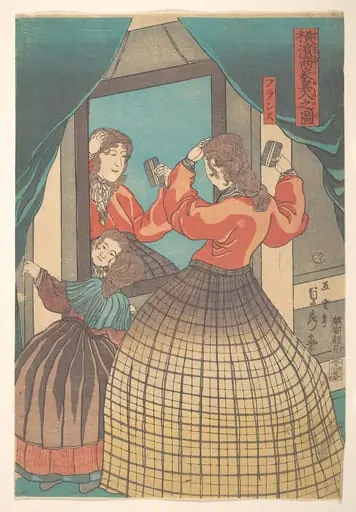 歌川五雲亭貞秀画 『横浜商家異人之図』|French Woman and Girl, from the series Foreign Merchants in Yokohama (Yokohama shōka ijin no zu)
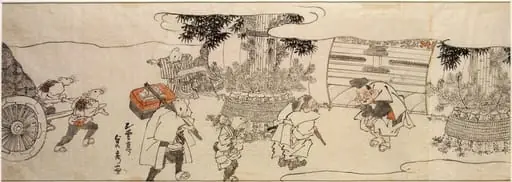 Daikoku and rats bringing rice bales to Ebisu