Artwork
Daikoku and Ebisu, Two of the Seven Gods of Happiness
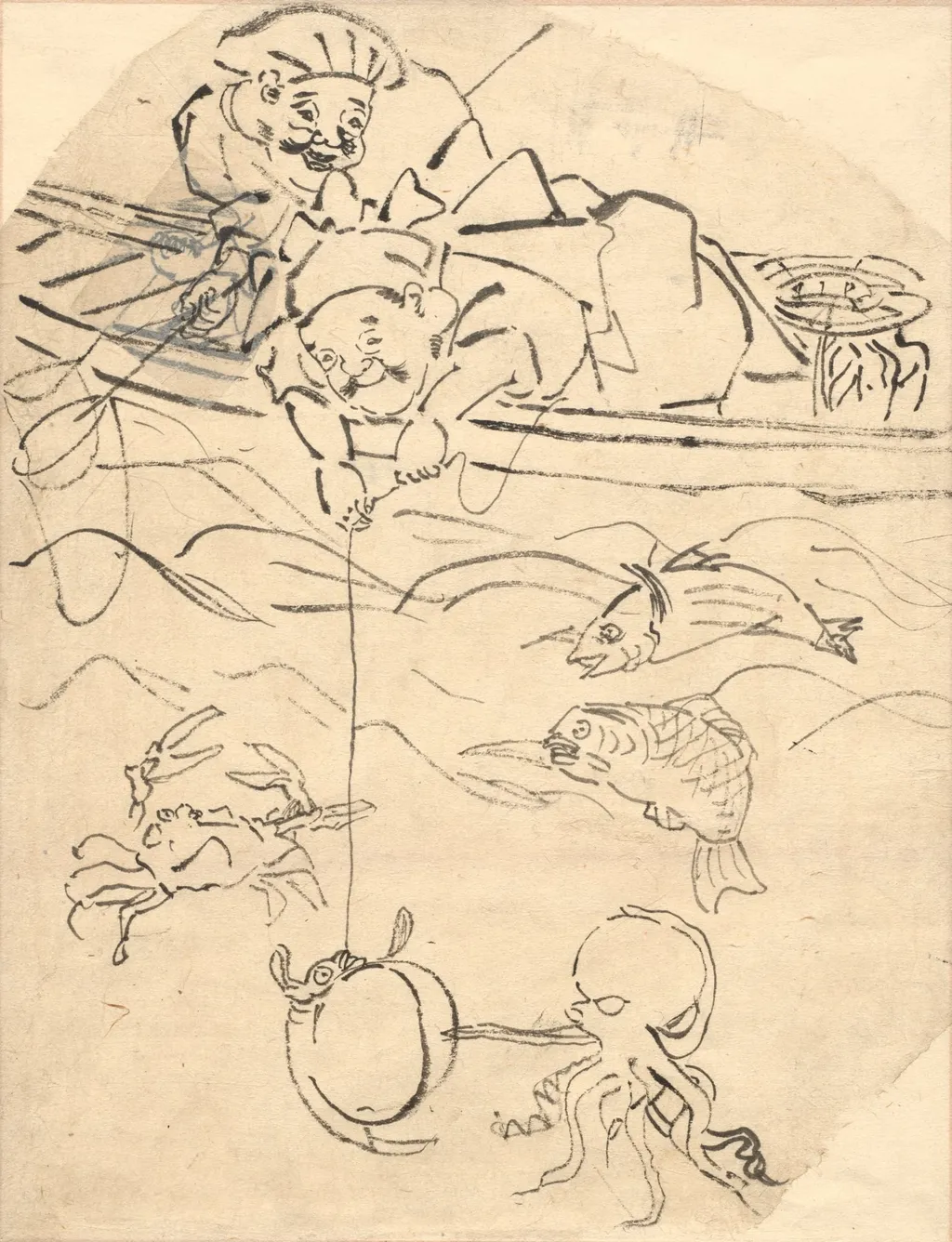
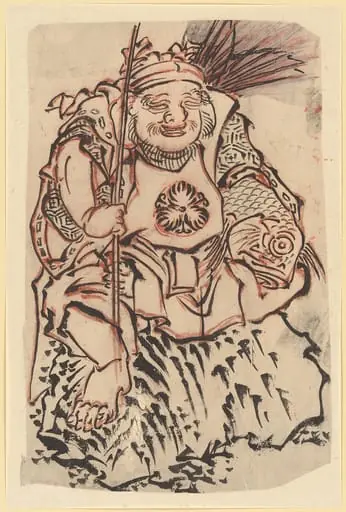
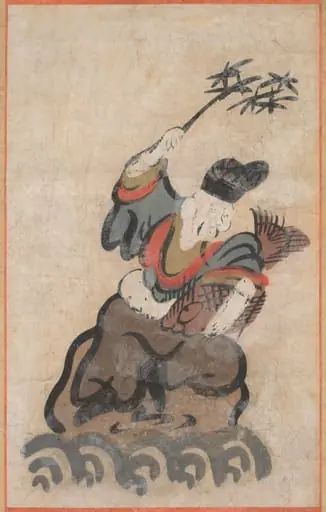
Daikoku and Ebisu, Two of the Seven Gods of Happiness is a drawing by the Romanticist artist Utagawa Kuniyoshi. It dates from 1834 and is held in the collection of the Cleveland Museum of Art.
About this work
Overview
Daikoku and Ebisu, Two of the Seven Gods of Happiness is a drawing by Japanese artist Utagawa Kuniyoshi, dating to around 1834. It is part of the collection at The Cleveland Museum of Art.
Subject & Meaning
The work depicts Daikoku and Ebisu, two deities from the Seven Gods of Happiness in Japanese mythology, standing together in a unified composition. Their portrayal reflects cultural and mythological significance during the Edo period.
Technique & Style
While specific medium details are not provided, the drawing showcases meticulous attention to detail, evident in the intricate patterns on the gods' attire and the objects they hold, characteristic of meticulous craftsmanship in Edo period art.
History & Provenance
Created circa 1834 by Utagawa Kuniyoshi, the drawing's history prior to its acquisition by The Cleveland Museum of Art is not detailed here, highlighting the need for further research on its provenance.
Context
The piece provides a visual window into Edo period (1603-1867) Japanese culture, illustrating the blend of mythology and everyday life through the depiction of these revered deities.
Artist & collection
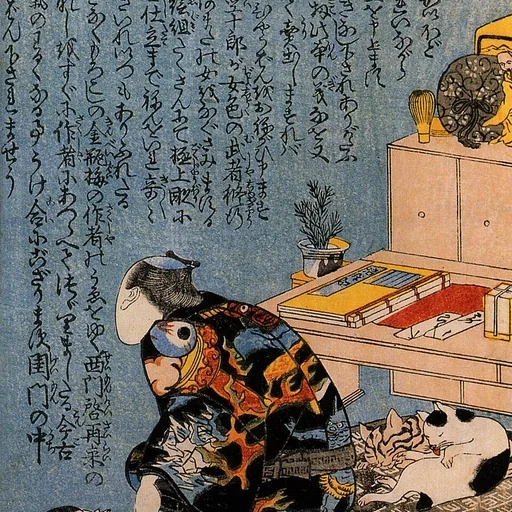
Artist
Kuniyoshi grew up in old Tokyo when the city was still called Edo. His dad ran a silk shop, but Kuniyoshi loved anything with pictures—scrolls, screens, comic books. He talked his way into the Utagawa school, a kind of…

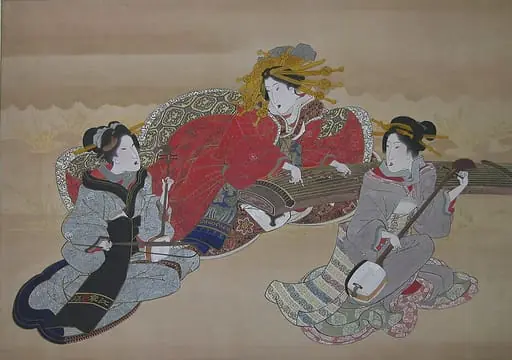 Untitled
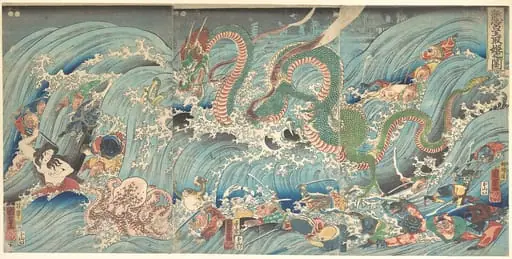 Ryugu Tamatori Hime no su|Recovering the Stolen Jewel from the Palace of the Dragon King
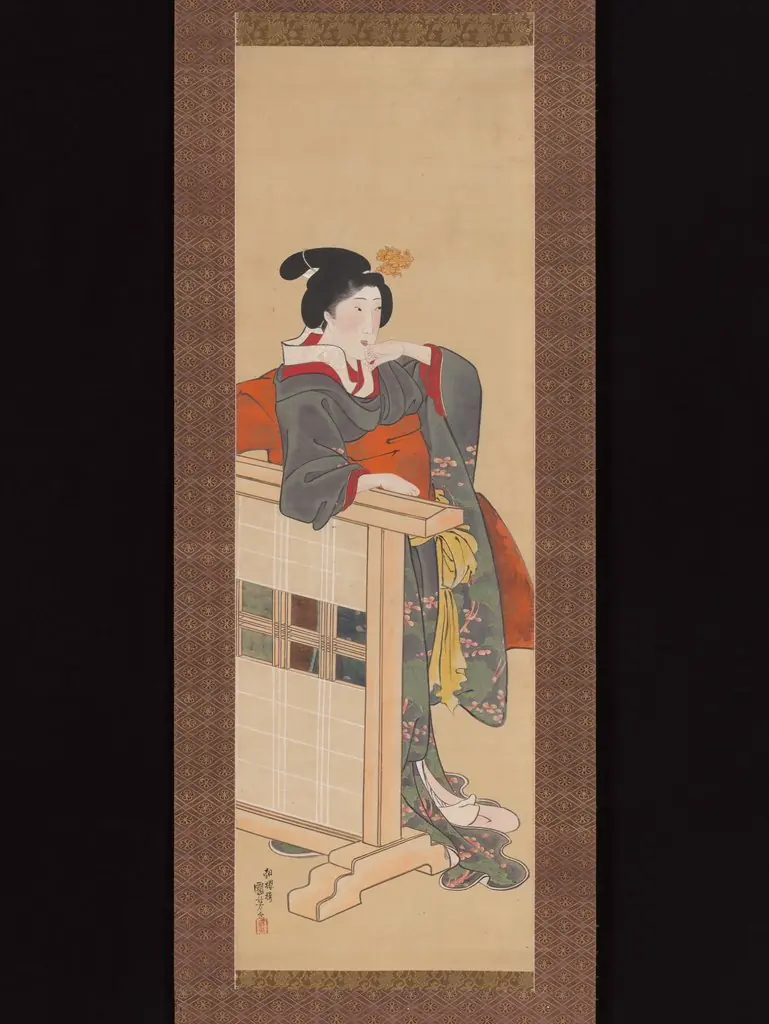 Lady-in-Waiting at Edo Castle
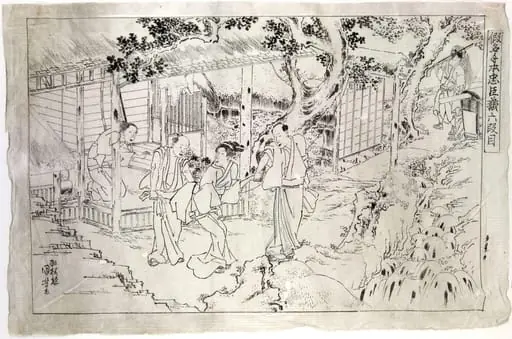 Treasury of the Forty-seven Loyal Retainers
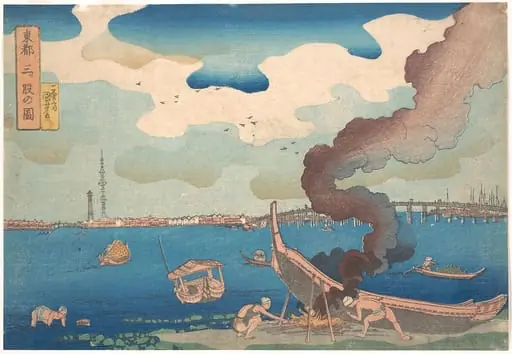 Toto Mitsumata no zu|Picture of Mitsumata
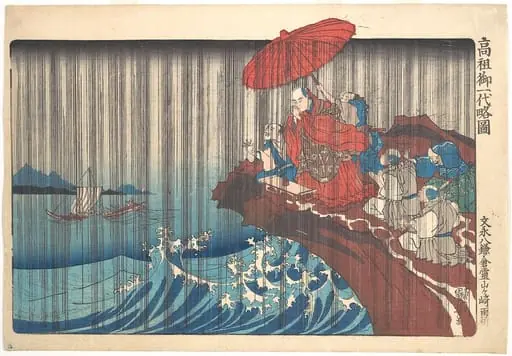 歌川国芳画 「高祖御一代略図 鎌倉霊山ヶ崎雨祈」|Concise Illustrated Biography of Monk Nichiren: Prayer for Rain Answered at Ryōzengasaki in Kamakura
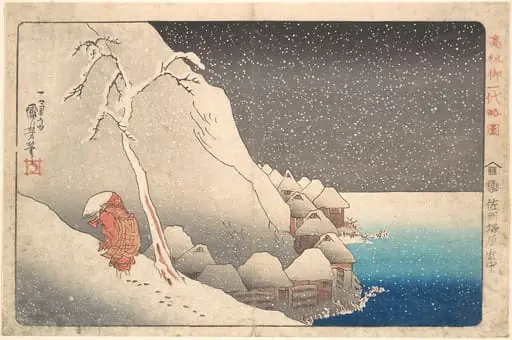 歌川国芳画 「高祖御一代略図 佐州塚原雪中」|Concise Illustrated Biography of Monk Nichiren: In Snow at Tsukahara on Sado Island
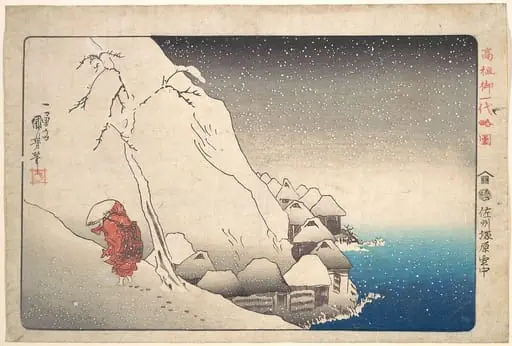 Sashu Tsukahara setchu|Nichiren in Snow at Tsukahara, Sodo Province