Artwork
Horinouchi Myōhōji Eho Mairi no Zu|Pilgrimage to Myōhōji in Horinouchi, Edo
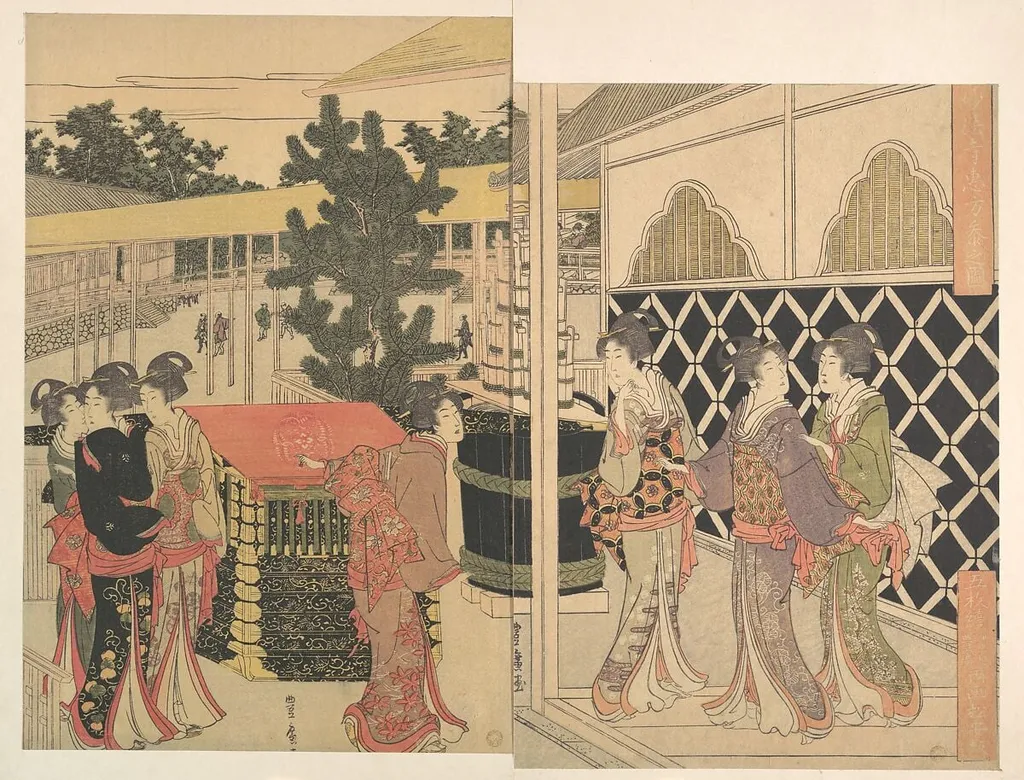
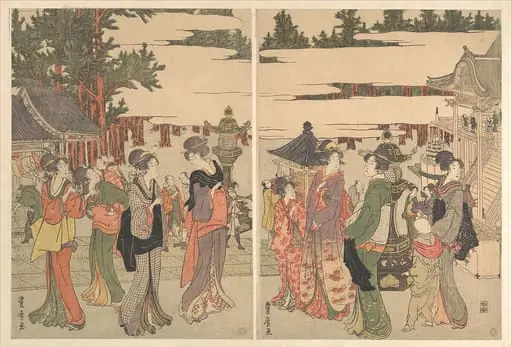
Horinouchi Myōhōji Eho Mairi no Zu|Pilgrimage to Myōhōji in Horinouchi, Edo is an ink print by the Romanticist artist Utagawa Toyohiro. It dates from 1804 and is held in the collection of the Metropolitan Museum of Art.
About this work
Overview
Horinouchi Myōhōji Eho Mairi no Zu is a late 18th-century Japanese woodblock print, specifically two sheets from a pentaptych, created by Utagawa Toyohiro around 1804. Executed in ink and color on paper, the work is now part of The Metropolitan Museum of Art's collection.
Subject & Meaning
The print depicts two scenes of women in traditional long robes and high hairstyles, suggesting a pilgrimage or visit to a sacred site, likely Myōhōji Temple in the Horinouchi area of Edo (modern Tokyo). The left sheet shows the group outdoors near a building with a prominent tree and a red chest, while the right sheet captures them indoors beside a distinctive black-and-white patterned wall and tall windows.
Technique & Style
Characterized by vibrant colors and intricate patterns on the women's attire, the print exemplifies Utagawa Toyohiro's mastery of woodblock printing techniques. The contrast between the outdoor setting, complete with a fence and distant figures, and the serene, decorated indoor space, highlights the artist's ability to convey different atmospheres within a single work.
History & Provenance
Created circa 1804, this woodblock print is attributed to Utagawa Toyohiro, a prominent figure in Edo-period ukiyo-e. The work is currently housed at The Metropolitan Museum of Art, though the full provenance history prior to its acquisition is not detailed here.
Context
This print reflects the cultural and religious practices of late Edo Japan, where pilgrimages to temples like Myōhōji were common. It also showcases the artistic trends of the time, blending traditional motifs with the evolving styles of ukiyo-e woodblock prints.
Legacy
As part of Utagawa Toyohiro's oeuvre, Horinouchi Myōhōji Eho Mairi no Zu contributes to the broader legacy of ukiyo-e in Japanese art history, offering insights into the daily life, fashion, and religious practices of 19th-century Edo.
Artist & collection


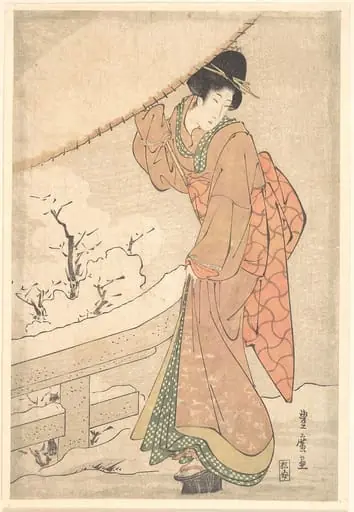
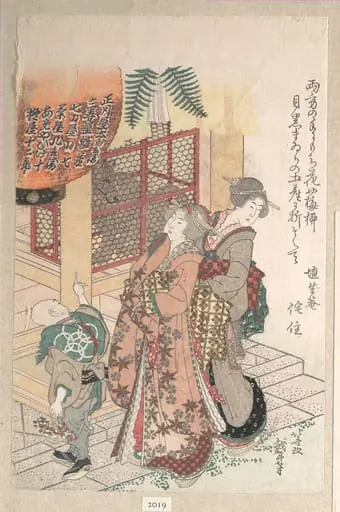 初詣|Young Women Visiting a Shinto Shrine
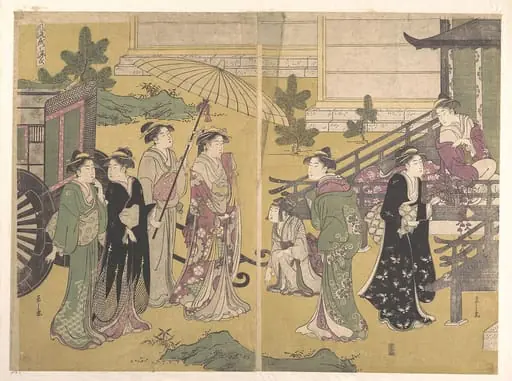 Untitled
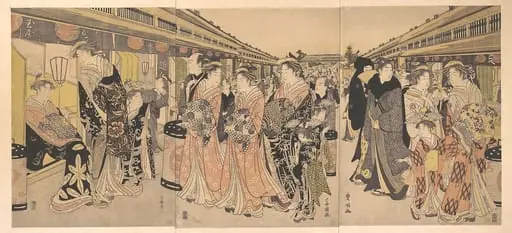 吉原仲の町花魁道中|Courtesans Promenading on the Nakanochō in Yoshiwara
 Untitled
 Untitled
 Kabuki Theater
 契情三人酔 三幅之内 腹立上戸 泣上戸 笑上戸|Three Intoxicated Courtesans
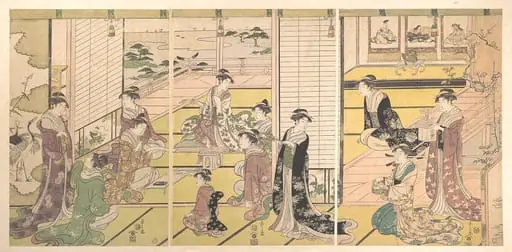 鳥文斎栄之画 和歌三神図|Honoring the Three Gods of Poetry: Women Composing Poems
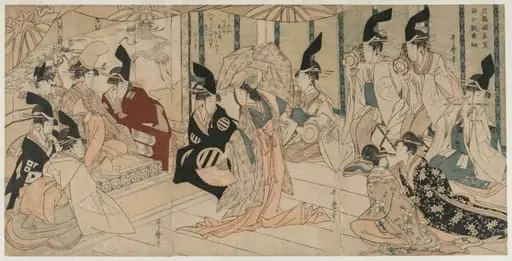 Scene Adapted from the play The Treasury of Loyal Retainers (Chushingura)
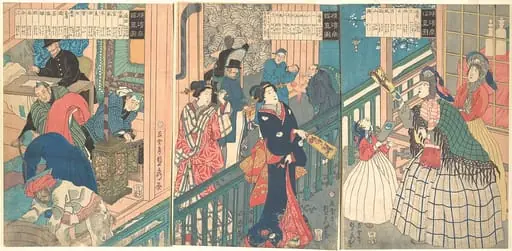 歌川(五雲亭)貞秀画 「横濱商館真圖」|A True View of a Trading House of a Yokohama Merchant
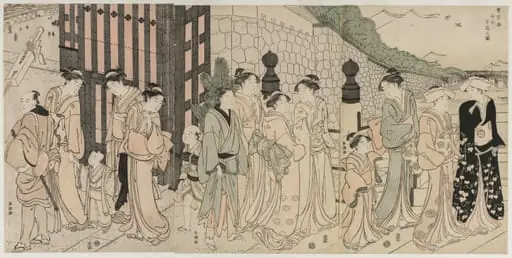 A Thousand Autumns, Ten Thousand Years on Tokiwa Bridge
![南四季 夏景|The Four Seasons in Southern Edo: A Summer Scene (Minami shiki; Natsu [no] kei), by Utagawa Toyokuni I](https://artifactworldgallery.com/img/utagawa-toyokuni-i--the-four-seasons-in-southern-edo-a-summer-scene-minami-shiki--de8110e8ab2ddcb5-w320.webp) 南四季 夏景|The Four Seasons in Southern Edo: A Summer Scene (Minami shiki; Natsu [no] kei)
南四季 夏景|The Four Seasons in Southern Edo: A Summer Scene (Minami shiki; Natsu [no] kei)