Artwork
Untitled
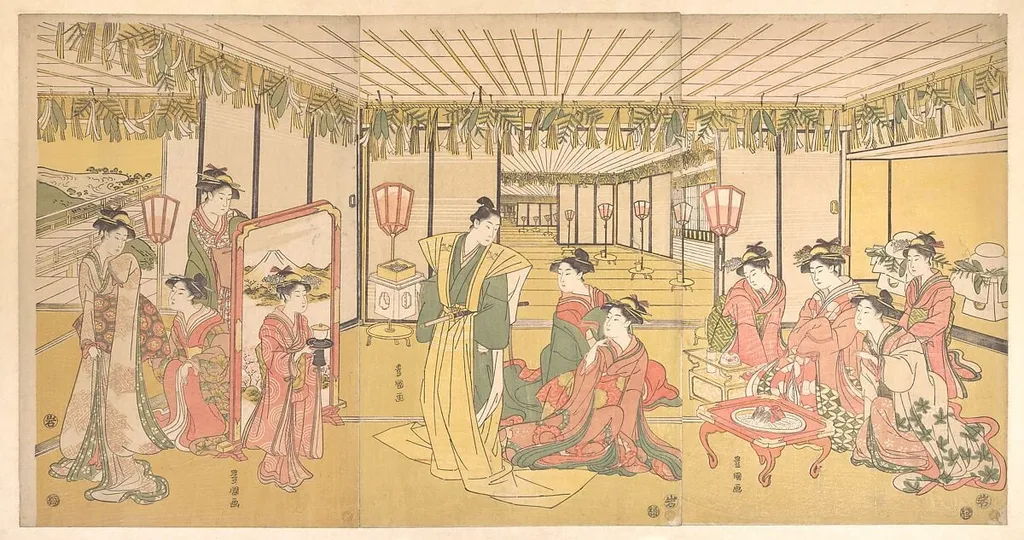
Untitled is an ink print by the Romanticist artist Utagawa Toyokuni I. It dates from 1791 and is held in the collection of the Metropolitan Museum of Art.
About this work
Overview
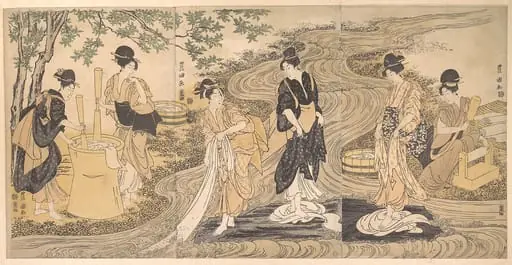
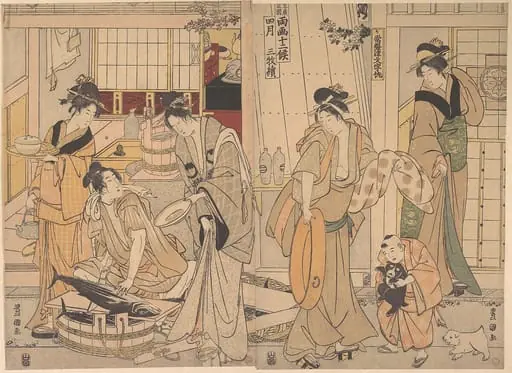
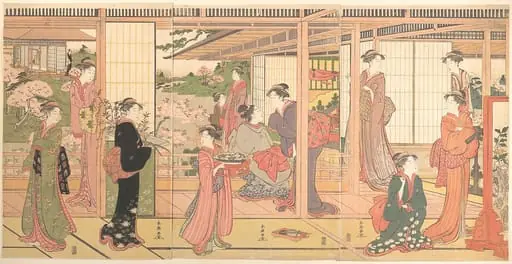
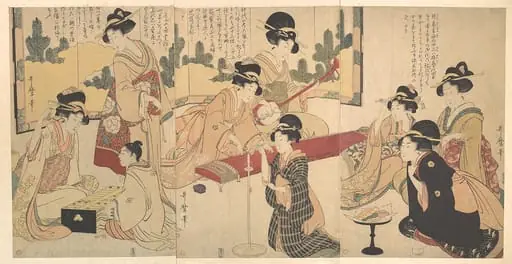
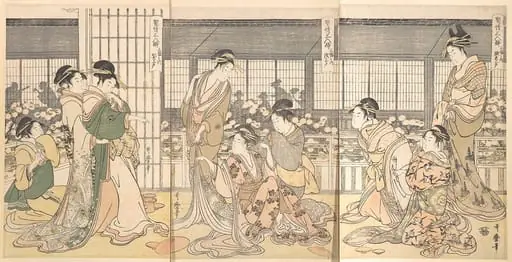
This triptych, created around 1791 by Utagawa Toyokuni I, consists of three woodblock prints on paper, each depicting a moment within a domestic gathering.
This triptych, created around 1791 by Utagawa Toyokuni I, consists of three woodblock prints on paper, each depicting a moment within a domestic gathering. The work is rendered in ink and color, characteristic of ukiyo-e traditions. It is part of the collection at The Metropolitan Museum of Art, where it serves as an example of late 18th-century Japanese printmaking focused on everyday social life.
Subject & Meaning
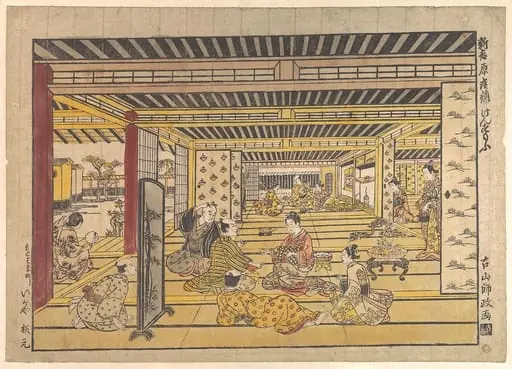
The three panels capture informal interactions in a single interior space: guests near a decorative screen, a man serving tea to seated women, and another group conversing around a table with food. These scenes suggest a cohesive social event, possibly a seasonal gathering or private celebration. The composition implies continuity between moments, emphasizing the rhythm of daily life rather than narrative climax.
Technique & Style
Toyokuni employed bold outlines and flat areas of color typical of ukiyo-e, using minimal shading to define forms. Figures are rendered with simplified contours, enhancing their dynamism. The use of paper lanterns and plain walls grounds the scene in domestic realism, while the vibrant robes and arranged furnishings add visual rhythm. The triptych format allows for a sequential yet unified portrayal of activity within a confined space.
History & Provenance
Produced during Toyokuni’s peak years in Edo, the triptych was likely made for the commercial print market, appealing to urban audiences interested in contemporary life. It entered The Metropolitan Museum of Art’s collection in the 20th century, where it has been studied as an example of genre printmaking. Its survival in good condition reflects its popularity and careful preservation over time.
Context
In late 18th-century Edo, woodblock prints often depicted scenes from urban leisure, theater, and domestic settings. This work aligns with a growing interest in portraying ordinary people and intimate spaces, distinct from earlier depictions of warriors or beauties. The interior setting, with its screens and lanterns, reflects the architectural norms of middle-class homes, where social rituals unfolded in modest, enclosed rooms.
Legacy
Toyokuni’s triptych exemplifies the evolution of ukiyo-e toward genre subjects, influencing later artists to focus on the subtleties of daily interaction. Its structured yet lively composition became a model for depicting social dynamics in print form. While not widely known outside specialist circles, it remains a key reference for understanding how Edo-period artists captured the quiet rhythms of domestic life.
Artist & collection

Artist
Toyokuni was a born showman who made sure the energy of Edo’s kabuki stage never faded on paper.

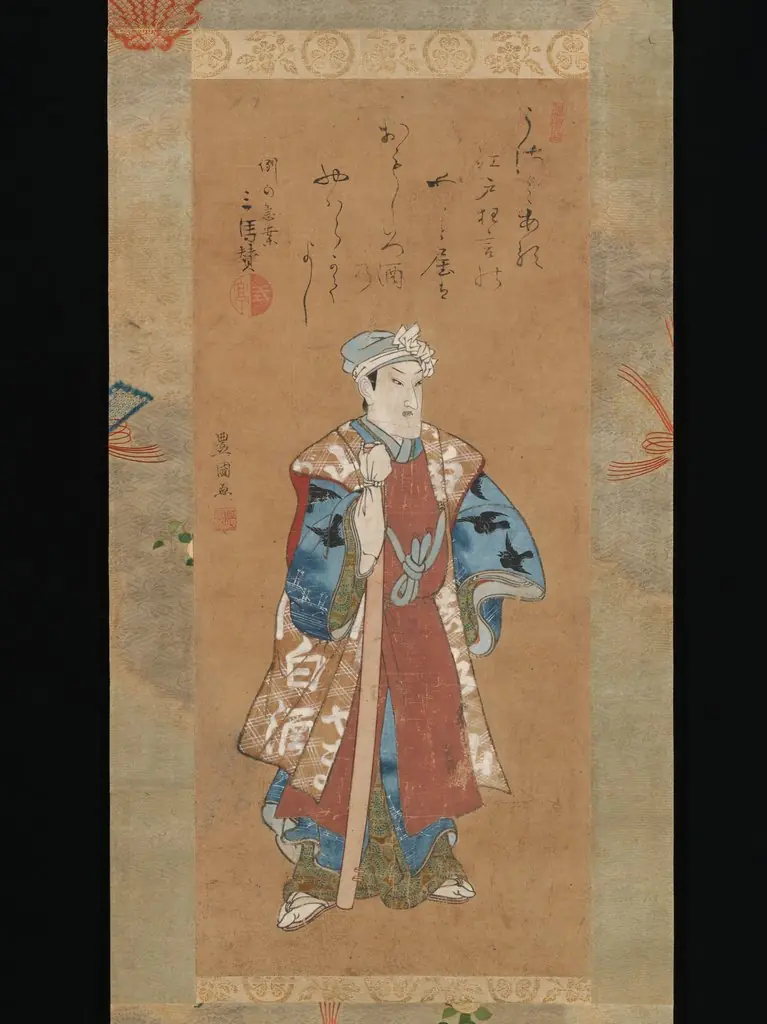 Bandō Mitsugorō II as Shinbei in the Kabuki Play "Sukeroku"
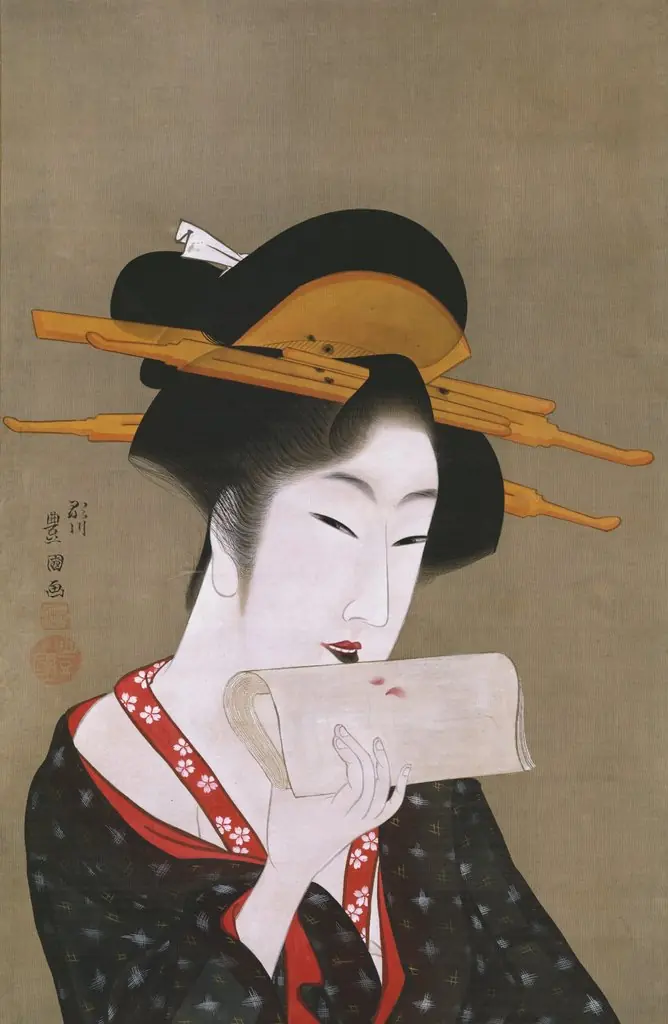 Beauty Blotting Her Lip Rouge
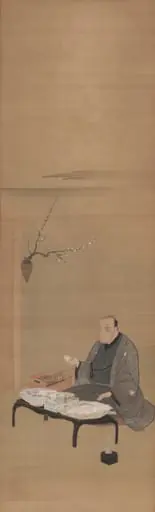 Portrait of Kinokuniya Bunzaemon
 Untitled
 Tokaido Yotsuya Kaidan|Onoe Matsusuke as the Ghost of the Murdered Wife Oiwa, in "A Tale of Horror from the Yotsuya Station on the Tokaido Road"
 Untitled
 娘道成寺図の錦絵|Print of a Kabuki Dancer from the Maiden of the Dōjōji Temple (Musume Dōjōji)
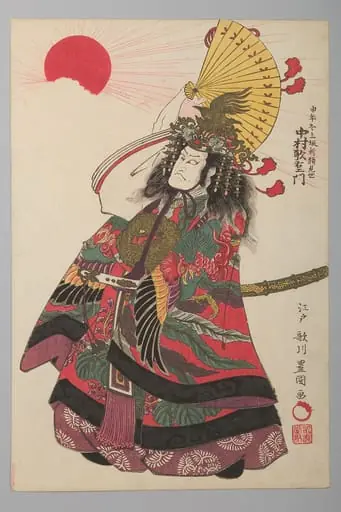 Untitled
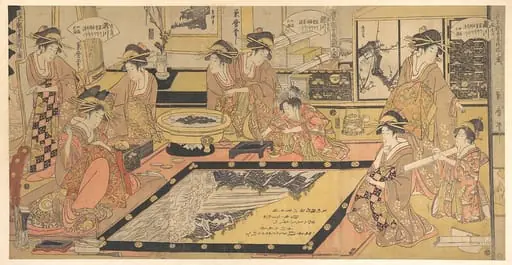 『浅草観音奉掛額之 図』 「扇屋内滝川 富川、粂川、玉川、津川、歌川、清川 め浪、お浪」|A Votive Picture to Be Donated to the Kannon of Asakusa (Asakusa Kannon hō kakegaku no zu), by Takigawa of the Ōgiya, Kamuro Menami and Onami, with Tomikawa, Kumegawa, Tamagawa, Tsugawa, Utagawa, and Kiyokawa
 Untitled
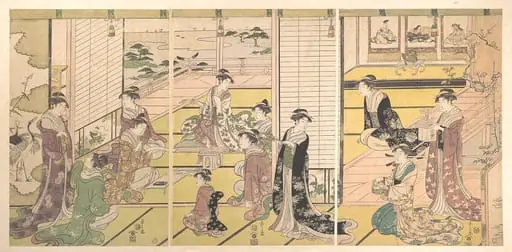 鳥文斎栄之画 和歌三神図|Honoring the Three Gods of Poetry: Women Composing Poems
 Untitled
![南四季 夏景|The Four Seasons in Southern Edo: A Summer Scene (Minami shiki; Natsu [no] kei), by Utagawa Toyokuni I](https://artifactworldgallery.com/img/utagawa-toyokuni-i--the-four-seasons-in-southern-edo-a-summer-scene-minami-shiki--de8110e8ab2ddcb5-w320.webp) 南四季 夏景|The Four Seasons in Southern Edo: A Summer Scene (Minami shiki; Natsu [no] kei)
南四季 夏景|The Four Seasons in Southern Edo: A Summer Scene (Minami shiki; Natsu [no] kei) 太閤五妻洛東遊観之図|A View of the Pleasures of the Taiko and His Five Wives at Rakutō
 The Shika Teahouse
 Untitled
 Untitled
 Women on a Veranda
 契情三人酔 三幅之内 腹立上戸 泣上戸 笑上戸|Three Intoxicated Courtesans
 Untitled