Artwork
Orandajin|Dutchmen
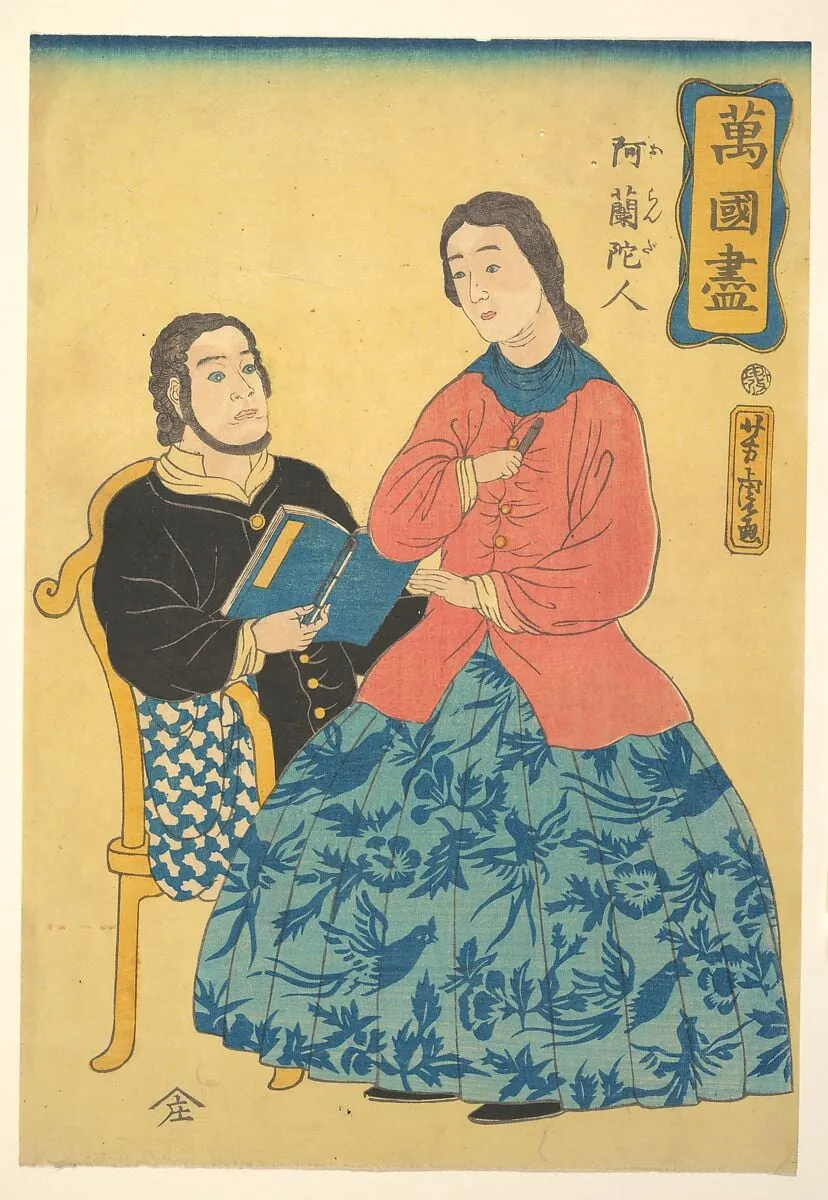
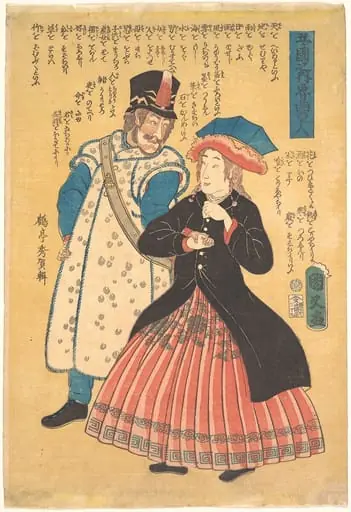
Orandajin|Dutchmen is an ink print by the Impressionist artist Utagawa Yoshitora. It dates from 1860 and is held in the collection of the Metropolitan Museum of Art.
About this work
Overview
The composition centers on a seated figure with an open book and a standing figure in vivid attire, suggesting a moment of quiet observation.
Created in 1860 by Utagawa Yoshitora, this woodblock print depicts two figures indoors, rendered in ink and color on paper. It is part of the collection at The Metropolitan Museum of Art. The composition centers on a seated figure with an open book and a standing figure in vivid attire, suggesting a moment of quiet observation. The work belongs to a genre of Japanese prints that engaged with foreign presence during the late Edo period.
Subject & Meaning
The title 'Orandajin'—Dutchmen—points to Westerners, though the figures may represent broader foreign stereotypes. The seated individual, holding a book, may symbolize knowledge or curiosity, while the standing figure, dressed in an unusually bright red jacket and patterned blue skirt, stands out as an exoticized other. Their simplified faces and stylized forms reflect a Japanese artistic interpretation of outsiders, not a literal portrait.
Technique & Style
The print employs traditional ukiyo-e woodblock methods: bold outlines, flat areas of color, and minimal shading. The contrast between the muted tones of the seated figure and the vivid red and blue of the standing one creates visual emphasis. Lines are crisp, forms are flattened, and details are reduced to essential shapes—hallmarks of mid-19th-century Japanese printmaking that prioritized clarity and decorative impact over realism.
History & Provenance
Produced during a time of limited foreign contact in Japan, the print reflects growing public interest in the outside world. Utagawa Yoshitora, known for his topical subjects, likely responded to contemporary fascination with Westerners, especially the Dutch, who had been Japan’s primary European trading partners for centuries. The work entered The Metropolitan Museum of Art’s collection as part of its broader acquisition of Edo-period prints.
Context
In the 1850s and 1860s, Japan began opening to foreign influence after centuries of isolation. Prints like this one captured public curiosity about Westerners, often blending observation with fantasy. The Dutch, historically tied to Nagasaki’s trade, remained symbolic figures in Japanese visual culture. Yoshitora’s depiction aligns with a broader trend of depicting foreigners as curious, colorful, and slightly alien.
Legacy
This print contributes to a visual record of how Japanese artists interpreted foreign presence during a pivotal era of change. While not widely known outside specialist circles, it exemplifies the adaptability of ukiyo-e to contemporary themes. Its preservation in major collections ensures its role as a document of cross-cultural perception in 19th-century Japan.
Artist & collection

 Untitled
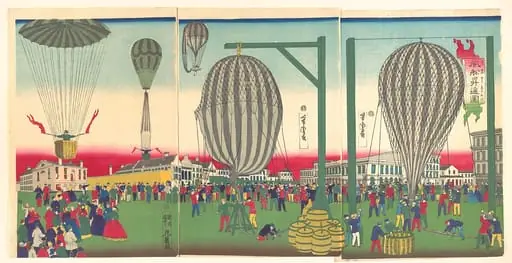 風船昇遥図|Illustration of a Balloon Ascending (Fūsen shōyō no zu)
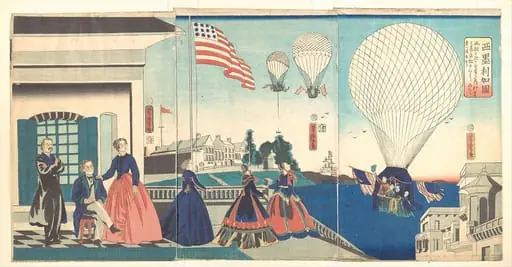 「亜墨利加國」|“America”: Enjoying Hot Air Balloons
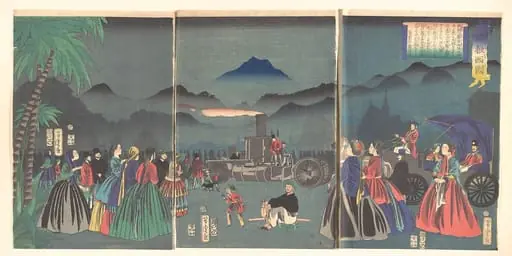 仏蘭西国|France (furansukoku)
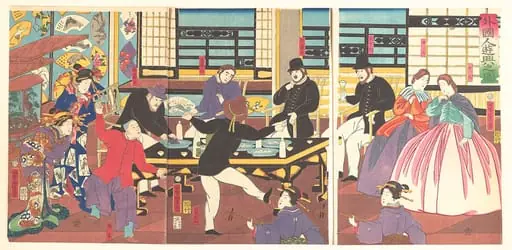 歌川義虎画 『外国人遊興之図』|Foreigners Enjoying a Party (Gaikokujin yūkyō no zu)
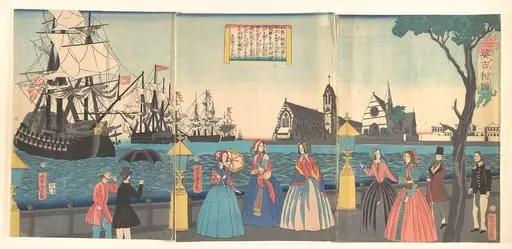 英吉利国|England (Igirisukoku)
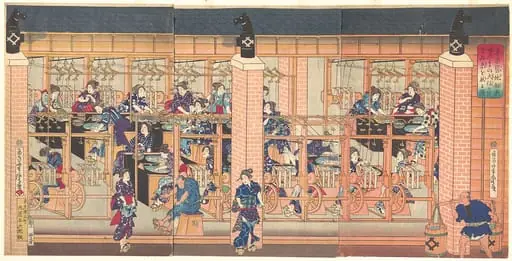 『東京築地舶来ぜんま い大仕かけきぬ糸をとる図』|Imported Silk Reeling Machine at Tsukiji in Tokyo
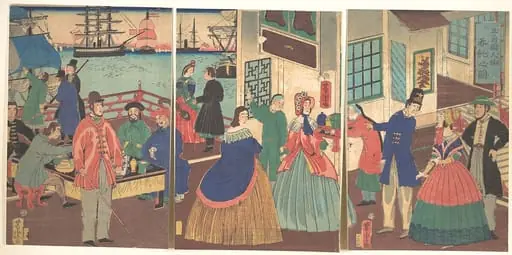 歌川芳虎画 『五箇国人物 呑飥之図』|People of the Five Nations Drinking and Eating (Gokakoku jinbutsu dontaku no zu)
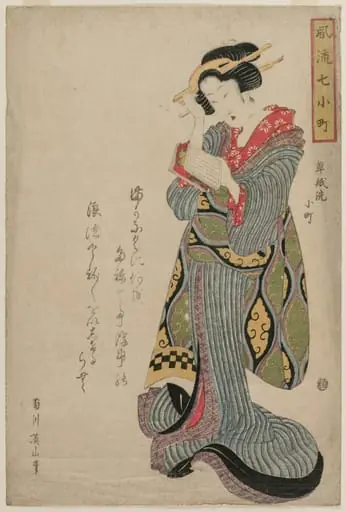 Komachi Washes the Book (from the series Seven Elegant Episodes from the Life of the Poetess Ono no Komachi)
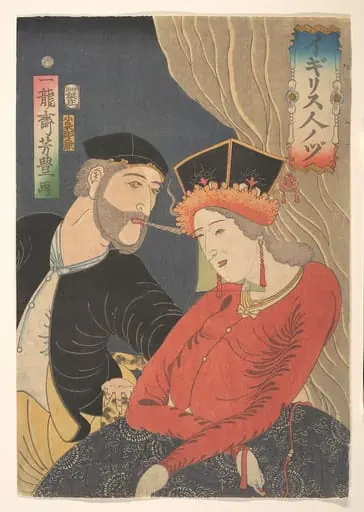 英吉利人之図|Illustration of English People (Igirisujin no zu)
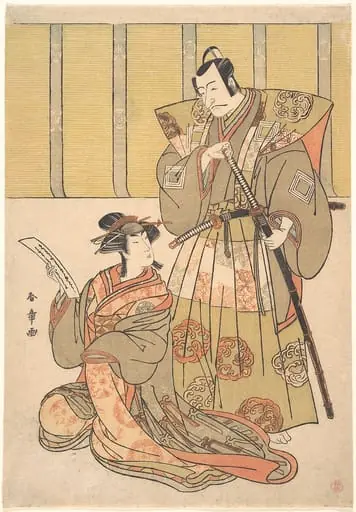 Untitled
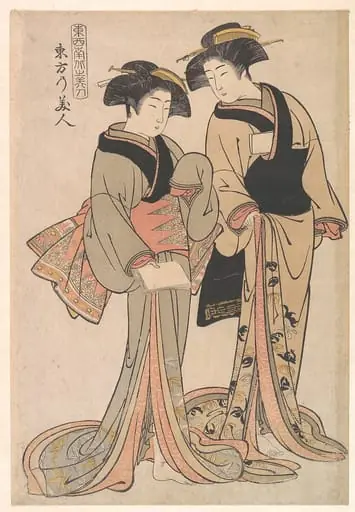 Untitled
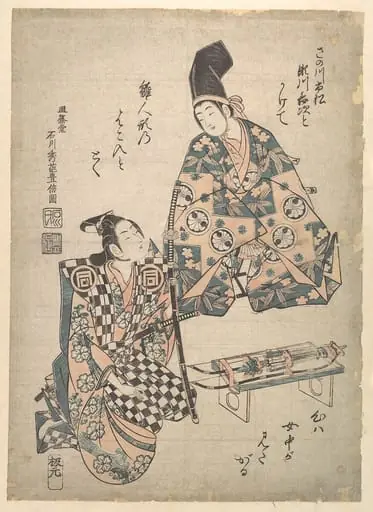 Untitled
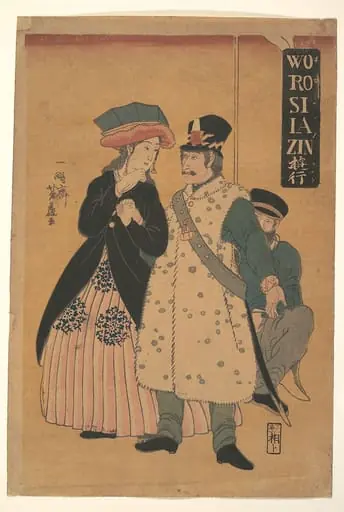 Worosiiazin yuko|魯西亜人遊行|Russians Strolling
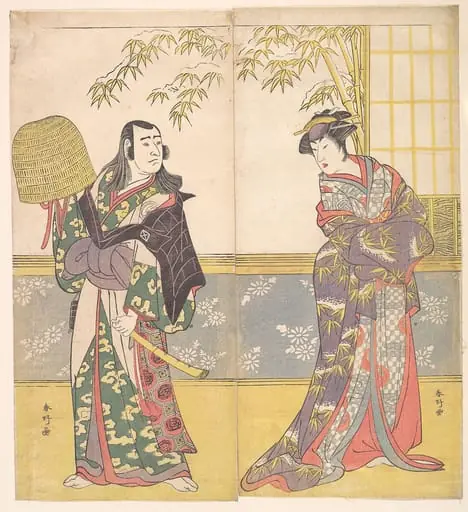 勝川春好画 三代目澤村宗十郎 三代目佐野川市松 |Kabuki Actors Sawamura Sōjūrō III and Sanogawa Ichimatsu III in "A Courtesan’s Mirror for the Eastern Provinces" (Keisei Azuma kagami)
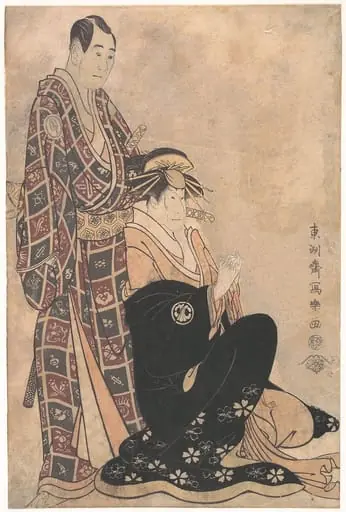 Untitled
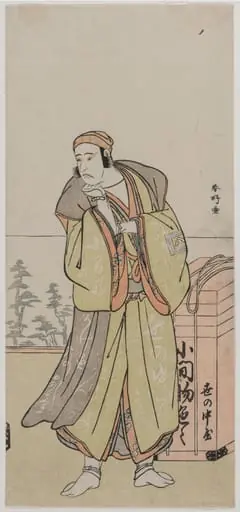 Ichikawa Yaozo II as an Itinerant Peddler
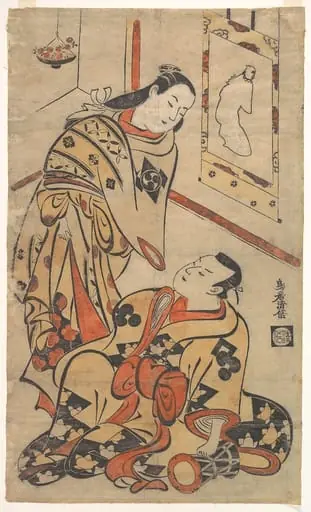 Untitled
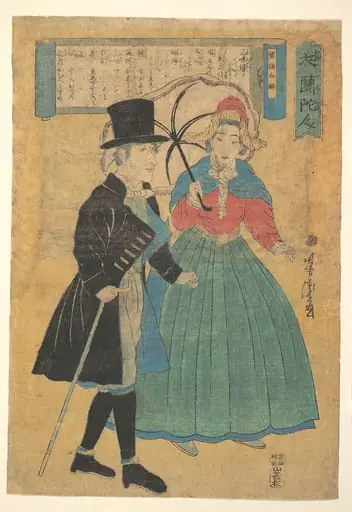 Orandajin|A Dutch Couple
 Roshiajin|Russians