Artwork
Untitled
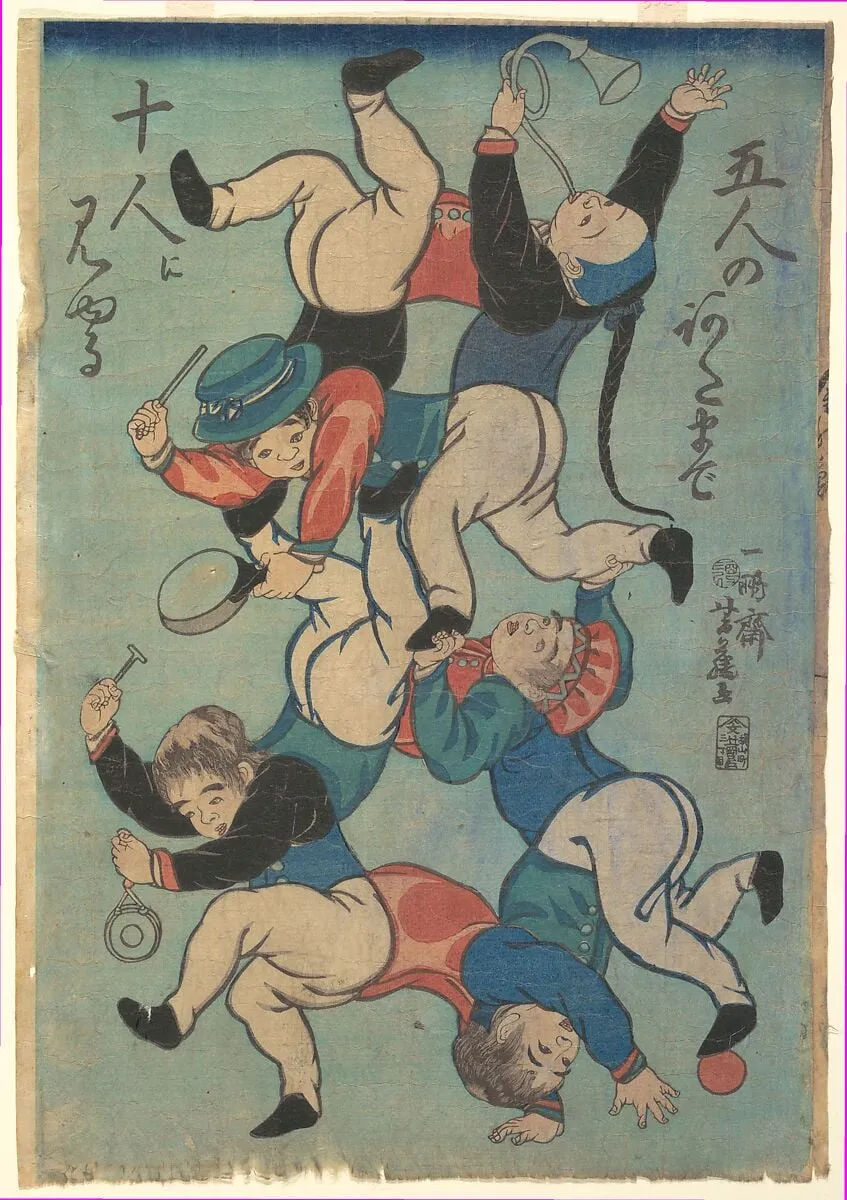
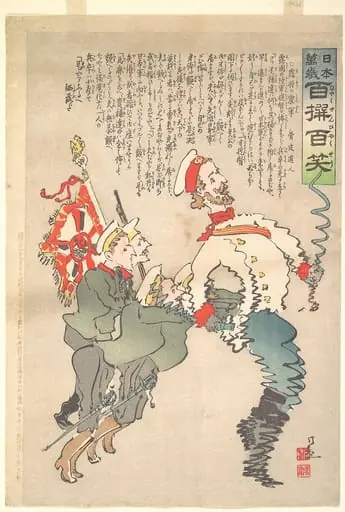
Untitled is an ink print by the Impressionist artist Utagawa Yoshifuji. It dates from 1861 and is held in the collection of the Metropolitan Museum of Art.
About this work
Overview
The composition captures a dynamic group of figures in motion, rendered with bold outlines and flat areas of color typical of the medium.
Created in 1861 by Utagawa Yoshifuji, this woodblock print is executed in ink and color on paper. It belongs to the Metropolitan Museum of Art’s collection and exemplifies the Edo-period tradition of ukiyo-e, a genre focused on scenes of everyday life and popular entertainment. The composition captures a dynamic group of figures in motion, rendered with bold outlines and flat areas of color typical of the medium.
Subject & Meaning
The print depicts five men engaged in a spirited, almost chaotic tumble, their limbs entwined in a circular arrangement. Their varied attire—brightly colored garments and accessories—suggests a festive or theatrical context, possibly a folk performance or seasonal celebration. The lack of narrative detail invites interpretation as a depiction of communal play, emphasizing movement and camaraderie over story.
Technique & Style
Yoshifuji employed traditional ukiyo-e woodblock techniques, using carved blocks to apply ink and color in layered, flat planes. The figures are outlined with strong, expressive lines, while the background is a muted light blue, enhancing the vibrancy of the costumes. Japanese text along the margins likely indicates the artist’s signature or a poetic phrase, consistent with print conventions of the time.
History & Provenance
The print was produced during the late Edo period, a time when woodblock prints flourished as affordable art for the urban middle class. It entered the Metropolitan Museum of Art’s collection through documented acquisition, though its specific provenance prior to museum ownership remains unrecorded in public sources. Its preservation reflects its status as a representative example of 19th-century Japanese printmaking.
Context
This work emerged in a cultural milieu where ukiyo-e artists documented scenes of urban leisure, theater, and folk customs. Unlike Western Impressionism, which developed decades later, Japanese prints like this one emphasized stylized form and decorative composition rather than optical realism. The scene likely resonated with contemporary audiences familiar with similar festive imagery in popular prints.
Legacy
Though not among Yoshifuji’s most widely recognized works, this print contributes to the broader understanding of Edo-period printmaking’s diversity. It illustrates how artists captured motion and social interaction through stylized forms, influencing later collectors and artists interested in Japanese aesthetics. Its presence in a major Western museum underscores its role in cross-cultural art exchange during the 19th and 20th centuries.
Artist & collection


![Nōgei no seiran|Returning Sails at Nōgei [American couple riding over the Nōgei Bridge], by Utagawa Yoshitora](https://artifactworldgallery.com/img/utagawa-yoshitora--nogei-no-seiran-returning-sails-at-nogei-american-couple-rid--332c5cab5263a5c5-w320.webp) Nōgei no seiran|Returning Sails at Nōgei [American couple riding over the Nōgei Bridge]
Nōgei no seiran|Returning Sails at Nōgei [American couple riding over the Nōgei Bridge]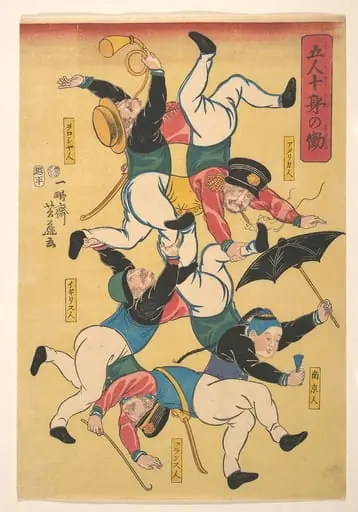 Gojin jūshin no hataraku|Five People Working Like Ten
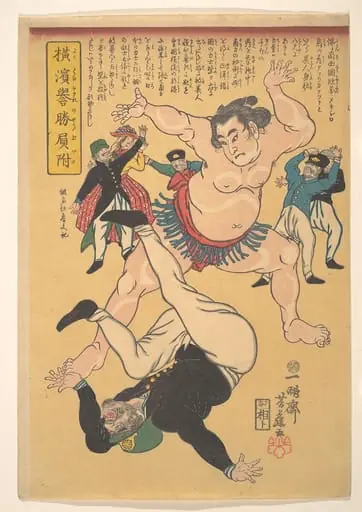 Untitled
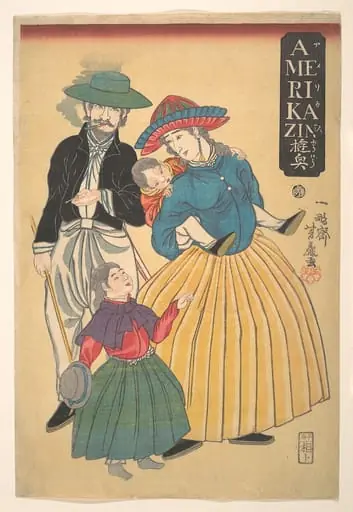 一鵬斎芳藤画 「AMERIKAZIN (アメリカ人)遊興」|Americans on an Outing (Amerikajin yūgyō)
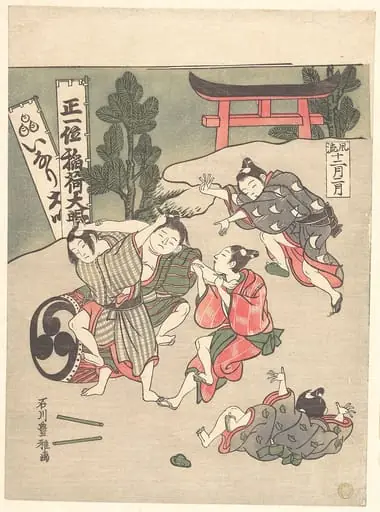 Inari-ko|The Second Month
 Untitled
 大坂下り早竹虎吉|Hayatake Torakichi from Osaka: Performance in Ryōgoku
 大坂下り早竹虎吉|Hayatake Torakichi from Osaka
 Mendicant Monk in Katsushika and Others
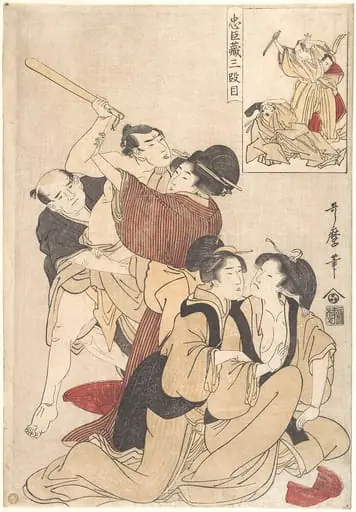 忠臣蔵三段目|Chushingura Act III
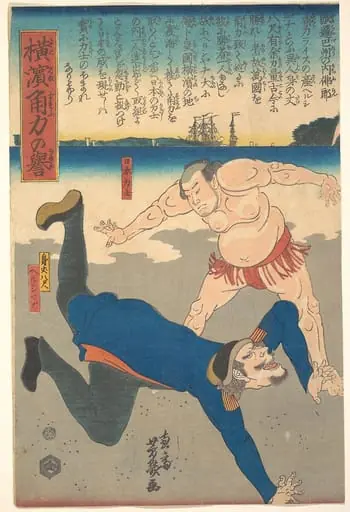 Sumo no homane|Sumo Wrestler Tossing a Foreigner
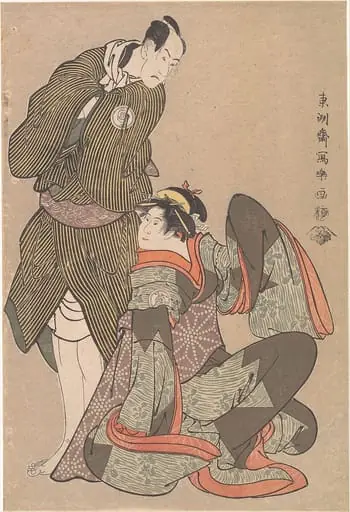 東洲斎写楽画 三代目坂東彦三郎の帯屋長右衛門と四代目岩井半四郎の信濃 屋お半 『二本松陸奥生長』|Bandō Hikosaburō III in the Role of Obiya Chōemon and Iwai Hanshiro IV in the Role of Shinanoya Ohan, from the Play “Nihonmatsu Michinoku sodachi”