Artwork
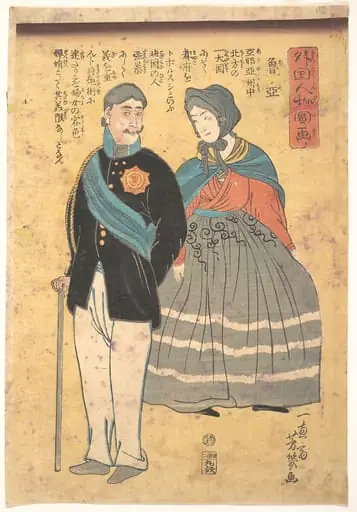
魯西亞 ・英吉利|An English Man and a Russian Woman
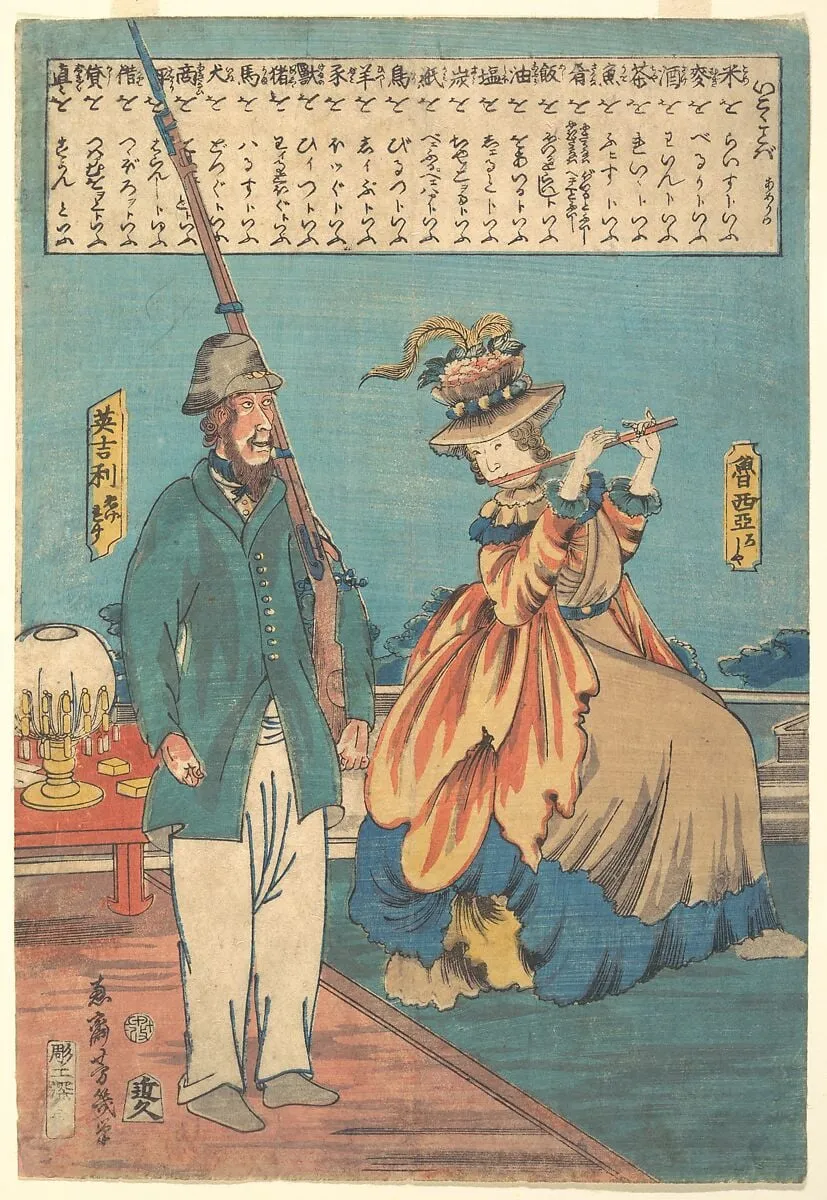
魯西亞 ・英吉利|An English Man and a Russian Woman is an ink print by the Impressionist artist Utagawa Yoshiiku. It dates from 12 and is held in the collection of the Metropolitan Museum of Art.
About this work
Overview
This woodblock print by Utagawa Yoshiiku, dated 1872, depicts a man and woman in an interior setting, their attire and demeanor suggesting cultural contrast.
This woodblock print by Utagawa Yoshiiku, dated 1872, depicts a man and woman in an interior setting, their attire and demeanor suggesting cultural contrast. Executed in ink and color on paper, it belongs to a series reflecting Japan’s engagement with foreign figures during the Meiji era. The Metropolitan Museum of Art holds the print as part of its collection of 19th-century Japanese prints, valued for its visual wit and technical clarity.
Subject & Meaning
The figures represent an Englishman and a Russian woman, distinguished by their clothing and posture. The man, standing rigidly with a rifle, embodies military formality; the woman, seated with a flute, suggests leisure and musicality. Their juxtaposition evokes a lighthearted commentary on national stereotypes, not as political statement but as playful curiosity, reflecting Japan’s fascination with Western customs during rapid modernization.
Technique & Style
Yoshiiku employed traditional ukiyo-e woodblock methods, using bold outlines and flat areas of color to define form. The man’s dark coat and hat contrast sharply with the woman’s vivid orange and white dress. Background elements—candles, teapot, ocean vista—are simplified into geometric shapes, enhancing the composition’s clarity. The print’s flat perspective and decorative patterning align with ukiyo-e conventions while emphasizing the figures’ symbolic roles.
History & Provenance
Created in 1872, the print was part of a series illustrating foreign types for a Japanese audience. It circulated as a commercial print, likely sold in Edo or Osaka. The Metropolitan Museum of Art acquired it in the 20th century, along with other Meiji-era prints, as part of a broader effort to document Japan’s visual response to Western influence during its opening to global trade and diplomacy.
Context
In the early Meiji period, Japan actively absorbed Western customs, and prints like this reflected public curiosity about foreigners. While not documentary, such images responded to increased exposure through ports and exhibitions. Yoshiiku’s work tapped into a growing market for prints that blended humor, exoticism, and national identity, offering viewers a safe, stylized way to engage with the unfamiliar.
Legacy
The print endures as an example of how Japanese artists interpreted foreign cultures through their own aesthetic lens. It illustrates the adaptability of ukiyo-e beyond traditional subjects, extending into contemporary themes. Though not widely known outside specialist circles, it remains a quiet testament to cross-cultural observation during a transformative era in Japanese history.
Artist & collection


 Untitled
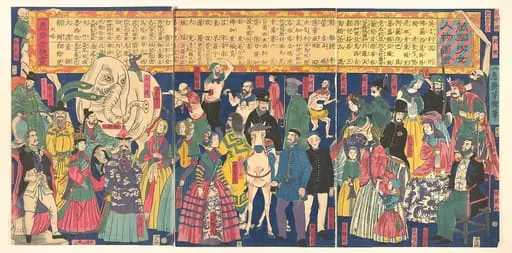 万国男女人物図絵|Picture of Men and Women from all Nations (Bankoku danjo jinbutsu zue)
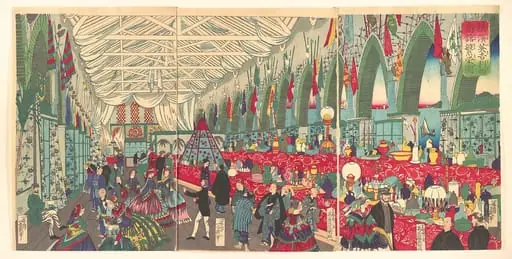 「横浜英吉利西商館繁栄圖」|“The Flourishing of an English Trading Firm in Yokohama”
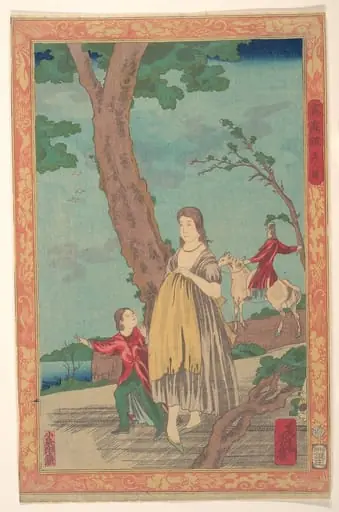 Bijin zu|Beauties
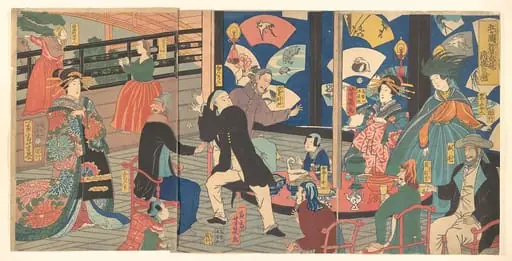 Gok'koku o Gankirō sakamori no zu|The Five Nations Enjoying a Drunken Revel at the Gankirō Tea House
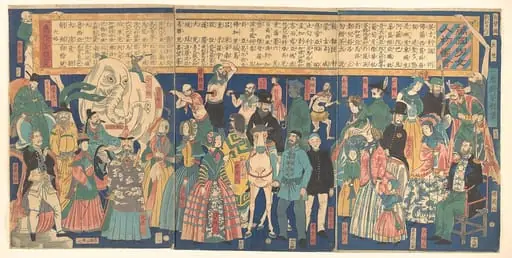 Bankoku danjō jimbutsu zue|Picture of Men and Women from all nations (Bankoku danjo jinbutsu zue)
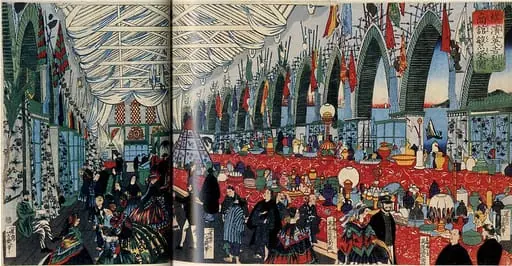 Yokohama Igirisu Shokan hanei no zu|Picture of a Prosperous English Trading Firm in Yokohama
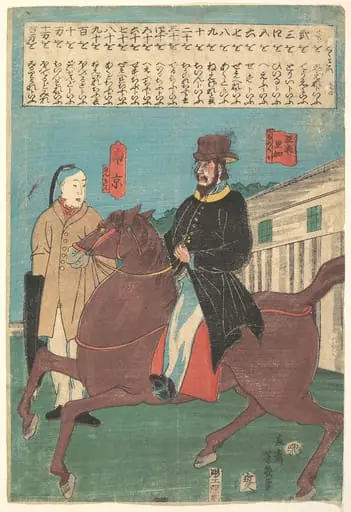 亜米利加・南京|An American on Horseback and a Chinese with a Furled Umbrella
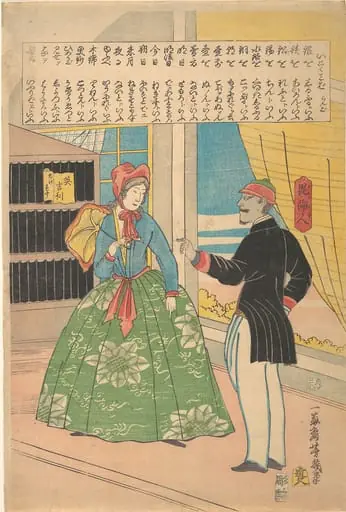 Igirisu to korombojin|English Woman with Black Man
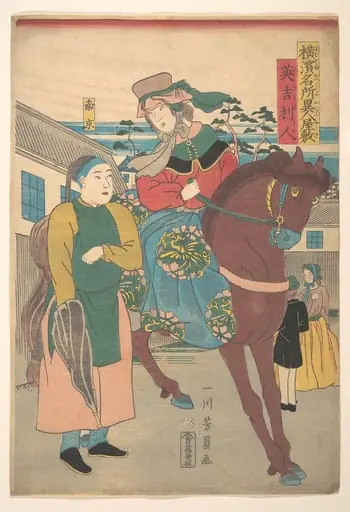 Igirisujin|An English Woman with a Chinese Servant in the Foreign District, from the series Famous Places in Yokohama
![Nōgei no seiran|Returning Sails at Nōgei [American couple riding over the Nōgei Bridge], by Utagawa Yoshitora](https://artifactworldgallery.com/img/utagawa-yoshitora--nogei-no-seiran-returning-sails-at-nogei-american-couple-rid--332c5cab5263a5c5-w320.webp) Nōgei no seiran|Returning Sails at Nōgei [American couple riding over the Nōgei Bridge]
Nōgei no seiran|Returning Sails at Nōgei [American couple riding over the Nōgei Bridge]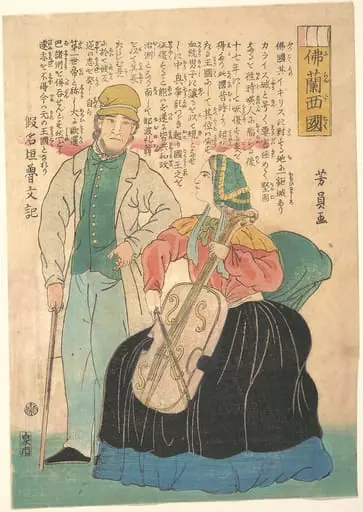 Furansukoku|仏蘭西国|France
 Untitled
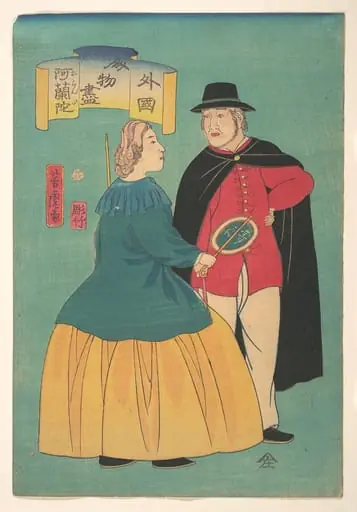 Oranda|Dutch Couple