Artwork
Gok'koku o Gankirō sakamori no zu|The Five Nations Enjoying a Drunken Revel at the Gankirō Tea House
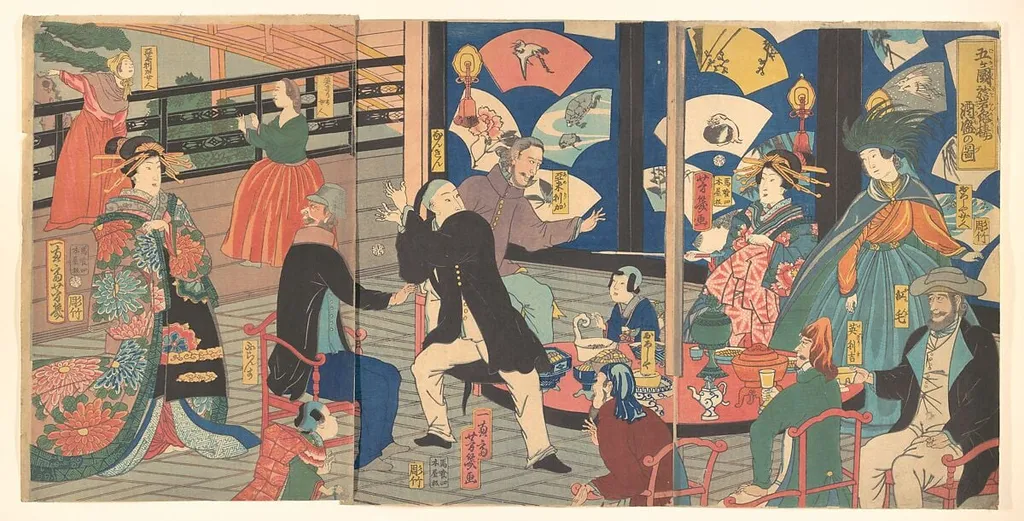
Gok'koku o Gankirō sakamori no zu|The Five Nations Enjoying a Drunken Revel at the Gankirō Tea House is an ink print by the Impressionist artist Utagawa Yoshiiku. It dates from 12 and is held in the collection of the Metropolitan Museum of Art.
About this work
Overview
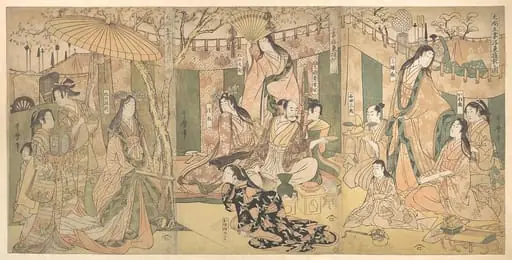
Utagawa Yoshiiku’s triptych, titled *The Five Nations Enjoying a Drunken Revel at the Gankirō Tea House*, is a multi‑panel woodblock print composed of ink and color on paper. Executed in the early nineteenth century, the work is part of the Metropolitan Museum of Art’s collection and presents a festive interior scene in vivid hues.
Subject & Meaning
The three panels portray a convivial gathering inside the Gankirō tea house, where men and women in traditional dress share drinks, laughter, and conversation. Attire varies from black jackets to blue kimonos, underscoring a relaxed, social atmosphere that celebrates communal enjoyment and the pleasures of leisure.
Technique & Style
Yoshiiku employed the ukiyo‑e woodblock method, carving separate blocks for each color and layering them to achieve bright, saturated tones. The composition uses bold outlines and a dynamic arrangement of figures, while the background of blue‑and‑white fans and a red table provides a striking contrast that heightens the scene’s vitality.
History & Provenance
Created around 1812, the print entered the Metropolitan Museum of Art’s holdings through acquisition in the twentieth century. Its preservation in paper format reflects the durability of the woodblock process and the museum’s commitment to conserving Japanese print media.
Context
During the Edo period, tea houses served as popular venues for socializing, and prints depicting such settings catered to a growing urban audience fascinated by everyday life. Yoshiiku’s work aligns with this trend, offering a snapshot of contemporary leisure while showcasing the artist’s skill in rendering lively group scenes.
Artist & collection


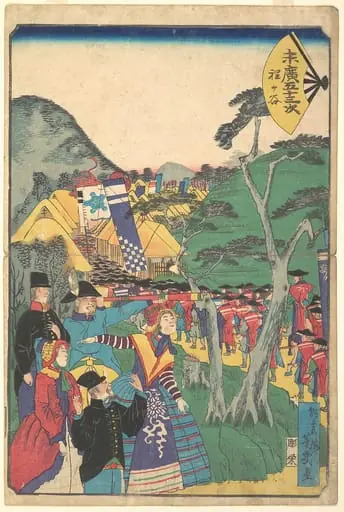 Untitled
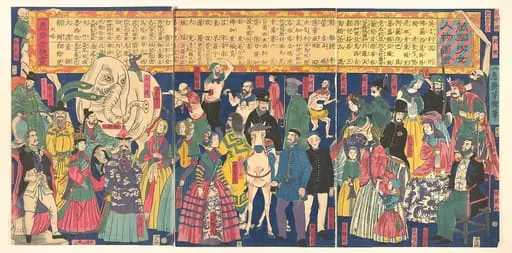 万国男女人物図絵|Picture of Men and Women from all Nations (Bankoku danjo jinbutsu zue)
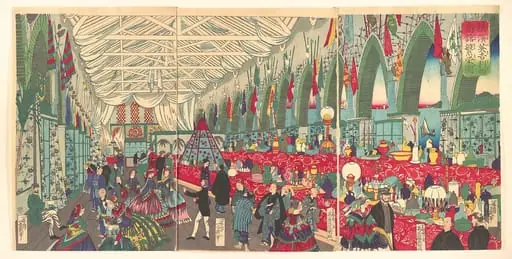 「横浜英吉利西商館繁栄圖」|“The Flourishing of an English Trading Firm in Yokohama”
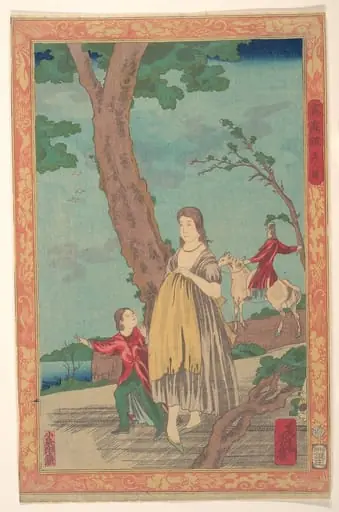 Bijin zu|Beauties
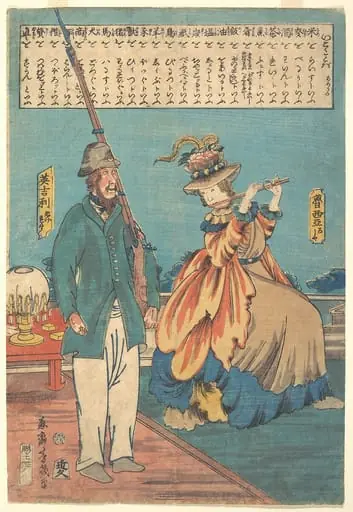 魯西亞 ・英吉利|An English Man and a Russian Woman
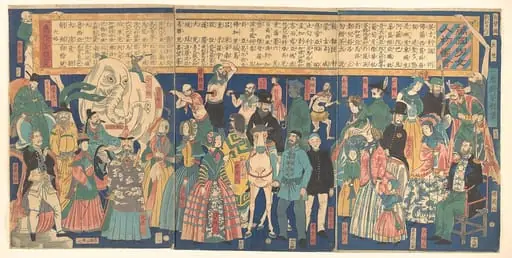 Bankoku danjō jimbutsu zue|Picture of Men and Women from all nations (Bankoku danjo jinbutsu zue)
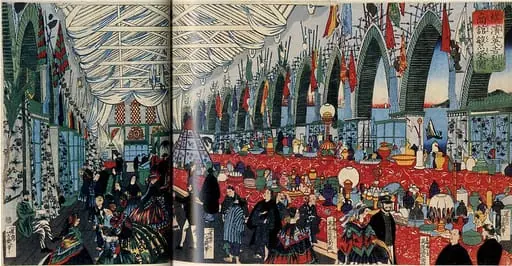 Yokohama Igirisu Shokan hanei no zu|Picture of a Prosperous English Trading Firm in Yokohama
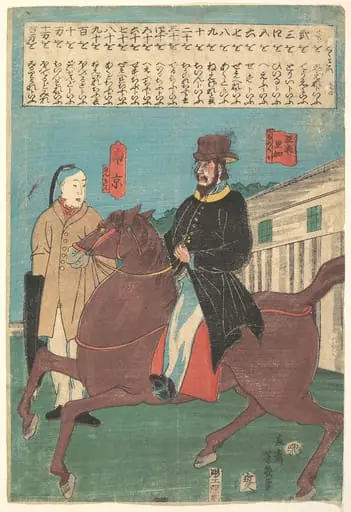 亜米利加・南京|An American on Horseback and a Chinese with a Furled Umbrella
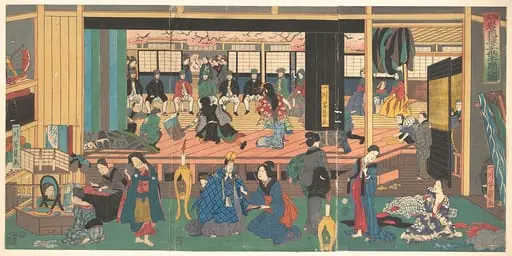 Yokohama Gankirō kodomo te odori no zu|Foreigners Enjoying Children's Kabuki at the Gankirō Tea House
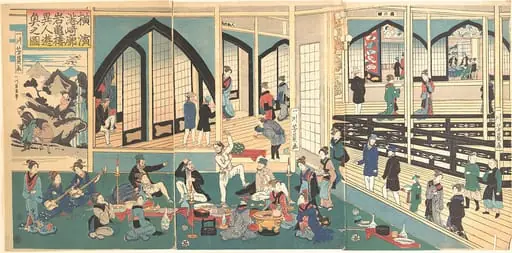 Yokohama Miyozaki-kaku Gankirō ijin yūkyō no zu|Foreigners Enjoying a Party at the Gankirō Tea House
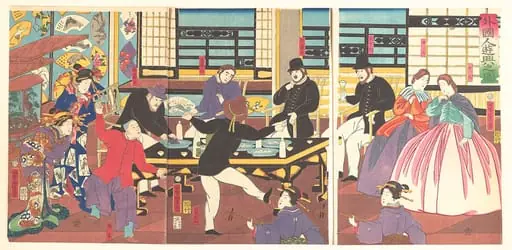 歌川義虎画 『外国人遊興之図』|Foreigners Enjoying a Party (Gaikokujin yūkyō no zu)
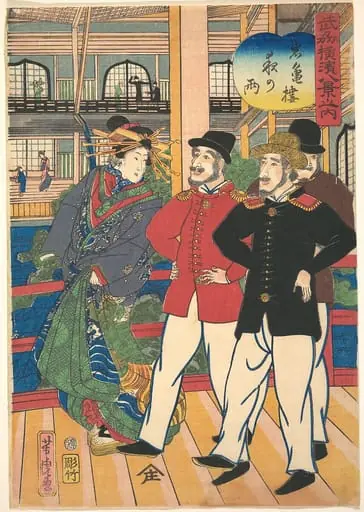 Gankirō yoru no ame|Night Rain at Gankirō
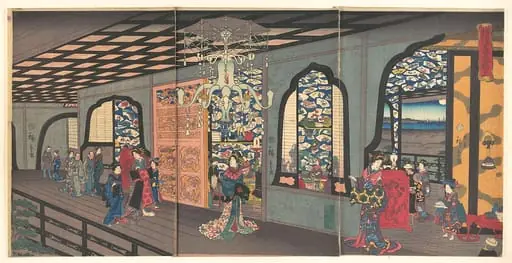 Yokohama Gankirō age|横浜岩亀楼上|Upper Floor of the Gankirō Tea House in Yokohama
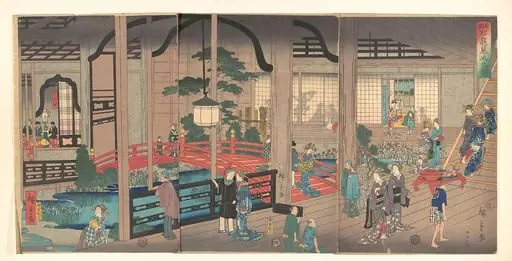 Yokohama Gankirō no zu|View of the Interior of the Gankirō Tea House in Yokohama
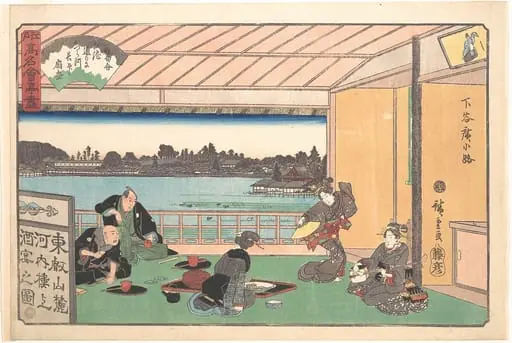 Shitaya Hirokōji (Oike)|江戸高名会亭尽 下谷広小路 河内楼|Teahouse at Hirokōji
 太閤五妻洛東遊観之図|A View of the Pleasures of the Taiko and His Five Wives at Rakutō