Artwork
Yokohama Igirisu Shokan hanei no zu|Picture of a Prosperous English Trading Firm in Yokohama
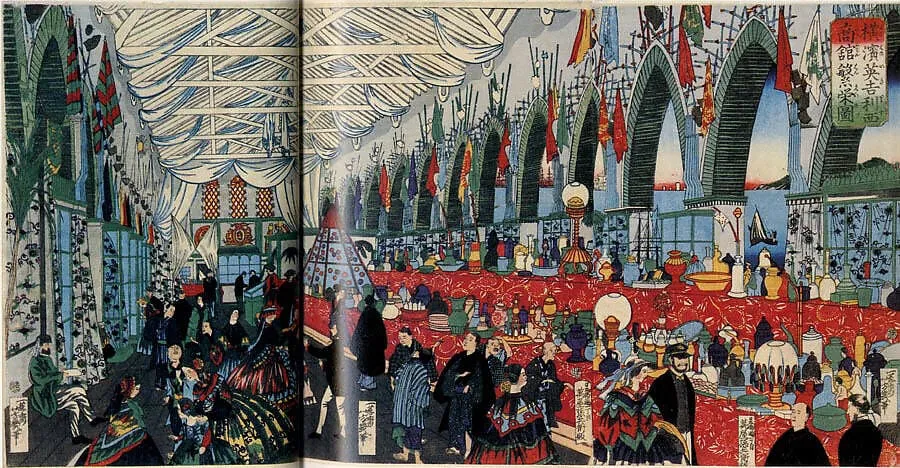
Yokohama Igirisu Shokan hanei no zu|Picture of a Prosperous English Trading Firm in Yokohama is an ink print by the Impressionist artist Utagawa Yoshiiku. It dates from 1871 and is held in the collection of the Metropolitan Museum of Art.
About this work
Overview
Yokohama Igirisu Shokan hanei no zu, a triptych woodblock print by Utagawa Yoshiiku dated 1871, depicts a bustling interior scene associated with an English trading firm in Yokohama. Executed in ink and color on paper, the work is part of the Metropolitan Museum of Art’s collection.
Subject & Meaning
The composition presents a crowded room where rows of figures sit on red carpets beneath patterned banners and flags. Central male figures in dark, striped attire stand near tables laden with teapots, globes and parcels, while the windows reveal ships and urban structures, suggesting a lively hub of commercial exchange between Japan and the West.
Technique & Style
Yoshiiku employs the traditional ukiyo-e woodblock method, layering multiple color blocks to achieve a vivid palette. The print’s intricate line work and careful registration allow for a dense arrangement of objects and figures, creating a sense of depth and movement that mirrors photographic immediacy despite its hand‑crafted origins.
History & Provenance
Created shortly after the opening of Yokohama’s treaty ports, the print reflects the early Meiji period’s rapid integration of foreign trade. It entered the Metropolitan Museum of Art’s holdings through a 20th‑century acquisition, where it remains catalogued as an example of cross‑cultural visual documentation.
Context
The image captures a moment in the nascent period of Japan’s international commerce, when English merchants established offices in port cities. The juxtaposition of Western commodities with Japanese interior décor illustrates the hybrid aesthetic that characterized many ukiyo-e works responding to the influx of foreign influence during the 1870s.
Artist & collection


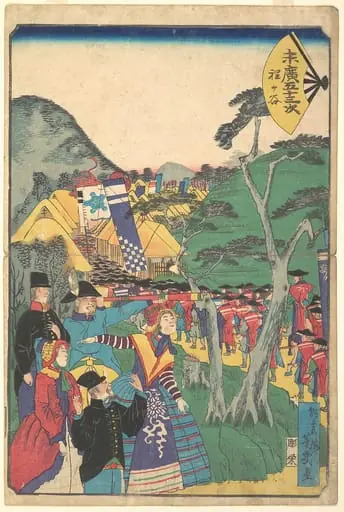 Untitled
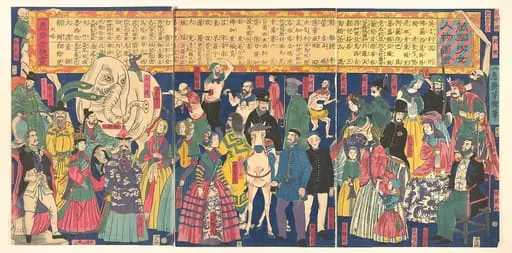 万国男女人物図絵|Picture of Men and Women from all Nations (Bankoku danjo jinbutsu zue)
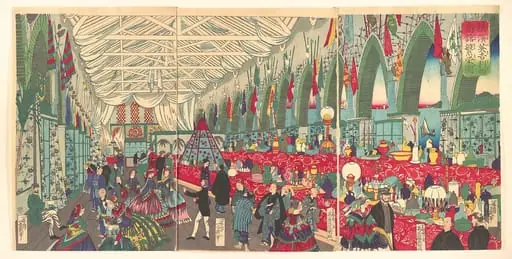 「横浜英吉利西商館繁栄圖」|“The Flourishing of an English Trading Firm in Yokohama”
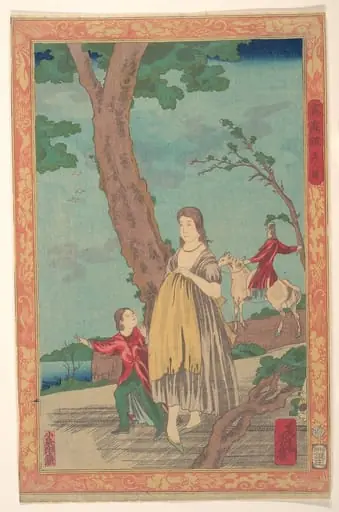 Bijin zu|Beauties
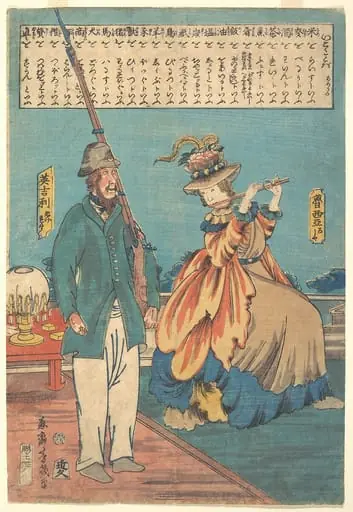 魯西亞 ・英吉利|An English Man and a Russian Woman
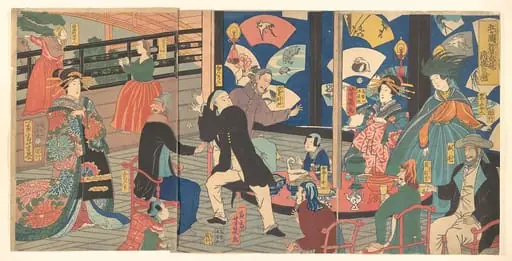 Gok'koku o Gankirō sakamori no zu|The Five Nations Enjoying a Drunken Revel at the Gankirō Tea House
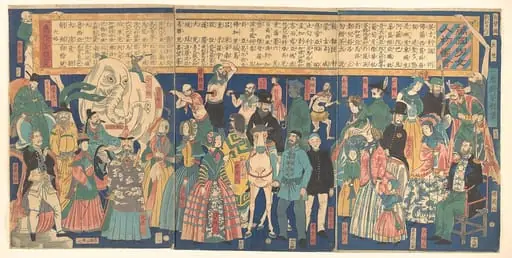 Bankoku danjō jimbutsu zue|Picture of Men and Women from all nations (Bankoku danjo jinbutsu zue)
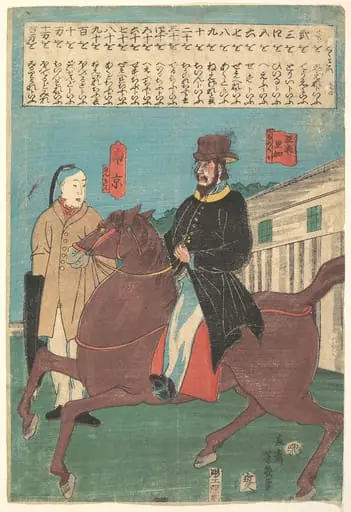 亜米利加・南京|An American on Horseback and a Chinese with a Furled Umbrella
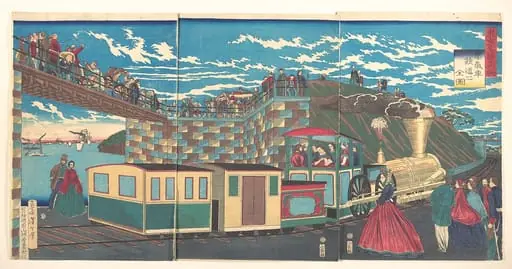 東京名勝高輪 蒸気車鉄道之全図|Illustration of Steam Locomotive Tracks at Takanawa, from the series Famous Places in Tokyo (Tōkyō meishō Takanawa-jōki kikansha no zen zu)
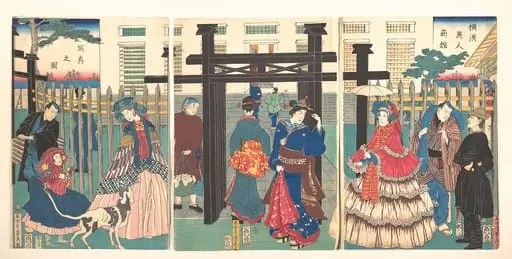 歌川五雲亭貞秀画 『横浜異人商館 写真之図』|Foreign Business Establishment in Yokohama (Yokohama ijin shōkan shashin no zu)
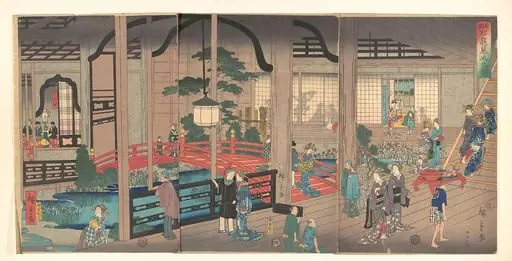 Yokohama Gankirō no zu|View of the Interior of the Gankirō Tea House in Yokohama
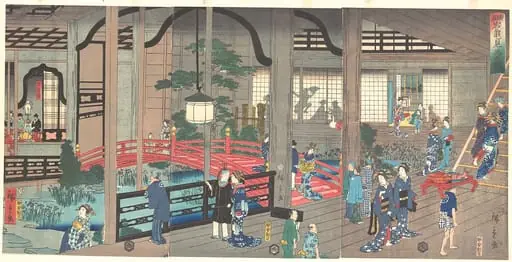 横浜 岩亀見込の図|The Interior of the Gankiro Tea House in Yokohama
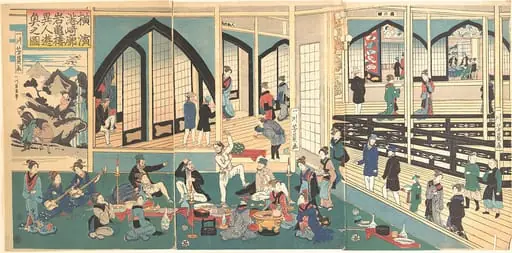 Yokohama Miyozaki-kaku Gankirō ijin yūkyō no zu|Foreigners Enjoying a Party at the Gankirō Tea House
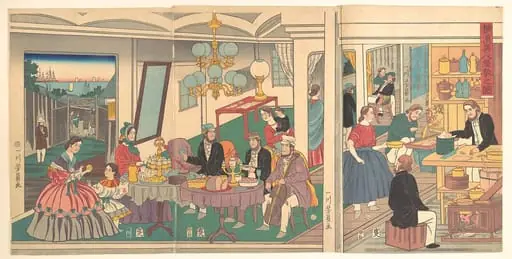 歌川芳員画 「横浜異人屋敷之圖」|A Foreign Residence in Yokohama
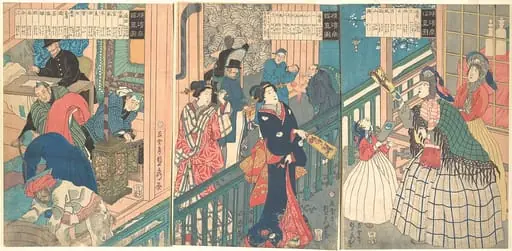 歌川(五雲亭)貞秀画 「横濱商館真圖」|A True View of a Trading House of a Yokohama Merchant
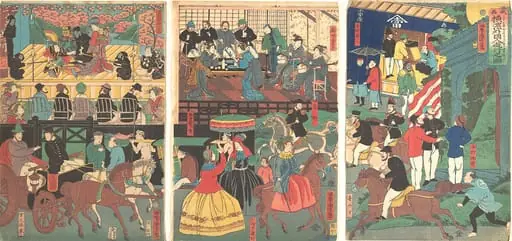 Bushu Yokohama gaikokujin yūkyō no zu|A View of the Amusements of the Foreigners in Yokohama, Bushu
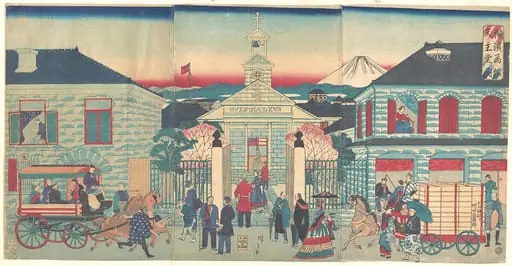 横浜商館天主堂ノ図|Illustration of Foreign Residences and the Catholic Church in Yokohama (Yokohama shōkan tenshudō no zu)