Artwork
Untitled
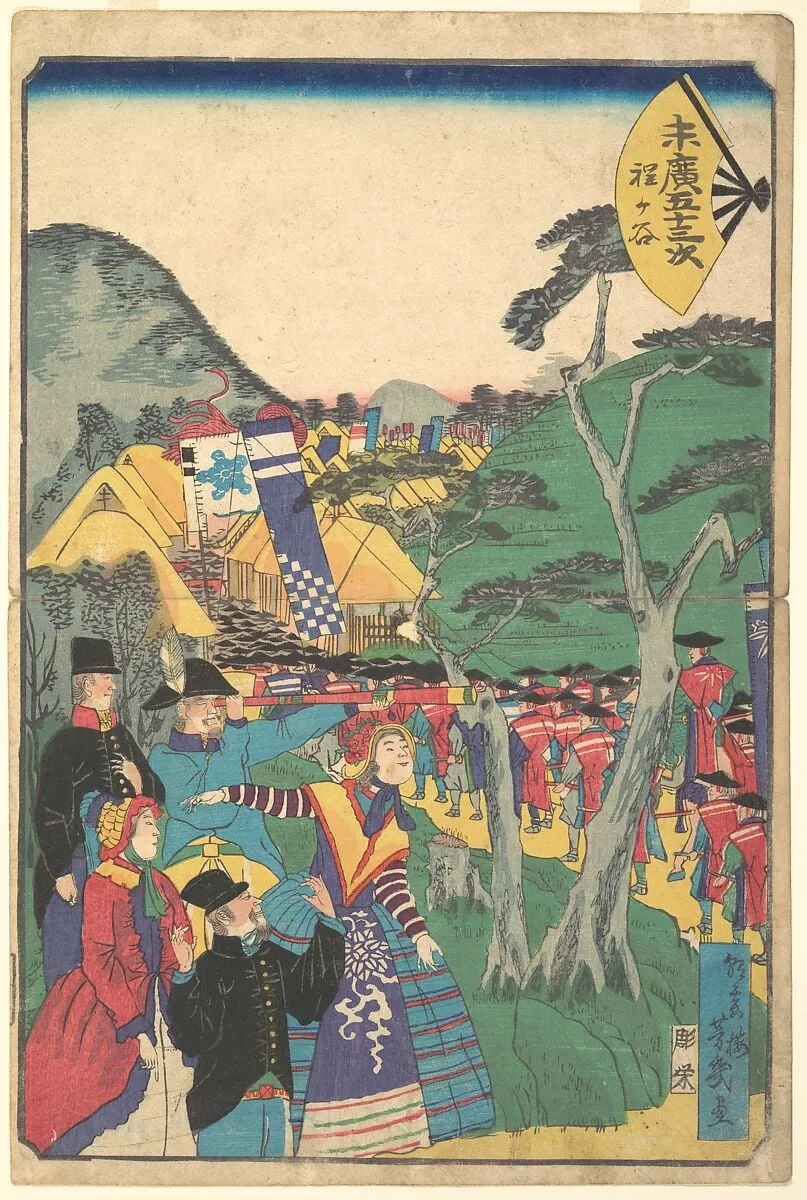
Untitled is an ink print by the Impressionist artist Utagawa Yoshiiku. It dates from 1865 and is held in the collection of the Metropolitan Museum of Art.
About this work
Overview
This woodblock print, dated 1865, is the work of Utagawa Yoshiiku, a printmaker active during the late Edo period. Executed in ink and color on paper, it depicts a vibrant public gathering. The piece resides in the collection of The Metropolitan Museum of Art, where it represents the dynamic street life captured in ukiyo-e traditions of the time.
Subject & Meaning
The scene portrays a bustling outdoor event, likely a seasonal festival or market. Central to the composition is a woman in a vivid blue and red striped dress, drawing attention amid a crowd of men in darker, more subdued attire. The presence of a painted sign and clustered buildings suggests a commercial or ceremonial space, reinforcing the sense of communal activity and public spectacle.
Technique & Style
Yoshiiku employed bold outlines and flat areas of color typical of ukiyo-e woodblock printing. The figures are rendered with simplified forms, emphasizing movement and gesture over detail. The background uses layered hues to suggest depth, while the red roofs and yellow sign provide focal contrast. The composition channels energy through diagonal groupings and overlapping figures.
History & Provenance
Created in 1865, the print emerged during a period of social change in Japan, just before the Meiji Restoration. Though its early ownership is undocumented, it entered the Metropolitan Museum of Art’s collection as part of its broader acquisition of Japanese prints in the early 20th century, reflecting growing Western interest in Edo-period visual culture.
Context
This print reflects the popularity of urban scenes in mid-19th century Japan, where artists documented everyday life amid rapid transformation. Festivals and markets were common subjects, capturing both the vibrancy of common people and the visual richness of Edo’s streets. Yoshiiku’s work aligns with the broader ukiyo-e tradition of portraying fleeting moments of public life.
Legacy
While not among Yoshiiku’s most widely reproduced works, this print contributes to the understanding of his engagement with crowd scenes and color dynamics. It remains a representative example of late Edo-period printmaking, illustrating how artists balanced commercial appeal with observational detail during a time of cultural transition.
Artist & collection


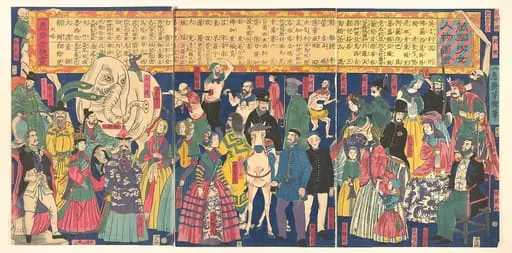 万国男女人物図絵|Picture of Men and Women from all Nations (Bankoku danjo jinbutsu zue)
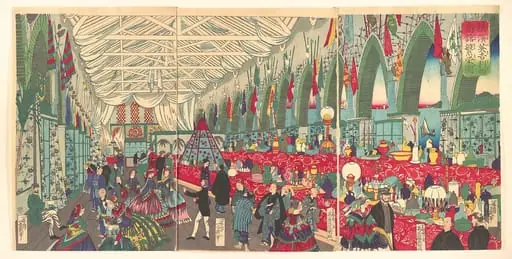 「横浜英吉利西商館繁栄圖」|“The Flourishing of an English Trading Firm in Yokohama”
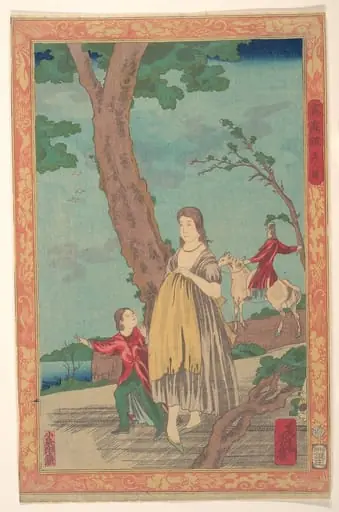 Bijin zu|Beauties
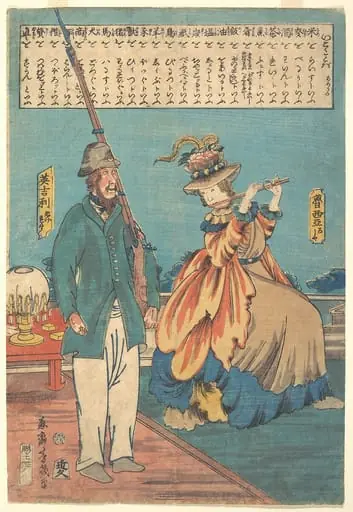 魯西亞 ・英吉利|An English Man and a Russian Woman
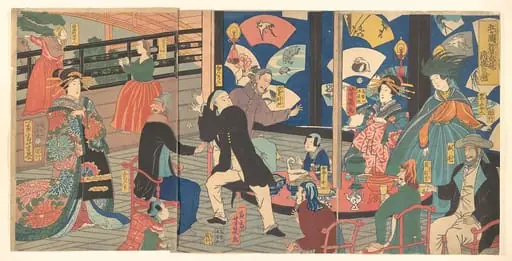 Gok'koku o Gankirō sakamori no zu|The Five Nations Enjoying a Drunken Revel at the Gankirō Tea House
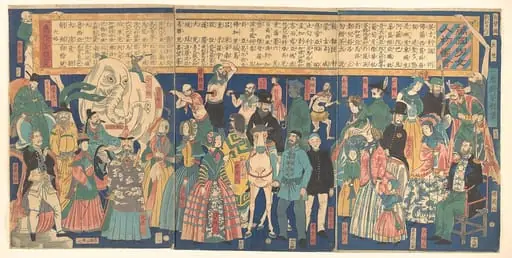 Bankoku danjō jimbutsu zue|Picture of Men and Women from all nations (Bankoku danjo jinbutsu zue)
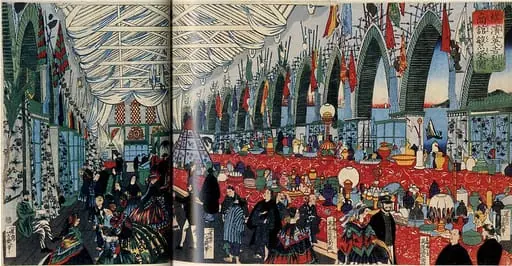 Yokohama Igirisu Shokan hanei no zu|Picture of a Prosperous English Trading Firm in Yokohama
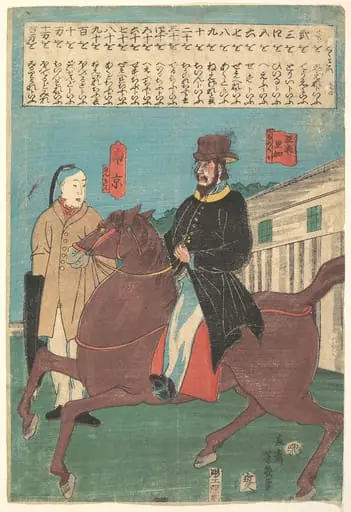 亜米利加・南京|An American on Horseback and a Chinese with a Furled Umbrella
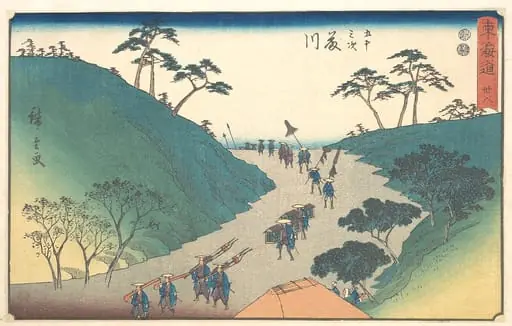 東海道五十三次 藤川|Fujikawa
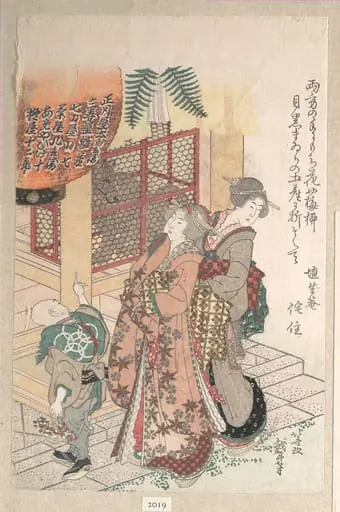 初詣|Young Women Visiting a Shinto Shrine
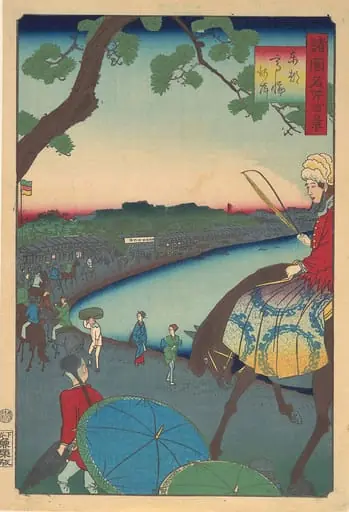 Tōtō Takanawa Kaigen|Foreigners Riding Along the Coast at Takanawa in the Eastern Capital
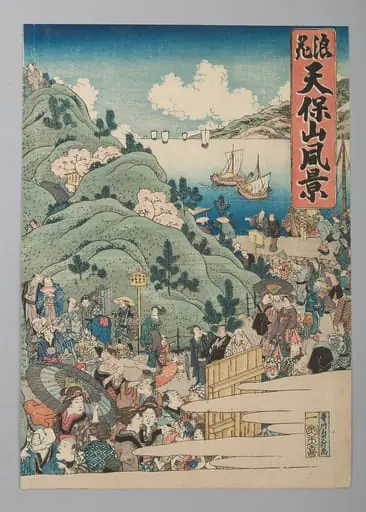 「浪花天保山風景」|“View of Mount Tenpō in Osaka” (Naniwa Tempōzan fukei)
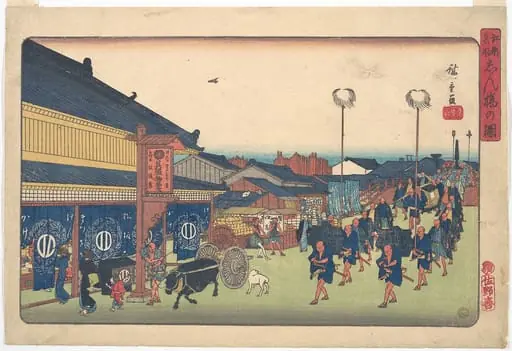 江都名所 新橋の図|Shimbashi no Zu
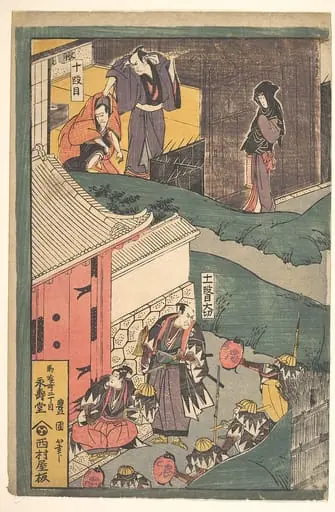 Untitled
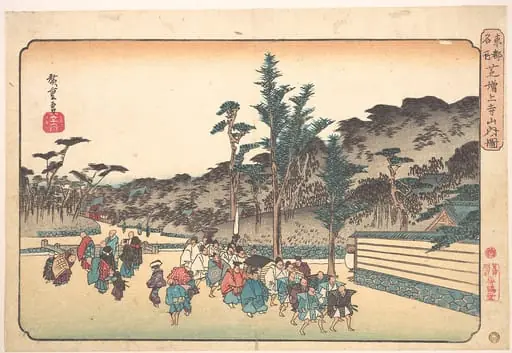 東都名所 芝増上寺山内の図|Shiba Zōjōji Sannai no Zu
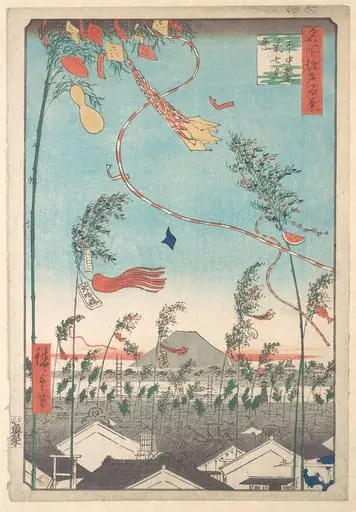 名所江戸百景 市中繁栄七夕祭|The Tanabata Festival, from the series One Hundred Famous Views of Edo
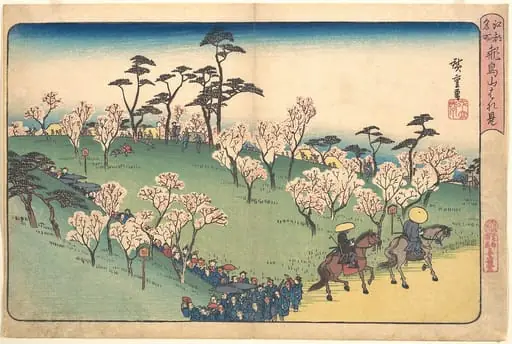 江都名所 飛鳥山はな見|Asukayama Hanami
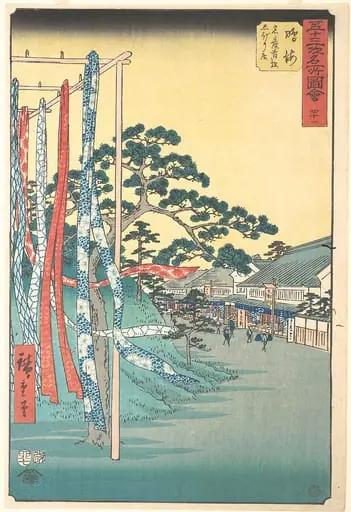 五十三次名所図会 鳴海 名產有松しぼり店|Narumi, Meisan Arimatsu Shibori Mise
![Motomura no yūdachi|Evening Glow at Motomura [Two Englishmen looking at the sunset], by Utagawa Yoshitora](https://artifactworldgallery.com/img/utagawa-yoshitora--motomura-no-yudachi-evening-glow-at-motomura-two-englishmen--2e8bfdf3deec941b-w320.webp) Motomura no yūdachi|Evening Glow at Motomura [Two Englishmen looking at the sunset]
Motomura no yūdachi|Evening Glow at Motomura [Two Englishmen looking at the sunset]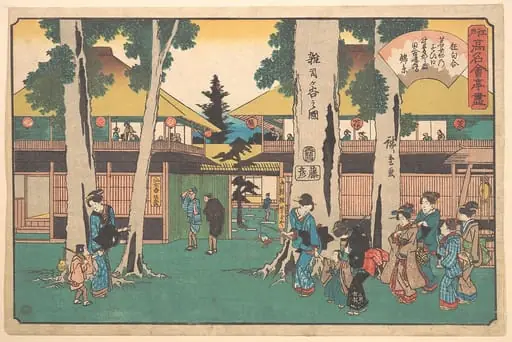 江戸高名会亭尽 雑司ヶ谷の図 茗荷屋|Zoshigaya no Zu (Myoga-ya)